Introduction
In recent decades, organized crime in Latin America, particularly in Mexico, has emerged as one of the most complex security, political, and social challenges. The expansion of drug cartel activities has not only placed considerable pressure on state security institutions but has also given rise to new forms of informal governance in many regions. Under these circumstances, organized violence has become part of everyday life, affecting indicators of human development. Meanwhile, cartels have exploited institutional weaknesses, economic inequality, and, in some cases, bureaucratic corruption to expand their influence. Competition among criminal organizations has further intensified the cycle of violence and instability. Successive Mexican governments, for their part, have often alternated between militarized security policies and socially oriented approaches. This fluctuation may itself have become one of the factors contributing to the persistence of the security crisis. At the same time, the cross-border consequences of this phenomenon, particularly through drug trafficking and migration, have extended its impact to the international level. Consequently, the cartel problem has evolved into a multilayered governance crisis in Mexico.
Incidents
- Armed Conflict Between Factions of the Sinaloa Cartel
The violent clashes between the two principal factions of the Sinaloa Cartel, known as Los Chapitos and Los Mayos (also known as La Mayiza), represent one of Mexico’s most significant security developments in recent years. A turning point in the crisis came on July 25, 2024, with the arrest in the United States of Ismael “El Mayo” Zambada, a leading figure associated with the latter faction. According to Zambada’s lawyer, the arrest followed his abduction and forcible transfer to the United States by Joaquín Guzmán López, one of the sons of Joaquín “El Chapo” Guzmán, further deepening divisions between the cartel’s two factions.
These tensions escalated into open armed conflict between the factions in the state of Sinaloa in September 2024. Violence initially intensified in Culiacán and its surrounding areas before spreading, particularly during the second year of the conflict, to southern parts of the state, including Mazatlán and Escuinapa.
The resulting violence has triggered a wave of killings, disappearances, kidnappings, internal displacement, road blockades, and armed attacks, alongside the partial breakdown of economic and social life. Public displays of violence and targeted attacks against prominent individuals believed to be either associated with or critical of cartel leaders, including social media influencers, have also served to demonstrate the power of rival factions and intimidate their followers. Beyond attacks against members of rival criminal groups, threats and targeted violence against certain local officials and political figures have also become instruments through which Sinaloa Cartel factions seek to exert influence. According to data from ACLED (Armed Conflict Location & Event Data), these actions are linked to efforts by rival groups to consolidate territorial control at the local level and expand their influence over political and administrative structures[1].
It is worth noting that, according to a report published by the Spanish newspaper El País on September 18, 2026, data from the Sinaloa State Attorney General’s Office indicate that more than 3,800 homicides and over 4,400 disappearances have been recorded in the state since the conflict between the two factions began[2].
- Wave of Violence Following the Killing of “El Mencho”
On February 22, 2026, Mexican security forces conducted an operation in the Tapalpa area of Jalisco state targeting Nemesio Rubén Oseguera Cervantes, known as “El Mencho,” the leader of the Jalisco New Generation Cartel (Cártel Jalisco Nueva Generación, CJNG). According to Reuters and statements from Mexico’s Secretariat of National Defense, the operation was carried out by Mexican special forces using intelligence provided by the United States. El Mencho was wounded during an armed confrontation with security forces in the Tapalpa area and died while being transported by helicopter to Mexico City[3].
Following his death, members of the Jalisco New Generation Cartel launched retaliatory attacks, setting vehicles on fire, erecting roadblocks, and targeting commercial establishments, thereby disrupting parts of Mexico’s transportation network. According to a report issued by the Mexican government’s Security Cabinet, a total of 252 roadblocks were recorded across 20 states, including 85 on federal highways. These actions heightened insecurity, disrupted transportation, and intensified public concern in various parts of the country. The situation became so alarming that Fabiola Cortes, a schoolteacher in Mexico City, told Reuters: “Unfortunately, we have experienced situations like this before, but this time it seems somewhat more alarming because these cartels have no clear successors. We sincerely hope that our president will take action on our behalf and protect us, because, quite frankly, fear is everywhere on the streets[4].”
In this context, social media users in Jalisco reported that stores, pharmacies, gas stations, and vehicles had been set ablaze. The fires, road blockades, and widespread security alerts led to the suspension of banking operations in Jalisco and neighboring states[5]. It should be noted that El Mencho had been wanted by U.S. judicial authorities for years. On December 4, 2024, during Joe Biden’s presidency, the U.S. Department of State increased the reward offered for information leading to his arrest or conviction from $10 million to $15 million[6].
- The Case of the Sinaloa Mine Workers
On January 23, 2026, ten employees and contractors associated with the Panuco mining project, operated by the Canadian company Vizsla Silver Corp., including technical and security personnel, were abducted by armed individuals from their accommodation in a residential complex in the municipality of Concordia, Sinaloa[7]. The area was under the influence of the Sinaloa Cartel, and following the incident, Vizsla Silver temporarily suspended certain operational activities at and around the Panuco project as a precautionary measure. The conflict centers on transportation routes connecting Sinaloa and Durango, the operation of clandestine laboratories producing synthetic drugs, and control over the formal economy, in which mining plays a significant role[8].
In response to the incident, the Mexican government launched an extensive search operation for the abducted workers, deploying more than 1,100 personnel from the armed forces, special forces, National Guard, and investigative units to the area[9]. During the operation, human remains were discovered in clandestine graves near the community of El Verde. However, the victims were identified gradually through forensic examinations. On April 6, 2026, the Canadian company Vizsla Silver finally confirmed that the bodies of nine of the ten abducted individuals had been identified, while one person remained missing[10].
Initial investigations and statements obtained from some of the detained suspects indicated that the victims may have been mistakenly identified as members of a rival criminal group. However, President Claudia Sheinbaum emphasized that this hypothesis had not yet been conclusively established. Most of the victims were in their thirties or forties[11]. In this regard, Michael Konnert, President and Chief Executive Officer of Vizsla Silver, stated: “This is a devastating outcome, and our heartfelt condolences are with all the families impacted. We stand beside them with continued support as we mourn our colleagues and friends[12].”
Meanwhile, legal proceedings related to the case continued in the following months. In November 2026, the victims’ families called for an investigation into Vizsla Silver’s potential responsibility regarding security risk assessments, employee protection, and cooperation with investigative authorities. They urged the relevant authorities to examine information and documentation relating to the incident and investigate whether there had been any failure to adopt preventive measures. Beyond the criminal liability of the direct perpetrators, these demands also raise questions concerning the human rights obligations of business enterprises and the safety of employees working in areas affected by organized crime[13].
Challenges and Responses
- Kidnapping, Murder, Extortion, and the Recruitment of Young People
According to the 2025 Global Organized Crime Index, Mexico ranked third among 193 countries worldwide, with a criminality score of 7.68 out of 10. The country also ranked first among the eight countries classified within the Central American region of the Index. This ranking reflects the scale and influence of organized criminal markets and networks and should not be confused with a general ranking of countries based on the incidence of all types of crime. Against this backdrop, kidnapping, murder, extortion, and the recruitment of young people into criminal networks constitute some of Mexico’s most pressing security and social challenges[14].
It should be noted that violent clashes between criminal gangs are widespread in Mexico, claiming countless victims. Street vendors, taxi drivers, restaurant owners, farmers, factory owners, and mining operators are sometimes forced to make payments to criminal gangs, which may be the same cartels involved in drug trafficking[15]. In this regard, Ramón Castro, Bishop of Cuernavaca, told The Guardian: “Imagine a woman who sells tamales, a woman who sells ice-cream, having to pay organised crime. This is unheard of and heartbreaking[16].”
Cartels have used targeted violence, including retaliatory killings and the elimination of rivals, to establish an atmosphere of fear and exercise social control across different regions. Alongside this direct violence, kidnapping is employed as an economic and political instrument to extort money and exert pressure on families and institutions. These groups also exploit poverty, unemployment, and deficiencies in education to recruit young people as replacement personnel, drawing them into the cycle of organized crime. Consequently, these three mechanisms operate simultaneously to reinforce the reproduction of violence and consolidate cartel power within society.
Under these circumstances, despite the Mexican government’s efforts, cartels have continued to consolidate and expand their control, engaging in armed confrontations with one another using heavy weapons and drones. Kidnappings, killings, and attacks targeting journalists remain widespread, while the government continues to face difficulties in delivering justice to victims of past crimes, particularly those committed by the military[17].
Among the principal economic drivers of organized crime in Mexico are cocaine trafficking from South American producing countries, particularly Colombia and Ecuador, through Mexico to the United States market, as well as the production and trafficking of synthetic drugs, especially fentanyl and methamphetamine. Mexican criminal networks obtain some of the chemical precursors required to manufacture these substances from countries such as China and India. Alongside these activities, extortion, human trafficking, fuel theft, illegal resource extraction, and money laundering have contributed to the expansion of the illicit economy and the consolidation of cartel influence[18].
- Domestic Responses
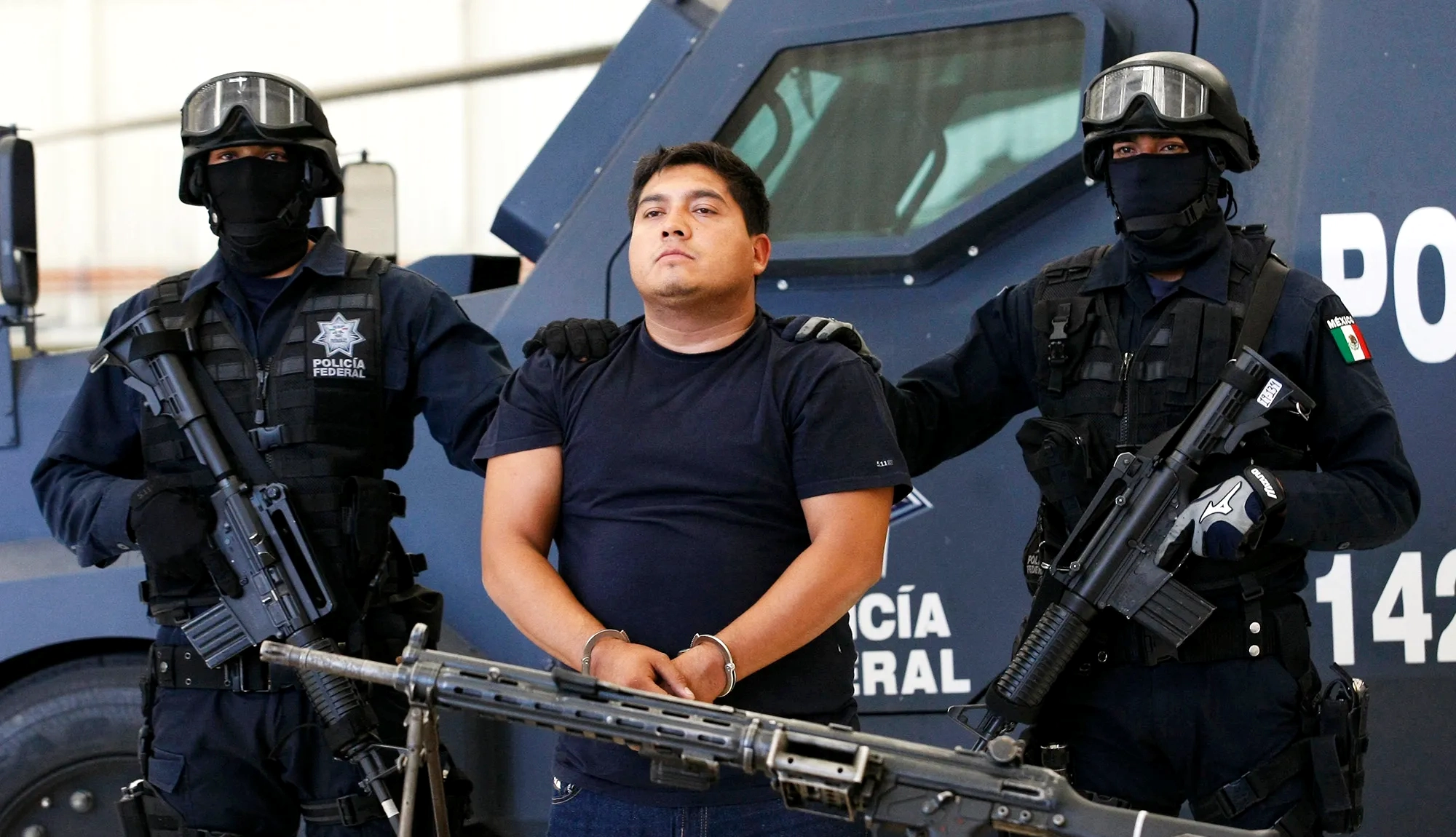
After nearly two years of bloody conflict in the state of Sinaloa, the Mexican government succeeded in arresting a key commander of the state’s cartel in June 2026. On June 1, 2026, personnel from the Mexican Army, the National Guard, and the Special Operations Group of the Sinaloa Secretariat of Public Security arrested Gabriel “N” (also known as “Gabito” or “80”) in the municipality of El Rosario. According to a statement issued by Mexico’s Secretariat of National Defense on June 2, he was identified as a regional commander of the Los Menores faction of the Pacific Cartel (Cártel del Pacífico) and a close associate of Iván Archivaldo Guzmán, one of the leaders of the Los Chapitos faction.
Security authorities also stated that he was under investigation in connection with kidnapping, extortion, and homicide cases, and that his possible involvement in the abduction and killing of six workers and four contractors associated with a mining company on January 23, 2026, was being examined. However, his criminal responsibility in this case remains subject to determination through judicial proceedings. It should also be noted that weapons, ammunition, drugs, cash, and a vehicle were seized during the operation. The suspect was subsequently placed in the custody of Mexico’s Attorney General’s Office (Fiscalía General de la República, FGR) for further investigation and determination of his legal status.
This arrest followed the detention of several other individuals associated with the cartel. Collectively, these developments occurred against the backdrop of armed confrontations between the two principal factions of the Sinaloa Cartel, which intensified following the arrest of Ismael “El Mayo” Zambada in the United States in July 2024. The conflict has fueled widespread competition for territorial control, trafficking routes, and illicit economic networks. The disappearance of ten workers associated with the Panuco mining project represents one of the most significant manifestations of this internal violence[19].
In this context, judicial proceedings related to the case continued in the following months. On September 8, 2026, Mexican security forces arrested two additional suspects allegedly involved in the abduction of the mine workers[20]. According to a report published by the newspaper La Jornada on November 11, 2026, at least 13 individuals had been arrested in connection with their suspected involvement in the case. Nevertheless, the fate of one of the victims remained unknown, while the affected families continued to emphasize the need for further investigations and the establishment of responsibility for all potentially involved parties[21].
The Mexico City-based magazine Proceso, in a report published in its June 2026 monthly edition under the title “Mexico, Criminal Control” (México, control criminal), also examined the expansion of violence and the growing influence of cartels within the country’s governance structures. The report emphasized that, in recent years, criminal organizations in Mexico have moved beyond their traditional role as informal actors and have effectively evolved into a form of “criminal government.”
This situation has developed to the point where cartels not only operate alongside the state but also exercise executive and decision-making authority in many regions. The report demonstrates how these groups have strengthened both their economic interests and political power through control over public resources, including water, as well as through extortion and kidnapping networks.
In this context, the report also highlights the influence of the prominent Sinaloa Cartel over certain local institutions and service sectors, including those operating in tourist areas. Furthermore, it examines growing tensions between the Mexican government and the United States concerning the possible involvement of certain political elites with criminal networks.
Meanwhile, under domestic and international pressure, Mexico’s federal government has been compelled to undertake security operations and arrest certain local officials. Overall, the report concludes that Mexico is confronting a structural phenomenon of criminal governance that simultaneously affects the country’s security, economy, and political system[22].
- International Responses
In June 2026, the Spanish newspaper El País published a report entitled “Sinaloa, Between Loss and Deterioration” (Sinaloa, entre la pérdida y el deterioro), examining the situation surrounding drug cartels in the state. The report emphasized that the conflict between the two factions of the Sinaloa Cartel, which had continued for more than 21 months, had plunged the state into multiple simultaneous crises, including widespread violence, a humanitarian breakdown, economic stagnation, and an ethical crisis. Referring to the extensive deployment of military forces across urban areas, the author described the complete militarization of the urban environment, noting that this military presence had nevertheless failed to halt the ongoing cartel conflict.
In his article, Adrián López, citing data compiled by the Mexican news outlet Noroeste, reported that 3,409 people had died violently in connection with the Sinaloa crisis between September 2024 and the article’s publication. This figure exceeded the official count of intentional homicides because of differences in how deaths were recorded and classified. Furthermore, according to data from the Sinaloa State Public Security Council (Consejo Estatal de Seguridad Pública, CESP), 3,980 cases of unlawful deprivation of liberty had been reported during the same period.
Meanwhile, an examination of an independent database compiled by Noroeste using search notices published by the State Search Commission and collectives representing families of disappeared persons revealed that at least 73% of the individuals recorded in that database were still considered missing. These discrepancies in the figures, together with the continued disappearance of large numbers of people, highlight serious concerns regarding data transparency, the effectiveness of investigations, and the extent of impunity[23].
The Associated Press, in a report published during the 2026 FIFA World Cup, also highlighted the stark contrast between the celebratory atmosphere in the tournament’s host cities and conditions in regions affected by cartel violence. According to the accounts documented by the news agency, fears of shootings, drone attacks, and other violent acts by criminal networks had led many residents in parts of Sinaloa, Michoacán, Veracruz, and Tamaulipas to avoid large public gatherings and instead watch matches at home or in small groups. Nevertheless, limited celebrations were also held in certain areas under the supervision of security forces. The report demonstrated that organized violence continued to affect citizens’ social lives, sense of security, and economic activities, even during a major international sporting event[24].
Similarly, the Chile-based media outlet BNamericas, in a report entitled “Disappearance of Vizsla Silver Workers Exposes Insecurity in Mexican Mines,” examined the Sinaloa mining incident, describing it as evidence of a structural security crisis within Mexico’s mining sector. The report emphasized that, on January 23, 2026, armed individuals attacked workers’ accommodation near the town of Concordia and violently abducted engineers and technical personnel employed by Vizsla Silver, leaving their fate unknown for several days.
In response to the incident, the company temporarily suspended its operations, while the Mexican government launched a large-scale search operation involving more than 1,000 military personnel to locate the missing workers. The report also highlighted the reactions of mining industry and engineering organizations, which regarded the incident as a serious threat to investment and the security of mining projects in areas affected by organized crime.
From a legal perspective, analysts cited in the report emphasized that classifying the case as a “disappearance committed by private individuals,” rather than kidnapping, could have significant implications for judicial proceedings. Ultimately, the outlet concluded that the incident reflected a structural risk in Mexico’s mining regions, potentially increasing investment costs and threats to workforce security while undermining the credibility of the country’s mining industry[25].
Finally, one of the most significant human rights developments in Mexico in 2026 was the announcement of a decision by the United Nations Committee on Enforced Disappearances on April 2. Acting under Article 34 of the International Convention for the Protection of All Persons from Enforced Disappearance, the Committee requested the United Nations Secretary-General to urgently refer the situation in Mexico to the General Assembly for consideration of measures to support the country.
The Committee stated that the information it had received appeared to contain well-founded indications that enforced disappearances had been and continued to be committed in the context of widespread or systematic attacks against the civilian population at different times and in different regions of Mexico. According to the Committee’s preliminary assessment, these acts could constitute crimes against humanity.
Nevertheless, the Committee did not establish evidence of a federal-level policy to commit such acts and emphasized that the purpose of the Article 34 procedure was to mobilize international support and cooperation rather than determine individual criminal responsibility[26].
In response, the Mexican government rejected the Committee’s assessment and emphasized the measures it had undertaken to reform its mechanisms for searching for missing persons, conducting investigations, and combating disappearances. This development underscores the importance of examining the links between the activities of criminal networks, the possible involvement or support of certain state officials, weaknesses in accountability mechanisms, and the Mexican government’s human rights obligations[27].
Conclusion
An examination of developments in Mexico between 2024 and 2026 demonstrates that violence associated with drug cartel activities has evolved beyond competition for illicit markets into an instrument of territorial control, interference in economic activities, and intimidation of the civilian population. The conflict between the Los Chapitos and Los Mayos factions in the state of Sinaloa, which intensified following the arrest of Ismael “El Mayo” Zambada in July 2024, has been accompanied by thousands of killings, cases of unlawful deprivation of liberty, and widespread disruption of economic and social activities. Similarly, the retaliatory actions undertaken by the Jalisco New Generation Cartel following the killing of its leader in February 2026 demonstrate the capacity of these criminal networks to simultaneously disrupt public security and transportation infrastructure. The abduction of ten employees and contractors associated with the Panuco mining project, together with the confirmation of the deaths of nine of them, further illustrates how the risks posed by organized crime have extended into workplaces and legitimate economic activities. Taken together, these developments, alongside organized extortion, recruitment activities, and infiltration of local institutions, indicate that the central problem is not merely the persistence of armed violence, but rather the ability of criminal networks to undermine the authority of public institutions, restrict citizens’ freedom and security, and establish informal mechanisms of social and economic control.
From the perspective of international human rights law, unlawful killings, arbitrary deprivation of liberty, disappearances, and intimidation of citizens affect the rights guaranteed under Articles 6 and 9 of the International Covenant on Civil and Political Rights (ICCPR) and Articles 4, 5, and 7 of the American Convention on Human Rights. Under Article 1(1) of the American Convention and Article 2 of the ICCPR, the Mexican state is obliged not only to refrain from directly violating human rights but also to adopt appropriate measures to protect individuals against abuses committed by non-state actors. This obligation is also closely linked to Articles 8 and 25 of the American Convention concerning the guarantee of effective judicial protection and access to remedies. With regard to disappearances, it is essential to distinguish legally between acts committed by independent criminal organizations and conduct carried out with the authorization, support, or acquiescence of state officials. Under Articles 2 and 3 of the International Convention for the Protection of All Persons from Enforced Disappearance, the question of whether conduct is attributable to the state is of decisive importance in defining enforced disappearance and determining the obligation to investigate acts committed by private individuals. The decision announced by the United Nations Committee on Enforced Disappearances on April 2, 2026, requesting that the situation in Mexico be referred to the General Assembly under Article 34 of the Convention, further highlights the need to examine the structural dimensions of disappearances and strengthen international cooperation. However, this decision does not, in itself, constitute a determination of individual criminal responsibility or establish that all cases of disappearance are attributable to the Mexican state. Furthermore, Articles 24 and 25 of the United Nations Convention against Transnational Organized Crime provide a basis for witness protection, assistance to victims, and opportunities to seek compensation. In the case involving the mine workers, Principles 17–22 of the United Nations Guiding Principles on Business and Human Rights, as non-binding standards, provide a framework for assessing corporate responsibilities in identifying and mitigating human rights risks and addressing the potential adverse impacts of business activities.
Accordingly, a human rights-based response to Mexico’s crisis requires a structural approach to judicial investigations that goes beyond identifying and prosecuting the direct perpetrators to examine recurring patterns of violence, cartel command hierarchies, financing networks, and the possibility of collusion or involvement by state officials. In the Sinaloa cases and the abduction of workers at the Panuco mining project, investigations must be conducted in accordance with the standards established by the Minnesota Protocol on the Investigation of Potentially Unlawful Death and the Guiding Principles for the Search for Disappeared Persons adopted by the Committee on Enforced Disappearances. Such investigations must ensure the preservation of the chain of custody of evidence, examination of communications and geolocation data, forensic documentation, and comparison of victims’ genetic profiles with reference samples provided by their families.
Pursuant to Article 12 and Article 24(2)–(4) of the International Convention for the Protection of All Persons from Enforced Disappearance, as well as Principle 13 of the Committee’s Guiding Principles for the Search for Disappeared Persons, search operations and criminal investigations must be conducted in a coordinated and mutually complementary manner. The continuation of search efforts must not be made conditional upon a conviction, acquittal, or closure of the criminal case, and such efforts must continue until the fate and whereabouts of the disappeared person have been established. At the same time, families’ rights to receive information about the progress of investigations, participate effectively in search operations, and obtain reparation must be guaranteed.
At the institutional level, priority should be given to strengthening data interoperability and addressing inconsistencies between the National Register of Missing and Disappeared Persons (Registro Nacional de Personas Desaparecidas y No Localizadas, RNPDNO), prosecutorial databases, and forensic identification systems. Establishing standardized criteria for recording and classifying cases of enforced disappearance, disappearances committed by private individuals, and kidnapping, together with independent data audits, maintaining records of data revisions, and enabling cross-referencing between the status of judicial cases and the outcomes of search operations, could help identify recurring patterns and facilitate a more accurate assessment of the performance of the responsible institutions.
In the case involving Vizsla Silver, an independent assessment of documentation relating to the identification of security risks, warnings received, measures adopted to protect employees and contractors, and actions taken by the company following the incident is also essential under Principles 17–22 of the United Nations Guiding Principles on Business and Human Rights, without presuming the company’s legal liability in advance. Furthermore, the Mexican government should utilize the judicial cooperation mechanisms established under the Palermo Convention, particularly Article 18, to investigate the cross-border financing and support networks of criminal organizations within the framework of criminal investigations.
Ultimately, the assessment of Mexico’s compliance with its international obligations should not be based solely on the number of arrests or security operations conducted. Instead, it should focus on verifiable indicators, including the extent to which the fate and whereabouts of disappeared persons have been established, the quality and independence of investigations, progress in judicial proceedings, effective protection of witnesses and families, and the implementation of reparative measures.
References
[1] Fernanda Arocha. M., & Pellegrini, S. (225, May 7). How the Sinaloa Cartel rift is redrawing Mexico’s criminal map. ACLED. From: https://acleddata.com/report/how-sinaloa-cartel-rift-redrawing-mexicos-criminal-map
[2] Vizcarra, M. (2026, September 18). Desaparecido desde hace dos días un ciudadano estadounidense en Sinaloa. El País. From: https://elpais.com/mexico/2026-09-18/desaparecido-desde-hace-dos-dias-un-ciudadano-estadounidense-en-sinaloa.html
[3] Diaz, L., & Gottesdiener, L. (2026, February 22). Mexican military kills cartel boss ‘El Mencho’ in US-backed raid. Reuters. From: https://www.reuters.com/world/americas/mexican-drug-lord-el-mencho-killed-military-operation-government-source-2026-02-22/
[4] Cortes, R., & Pelaez-fernandez, A., & Morland, S. (2026, February 24). Romantic tryst led to Mexican cartel leader’s capture, death. Reuters. From: https://www.reuters.com/world/americas/least-25-soldiers-died-after-raid-mexicos-most-wanted-cartel-leader-2026-02-23/
[5] Suarez, K. (2026, February 23). Stores, gas stations, and banks: businesses targeted after El Mencho’s death. EL PAÍS. From: https://elpais.com/mexico/2026-02-23/tiendas-gasolineras-y-bancos-los-negocios-atacados-tras-la-muerte-de-el-mencho.html
[6] Ferri, P. (2026, February 22). Most-wanted drug lord Nemesio Oseguera, ‘El Mencho,’ is taken down in a security operation. EL PAÍS. From: https://elpais.com/mexico/2026-02-22/cae-nemesio-oseguera-el-mencho-el-narco-mas-buscado-en-un-operativo-de-seguridad.html
[7] RCI. (2026, April 7). Vancouver-based mining company confirms the deaths of 9 of 10 workers kidnapped in Mexico. RCI. From: https://ici.radio-canada.ca/rci/en/news/2244187/vancouver-based-mining-company-confirms-the-deaths-of-9-of-10-workers-kidnapped-in-mexico
[8] Ferri, P. (2026, February 11). Loose ends in the disappearance of the Sinaloa miners: Another case of horror in Mexico. EL PAÍS. From: https://english.elpais.com/international/2026-02-11/loose-ends-in-the-disappearance-of-the-sinaloa-miners-another-case-of-horror-in-mexico.html
[9] Diaz, L. (2026, February 7). Mexican authorities find remains matching one of 10 kidnapped miners. Reuters. From: https://www.reuters.com/world/americas/mexican-authorities-find-remains-matching-one-10-kidnapped-miners-2026-02-07/
[10] Duran, P. (2026, April 7). Nine of 10 Kidnapped Vizsla Silver Workers Found Dead. Mexico Business News. From: https://mexicobusiness.news/mining/news/nine-10-kidnapped-vizsla-silver-workers-found-dead
[11] MND Staff. (2026, April 7). Vizsla Silver confirms 9 of 10 missing Sinaloa mine workers have been found dead. MND. From: https://mexiconewsdaily.com/news/vizsla-silver-miners-sinaloa/
[12] Wilson, J. (2026, April 9). Nine of 10 abducted Vizsla Silver workers confirmed dead near Mexican project site. Canadian Occupational Safety. From: https://www.thesafetymag.com/ca/topics/safety-and-ppe/nine-of-10-abducted-vizsla-silver-workers-confirmed-dead-near-mexican-project-site/547416
[13] Gómez Lima, C. (2026, November 11). Familias de mineros de Concordia exigen investigar posibles omisiones de Vizsla Silver. La Jornada. From: https://www.jornada.com.mx/noticia/2026/11/11/estados/familias-de-mineros-de-concordia-exigen-investigar-posibles-omisiones-de-vizsla-silver
[14] Global Organized Crime Index. (2025). Mexico. Global Organized Crime Index. From: https://ocindex.net/country/mexico
[15] McDonnell, P., & Sánchez Vidal, C. (2025, December 16). In Mexico, ‘invisible crime’ of extortion exacts heavy toll. Los Angeles Times. From: https://www.latimes.com/world-nation/story/2025-12-16/crime-that-haunts-mexico-sowing-fear-disrupting-life-extortion
[16] Lopez, O. (2026, June 3). Kidnappings, threats and ‘protection fees’: how can Mexico confront rise in deadly extortion. The Guardian. From: https://www.theguardian.com/world/2026/jun/03/how-can-mexico-confront-rise-in-deadly-extortion
[17] Center for Preventive Action. (2026, February 24). Criminal Violence in Mexico. Council on Foreign Relations. From: https://www.cfr.org/global-conflict-tracker/conflict/criminal-violence-mexico
[18] Ellis, E. (2025, April 29). Transnational Organized Crime in Mexico and the Government’s Response. Florida International University. From: https://gordoninstitute.fiu.edu/news-events/the-policy-spotlight/2025/transnational-organized-crime-in-mexico-and-the-governments-response.html
[19] Flores Ramírez, P. (2026, June 2). The government tightens the net around Los Chapitos with the arrest of one of their regional leaders in Sinaloa. EL PAÍS. From: https://elpais.com/mexico/2026-06-02/el-gobierno-estrecha-el-cerco-sobre-los-chapitos-con-la-detencion-de-uno-de-sus-jefes-regionales.html
[20] Castillo García, G. (2026, September 8). Detienen a dos presuntos integrantes de Los Chapitos por secuestro de mineros en Concordia, Sinaloa. La Jornada. From: https://www.jornada.com.mx/noticia/2026/09/08/politica/detienen-a-dos-presuntos-integrantes-de-los-chapitos-por-secuestro-de-mineros
[21] Gómez Lima, C. (2026, November 11). Familias de mineros de Concordia exigen investigar posibles omisiones de Vizsla Silver. La Jornada. From: https://www.jornada.com.mx/noticia/2026/11/11/estados/familias-de-mineros-de-concordia-exigen-investigar-posibles-omisiones-de-vizsla-silver
[22] Carrasco Araizaga, J. (2026, May 30). Mexico, Criminal Control. Proceso. From: https://www.proceso.com.mx/reportajes/2026/5/30/mexico-control-criminal-372878.html
[23] Lopez, A. (2026, June 18). Sinaloa, between loss and deterioration. EL PAÍS. From: https://elpais.com/mexico/opinion/2026-06-18/sinaloa-entre-la-perdida-y-el-deterioro.html
[24] Verza, M., & Ibarra, A. (2026, June 26). Mexico’s World Cup joy muted in regions gripped by cartel violence. The Associated Press. From: https://apnews.com/article/world-cup-mexico-cartel-violence-a57e6d07b88ec4f24bd1988eb9e71a26
[25] Bnamericas. (2026, February 3). Vizsla workers’ disappearance exposes mining insecurity in Mexico. Bnamericas. From: https://www.bnamericas.com/en/analysis/disappearance-of-vizsla-workers-exposes-mining-insecurity-in-mexico
[26] Office of the United Nations High Commissioner for Human Rights. (2026, April 2). Mexico: UN committee requests General Assembly consideration of enforced disappearance situation. OHCHR. From: https://www.ohchr.org/en/press-releases/2026/04/mexico-un-committee-requests-general-assembly-consideration-enforced
[27] Secretaría de Relaciones Exteriores. (2026, April 2). Mexico rejects UN Committee on Enforced Disappearances report for omitting progress since 2018. Government of Mexico. From: https://www.gob.mx/sre/prensa/mexico-rejects-un-committee-on-enforced-disappearances-report-for-omitting-progress-since-2018