Introduction
The adoption of amendments to Finland’s Act on the Sámi Parliament in June 2025, following three decades of advocacy and repeated criticism from United Nations human rights monitoring bodies, marked a turning point in the long-standing dispute over Indigenous peoples’ right to self-determination and the scope of their self-government in the country. Beyond revising the structure of a representative institution, this development raises a fundamental question about the position of Indigenous peoples within contemporary political systems: To what extent can the right to self-determination be considered realized when decision-making authority over their traditional lands, natural resources, and livelihoods remains largely in the hands of the central government? By redefining the criteria for inclusion in the Sámi Parliament’s electoral roll and strengthening mechanisms for the Parliament’s participation in government decision-making, the recent reforms represent an important step toward recognizing the Sámi people’s right to internal self-determination. Nevertheless, the publication of the final report of the Truth and Reconciliation Commission Concerning the Sámi People in December 2025, together with continuing disputes over land ownership, natural resource exploitation, and the historical consequences of cultural assimilation policies, has exposed the limitations of this legislative progress. From this perspective, developments in Finland constitute not only a test of the country’s commitment to its international human rights obligations but also a revealing example of the gap between the recognition of Indigenous rights in domestic legislation and their effective realization in governance. This gap places the meaningful participation of Indigenous peoples in decisions affecting their identity, lands, and collective future at the center of attention.
Incidents
The issue of Sámi rights in Finland presents a notable example of the tension between a state’s leading position in international human rights rankings and the structural challenges of realizing Indigenous peoples’ rights within its national legal system. This tension has been particularly evident in long-standing disputes over the right to self-determination, the scope of cultural and linguistic autonomy, the independence of representative institutions, and the extent of effective Sámi participation in government decision-making. Against this backdrop, the adoption of amendments to the Act on the Sámi Parliament on June 19, 2025, with 150 votes in favor, 27 against, and 22 members absent, marked a significant development in redefining the legal and institutional relationship between the Finnish state and the Sámi Indigenous people[1]. The significance of this development becomes even more apparent considering that the amendments were adopted after legislative efforts had failed during the three preceding parliamentary terms, following years of legal disputes, political advocacy, and criticism from international human rights monitoring bodies[2].
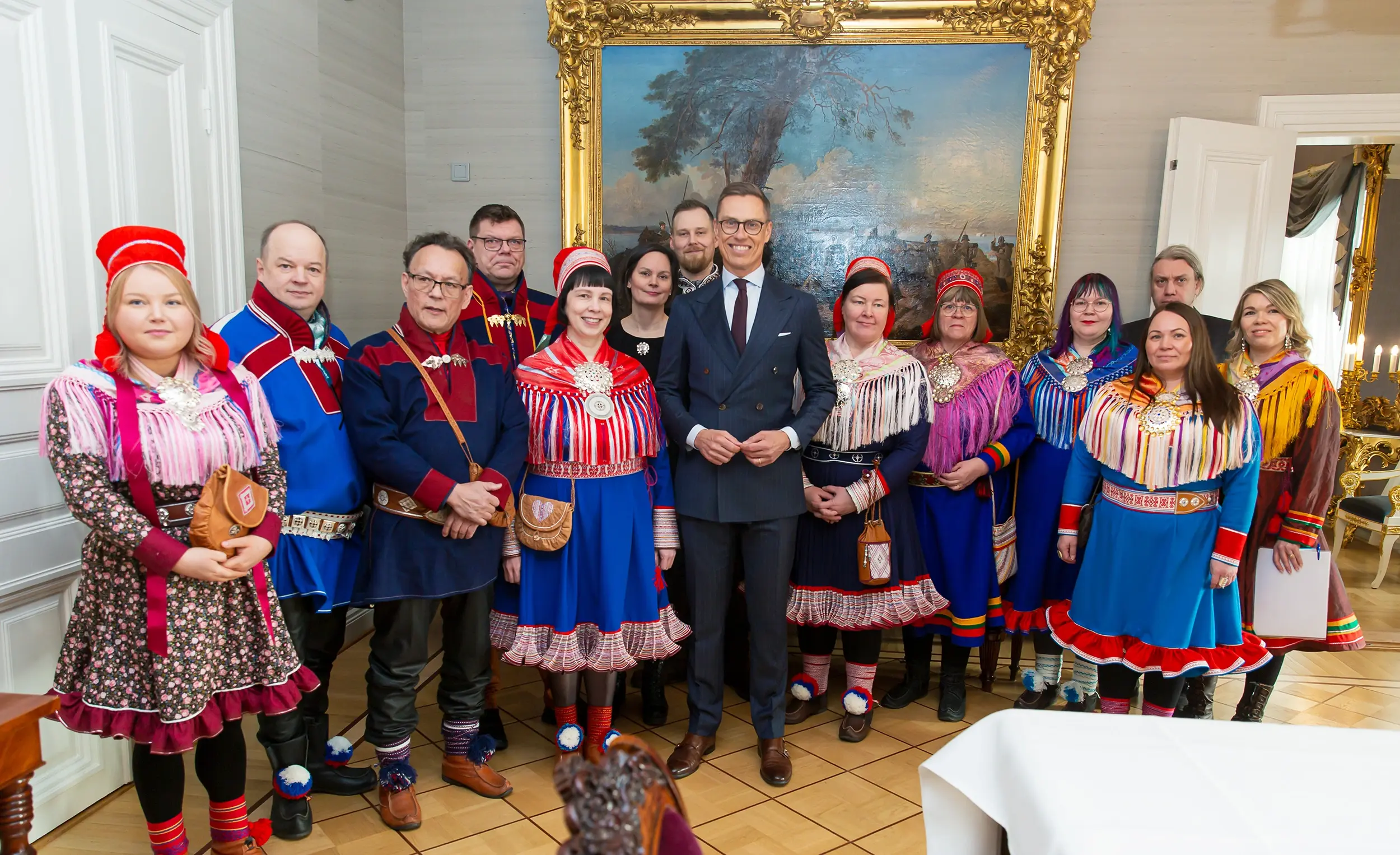
Understanding the significance of these reforms requires consideration of the Sámi people’s historical background, legal status, and long-standing challenges in Finland. The Sámi are an Indigenous people inhabiting a region known as Sápmi, which extends across northern Finland, Norway, Sweden, and part of Russia (the Kola Peninsula). They possess their own distinct languages, culture, traditions, and historical identity. Archaeological evidence indicates that human settlement in parts of Fennoscandia, encompassing the Scandinavian Peninsula, Finland, and the Kola Peninsula, dates back approximately 10,000 years, to the period following the retreat of the glaciers. However, the emergence of the Sámi population and its historical identity resulted from complex demographic and cultural processes unfolding over thousands of years[3]. Over recent decades, the Sámi have faced numerous challenges concerning their cultural rights, traditional lands, language, and right to self-determination. Their total population is estimated at approximately 75,000 to 100,000, of whom around 10,000 to 11,000 live in Finland, with a substantial proportion residing outside the traditional Sámi homeland. The Constitution of Finland recognizes the Sámi people’s right to maintain and develop their language and culture. Three Sámi languages are spoken in Finland: Northern Sámi, Inari Sámi, and Skolt Sámi. The principal institution representing the Sámi politically in Finland is the Sámi Parliament, which comprises 21 elected members and is based in Inari. This institution is responsible for addressing matters concerning the Sámi people’s language, culture, and status as an Indigenous people. It also participates in consultation and negotiation processes with government authorities on matters affecting Sámi rights and interests, including land use and natural resource management. Nevertheless, its powers do not extend to the general administration or oversight of all decisions concerning the Lapland region[4]. Under the amended Section 9 of the Act on the Sámi Parliament, government authorities and other bodies performing public administrative functions are required to cooperate and negotiate with the Sámi Parliament when preparing legislation, administrative decisions, and other measures of particular significance to the Sámi people. The purpose of this process is to reach an agreement with the Sámi Parliament or obtain its consent before decisions are made. Such negotiations must be conducted in a timely manner, in good faith, and under conditions that allow for genuine influence over the outcome of the decision-making process[5].
The inclusion of these mechanisms in the amended legislation is the result of years of advocacy aimed at strengthening Sámi rights. As the official representative body of the Sámi people in Finland, the Sámi Parliament had called for a revision of the Act on the Sámi Parliament for three decades, ever since its enactment in 1995. These efforts ultimately culminated in the adoption of the amendments on June 19, 2025, a day that Pirita Näkkäläjärvi, President of the Sámi Parliament, described as “a historic day[6].” The legislative reforms aim to advance the realization of the Sámi people’s right to self-determination and improve the conditions for exercising Sámi linguistic and cultural autonomy and for the operation of their Parliament. According to official government sources, the amendments entered into force on August 1, 2025[7]. One of the most significant aspects of the reform was the revision of the criteria for inclusion in the Sámi Parliament’s electoral roll, an issue that had generated legal and political disputes between Sámi representative institutions and Finnish judicial authorities in previous years. Under the new provisions, applicants for registration must identify themselves as Sámi and, in addition, satisfy one of two conditions: either they themselves, or at least one of their parents, grandparents, or great-grandparents, must have learned a Sámi language as their first language; or at least one of their parents must be, or have been, registered as an eligible voter in elections to the Sámi Parliament held on or after January 1, 2027[8]. The amendments also abolished the so-called “Lapp criterion,” which had allowed individuals to rely on historical records identifying their ancestors in land, taxation, or population registers. Under the new law, inclusion in the electoral roll serves solely as the basis for the right to vote and stand as a candidate in Sámi Parliament elections and does not, in itself, determine an individual’s ethnic identity. Furthermore, initial responsibility for reviewing appeals concerning the electoral roll has been transferred to an independent review board[9].
Alongside the Sámi people’s long-standing advocacy, decisions issued by United Nations human rights treaty bodies also played an important role in shaping these reforms. In 2019, the United Nations Human Rights Committee, in two cases concerning the Sámi Parliament’s electoral roll, found violations of rights guaranteed under the International Covenant on Civil and Political Rights (ICCPR) and emphasized the need to reform the electoral criteria in a manner that respected the Sámi people’s right to internal self-determination. Subsequently, in 2022, the United Nations Committee on the Elimination of Racial Discrimination (CERD), examining judicial interventions affecting the composition of the Sámi Parliament’s electoral roll, found that the political rights of the Sámi people had been violated under Article 5(c) of the International Convention on the Elimination of All Forms of Racial Discrimination (ICERD). The Committee called on Finland to revise the relevant legislation to ensure that the Sámi people’s rights to determine the composition of their own representative institution were protected[10].
Furthermore, in 2024, the United Nations Committee on the Rights of the Child (CRC) and the Committee on Economic, Social and Cultural Rights (CESCR) issued decisions concerning mineral exploration activities on traditional Sámi lands, finding that Finland had violated certain obligations under international human rights law. These decisions emphasized the need to assess the impacts of mining activities on cultural rights, traditional livelihoods, and the effective participation of Indigenous communities, including Sámi children. The three children involved in the case submitted to the Committee on the Rights of the Child were sisters aged 13, 15, and 16, belonging to a multigenerational Sámi reindeer-herding family. They alleged that mineral exploration activities would have unpredictable adverse consequences for the continuity of their culture and would limit their ability to benefit from the transmission of Sámi culture and traditional livelihoods[11].
Overall, pressure from human rights bodies, primarily those associated with the United Nations, played a significant role in the decision to reform the legal framework governing the Sámi people. Before the amendments to the Act on the Sámi Parliament were formally adopted and implemented, the Finnish Government had stated that it intended to implement the decisions issued by the United Nations Human Rights Committee concerning the Sámi Parliament’s electoral roll. The Government also announced that the latest amendments would bring the Act on the Sámi Parliament into conformity with international human rights treaties[12].
From an international human rights law perspective, the reform of the Act on the Sámi Parliament can be examined within the framework of Indigenous peoples’ right to internal self-determination. Articles 3 and 4 of the United Nations Declaration on the Rights of Indigenous Peoples (UNDRIP) recognize the rights to self-determination and autonomy or self-government in internal and local affairs, while Articles 18 and 19 emphasize participation through representative institutions chosen by Indigenous peoples themselves and the requirement to consult with them with the aim of obtaining their free, prior and informed consent. Article 26 of the Declaration also addresses Indigenous peoples’ rights to their traditional lands and resources. Nevertheless, the practical realization of these principles in Finland continues to face legal and implementation-related constraints, and the country has yet to ratify the International Labour Organization’s Indigenous and Tribal Peoples Convention, 1989 (No. 169).
Challenges and Responses
- Persistence of Certain Domestic Disputes
Despite the reform of the Act on the Sámi Parliament and the Finnish Government’s efforts to advance the reconciliation process, certain disputes between the central government and the Indigenous Sámi community remain unresolved. One of the most significant examples of these tensions is a complaint filed with the United Nations Human Rights Committee on June 24, 2025, by a group of Sámi reindeer herders from Muddusjärvi, which remained under consideration in 2026. The complainants have accused the Finnish Government of threatening their traditional livelihoods and cultural existence through extensive deforestation, inadequate climate policies, and the failure to ensure meaningful Sámi participation in decision-making processes. According to the complainants, forest destruction and the loss of winter grazing grounds for reindeer, compounded by the consequences of climate change, have placed the Sámi people’s centuries-old way of life in jeopardy. The case has also brought the issues of traditional land rights, self-determination, and Indigenous participation in projects involving natural resources and the green transition back to the forefront of disputes between the Sámi people and Finland’s central government. In this context, certain human rights organizations and Indigenous activists have called for more explicit legislation protecting Sámi land rights, the suspension of environmentally destructive projects, and full adherence to international standards concerning Indigenous peoples’ rights[13].
More broadly, although the Sámi Parliament possesses statutory rights to consultation and participation in certain decisions concerning land and natural resources, the Sámi people’s ultimate authority over much of their traditional territory remains limited. Approximately 90 percent of the land in the area designated as the Sámi Homeland in Finland is owned by the state, with much of its management entrusted to the state-owned enterprise Metsähallitus. Under these circumstances, disputes concerning the recognition of traditional ownership rights, the exploitation of natural resources, and the extent of meaningful Sámi participation in decisions affecting their lands remain unresolved. The Act on the Sámi Parliament, adopted in 1995, did not comprehensively resolve questions of ownership and use of traditional Sámi lands, and these disputes persisted over the following decades. Finnish authorities, however, argued that issues concerning Sámi land rights required more detailed examination before any legislation could be adopted. Since then, various government bodies, particularly Finland’s Ministry of Justice, have sought to examine the question of Sámi land rights. The Sámi Parliament also conducted an independent investigation into the matter and published a report on land ownership in September 2002, asserting that the Finnish state’s claims to ownership of land within the Sámi Homeland lacked a legally defensible basis[14].
- Domestic Responses
In December 2025, the Truth and Reconciliation Commission Concerning the Sámi People submitted its final report to the Finnish Government, the Sámi Parliament, and the Skolt Sámi Siida Council. The report was the culmination of four years of work, including consultations with nearly 400 Sámi individuals and 25 independent expert studies. Established in 2021 through cooperation between the Finnish Government and Sámi representative institutions, the Commission was tasked with examining the historical and contemporary dimensions of discrimination, rights violations, and state assimilation policies targeting the Sámi people. The report presented a series of recommendations and proposed measures aimed at advancing reconciliation, redressing historical injustices, and strengthening Sámi cultural and linguistic rights. Finnish officials, including Prime Minister Petteri Orpo, described the report as “historic” and “necessary” and emphasized the importance of giving its recommendations serious consideration. The Acting President of the Sámi Parliament also stated that the time had come for the government to change its traditional approach to Sámi affairs. Beyond its legal and political dimensions, the report also sought to raise public awareness of the Sámi people’s status as an Indigenous people of Finland[15].
The Swedish People’s Party of Finland (SFP/RKP) also described the legislative reform as “a historic step for Sámi rights.” Anders Adlercreutz, the party’s president and Finland’s Minister of Education, stated that the legislation had finally been adopted after more than a decade of political efforts and would strengthen the Sámi people’s right to self-determination in matters affecting them. He further emphasized that the decision formed part of Finland’s responsibility, as a state governed by the rule of law, to fulfill its international human rights obligations and represented a response to repeated criticisms and recommendations from United Nations bodies concerning the situation of Sámi rights. The party, which had been among the principal supporters of reforming the Act on the Sámi Parliament since 2014, regarded its eventual adoption as recognition of the Sámi people’s right to autonomy under the Finnish Constitution. The Swedish People’s Party of Finland also announced that its official name would henceforth be registered and used in all three Sámi languages[16].
Approximately one year before the adoption of the amendments to the Act on the Sámi Parliament, the Finnish Human Rights Centre published a question-and-answer report aimed at clarifying the circumstances of the Sámi community, their demands—including the reform of the Act—and other issues affecting them. The report identified the Sámi as an Indigenous people recognized under the Finnish Constitution and emphasized their rights to preserve their language, culture, and traditional way of life, as well as to participate in decisions concerning their lands. It also examined the structure and status of the Sámi Parliament as the official representative institution of the Sámi people in Finland, explaining that the Parliament is responsible for maintaining and developing the three Sámi languages, supporting traditional livelihoods, and safeguarding Sámi culture and ways of life. Another section of the report stressed the need to strengthen mechanisms for dialogue and consultation between the government and the Sámi Parliament to ensure that decisions concerning Indigenous affairs, particularly in the cultural, economic, and environmental spheres, are made with the genuine and effective participation of the Sámi community. The report also sought to clarify several common misconceptions about Indigenous peoples’ rights, the concept of Sámi autonomy, and the question of veto power, demonstrating that Sámi demands extend beyond cultural matters to encompass broader dimensions of land rights, political participation, and historical justice[17].
- International Responses
In a report published in June 2025, ICT, an Indigenous news outlet affiliated with IndiJ Public Media in the United States, described the adoption of amendments to Finland’s Act on the Sámi Parliament as a historic development toward strengthening the Sámi people’s right to self-determination. Referring to the approval of the amendments by 150 votes to 27, the outlet identified the abolition of the so-called “Lapp criterion” as one of the most significant achievements of the new legislation. This provision had previously allowed individuals to be included in the Sámi Parliament’s electoral roll on the basis of historical records concerning their ancestors. The report also highlighted the revision of language-based voter registration criteria and the positive response of the President of the Sámi Parliament, presenting the legislative reform as the outcome of years of advocacy by the Sámi community and criticism from international human rights bodies[18].
The report The Indigenous World 2026, published by the International Work Group for Indigenous Affairs (IWGIA), also devoted particular attention to the amendments to Finland’s Act on the Sámi Parliament, describing them as one of the most significant developments concerning Indigenous peoples’ rights in Northern Europe. The report emphasized that the legislative reform had finally been achieved after years of delays, legal disputes, and pressure from international human rights bodies, with its principal objective being to end long-standing violations of the Sámi people’s right to self-determination. It further noted that the question of determining eligibility to vote in Sámi Parliament elections had repeatedly drawn criticism in previous years from United Nations Special Rapporteurs, the Human Rights Committee, and the Committee on the Elimination of Racial Discrimination. The report also assessed the new amendments as a step toward reducing state interference in the Sámi people’s internal affairs and strengthening their autonomy in linguistic and cultural matters. Nevertheless, it simultaneously stressed that challenges concerning land rights, natural resource extraction, mining projects, and security and military policies in the Sápmi region persist and may adversely affect the Sámi people’s traditional livelihoods and cultural life[19].
In the most recent international developments, the United Nations Human Rights Committee, in March 2026, reviewed the measures taken by Finland to implement its previous Views concerning the Sámi Parliament’s electoral roll and decided to close the follow-up procedure in one of the relevant cases, assessing the implementation of its Views as satisfactory. Nevertheless, in its concluding observations adopted on August 25, 2026, the United Nations Committee on the Elimination of Racial Discrimination, while welcoming the reform of the Act on the Sámi Parliament, emphasized that the full realization of the Sámi people’s rights continued to face significant challenges. The Committee called on the Finnish Government to ensure meaningful Sámi participation in decision-making processes and to refrain from adopting decisions affecting their rights without obtaining their free, prior and informed consent. It also stressed the need to strengthen protection of the Sámi people’s rights to their traditional lands, natural resources, and traditional livelihoods[20].
Conclusion
The reform of Finland’s Act on the Sámi Parliament in June 2025, following three decades of advocacy by the Sámi people and repeated criticism from United Nations human rights monitoring bodies, represents a significant development in the legal framework governing their cultural and linguistic self-government. The revision of voter registration criteria, the abolition of the “Lapp criterion,” and the strengthening of mechanisms for the Sámi Parliament’s participation in government decision-making are among the most important achievements of these reforms. Nevertheless, the publication of the final report of the Truth and Reconciliation Commission Concerning the Sámi People in December 2025, together with continuing disputes over ownership of traditional lands, natural resource exploitation, and the protection of traditional livelihoods, demonstrates that reforming the structure of political representation alone cannot adequately address the historical consequences of assimilation policies or the structural limitations on the Sámi people’s right to self-determination. The assessment issued by the United Nations Committee on the Elimination of Racial Discrimination in August 2026 further confirms that progress in recognizing political and cultural rights has yet to translate into full guarantees of the Sámi people’s effective participation in decisions affecting their lands and way of life.
From the perspective of international law, these developments must be assessed in light of Articles 25 and 27 of the International Covenant on Civil and Political Rights (ICCPR), concerning participation in public affairs and the protection of minorities’ cultural rights, respectively, while also taking into account the right to self-determination enshrined in Article 1 of the Covenant. Furthermore, Article 5(c) of the International Convention on the Elimination of All Forms of Racial Discrimination (ICERD) requires the guarantee of equal enjoyment of political rights, while Article 15 of the International Covenant on Economic, Social and Cultural Rights (ICESCR) is also relevant to protecting the right to participate in cultural life. Regarding standards specifically addressing Indigenous peoples’ rights, Articles 3, 4, 18, and 19 of the United Nations Declaration on the Rights of Indigenous Peoples (UNDRIP) emphasize the rights to self-determination, self-government, and participation through representative institutions chosen by Indigenous peoples themselves. Articles 26 and 32 of the Declaration, meanwhile, elaborate on rights relating to traditional lands and resources and the requirement to consult with Indigenous peoples with the aim of obtaining their free, prior and informed consent. Although the Declaration is not a legally binding treaty and Finland has not ratified the International Labour Organization’s Indigenous and Tribal Peoples Convention, 1989 (No. 169), the country’s treaty obligations, together with the interpretations provided by United Nations human rights monitoring bodies, establish an important legal basis for assessing the effectiveness of protections afforded to Sámi rights. From this perspective, the principal criterion for evaluating the recent reforms is not merely the legal recognition of rights, but the extent to which the Sámi people can genuinely influence decisions affecting the continuity of their cultural identity, their access to resources, and the survival of their traditional livelihoods.
Within this framework, it is essential that the Finnish Government ensure the implementation of Sections 9, 9a, and 9b of the amended Act on the Sámi Parliament through a transparent and assessable mechanism that guarantees negotiations with Sámi representatives before decisions affecting their rights are made, while requiring documentation of the outcomes, points of disagreement, and the manner in which Sámi perspectives are reflected in final decisions. Furthermore, the authorization of mining, forestry, and energy projects on traditional Sámi lands should be accompanied by independent and participatory assessments of their cumulative environmental, cultural, and livelihood impacts and, in accordance with the recommendations issued by the Committee on the Elimination of Racial Discrimination in 2026, should be conditional upon obtaining the free, prior and informed consent of affected communities. Regarding land rights, the establishment of an independent mechanism agreed upon by the parties to examine claims concerning land ownership and traditional rights of use, with the participation of the Sámi Parliament and the state-owned enterprise Metsähallitus, could provide a basis for resolving long-standing disputes. In addition, the Government should pursue the implementation of the recommendations of the Truth and Reconciliation Commission through an action plan with a defined timetable, dedicated funding, and measurable indicators, under the oversight of Sámi representative institutions. Publishing public reports on progress in implementing these measures and incorporating the results into the follow-up process for the Committee on the Elimination of Racial Discrimination’s recommendations, particularly within the two-year deadline established for reporting on Sámi land rights and traditional livelihoods, could provide an objective benchmark for assessing Finland’s transition from legislative reform to the practical realization of Indigenous peoples’ rights.
References
[1] Yle. (2025, June 19). Finland approves reform of long-contested Sámi Parliament Act. Yle. From: https://yle.fi/a/74-20168666
[2] Uusivaara, T. (2025, June 19). Parliament Approved the Amendment to the Sámi Parliament Act – Government Coalition Lines Fractured. Lapin Kansa. From: https://www.lapinkansa.fi/eduskunta-hyvaksyi-saamelaiskarajalain-muuttamisen/11674931
[3] Riekkinen, M., & Suksi, M. (2019, November). The Sámi Assembly in Finland. AAW. From: https://www.world-autonomies.info/non-territorial-autonomies/finland
[4] Szumski, C. (2025, December 16). Finland passes landmark Sami parliament reform, bolsters indigenous self-governance. Euractiv. From: https://www.euractiv.com/news/finland-passes-landmark-sami-parliament-reform-bolsters-indigenous-self-governance/
[5] Ministry of Justice, Finland. (n.d). Rights of the Sámi people, Ministry of Justice safeguards the rights of the Sámi people. Ministry of Justice, Finland. From: https://oikeusministerio.fi/en/rights-of-the-sami-people
[6] Sámi Parliament. (2025, June 19). The Parliament of Finland has passed the amendment to the Sámi Parliament Act – Thirty years of work by the Sámi Parliament pays off. Sámi Parliament. From: https://samediggi.fi/en/news/the-parliament-of-finland-has-passed-the-amendment-to-the-sami-parliament-act-thirty-years-of-work-by-the-sami-parliament-pays-off/
[7] Finnish Government. (2025, June 27). Reformed Act on the Sámi Parliament. Finnish Government. From: https://valtioneuvosto.fi/en/-/1410853/reformed-act-on-the-sami-parliament
[8] TEC News., & AFP. (2025, June 20). Finland Approves Self-Governance Law for the Sami. The European Conservative. From: https://europeanconservative.com/articles/news-corner/finland-approves-self-governance-law-for-the-sami/
[9] Helsinki Times. (2025, June 19). Finland passes Sámi Parliament Act reform after years of delays. Helsinki Times. From: https://www.helsinkitimes.fi/finland/finland-news/politics/27191-finland-passes-sami-parliament-act-reform-after-years-of-delays.html
[10] The Office of the High Commissioner for Human Rights. (2025, August 26). Legal reform – Finland. OHCHR. From: https://knowledgegateway.ohchr.org/escr-hub/practices/tekizj0h1ozyb17vozhcoi7j
[11] UN. (n.d). Finland must respect the rights of Sámi Indigenous people to traditional lands. UN. From: https://unric.org/en/finland-must-respect-the-rights-of-sami-indigenous-people-to-traditional-lands/
[12] Yle. (2025, June 4). Long-delayed bill on indigenous Sámi Parliament moves toward final vote by Finnish MPs. Yle. From: https://yle.fi/a/74-20165747
[13] Gesellschaft für bedrohte Völker. (2026, January 6). Lawsuit against Finnish government – UN examines historic complaint by the Sámi. Gesellschaft für bedrohte Völker. From: https://www.gfbv.de/en/news/indigene-rechte-europa-sami-finnland-un-beschwerde0-11917/
[14] Minority Rights Group. (n.d). Sami in Finland. Minority Rights Group. From: https://minorityrights.org/communities/sami/
[15] The Sámi Truth and Reconciliation Commission in Finland. (2025, December 5). The Sámi Truth and Reconciliation Commission in Finland submitted its final report. The Sámi Truth and Reconciliation Commission in Finland. From: https://sdtsk.fi/en/2025/12/05/the-sami-truth-and-reconciliation-commission-in-finland-submitted-its-final-report/
[16] Svenska folkpartiet i Finland. (2025, June 19). Sámi Parliament Act Approved – A Historic Step for Sámi Rights. Svenska folkpartiet i Finland. From: https://sfp.fi/fi/artikkelit/saamelaiskarajalaki-hyvaksytty-historiallinen-askel-saamelaisten-oikeuksille/
[17] Ihmisoikeuskeskus. (n.d). Reform of the Sámi Parliament Act. Ihmisoikeuskeskus. From: https://www.ihmisoikeuskeskus.fi/julkaisut2/ihmisoikeuskeskuksen-julkaisut/saamelaiskarajalain-uudistus/
[18] Ruhangariyo, D. (2025, June 25). Global Indigenous: Historic wins in Finland. ICT. From: https://ictnews.org/news/global-indigenous-historic-wins-in-finland/
[19] IWGIA. (2026, April 22). Indigenous peoples in Sápmi. IWGIA. From: https://iwgia.org/en/sapmi/6000-iw-2026-sapmi.html
[20] Ministry for Foreign Affairs of Finland. (2026, August 25). UN Committee on the Elimination of Racial Discrimination issues recommendations to Finland. Finnish Government. From: https://valtioneuvosto.fi/en/-/un-committee-on-the-elimination-of-racial-discrimination-issues-recommendations-to-finland