The Great Famine in Iran
The fires of World War I engulfed neutral countries such as Iran the most and had irreparable consequences. A crime that over the years has never given the injured a chance to be thoroughly investigated and prosecuted. The documents of those events are still classified in a country like the United Kingdom as a major player. One of the devastating consequences of the First World War was the famine of 1917-1919 in some countries of Southwest Asia, especially Iran.
Foreign forces have been present in Iran for many years, specifically after the 1907 agreement between Russia and Britain. Most of all, Britain was present in the southern regions of Iran with the establishment of the southern police. World War II intensified this presence and influence. With the withdrawal of Russia from Iran following the October Revolution of 1917, as well as the withdrawal of the Ottomans from the western cities of Iran after the culmination of its defeat in World War I, it practically makes Britain the only influential player in the political developments of this historical period throughout Iran.
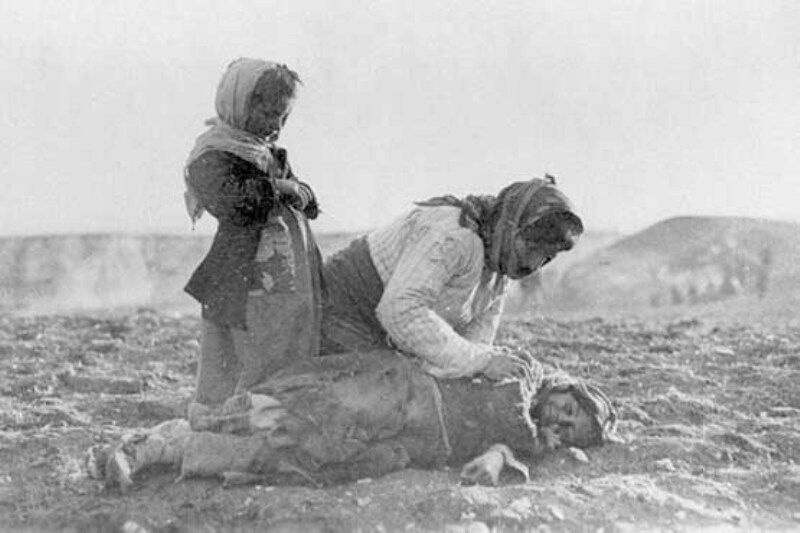
Various narratives of famine and the causes of its formation have been narrated during these years; According to Mohammad Gholi Majd, the author of The Great Famine, whose source of information is the archives of reports by US diplomats in Iran and newspapers of the time, about half of the Iranian people died because of this famine. He puts the death toll at 8 to 10 million and even more. He considers the main cause of this famine to be primarily due to the British government’s fiscal policies in Iran. The first cause of famine was the feeding of countless British troops by Iranian grain; this shortage of food in the Iranian market led to rampant inflation and eventually hoarding and intensification of famine. Britain could import all or part of the grain from India; but in order not to waste the capacity of their navy, they decided to supply power to Iran; Millions of Iranians die at the cost of running out of British naval capacity. In addition, at that time the Iranian government was severely weakened. The average lifespan of each cabinet was 4.5 4.5 months. The country was in turmoil and the government did not have enough revenue to manage the crisis. In this situation, the United Kingdom refused to grant Iran full rights to oil sales revenues and customs revenues. These are the three main causes of famine mentioned.
There is a narrative in front that has been more welcomed by some western centers. These researchers assess the role of foreign forces, most notably the United Kingdom, people. They accept the principle of famine on the influence of foreign occupiers, including Russia along with the United Kingdom, they emphasize and believe that the famine occurred primarily due to natural causes and the spread of the disease. Unfortunately, the lack of food and grains was associated with the spread of diseases such as influenza, cholera, typhus, etc. Some consider the outbreak to be due to the movement of troops from the United States and Europe to Asia and the southwest of the continent. Meanwhile, British and Russian measures to support their soldiers, along with blocking grain transfers in the country to prevent rivals and enemies from gaining access to food, had exacerbated famine and increased casualties. Most narrators estimate the number of famine deaths at less than 4 million. One-third, one-fourth, one – fifth tenth of the total population are ratios cited by various authors to express the number of deaths.
Another point that has led to this difference of opinion is rooted in the discrepancy that occurred in mentioning the statistics of the Iranian population before World War II. Iran’s population in the 1920s is estimated at nine to eleven million. Therefore, the rate of population decline compared to before World War II is considered as the number of casualties.
What is clear and agreed upon by most scholars is the role, albeit minimal, of foreign powers, especially the United Kingdom, in exacerbating famine and death in Iran. There is no one to deny the existence of famine and the death of at least 1 million Iranians in those years; rather, the differences go back to the dimensions of this crisis. Although disease and famine had spread throughout Iran, the number of British military casualties, sometimes estimated at as many as 400,000, was relatively small. This is a sign of the lack of food and medical facilities among the people, unlike the military.
Thereore, even if we consider the minimal narrative, the massacre of 1 million Iranians in front of the eyes of the occupiers and because of the implementation of utilitarian policies is a great crime. Changing the number of casualties from 10 million to 2-3 million cannot make a significant difference in the severity of this crime.
Now, first of all, the government and research centers must examine all historical documents, including the correspondence of foreign officials present in Iran, public reports, etc., to arrive at a single or similar account of the event. On the other hand, the international institutions and the occupying countries should be demanded in those years to publish the documents related to that period and to provide a more detailed study. In addition to these measures, given the consensus on the events of that time, sufficient efforts should be made to condemn the adversaries and seek compensation if possible.