

Sahar Barati Borujeni
PhD Student in International Relations, University of Isfahan
Introduction
The plan to transfer asylum seekers from European countries to Rwanda, particularly following its initial announcement by the United Kingdom government, has become one of the most controversial and debated issues in the field of migration and human rights in recent years. This plan, which was introduced with the stated aim of countering irregular migration and curbing human smuggling networks, has faced widespread opposition from international organizations, human rights institutions, and civil society activists. While proponents of the scheme present it as a mechanism to better manage the refugee crisis and reduce the appeal of dangerous migration routes, critics consider it a blatant violation of international commitments regarding the protection of refugees—most notably the 1951 Refugee Convention—and inconsistent with ethical and humanitarian principles.
The Core of the Initiative and the Transfer Agreement
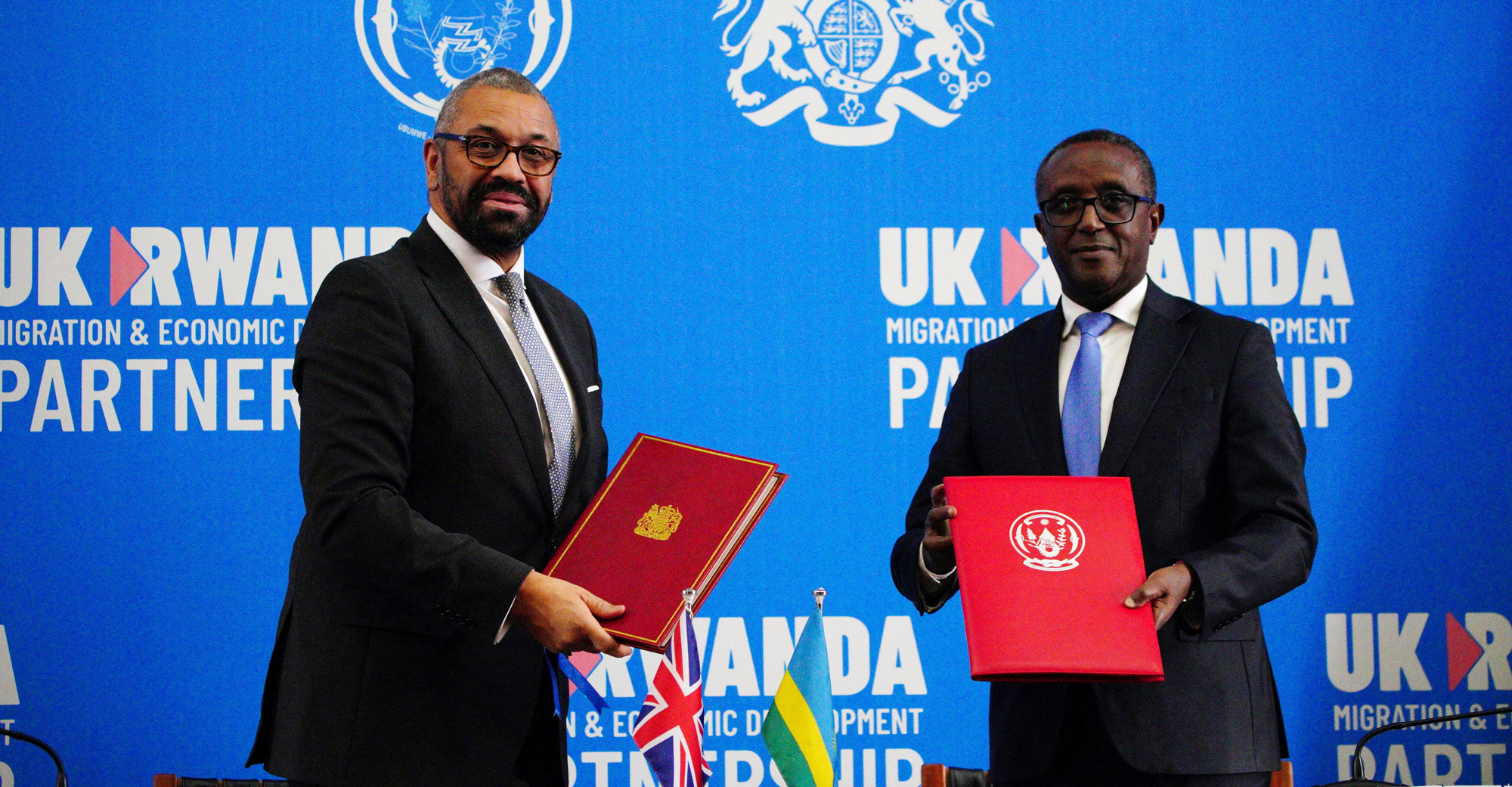
The central focus of the asylum transfer plan to Rwanda initially revolved around the agreement between the United Kingdom and Rwanda. In April 2022, the UK government officially announced what became known as the “Migration and Economic Development Partnership.” Under this framework, asylum seekers who entered the UK irregularly would be transferred to Rwanda, where their claims would be processed. If their applications were accepted, they would be resettled in Rwanda, while rejected applicants would remain there or be returned to their countries of origin—with no possibility of resettlement in the United Kingdom. The UK government justified this plan as a significant step to “stop the boats” and prevent irregular crossings of asylum seekers through the English Channel (UK-Rwanda Asylum Partnership, n.d.).
Similar Approaches by Other European States
Following the UK’s announcement, similar debates surfaced in other European countries. Denmark, as one of the most restrictive states in terms of migration policies, also began seriously considering the transfer of asylum seekers to third countries, including Rwanda. Although no formal agreement comparable to that of the UK has been finalized between Denmark or other European countries and Rwanda, the idea of outsourcing asylum responsibilities to non-EU countries has attracted significant political and legal attention across the continent.
This approach is being advanced in the context of mounting migratory pressures and domestic challenges in asylum management, presented as a strategy to alleviate burdens on European states and counter irregular migration. The notion of a “safe third country” holds central importance within these discussions. According to both international and national legal frameworks, asylum seekers may be transferred to a third country if that country is deemed “safe” and adheres to the principle of non-refoulement. Nevertheless, the definition and implementation of “safe third country” with regard to Rwanda—given the country’s human rights record—remains one of the most contentious issues dividing advocates and opponents of the plan.
Views of Human Rights Organizations
- Amnesty International
Amnesty International, from the outset, has been among the principal critics of the plan, repeatedly warning about its disastrous consequences. Its central positions can be summarized as follows:
- Violation of the 1951 Refugee Convention: Amnesty asserts that the plan contravenes the core principle of non-refoulement, guaranteed by the 1951 Refugee Convention and its 1967 Protocol. This principle prohibits the return of refugees to any country where their life or freedom would be at risk. By transferring asylum seekers to Rwanda, serious concerns arise regarding their access to fair asylum procedures and the risk of future forced return to their countries of origin.
- Abdication of Responsibility: Amnesty emphasizes that outsourcing asylum responsibilities represents an evasion of international obligations. Developed states are required to process asylum claims within their own territories and provide protection, rather than shifting these duties to other countries.
- Concerns Regarding Rwanda’s Human Rights Record: Amnesty highlights significant concerns about human rights in Rwanda. Despite certain advances, there are widespread reports of political repression, restrictions on freedom of expression, and other rights violations. These factors cast serious doubt on Rwanda’s designation as a “safe country” (Rwanda, 2022).
- The United Nations High Commissioner for Refugees (UNHCR)
The UNHCR has also strongly opposed the plan. The agency stresses that refugees must not be forcibly transferred to another country unless very specific and safe conditions are ensured. Furthermore, the UNHCR argues that outsourcing asylum responsibilities undermines the global refugee protection regime and could initiate a “race to the bottom” in standards of asylum protection (UNHCR ‘Firmly’ Opposing UK-Rwanda Offshore Migration Processing Deal, 2022).
- Other Human Rights Organizations
Organizations such as the Refugee Council, Médecins Sans Frontières (MSF), and various NGOs have raised similar concerns. They point to the practical challenges of transferring asylum seekers, limited access to adequate legal advice, and risks of inequality in the adjudication process. These groups argue that instead of such measures, governments should focus on establishing safe and legal pathways for asylum, expediting asylum processing, and investing in integration programs.
Challenges Confronting the Plan
- Legal and Human Rights Challenges: As noted, the plan faces substantial legal hurdles, including potential violations of the 1951 Refugee Convention and the European Convention on Human Rights. Domestic courts across Europe as well as the European Court of Human Rights (ECHR) may suspend or even annul the plan. Lengthy and costly legal battles constitute one of the primary obstacles to its full implementation.
- Practical and Logistical Challenges: The implementation of such a scheme is logistically complex. Identifying, transferring, and resettling thousands of asylum seekers in another country requires meticulous planning, massive financial resources, and appropriate infrastructure. Providing housing, food, healthcare, education, and employment opportunities poses a considerable burden, raising doubts about Rwanda’s capacity to manage such responsibilities at scale.
- Financial Challenges: The plan is highly expensive. UK financial contributions to Rwanda under this arrangement are substantial. Critics contend that such funds could be better allocated toward improving domestic asylum systems or investing in safe and legal migration channels, rather than outsourcing responsibility.
- Political and International Challenges: The plan has faced widespread condemnation at the international level and risks damaging the diplomatic relations and credibility of European states in global forums. Other countries may refuse to adopt similar measures, leaving proponents politically isolated. Moreover, the plan could weaken the international asylum system by encouraging replication of such outsourcing models globally.
- Monitoring and Oversight Concerns: Ensuring the protection of asylum seekers’ rights in Rwanda poses serious difficulties for sending states. Independent access for human rights organizations and international monitors may be restricted, further intensifying concerns about transparency and accountability.
- Impact on Human Smuggling Networks: Although the plan is justified as a tool to combat human smuggling, critics argue that it will not dismantle such networks but rather incentivize them to devise even more dangerous and clandestine routes. Furthermore, the plan fails to address the root causes of forced migration—such as conflicts, poverty, and persecution—and merely seeks to manage its consequences (Walsh, 2024).
Conclusion
The transfer of asylum seekers from European states to Rwanda—epitomized by the UK-Rwanda agreement—constitutes a complex and multifaceted phenomenon that has emerged as one of the most controversial issues in migration and human rights policy in recent years. From a legal perspective, the plan confronts serious challenges, foremost among them the potential violation of the non-refoulement principle guaranteed by the 1951 Refugee Convention. Questions surrounding Rwanda’s designation as a “safe third country,” in light of its human rights record and the right of asylum seekers to fair adjudication, remain pressing concerns.
Ultimately, the evidence suggests that the transfer plan offers no sustainable solution to the global refugee challenge. Instead, it risks exacerbating human rights crises and undermining fundamental principles of refugee protection at the international level. Rather than pursuing such policies, the international community and European countries should prioritize strengthening international cooperation, creating safe and legal migration pathways, improving domestic asylum systems, and investing in refugee integration programs. Respect for human dignity and adherence to international law must remain the cornerstone of asylum and migration policy.
References
- UK-Rwanda Asylum Partnership. (n.d.). https://www.unhcr.org/uk/what-we-do/unhcr-recommendations-uk-government/uk-rwanda-asylum-partnership
- UNHCR ‘Firmly’ opposing UK-Rwanda offshore migration processing deal. (2022, April 14). UN News. https://news.un.org/en/story/2022/04/1116342
- Rwanda. (2022). https://www.amnestyusa.org/. Retrieved June 10, 2025, from https://www.amnestyusa.org/countries/rwanda/#:~:text=It%20had%20previously%20raised%20concerns,seekers%20and%20inadequate%20legal%20representation
- Walsh, P. W. (2024, August 13). Q&A: The UK’s former policy to send asylum seekers to Rwanda – Migration Observatory. Migration Observatory. https://migrationobservatory.ox.ac.uk/resources/commentaries/qa-the-uks-policy-to-send-asylum-seekers-to-rwanda/


