

Prof. Alireza Arashpour
Faculty Member, Department of Law, University of Isfahan
Introduction
Recent developments surrounding the Strait of Hormuz have elevated this strategic waterway from a purely geopolitical subject to one of the central issues within the law of the sea. Under such circumstances, any meaningful analysis of its status necessitates moving beyond general observations and engaging with a coherent conceptual framework capable of properly articulating the relationship between coastal State sovereignty, freedom of navigation, and international legal norms.
Within this framework, two fundamental questions form the core of the discussion. First, whether a potential action by Iran—such as the closure of the Strait of Hormuz or the imposition of tolls on transiting vessels—can be justified under the principles and rules of international law, particularly in light of the 1982 United Nations Convention on the Law of the Sea (UNCLOS). Second, in the absence of Iran’s full ratification of this Convention, how the binding nature of customary international law governing such regimes should be assessed.
Addressing these questions inevitably directs us to one of the foundational debates in international law: the sources of State obligations. Such obligations arise either through treaties and conventions or through customary international law, established via consistent State practice accompanied by opinio juris, that is, a belief in legal obligation.
Accordingly, a precise analysis of key concepts such as “straits used for international navigation,” “innocent passage,” and “transit passage” constitutes a necessary precondition for any legal position in this field. Only through such an approach can a coherent and academically grounded assessment of the legal status of the Strait of Hormuz—and the scope of Iran’s authority in this regard—be achieved.
The Conceptual Distinction Between Innocent Passage and Transit Passage: The Point of Departure for the Legal Analysis of Straits
To engage rigorously with the legal analysis of the Strait of Hormuz, one of the first—and indeed most decisive—steps is to clarify the distinction between two foundational concepts in the law of the sea: “innocent passage” and “transit passage.” Although these terms are sometimes used interchangeably in general discourse, they in fact represent two distinct legal regimes, each carrying fundamentally different implications for coastal States.
In contemporary legal literature, it is commonly asserted that vessels navigating international straits enjoy the right of transit passage, whereas the concept of innocent passage applies to navigation through the territorial sea. This initial distinction raises a critical legal question: which of these regimes governs the Strait of Hormuz, and to what extent Iran’s interpretation of these concepts aligns with the prevailing understanding reflected in the 1982 UNCLOS.
Before addressing this issue, it is necessary to define precisely what constitutes an “international strait.” Within the framework of the law of the sea, straits are understood as maritime passages connecting two parts of the high seas or exclusive economic zones (EEZs). This definition is not merely geographical; it carries significant legal implications. Such straits typically lie along major global shipping routes and serve as vital corridors for the transportation of goods and energy. Their role in shortening maritime routes renders them indispensable to the efficiency of international trade.
Within this context, the concept of innocent passage emerges as one of the classical rules of the law of the sea. Pursuant to Article 17 of UNCLOS, all ships—whether belonging to coastal or landlocked States—enjoy the right of innocent passage through the territorial sea. This rule reflects the effort of international law to strike a balance between the sovereignty of coastal States and the necessity of maintaining uninterrupted maritime navigation.
At the same time, it must be noted that the law of the sea broadly encompasses two distinct domains: “maritime zones” and “international waterways.” The 1982 UNCLOS—often referred to as the “Constitution of the Oceans”—with its more than 300 provisions, seeks to regulate both domains within a comprehensive and integrated legal framework. This breadth and complexity have made the interpretation of its concepts one of the major challenges in contemporary international law.
From this perspective, the distinction between innocent passage and transit passage is not merely theoretical. Rather, it constitutes a pivotal factor in determining the scope of authority of coastal States—including Iran—in relation to straits such as Hormuz. Indeed, the interpretation adopted with respect to these two concepts can lead to entirely different legal conclusions regarding the permissibility of restricting passage, imposing charges, or exercising control over such waterways.
Accordingly, a precise analysis of these concepts is not only a prerequisite for understanding the legal regime of the Strait of Hormuz, but also forms the fundamental basis for any legal position concerning the current developments affecting this strategic maritime corridor.
Conditions and Limits of Innocent Passage: From the Recognition of a Right to the Possibility of Suspension
Following the clarification of the distinction between innocent passage and transit passage, the next step in the legal analysis is to examine in detail the conditions under which innocent passage is realized, as well as the scope of authority vested in the coastal State in relation to it. This aspect of the discussion represents the point of intersection between the principle of freedom of navigation and the sovereign prerogatives of States.
Within the framework of the 1982 United Nations Convention on the Law of the Sea (UNCLOS), innocent passage is a conditional concept, the realization of which depends upon compliance with a set of clearly defined requirements. The first fundamental condition is that passage must be undertaken solely for the purpose of navigation; in other words, the transit must be aimed at proceeding from one point to another, rather than engaging in independent activities within the maritime domain of the coastal State. This requirement distinguishes passage from any form of use that exceeds its purely transitory nature.
Alongside this condition, a second decisive criterion is that such passage must not be prejudicial to the peace, good order, or security of the coastal State. According to Article 19 of UNCLOS, any conduct that undermines these elements renders the passage “non-innocent.” The Convention provides an illustrative—though not exhaustive—list of such activities, including: the threat or use of force against the sovereignty or territorial integrity of the coastal State; military exercises or weapons practice; intelligence-gathering activities to the detriment of national security; acts of serious environmental pollution; fishing operations; and other activities incompatible with the notion of mere passage. This enumeration demonstrates that the “innocent” character of passage is not presumed in a simplistic manner, but rather depends upon strict adherence to a defined set of behavioral standards.
At this juncture, one of the most significant theoretical questions in the law of the sea arises: Is innocent passage an absolute right of vessels, or does the coastal State retain a degree of control over it? While the text of UNCLOS—particularly Article 17—recognizes innocent passage as a right available to all ships, including those of landlocked States, this right is neither absolute nor immune from limitation.
Indeed, Article 25 of UNCLOS establishes a form of balance between this right and the authority of the coastal State. Under this provision, the coastal State may, under specific circumstances, temporarily suspend innocent passage in designated areas of its territorial sea. Although such suspension constitutes an exception to the general principle of freedom of navigation, it is itself subject to strict and limiting conditions.
First, the suspension must be based on genuine and objectively verifiable security considerations; mere political or economic motivations cannot justify such a measure. Second, the suspension must be temporary rather than permanent, as its purpose is to address a particular situation rather than to fundamentally alter the legal regime governing passage. Third, the coastal State is under an obligation to provide prior and adequate notice of the suspension, enabling other States to adjust their conduct accordingly. Finally, the measure must be applied without discrimination among States; selective restriction targeting certain States while exempting others would be incompatible with international law.
Taken together, these conditions indicate that while innocent passage is recognized as a right of vessels, it simultaneously incorporates mechanisms for limited intervention by the coastal State. This duality reflects the broader effort of international law to reconcile the freedom of navigation with the preservation of State sovereignty and security.
Ultimately, innocent passage should not be understood as a simple or static rule, but rather as a complex legal mechanism: one that, under normal circumstances, guarantees the smooth flow of maritime navigation, yet, in times of crisis, may serve as a legal instrument for regulatory control and security management by the coastal State.
Transit Passage: The Apex of the Preference for Freedom of Navigation over Coastal Sovereignty
In completing the discussion on innocent passage, it is essential to examine transit passage as the most advanced—and, at the same time, most restrictive—legal regime vis-à-vis coastal State authority in international straits. This concept, articulated in Articles 37 and 38 of UNCLOS, effectively reflects the prioritization by the international legal order of maintaining the uninterrupted flow of navigation through critical maritime chokepoints.
In precise terms, transit passage refers to the freedom of navigation and overflight through straits, provided that such passage is conducted in a continuous and expeditious manner. This qualification is of particular importance, as it underscores that the purpose of transit passage is strictly the act of traversing the strait, rather than utilizing it as a space for independent operational or economic activities. In other words, transit passage constitutes a functional freedom, not a right to stop, engage in activities, or exercise control within the maritime domain.
What distinguishes transit passage as a unique regime in the law of the sea are its fundamental differences from innocent passage—differences that directly affect the extent of coastal State sovereignty and are indispensable for understanding the legal status of straits such as Hormuz.
The first distinction lies in the scope of application. Transit passage is broader than innocent passage, as it applies not only to ships but also to aircraft. This means that the airspace above the strait is likewise subject to a regime of freedom, thereby significantly limiting the regulatory authority of the coastal State.
The second—and arguably most critical—distinction concerns the possibility of suspension. While innocent passage may be suspended under specific conditions, transit passage is, as a rule, non-suspendable. In other words, the coastal State is not entitled to unilaterally suspend or restrict this form of passage, even under particular circumstances. This feature renders transit passage one of the most stringent constraints on coastal State sovereignty in international law.
The third distinction relates to the issue of charges and fees. Within the framework of transit passage, the coastal State is not permitted to levy charges on vessels merely for their transit through the strait. This rule reflects the fundamental principle of freedom of passage in international straits, emphasizing that such waterways are not to be treated as sources of revenue for coastal States, but rather as international corridors serving the broader interests of the global community.
Taken together, transit passage can be understood as the full expression of the international legal system’s preference for the efficiency of global transportation over traditional notions of territorial sovereignty. While this regime significantly restricts the powers of the coastal State, it simultaneously ensures stability and predictability in one of the most vital domains of international interaction—namely, the uninterrupted flow of goods, energy, and communications.
It is precisely at this point that the central challenge in analyzing the Strait of Hormuz emerges: Should the Strait be governed under the regime of transit passage, or can it be interpreted—based on particular legal and contextual considerations—within a framework closer to innocent passage? The answer to this question is not merely a legal determination, but a strategic choice reflecting the dynamic relationship between law and power in the international system.
The Legal Status of the Strait of Hormuz: Between the Conventional Reading and Iran’s Sovereignty-Based Interpretation
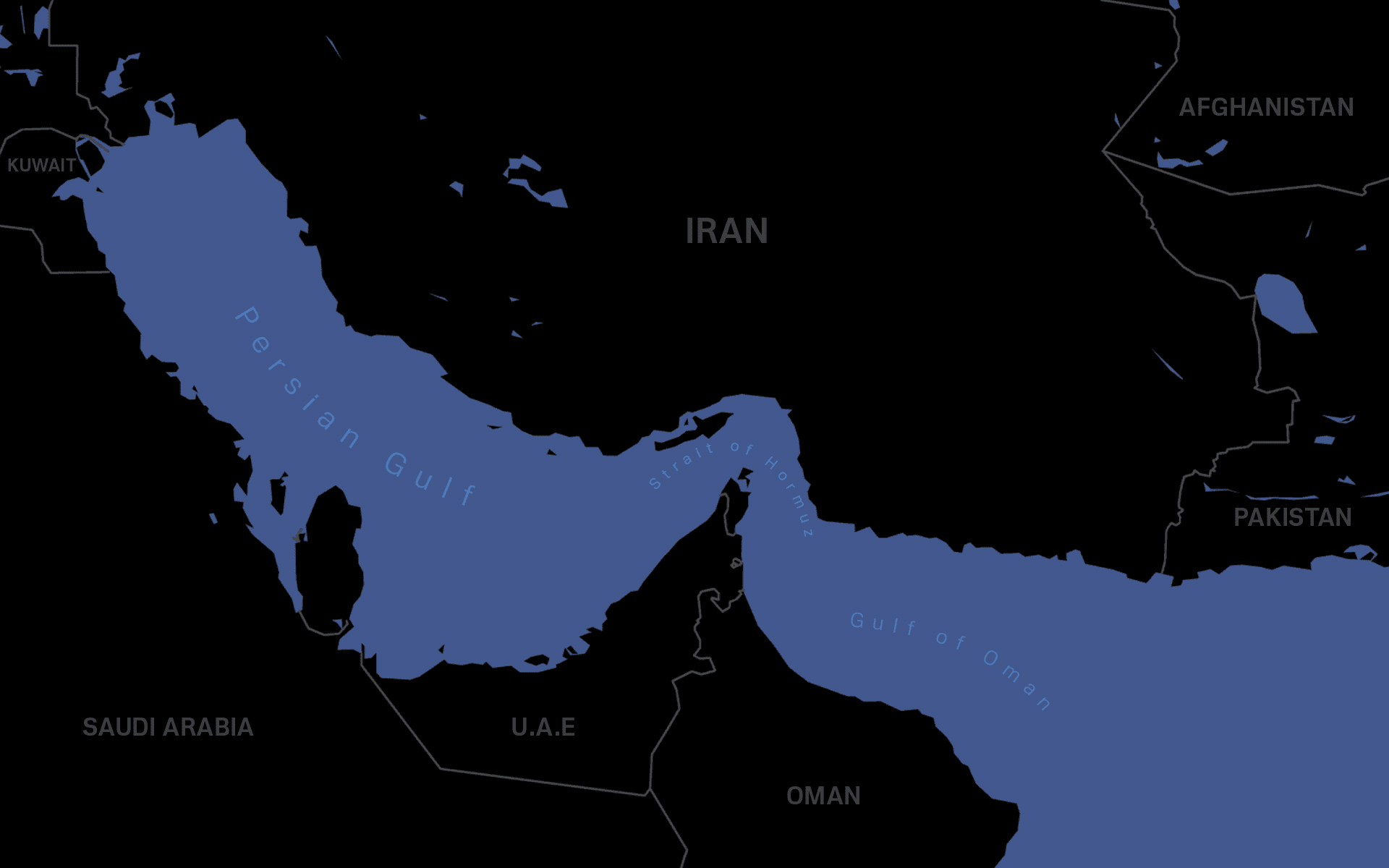
Building upon the preceding discussions, the point at which theoretical analysis converges with practical reality lies in examining the specific legal status of the Strait of Hormuz within the framework of the law of the sea. Unlike many other maritime corridors, this strait is not located in the high seas; rather, it lies within the territorial seas of Iran and Oman, a fact that naturally places it at the intersection of coastal State sovereignty and the rules governing freedom of navigation.
According to the prevailing interpretation of UNCLOS—particularly Articles 37 and 38—any strait used for international navigation that connects two parts of the high seas or exclusive economic zones (EEZs) is subject to the regime of transit passage. From this perspective, the Strait of Hormuz, which connects the Persian Gulf to the Gulf of Oman, would ordinarily fall within this category, and therefore be governed by the transit passage regime.
However, this is precisely where one of the most significant interpretative disputes in the law of the sea arises. Iran, relying on a set of legal arguments, advances an alternative reading of this regime and seeks to redefine the scope of its authority over the strait.
The first and most fundamental argument put forward by Iran relates to its legal status vis-à-vis UNCLOS. Iran has signed the Convention but has not ratified it. Consequently, from the perspective of the law of treaties, it is not contractually bound by its provisions. This position is grounded in the well-established principle of the relative effect of treaties (pacta tertiis nec nocent nec prosunt), according to which treaties neither impose obligations nor confer rights upon third States without their consent. This principle constitutes one of the cornerstones of international treaty law and serves here as a primary pillar of Iran’s legal reasoning.
In addition to this argument, Iran has resorted to another legal instrument: the interpretative declaration. Upon signing the Convention, Iran declared that it would recognize the regime of transit passage only under specific conditions and only with respect to States that are themselves parties to the Convention. Accordingly, in relation to States such as the United States, which is not a party to UNCLOS, Iran maintains that the applicable regime is that of innocent passage.
In practical terms, this distinction entails a restriction of the scope of navigational freedoms for certain States and a corresponding expansion of control by the coastal State. This position acquires particular significance with respect to warships. Iran maintains that the innocent passage of military vessels cannot be unconditional, but should instead be subject to prior authorization by the coastal State.
This view, however, remains contested in international law. Some States argue that prior notification is sufficient for the passage of warships, while others—including Iran—insist on the necessity of obtaining prior consent. This divergence reflects two competing approaches to the balance between coastal State sovereignty and freedom of navigation at sea.
In sum, the legal status of the Strait of Hormuz must be understood within the framework of a dual interpretative paradigm: on the one hand, the conventional reading of UNCLOS, which emphasizes the application of the transit passage regime and limits coastal State authority; and on the other hand, Iran’s interpretation, which, drawing upon principles of treaty law, interpretative declarations, and security considerations, seeks to expand the scope of its sovereign powers.
This duality demonstrates that the Strait of Hormuz is not merely a legal issue, but rather a site of competing legal interpretations—a domain in which the boundary between law and politics becomes increasingly fluid and subject to strategic redefinition.
Customary International Law and Iran’s Position: From the “Persistent Objector” Doctrine to the Reconfiguration of the Passage Regime
Continuing this analysis, one of the most complex—and at the same time decisive—legal dimensions of the Strait of Hormuz pertains to the realm of customary international law. The central question here is whether the regime of transit passage constitutes merely a treaty-based rule under UNCLOS, or whether it has gradually evolved into a general rule of customary international law.
The importance of this question lies in the fact that, once a rule attains customary status, it becomes, in principle, binding even upon States that are not parties to the relevant treaty. In other words, if transit passage is recognized as a customary norm, reliance solely on non-ratification of the Convention would not suffice to avoid its legal consequences.
At this juncture, Iran’s principal argument is grounded in the doctrine of the “persistent objector.” This well-established concept in international law allows a State, through consistent and explicit opposition to an emerging customary rule, to exempt itself from being bound by that rule. According to this doctrine, if a State has, from the outset and throughout the development of a customary norm, persistently and clearly objected to it, that norm does not become binding upon that State.
Within this framework, Iran considers itself among those States that have consistently objected to the application of the transit passage regime, particularly with respect to the Strait of Hormuz. This position enables Iran to refrain from accepting transit passage and instead emphasize the application of the earlier and more restrictive regime of innocent passage—a regime that affords greater regulatory authority to the coastal State.
The implications of this approach are significant not only under normal circumstances, but even more so in situations of crisis—particularly during armed conflict or when national security is at risk. In such contexts, Iran may rely on two complementary legal bases: its non-ratification of UNCLOS and its status as a persistent objector to the customary development of transit passage. Together, these arguments provide a foundation for applying an alternative legal framework in managing the Strait of Hormuz.
Within this alternative framework, the application of the innocent passage regime allows Iran to utilize legal instruments such as the temporary suspension of passage and the establishment of a specific regulatory regime for the strait. Unlike the stringent constraints imposed by transit passage, these mechanisms offer greater flexibility for the coastal State, enabling it to incorporate security, environmental, and strategic considerations into the regulation of navigation.
Ultimately, this discussion illustrates that the legal regime governing the Strait of Hormuz is not determined solely by treaty provisions, but is instead shaped within a dynamic interaction between customary law, State practice, and security considerations. In this context, Iran’s invocation of the persistent objector doctrine represents an effort to redefine the governing legal regime in a manner more consistent with its sovereign interests—an effort that itself exemplifies the flexibility and evolving nature of international law in response to political realities.
Conclusion
Ultimately, what emerges from the foregoing legal and interpretative analysis is that the Strait of Hormuz should not be understood merely as an international passageway, but rather as a complex construct situated at the intersection of law, sovereignty, and security considerations—a framework that allows for the reconfiguration of the coastal State’s role, even in relation to seemingly established legal norms.
Within this framework, and based on the legal arguments advanced, Iran may assert that it is entitled to levy charges related to navigation, particularly in areas such as maritime safety services and environmental protection. This position is not merely theoretical, but finds support in comparative practice within international law. Notably, in the Turkish Straits—namely the Bosporus and the Dardanelles—Turkey has, within specific legal arrangements, adopted measures to regulate passage and impose related fees. This comparison demonstrates that the establishment of special legal regimes for straits is not unprecedented, but rather can be analyzed within the framework of existing State practice.
Moreover, in situations of armed conflict, the scope of the coastal State’s authority naturally expands. Under such circumstances, Iran may lawfully restrict the passage of vessels belonging to hostile States, a measure rooted in general principles of international law and fundamental considerations of national security. This observation highlights that even within the law of the sea, wartime conditions may lead to a redefinition of the limits of navigational freedoms.
At the discursive level, statements by official authorities reflect a clear orientation in Iran’s legal interpretation of the Strait. Among these is the assertion that the Strait of Hormuz lies within Iran’s territorial waters, and therefore should be governed by the regime of innocent passage. This position stands in contrast to maximalist interpretations of transit passage, which tend to regard it as an absolute and non-restrictable right.
Beyond crisis situations, one of the most significant aspects of this analysis lies in the potential for the institutionalization of this approach during peacetime. In this regard, the adoption of domestic legislation, particularly concerning the regulation of passage and the imposition of fees, could contribute to the consolidation of a national–regional legal regime governing the Strait of Hormuz. Such measures would not only enhance legal clarity but also enable Iran to more effectively leverage its unique geopolitical and geoeconomic position in pursuit of its national interests.
In conclusion, the Strait of Hormuz should be viewed not merely as a geographic location, but as a strategic asset within the international system—one that, if managed intelligently and within a sound legal framework, can serve as a tool for enhancing national power, strengthening regional influence, and redefining Iran’s position in global dynamics.


