Modern warfare has posed new challenges to established legal frameworks, accountability mechanisms, and the protection of fundamental human rights. These legal challenges become particularly significant in armed conflicts involving political and military cooperation among States, support for non-State actors, attacks on critical infrastructure, and far-reaching humanitarian consequences. Accordingly, beyond assessing the lawfulness of the initial resort to force, issues such as the conduct of hostilities, the identification of military objectives, compliance with the principles of distinction and proportionality, the responsibility of States involved in armed conflicts, and the role of international human rights law in protecting civilians and their fundamental rights have become central concerns in contemporary legal discourse. Recent military actions by the United States and Israel against Iran have once again brought these challenges to the fore, while also highlighting the limitations of international institutions in effectively enforcing international legal rules and ensuring accountability for major powers.
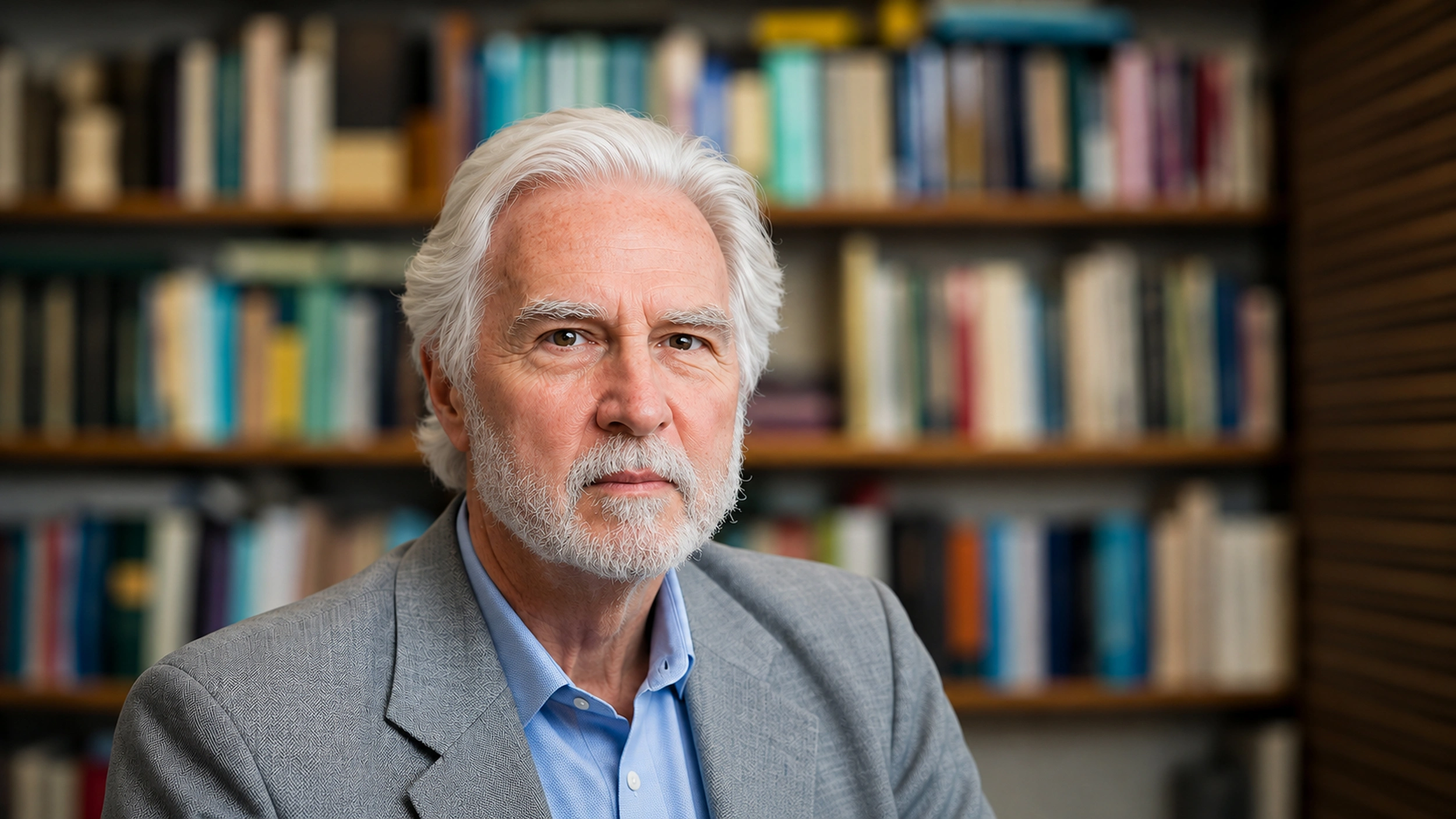
Against this backdrop, this interview with Professor Hurst Hannum, Professor Emeritus of International Law at The Fletcher School of Law and Diplomacy, Tufts University, examines these fundamental questions. The discussion explores the legal assessment of attacks against Iran under the United Nations Charter, the boundary between self-defense and preventive war, the responsibility of allied and cooperating States, the protection of civilian infrastructure, and the principles of distinction and proportionality under international humanitarian law. The interview also addresses the relationship between international humanitarian law and international human rights law, the concepts of humanitarian intervention and the Responsibility to Protect, and the capacities and limitations of international law and international institutions in constraining power and ensuring accountability.
Interview Details
- Interviewer: Mahdi Baeidi Nejad | PhD Student in International Relations, University of Isfahan
- Interviewee: Professor Hurst Hannum | Professor Emeritus of International Law, The Fletcher School of Law and Diplomacy, Tufts University
- Date of Interview: Tuesday, 12 May 2026
- Main Topics:
- Legal Assessment of Attacks Against Iran under the United Nations Charter
- The Boundary Between Self-Defense and Preventive War
- The Legal Responsibility of Allied and Cooperating States in Armed Conflicts
- Protection of Civilian Infrastructure under International Humanitarian Law
- The Relationship Between International Humanitarian Law and Human Rights Law in Armed Conflicts
- Humanitarian Intervention, the Responsibility to Protect, and the Risk of Undermining the Prohibition on the Use of Force
- The Capacity and Limitations of International Institutions in Restraining Power and Ensuring Accountability
Note: In order to preserve academic independence and diversity of perspectives, it should be emphasized that the opinions expressed in this interview reflect solely the personal views of the interviewee and do not necessarily imply endorsement or adoption of a position by the Human Rights Institute of the University of Isfahan.
Interview Summary
Topic 1: Legal Assessment of Attacks Against Iran under the United Nations Charter
- Question: Considering the rules of the United Nations Charter concerning the prohibition on the use of force and the principle of state sovereignty, how would you legally assess the recent military actions undertaken by the United States and Israel against Iran, while taking into account the legal and political differences between the actions of these two states?
In response to this question, Professor Hannum identifies the use of force and the legal assessment of state military actions as among the most significant and complex issues in international law. He emphasizes that, although human rights law and international humanitarian law are closely connected, important distinctions between these legal fields must be maintained in legal analysis.
According to Professor Hannum, the United Nations Charter, which has been accepted by Iran, the United States, and Israel, establishes relatively clear principles regarding self-defense and the use of force. He begins his analysis with the principle of sovereign equality of states under Article 2 of the Charter. Although states are not equal in political, economic, or military capacity, they are legally considered equal, similar to the principle that individuals are equal before the law. This principle is reflected in many mechanisms of the United Nations, including voting procedures, although the veto power granted to the five permanent members of the Security Council represents an important exception that has significantly limited the Council’s effectiveness in addressing many international crises.
Professor Hannum then turns to Article 2(4) of the Charter, which prohibits “the threat or use of force against the territorial integrity or political independence of any state.” From his perspective, the concept of the use of force is relatively clear; the more difficult question concerns whether a particular use of force is lawful or unlawful. At the same time, he notes the importance of the separate principle of non-intervention and emphasizes that it should not be equated with the prohibition on the use of force. Certain actions may constitute unlawful intervention without reaching the threshold of the use of force.
To explain this distinction, Professor Hannum gives the example of proxy conflicts and the Nicaragua case before the International Court of Justice. During the Cold War, the United States supported the Contras in Nicaragua politically and militarily in their goal of overturning the pro-communist government of Nicaragua. The matter was brought before the ICJ, which distinguished between an “armed attack” and “unlawful intervention.” Its judgment concluded that US support for the Contras, including military assistance, does not necessarily constitute an armed attack by the supporting state, although, in this case, it did violate the principle of non-intervention under international law.
Based on this distinction, Professor Hannum argues that Iran’s support for groups such as the Houthis, Hamas, and Hezbollah may similarly violate the prohibition against intervention. However, such support, by itself, does not provide a legal basis for direct military attacks by the United States or Israel against Iran. He offers examples of other forms of interference, such as cyberattacks, espionage, and intrusive actions by China in the South China Sea, identifying them as possible violations of international law and state sovereignty. However, he notes that these acts differ in intensity and consequences from the direct use of military force.
Therefore, in assessing the crisis involving Iran, the central legal issue remains the resort to force, not merely threats of using force or unlawful intervention.
Topic 2: The Boundary Between Self-Defense and Preventive War
- Question: States facing security tensions sometimes invoke concepts such as necessity, deterrence, anticipatory self-defense, and preventive action. From the perspective of international law, where should the boundary be drawn between self-defense recognized under the United Nations Charter and preventive war? How should the recent crisis involving Iran be assessed within this framework?
Professor Hannum believes that the issue of self-defense as a justification for the use of force is also relatively clear. Under Article 51 of the Charter, the inherent right of individual or collective self-defense can only be exercised when an “armed attack” has occurred. Therefore, violations of sovereignty, interference in domestic affairs, or political and economic pressure, by themselves, do not constitute sufficient grounds for invoking self-defense.
Clear examples of the unlawful use of force are unfortunately not difficult to find. For example, Russia’s invasion of Ukraine is a clear instance of an armed attack that activated Ukraine’s right to self-defense. Similarly, Professor Hannum considers that actions such as the 1999 bombing of Serbia and Kosovo by the United States and NATO, as well as the 2003 U.S. invasion of Iraq, are also examples of unlawful uses of force, even if some states viewed the Kosovo intervention as politically or morally justified. From Professor Hannum’s perspective, the recent attacks against Iran are also, in almost every respect, lacking in legal justification.
At the same time, he acknowledges that international legal interpretation has evolved to recognize a limited understanding of self-defense against an “imminent attack.” However, he emphasizes that the concept of “imminence” is fundamentally different from a threat that is merely “possible,” “probable,” or “dangerous.” To illustrate this distinction, Professor Hannum refers to Israel’s 1981 attack on an Iraqi nuclear reactor. Israel justified the bombing operation by claiming that Iraq’s future nuclear capabilities posed a threat. However, the United Nations Security Council unanimously condemned the act as a violation of the Charter and held the attack to be unlawful. This principle remains valid today: the mere possession, or even the possibility of acquiring, nuclear weapons by a state does not legally authorize another state to launch a military attack against it.
There is also a distinction between the use of force by non-state actors and direct attacks conducted by states. In his view, armed attacks on Israel by groups such as Hamas or Hezbollah do justify forceful self-defense by Israel. However, these acts are not, as noted earlier, sufficient to legalize an armed attack on Iran, which supports these groups. Referring again to the Nicaragua case, he explains that mere support for an armed group—even substantial support—does not necessarily amount to an armed attack by the supporting state, unless the level of direction and control exercised by that state reaches a threshold in which the actions of the group can legally be attributed to it.
In conclusion, Professor Hannum argues that the attacks carried out by the United States and Israel against Iran cannot be justified on the basis of self-defense or preventing Iran from potentially acquiring nuclear weapons. Even a possible violation by Iran of its obligations under the Treaty on the Non-Proliferation of Nuclear Weapons (NPT) would not, by itself, create a legal basis for the use of force.
Topic 3: The Legal Responsibility of Allied and Cooperating States in Armed Conflicts
- Question: When allied states, such as the United States and Israel, act in parallel, coordinate politically, or advance shared security narratives, how should the legal responsibility of each state be assessed independently? Moreover, how can one avoid both artificially merging responsibilities and unrealistically separating related actions?
In response to this question, Professor Hannum asserts that, from a legal perspective, the mere fact that states act in coordination or share common political and security objectives should not be, by itself, a decisive factor in determining their legal responsibility. According to Professor Hannum, both general international law and international humanitarian law—including the rules concerning war crimes and the conduct of hostilities—focus on the specific actions of states, armed forces, and individuals. Therefore, legal responsibility is not determined primarily by identifying which state supports or cooperates with another state, but rather by examining the specific conduct and actions of the relevant state or individual.
From Professor Hannum’s perspective, joint attacks or coordinated military operations between states are not necessarily more serious, nor are they necessarily less significant, from a legal standpoint. What matters is a careful assessment of the conduct of each actor and the determination of responsibility based on their specific actions. For this reason, he argues that legal analysis should continue to be conducted on a state-by-state basis and, in cases involving war crimes, on an individual-by-individual basis. To illustrate this point, Professor Hannum refers to the involvement of North Korean forces alongside Russia in the war in Ukraine. In his view, the participation of North Korean troops in military operations against Ukraine makes them legitimate military targets for Ukraine, because they are directly participating in an armed conflict. However, the degree of cooperation or command between Russia and North Korea is not relevant to determining the legal responsibility of either state.
Professor Hannum then addresses what he considers to be an even more concerning issue: the way in which public opinion and governments around the world sometimes respond to these matters. For example, the thousands of drones provided by Iran to Russia have been used against both military and civilian targets in Ukraine. Such support does not, by itself, constitute an armed attack and therefore does not create a legal basis for Ukraine to launch direct military action against Iran. However, it does facilitate what is undoubtedly a blatant violation of international law.
Professor Hannum then turns to the relationship between the United States and Israel. He acknowledges that there is no doubt that the two states share many common objectives; however, he notes that it is not clear whether they have conducted genuinely joint military operations in this context. He recalls that the United States has not deployed ground forces and has occasionally expressed criticism of certain Israeli actions, particularly in Gaza and the West Bank. Therefore, while examining the United States and Israel within a common framework may be understandable from a political or analytical perspective, he questions how such an approach would contribute to assessing the legal responsibility of each State separately.
In concluding, Professor Hannum emphasizes the importance of distinguishing between “countries” and “governments” when analyzing the issues raised in our conversations. Although we have no choice but to refer to states when analyzing their responsibility under international law, that responsibility is in fact based on the conduct of particular governments, not of the people of a state. We should not automatically equate Iranians, Israelis, and Americans with Iran, Israel, and the United States.
Topic 4: Protection of Civilian Infrastructure under International Humanitarian Law
- Question: You were among the signatories of the Just Security statement concerning the risks of attacks against power plants, electricity networks, water facilities, and other critical infrastructure in Iran. From the perspective of international humanitarian law, what principles make attacks or threats against such infrastructure a serious legal issue and potentially even a war crime?
In response to this question, Professor Hannum begins by distinguishing between the legality of initiating a war and the rules governing the conduct of hostilities. The first issue concerns when resorting to war may be legally justified, whereas international humanitarian law primarily addresses how parties to an armed conflict must behave during warfare, commonly referred to as jus in bello.
To explain this distinction, Professor Hannum refers again to the war between Russia and Ukraine. According to him, Ukraine has the right to defend itself; however, this right does not grant complete freedom regarding the methods and means it employs in warfare. If Ukraine or any other state intentionally targets civilians or civilian objects, it is committing a war crime. In this context, Professor Hannum notes the particular importance of two fundamental principles of international humanitarian law: the principle of distinction and the principle of proportionality.
Under the principle of distinction, a clear difference must be maintained between combatants and non-combatants. Professor Hannum acknowledges that this distinction is not always straightforward, because individuals who are not directly engaged in fighting but are integrated into a military apparatus may still qualify as legitimate military targets. By contrast, individuals such as soldiers who have surrendered are no longer considered active combatants and must be treated according to different legal rules. Thus, adopting the tactic of “no quarter” in battle (a concept referring to the killing of individuals without regard to whether they are combatants or non-combatants) is in itself a war crime.
The second principle is proportionality. Professor Hannum explains that international humanitarian law recognizes the reality of warfare and therefore accepts that civilians may sometimes be harmed during military operations. However, the intentional killing of civilians constitutes a war crime, and even unintended civilian harm may carry legal responsibility under certain circumstances. The principle of proportionality requires assessing the expected harm to civilians in relation to the anticipated military advantage of a specific operation.
To clarify this issue, Professor Hannum offers the example of soldiers and a machine gun placed on the roof of a hospital. The placement of such equipment within a hospital itself constitutes a violation of the law of armed conflict. However, this does not give the opposing side the right to simply destroy the entire hospital. If the same military objective can be eliminated through a more limited and targeted operation, a broader and more devastating attack cannot be justified under the principle of proportionality.
From Professor Hannum’s perspective, one of the most significant criticisms against Israel’s military operations against Hamas and Hezbollah is the failure to adequately respect this principle. While members of armed groups who participate in hostilities may constitute legitimate military targets, this does not justify the extensive destruction of Gaza, the devastation of residential areas and infrastructure in southern Lebanon, or the forced displacement of civilian populations from their homes.
Topic 5: The Relationship Between International Humanitarian Law and Human Rights Law in Armed Conflicts
- Question: When attacks are directed against critical civilian infrastructure, should legal analysis primarily be conducted within the framework of the law of armed conflict, or is international human rights law independently applicable as well, particularly in relation to rights such as the right to life, health, water, and food?
In response to this question, Professor Hannum first emphasizes the fundamental distinction between international humanitarian law and international human rights law. Although these two areas of law may intersect in certain circumstances, he argues that they do not have identical objectives, structures, or fields of application. Professor Hannum explains that one of his concerns in recent years has been the expansion of the concept of human rights to encompass an extremely wide range of issues—issues that human rights were not necessarily designed to address.
From Professor Hannum’s perspective, the law governing the circumstances surrounding the outbreak of war and, particularly, the conduct of hostilities, has a fundamentally different nature from international human rights law. International humanitarian law is designed to regulate the conduct of parties engaged in armed conflicts, whereas human rights law is principally concerned with the relationship between states and individuals within their own territories. He notes that numerous international institutions exist to promote, monitor, interpret, and define human rights obligations. However, state obligations in this field extend beyond merely refraining from violating human rights and also include positive duties, such as protecting rights like the right to a fair trial and the right to education—rights whose realization requires active measures by governments.
Based on these differing goals, Professor Hannum argues that merging these two legal frameworks is not particularly useful for analyzing issues arising from warfare. He acknowledges that important connections exist between human rights law and situations of armed conflict and that these connections are recognized within human rights instruments themselves. He refers specifically to Article 4 of the International Covenant on Civil and Political Rights (ICCPR), a foundational treaty within the United Nations human rights system to which Iran, the United States, and Israel are all parties. This provision recognizes that human rights remain relevant even during wartime, and it permits states, under certain conditions, to temporarily derogate from some human rights obligations during “a public emergency that threatens the life of the nation.”
Professor Hannum explains that although war is usually the first example that comes to mind in such situations, other emergencies—such as earthquakes, floods, or natural disasters—may also create circumstances in which governments are required to adopt extraordinary measures. Such measures may include evacuating populations, restricting movement, or taking other actions that would not be permissible under normal circumstances.
Two fundamental limitations apply when evaluating such situations. The first concerns the concept of an emergency itself. Not every difficult or challenging situation can justify restrictions on human rights. Rather, a country must explain how a situation genuinely threatens the life of the nation. Economic difficulties, inflation, or ordinary political and social challenges, by themselves, do not constitute such an emergency. By contrast, armed conflict may, in many circumstances, meet this threshold, even if only part of a country’s territory is affected. As an example, Professor Hannum refers to the conflict in Northern Ireland that began in the 1970s, where an emergency situation was recognized even though the conflict did not involve all regions of the United Kingdom.
The second limitation concerns the principle of proportionality. Even when a genuine emergency exists, a state may adopt only those measures that are truly required by the circumstances. In other words, restrictions or derogations from human rights must remain limited to what is strictly necessary. He explains that a human rights body, such as a regional human rights court or the Human Rights Committee, may accept that an emergency existed and that a state had the authority to take certain measures, while simultaneously determining that the specific actions taken—such as mass detention of a particular group, unnecessary evacuations of large populations, or excessive restrictions on freedom of expression—exceeded what was necessary.
Professor Hannum notes that many states adopt special national security laws during periods of war. He considers it natural that countries may impose certain restrictions in wartime conditions. For example, he observes that it would have been unlikely for a state during World War II to permit activities openly supporting Nazi Germany. However, the existence of a war does not mean that governments are permitted to prohibit all forms of opposition or criticism.
A state must protect human rights during a war within its own territory insofar as possible. He again refers to Russia as an example, arguing that many of the restrictions imposed by the Russian government on its own population would likely be inconsistent with international human rights standards because of their excessive nature. However, he stresses that such cases should be examined as human rights violations per se, not necessarily connected to war crimes or other violations of international humanitarian law. Each state must be evaluated based on the specific obligations it has accepted. If a state is a member of the United Nations, it has an obligation to refrain from resorting to war except within the frameworks permitted by international law. If it is party to human rights treaties, it must protect human rights while respecting the limited exceptions recognized under those treaties.
Ultimately, Professor Hannum argues that although a state may violate both legal frameworks simultaneously, these two forms of responsibility should not be artificially merged into a single category. From his perspective, a significant portion of human rights law was developed for conditions of relative peace, and its primary focus should remain within that sphere. He also expresses concern regarding a tendency by some international institutions— particularly in Geneva and within the Office of the United Nations High Commissioner for Human Rights—to expand the role of human rights mechanisms to investigate nearly all dimensions of warfare, including violations of international humanitarian law and issues of criminal accountability.
Topic 6: Humanitarian Intervention, the Responsibility to Protect, and the Risk of Undermining the Prohibition on the Use of Force
- Question: Concepts such as “humanitarian intervention” and the “Responsibility to Protect” are sometimes invoked to justify coercive measures. What legal and political risks does the use of human rights discourse and the protection of civilians as a justification for the use of force create for the international system?
In response to this question, Professor Hannum first refers to the moral challenge of responding to humanitarian crises around the world. It is extremely difficult for individuals to encounter images and reports of human suffering through the media, newspapers, or social networks and, at the same time, not feel that they should “do something.” According to Professor Hannum, this human desire to take action is one of the foundations of concepts such as humanitarian intervention and the Responsibility to Protect (R2P).
However, he believes that the primary objection to humanitarian intervention and its more recent formulation, the Responsibility to Protect, is based on historical experience. In his view, such interventions have often failed not only to resolve existing problems but have, in many cases, produced consequences more harmful than the conditions that existed before the intervention. He argues that recent experiences demonstrate that the use of force for humanitarian purposes does not consistently produce the outcomes that its supporters anticipate.
As an example, Professor Hannum refers to the 1994 genocide in Rwanda. From an ethical perspective, he argues, almost everyone would have supported the deployment of an international military force to prevent the genocide. However, the fundamental problem was that, in practice, the possibility of such an intervention was extremely limited. Rwanda is geographically distant from many centers of global power. The genocide was carried out largely not by organized armies but by ordinary individuals using simple weapons, such as machetes. The catastrophe lasted approximately three months and resulted in the deaths of hundreds of thousands of people. Therefore, even where there was a strong moral motivation to intervene, the likelihood of effective action under such circumstances was extremely low.
Professor Hannum then examines the experience of Kosovo in 1999, an intervention that was partly influenced by concerns arising from the failure to prevent the Rwandan genocide a few years earlier. At that time, it was argued that genocide was taking place against the Albanian population of Kosovo by Serbian forces, and NATO therefore launched a bombing campaign to stop it. However, subsequent investigations—even by experts who were generally sympathetic to NATO’s intervention—concluded that the situation in Serbia and Kosovo was not significantly different from many other domestic conflicts. There were human rights violations and killings in Kosovo, but there was no persuasive evidence of an organized campaign aimed at the complete elimination of a population. Ultimately, the bombing did end the conflict between Serbs and Kosovars, but many experts agreed that such a use of force was “illegal, but legitimate”. Finally, Professor Hannum turns to the cases of Afghanistan and Iraq. In his view, neither of these countries was initially attacked primarily on humanitarian grounds or because of human rights violations. Afghanistan was invaded in response to the September 11 attacks carried out by al-Qaeda against the United States, while Iraq was attacked based on claims concerning weapons of mass destruction, which were later proven to be false. However, after military operations began, humanitarian and human rights arguments became increasingly important elements of the political justification for these interventions and their continuation. Professor Hannum emphasizes that, in both cases, tens or even hundreds of thousands of people lost their lives during the occupation by foreign military forces. Therefore, from an ethical perspective, such so-called humanitarian interventions have often been neither successful nor useful.
Professor Hannum highlights another important point: most government and NGO supporters of humanitarian intervention or the Responsibility to Protect generally come from the countries that would carry out the intervention, rather than from the countries that would experience bombing or invasion in the name of humanitarian protection. To illustrate the contradiction inherent in some interventionist approaches, Professor Hannum refers to a famous statement attributed to a U.S. military officer during the Vietnam War, who reportedly said that “to save a village, it was necessary to destroy it.” Although Professor Hannum considers this statement extreme and incorrect, he argues that it reflects, to some extent, the logic underlying certain contemporary interventions such as in Afghanistan and Iraq—the assumption that a society can be transformed through the use of force in order to achieve a better future.
Turning to the purely legal dimension of the discussion, Professor Hannum observes that neither humanitarian intervention nor the Responsibility to Protect has been recognized in international law as an independent legal basis for the use of force. He explains that efforts have been made to develop the concept of the Responsibility to Protect, and that the United Nations General Assembly referred to the concept in an important resolution. However, the framework described by the United Nations rests essentially on two levels: first, the responsibility of states themselves to protect their populations, which is in fact part of their existing human rights obligations, and second, the responsibility of the United Nations Security Council to authorize the use of force in exceptional circumstances. However, neither the UN General Assembly nor Security Council has ever declared that an individual state or a “coalition of the willing” may unilaterally intervene militarily in another country solely on the basis of the Responsibility to Protect. Therefore, this concept does not constitute an independent legal authorization for unilateral military intervention.
Professor Hannum concludes that he is sympathetic to the humanitarian motivations of those who support these concepts, because such views often emerge from genuine concern for human suffering. Nevertheless, he argues that the great majority of states have not accepted the Responsibility to Protect as a justification for unilateral uses of force. Moreover, practical experience has demonstrated that such interventions have frequently produced outcomes entirely different from their original objectives.
Topic 7: The Capacity and Limitations of International Institutions in Restraining Power and Ensuring Accountability
- Question: In crises of this nature, what characteristics should a credible institutional response from international organizations possess? Is the main problem the weak enforcement of international law, or do ambiguity and political considerations within international institutions also contribute to the weakening of accountability? And if you were to identify one central lesson from this crisis for international law students, what would that lesson be regarding the capacity of international law to restrain power?
In response to this question, Professor Hannum first observes that international organizations are often criticized excessively by those who are unwilling to acknowledge their own responsibility for the failures of international law. According to Professor Hannum, although there is no doubt that institutional problems have existed within the structure of the United Nations from the beginning, it should not be forgotten that many of these limitations originate from the fundamental principle of state sovereignty. The existence of permanent members of the Security Council and their veto power represents one of the clearest examples of these structural limitations.
States remain the primary actors in the international system, and in many cases, they are unwilling to transfer genuine authority to international organizations that would allow those institutions to impose binding obligations upon sovereign states. One of the only exceptions to this generalization is the European Union. Although the EU faces numerous problems and shortcomings, it is an important example of an organization to which states have transferred part of their sovereign authority to a supranational institution—not because the organization itself claimed such authority, but because states made sovereign decisions to delegate certain powers.
Professor Hannum recalls that Chapter VII of the United Nations Charter includes a means of establishing a form of military capacity under the authority of the Security Council. Under these articles, a small force could have been made available for emergency situations in which the Security Council determined that immediate intervention was necessary to maintain international peace and security. This force was not intended to become an independent United Nations army; rather, it would have been created through voluntary contributions by member states. However, during the past eight decades, not a single state has provided forces for such a mechanism. From Professor Hannum’s perspective, the reason is clear: states are unwilling to limit their own sovereignty.
International organizations are not governed by independent bureaucracies; they are controlled by states. The Secretary-General of the United Nations does not possess independent authority to undertake extensive actions. Voting decisions are made by governments, budgets are determined by governments, and legally binding decisions within the United Nations system are primarily adopted through the Security Council—a body in which major powers possess veto power. For this reason, what the United Nations General Assembly declares or recommends does not constitute by itself international law, although it may have significant political consequences.
Based on this analysis, Professor Hannum concludes that ultimate responsibility continues to rest with states themselves. He emphasizes that he does not make this argument because he considers the existing system ideal, but because he does not foresee a fundamental transformation in the global structure of power in the near future. In his view, at least during the lifetime of current generations, it is unlikely that the world will suddenly move toward a form of global government. Indeed, some developments of recent decades suggest a movement toward conditions resembling the nineteenth century—a period in which “might makes right” and powerful states could pursue their interests without facing serious consequences. Although Professor Hannum does not consider this outcome inevitable, he regards it as a realistic possibility.
To explain this concern, he again refers to the example of Russia and Ukraine and emphasizes the role of state behavior in weakening international law. From his perspective, questions such as why the United States does not condemn certain Israeli actions or why some states do not participate in measures such as sanctions against Russian oil exports demonstrate that the weakening of international law is not the result of the actions of only a few particular states. Rather, it is the consequence of the conduct of multiple states.
Professor Hannum then emphasizes two factors that, in his view, are among the most important sources of influence for human rights: hypocrisy and persuasive power. He explains that hypocrisy emerges from the fact that all states, including those that violate international rules, have accepted these rules. Governments declare their commitment to international humanitarian law, human rights law, and international treaties, yet in practice they sometimes behave as though they have no responsibility to comply with the obligations they have undertaken. According to Professor Hannum, states do not wish to be accused of hypocrisy, and this creates an important form of moral and political pressure from both governmental and nongovernmental actors.
Professor Hannum also addresses the relationship between humanitarian intervention and the risk of the return of colonial patterns of thinking. He argues that a country or society can rarely be transformed primarily through the use of force; sustainable change must emerge from within the society itself. There are many ways to support human rights that do not necessarily involve military intervention. He refers to the experience of Latin America during the 1980s, when many countries in the region were governed by military dictatorships. After the collapse of these regimes, one of the first actions taken by many of these states was to join international human rights treaties. This transformation did not mean that South America suddenly became a region with perfect human rights conditions. However, it demonstrated that internal political and social change can produce meaningful outcomes.
Professor Hannum then offers a few broader reflections on the position of international law. He argues that focusing on the use of force and human rights directs attention toward areas that are among the most contested dimensions of international law. Nevertheless, he emphasizes that a large portion of international law functions effectively in practice. He refers to the observation of Louis Henkin, a prominent American international lawyer, who stated that:
“Almost all nations observe almost all principles of international law and almost all of their obligations almost all of the time.”
Although this statement may not appear particularly inspiring, it expresses an important reality: international law remains essential and effective in many areas. According to Professor Hannum, when international rules do not directly threaten the political power of states and instead facilitate cooperation, governments are much more willing to accept the role of international institutions. He refers to specialized international agencies, such as the Universal Postal Union, the International Civil Aviation Organization (ICAO), and the International Telecommunication Union (ITU), arguing that many forms of international cooperation have succeeded in these practical and everyday areas.
Professor Hannum also emphasizes that protecting international law requires the participation of all states, particularly middle powers. In his view, large states such as Iran or India, because of their size and international position, are often less willing to accept external demands regarding their conduct. By contrast, some of the strongest historical supporters of international law have been smaller states, particularly Scandinavian countries with populations of only several million people. Although their influence is naturally limited, they have played an important role in supporting international legal norms.
In conclusion, Professor Hannum emphasizes that although international law is highly significant for analyzing these issues, it should not be expected to resolve all global problems. International organizations are inherently political because international relations themselves are political in nature. Many global challenges—including economic issues, development, climate change, and corporate behavior—are not merely legal questions; they also involve political, economic, and ethical dimensions. Law, whether international or domestic, cannot by itself resolve all global challenges.
Conclusion
The interview with Professor Hurst Hannum demonstrates that the main challenge facing the international legal order is not the absence of rules, but rather the gap between the existence of rules and the ability of the international system to effectively implement them. From his perspective, the United Nations Charter provides a relatively clear framework for restricting the use of force, defining self-defense, and protecting state sovereignty. However, the expansion of broad interpretations of concepts such as anticipatory self-defense, deterrence, and humanitarian intervention has created the risk of weakening the restrictive function of international law.
The examination of military actions, the responsibility of allied states, the protection of civilian infrastructure, and the relationship between international humanitarian law and human rights law demonstrate that legal analysis requires distinguishing between different areas of responsibility and avoiding the politicization of legal concepts.
Ultimately, Professor Hannum’s perspective emphasizes that international law, despite its structural limitations and its dependence on the will of states, remains an essential instrument for restraining power, defining obligations, and establishing a framework for accountability. However, its objectives cannot be achieved through legal rules alone; their realization also requires the political commitment of states, public pressure, the strengthening of international institutions, and the development of a culture of respect for global norms.
The most important lesson of this conversation is that international law is not a substitute for politics and ethics; rather, it is a framework that can limit the behavior of powerful actors, provided that states consider themselves accountable for the obligations they have accepted.