The contemporary international legal system rests on a body of rules and institutions designed to constrain states’ resort to military force, protect civilian populations during armed conflict, and establish mechanisms of accountability for serious violations of international law. The prohibition on the use of force under Article 2(4) of the United Nations Charter, the rules governing self-defense, the principles of international humanitarian law, and the mechanisms of state responsibility and individual criminal responsibility all form part of this framework. Yet contemporary armed conflicts have once again raised questions about the extent to which these rules can retain their constraining force in the face of the political and military power wielded by powerful states.
Viewed from this perspective, the war against Iran has raised questions not only concerning the lawfulness of the resort to force, but also regarding the application of the principles of distinction, proportionality, and precautions; the protection of civilian infrastructure; the long-term consequences of attacks on public health; and the limits of accountability for the conduct of powerful states.
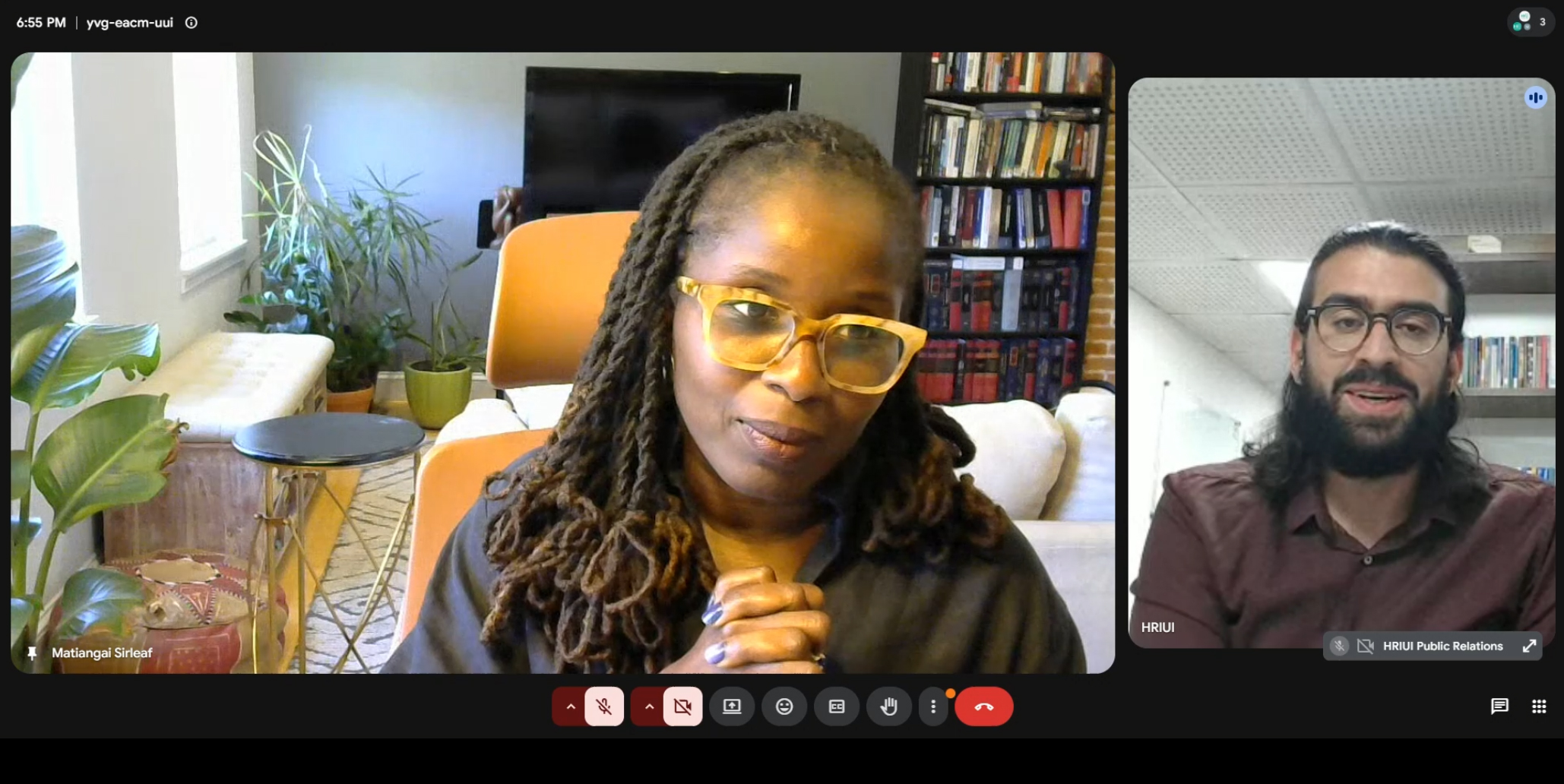
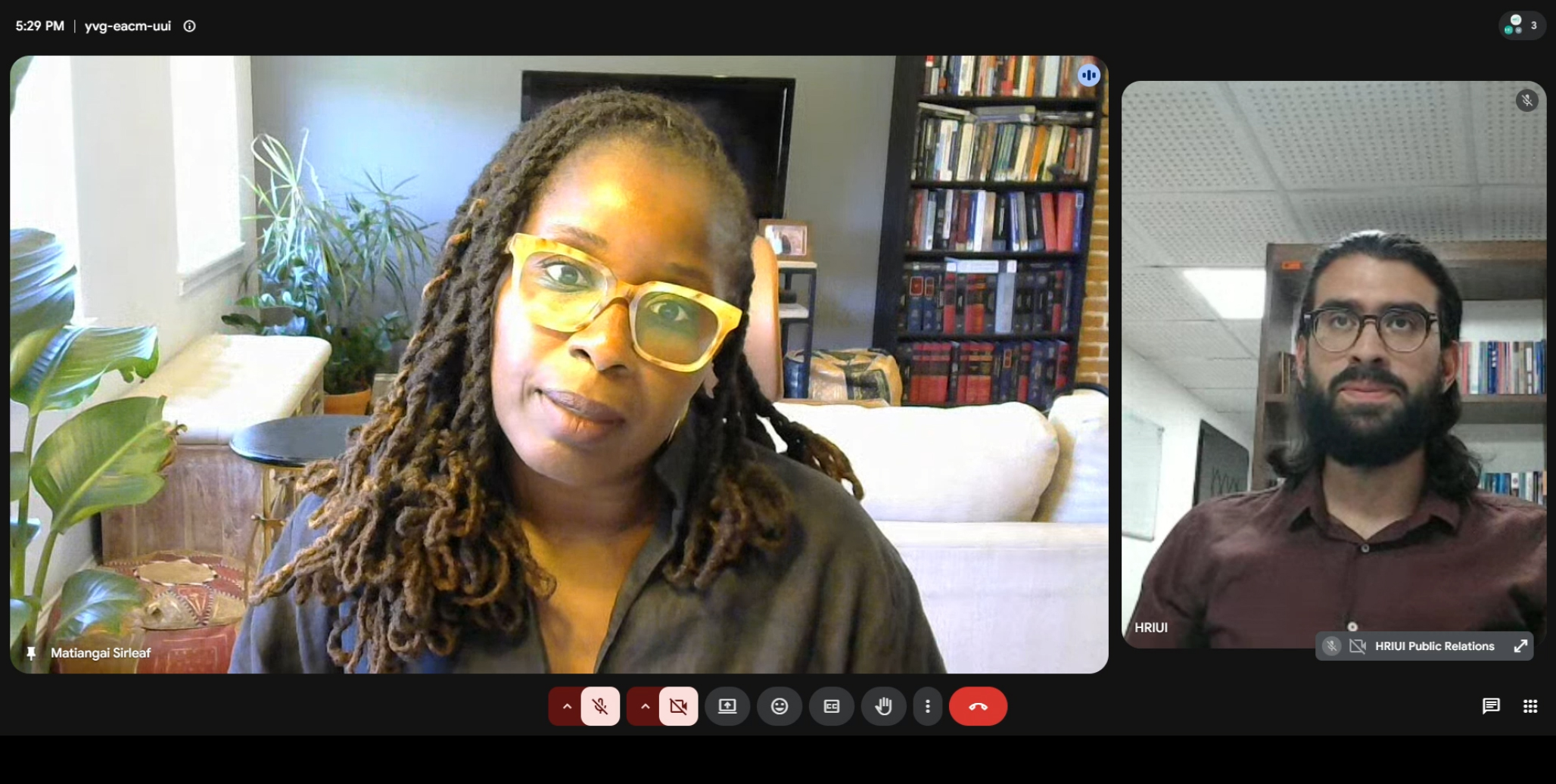
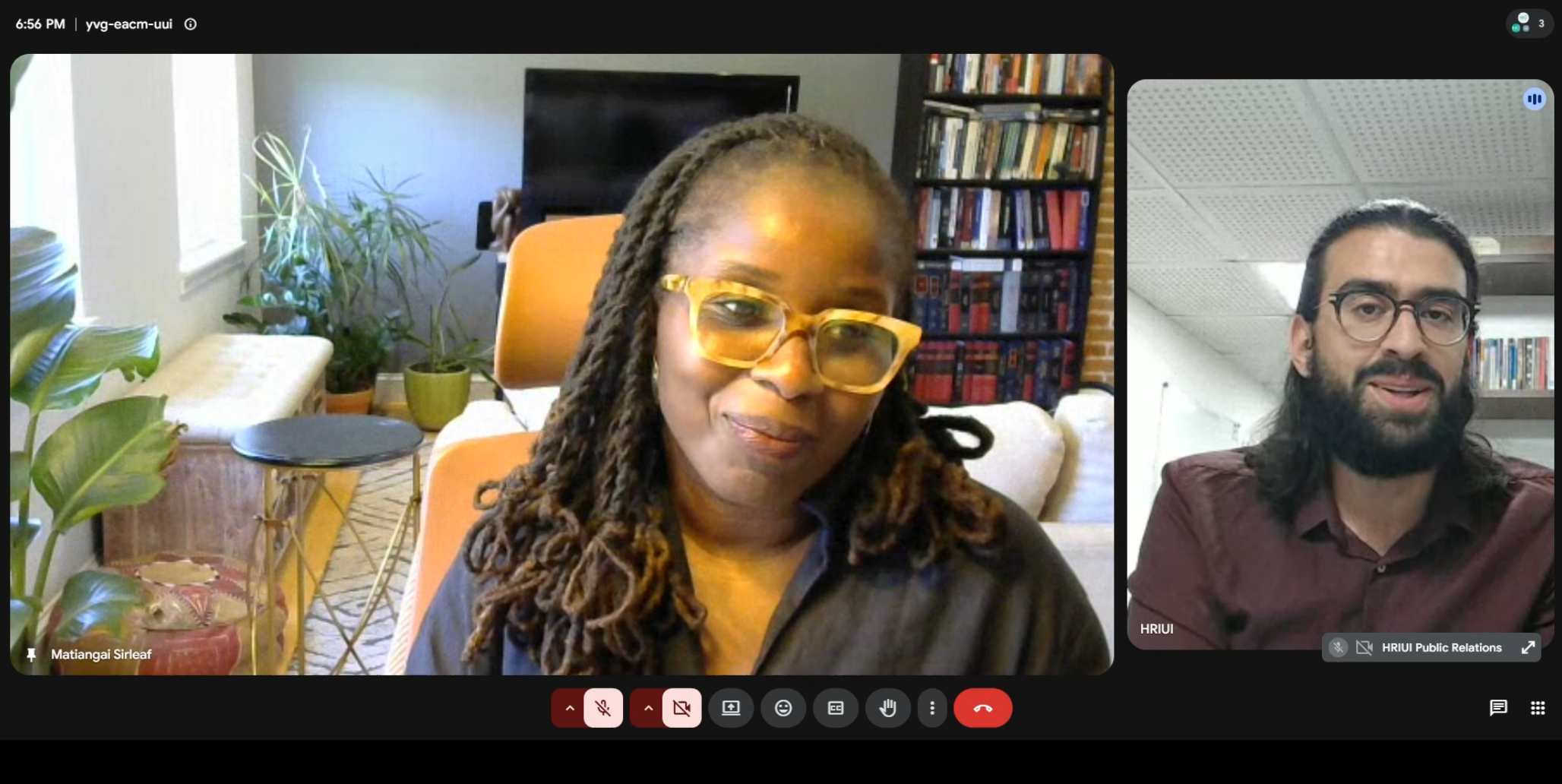
This interview with Professor Matiangai Sirleaf, the Nathan Patz Professor of Law at the University of Maryland and Executive Editor of Just Security, examines a range of these issues from the perspectives of international law, international humanitarian law, public health law, and the structures of power within the international order. The discussion begins by distinguishing between jus ad bellum and jus in bello and assessing the lawfulness of the war. It then turns to the impact of power asymmetries on the implementation and enforcement of international law; attacks on healthcare facilities and health infrastructure; the reverberating and long-term effects of armed conflict; attacks on critical infrastructure; and the concept of societal resilience.
Other themes addressed in the interview include threats made by political officials against civilian infrastructure; the issue of dual-use objects and infrastructure; avenues for accountability, including state responsibility, universal jurisdiction, and people’s tribunals; the role of security narratives in the dehumanization of civilian populations; and, ultimately, the broader crisis confronting the rules-based international order.
Interview Details
- Interviewer: Mahdi Baeidi Nejad | PhD student in International Relations, University of Isfahan
- Interviewee: Professor Matiangai Sirleaf | The Nathan Patz Professor of Law at the University of Maryland; Executive Editor of Just Security
- Date of Interview: Tuesday, 16 June 2026
- Main Topics:
- The Illegality of the Resort to Force and the Distinction Between Jus ad Bellum and Jus in Bello
- Power Asymmetries and the Selective Enforcement of International Law
- Attacks on Health Systems and the Public Health Consequences of Armed Conflict
- The Reverberating Effects of War and the Limits of Civilian Protection under International Humanitarian Law
- Critical Infrastructure, Societal Resilience, and the Structural Dimensions of War
- Official Threats and the Discursive Normalization of Violence Against Civilians
- Dual-Use Infrastructure and the Erosion of the Principle of Distinction
- Pathways to Accountability, Documentation, and the Preservation of Legal Memory
- Security Narratives, Dehumanization, and the Narrowing of the Scope of Civilian Status
- The Erosion of Legal Constraints on Warfare and the Crisis of the Rules-Based International Order
Note: In order to preserve academic independence and diversity of perspectives, it should be emphasized that the opinions expressed in this interview reflect solely the personal views of the interviewee and do not necessarily imply endorsement or adoption of a position by the Human Rights Institute of the University of Isfahan.
Interview Summary
Topic 1: The Illegality of the Resort to Force and the Distinction Between Jus ad Bellum and Jus in Bello
- Question: In light of the theoretical foundations of contemporary international law, how can the war waged by the United States and Israel against Iran be analyzed simultaneously under jus ad bellum and international humanitarian law? In this context, can the distinction still be maintained between the illegality of the initial resort to force and the legal obligations governing the conduct of hostilities?
In response, Professor Sirleaf first emphasizes the need to preserve the distinction between two separate bodies of international law. One concerns the legality of the initial resort to force, while the other—the law of armed conflict, or international humanitarian law—governs the conduct of the parties once force has been used and an armed conflict is underway. In her view, maintaining this distinction remains essential. If the legality or illegality of initiating a war were treated as directly determining all of the rules governing conduct during hostilities, a party claiming a justification for its resort to force might effectively also claim unrestricted discretion over its conduct in war.
The independence of these two legal frameworks, however, does not mean that the legality of the initial resort to force is unimportant. Professor Sirleaf expressly characterizes the war waged by the United States and Israel against Iran as a war of aggression and considers it to constitute a violation of Article 2(4) of the United Nations Charter. In her analysis, the Charter framework prohibits the threat or use of force except in the context of self-defense against an armed attack or an imminent threat thereof, or where the use of force has been authorized by the Security Council. She maintains that none of these conditions has been satisfied in the present circumstances.
Professor Sirleaf also addresses the United States’ argument that an ongoing conflict exists with Iran and its reliance on both individual self-defense and collective self-defense in support of Israel. According to her, the Legal Adviser to the U.S. Department of State sought in April to articulate a legal basis for this position, but she does not regard that argument as legally persuasive. In particular, the United States itself had treated the 2025 attack against Iran as having concluded. The claim that a continuing international armed conflict has existed since that time is therefore, in her view, inconsistent with the factual circumstances.
She further argues that no prior armed attack against either the United States or Israel has been established that would provide the necessary legal basis for self-defense, nor has the necessity of initiating the attack been demonstrated. On this basis, she characterizes the conflict not as a war of necessity, but as a war of choice and a war of aggression brought about by the political decisions of the leaders of the United States and Israel.
Professor Sirleaf then emphasizes the historical and legal importance of restrictions on the use of force. One of the fundamental purposes behind the establishment of the United Nations was to prevent wars of aggression and to replace the logic of power with the logic of law. In her view, disregarding the strict limitations governing the resort to force risks returning the international order to a condition in which might determines right.
She argues that even international lawyers who adopt a critical approach to international law should regard Article 2(4) as a fundamental safeguard for states and peoples in comparatively weaker positions within the international system. The fundamental principle, in her account, is that military force is impermissible except in circumstances of lawful self-defense, and preserving this constraint is essential to preventing domination by more powerful states.
Topic 2: Power Asymmetries and the Selective Enforcement of International Law
- Question: Given your argument that international law, despite its claim to normative neutrality, operates in practice within asymmetrical structures of power, how should the responses of states, international organizations, and segments of the international legal community to the war against Iran be understood?
Professor Sirleaf regards the limited and cautious responses of states and international institutions to what she considers a clear violation of Article 2(4) of the Charter as indicative of the influence of power structures on the operation of international law. Her concerns extend beyond the initial resort to force to the manner in which the war has been conducted. She refers, among other matters, to attacks on infrastructure and a girls’ school, as well as statements by U.S. officials concerning attacks on oil and gas facilities, desalination plants, and even the destruction of a civilization.
In her view, some of these statements are directly at odds with the law of armed conflict. One example highlighted by Professor Sirleaf is the U.S. Secretary of Defense’s statements concerning “no quarter” and “no mercy” toward the enemy. She notes that the prohibition against declaring that no quarter will be given is expressly recognized both under international humanitarian law and in the U.S. Department of Defense Law of War Manual. Despite this, she considers the response of international leaders to such statements to have been remarkably weak. In her assessment, even the response of the United Nations Secretary-General has largely taken the form of generalized calls for “all parties” to comply with international law.
For Professor Sirleaf, this situation cannot be explained solely by political weakness or fear on the part of states. Rather, it reflects the structural character of what is commonly described as the rules-based international order. In principle, this order is supposed to subject all states equally to a common set of rules. Yet when states that portray themselves as guardians of that order violate those very rules, the limitations of the structure become particularly visible.
Drawing on the legacy of Nuremberg, she explains that the post-Second World War legal order was intended to constrain power through legal rules. Historical experience, however, has demonstrated that the rule of law at the international level can, in many instances, become a veneer for the rule of power. The inability of international institutions to respond effectively to violations committed by powerful states, in her view, makes this tension increasingly apparent.
Professor Sirleaf identifies the Security Council as a particularly clear illustration of this structural problem. Under the Charter, the Security Council bears primary responsibility for the maintenance of international peace and security. Yet the institutional structure established from the outset grants a special position to the five permanent members, including the power of veto. Consequently, when one of those permanent members is itself implicated in a serious violation of international law, the Council’s capacity to take effective action becomes severely constrained.
From Professor Sirleaf’s perspective, the marginalization of the Security Council in the recent war against Iran is therefore only one manifestation of a much older problem. The more fundamental issue is that certain powerful states can, in practice, selectively determine which rules they are prepared to accept as applicable to themselves and which they are willing to disregard. For her, this exposes the structural inequality embedded within the international order.
Topic 3: Attacks on Health Systems and the Public Health Consequences of Armed Conflict
- Question: Given your expertise in global public health law, how should attacks on hospitals, healthcare facilities, ambulances, medical personnel, and other components of public health infrastructure during this war be conceptualized and assessed?
Professor Sirleaf identifies the insufficient attention paid to the reverberating and indirect effects of armed conflict as one of the fundamental shortcomings in the analysis of war. Under the law of armed conflict, hospitals, healthcare facilities, medical personnel, and medical transports enjoy special protection, and existing rules of international law require parties to armed conflict to protect them. She refers to the 2016 Security Council resolution calling for an end to attacks against healthcare services in armed conflict and explains that the resolution essentially reaffirmed existing legal rules—rules that not only prohibit attacks on healthcare systems, but also require states to prevent such attacks, investigate violations, and hold perpetrators accountable. In her view, however, focusing solely on the physical structure of a hospital or on the immediate casualties resulting from an attack is insufficient to capture the broader health consequences of war.
Professor Sirleaf emphasizes that, in addition to direct and visible violence, armed conflict produces forms of structural harm that can have long-term consequences for the health and quality of life of affected populations. An attack on electricity infrastructure, for example, does not merely result in a loss of power; it can also disrupt the functioning of the healthcare system. Similarly, attacks on oil, gas, or petrochemical facilities may expose populations to smoke, toxic substances, and pollutants whose health consequences can persist long after the initial attack.
War can also disrupt patients’ access to healthcare facilities and medical referral pathways, generate shortages of medical equipment and medicines, delay the diagnosis of illnesses, and interfere with preventive care and the management of chronic diseases. Conditions that would ordinarily be treatable may, as a result of such disruptions, become fatal.
Professor Sirleaf also emphasizes the psychological consequences of living under conditions of insecurity and bombardment. Persistent uncertainty about when and where the next attack may occur can inflict profound harm on mental health. Moreover, when healthcare facilities themselves are attacked, individuals may become reluctant to seek medical care because a place that should provide safety and treatment has itself become a site of danger.
She stresses that the effects of war must be understood on a broader, intergenerational scale. Certain weapons may produce genetic effects or congenital abnormalities whose consequences can extend to subsequent generations. Accordingly, in her view, the health costs of war cannot be measured solely by the number of people killed or injured at the moment of an attack. Rather, they encompass short-, medium-, and long-term consequences, as well as effects that may extend across generations, affecting both the right to health and the possibility of living a life with dignity.
Topic 4: The Reverberating Effects of War and the Limits of Civilian Protection under International Humanitarian Law
- Question: In the contemporary literature on the law of armed conflict, the concept of “reverberating effects” is used to describe the delayed, indirect, and cascading harm resulting from attacks on infrastructure. How do you assess the current capacity of international law to recognize such effects and hold those responsible accountable?
In response, Professor Sirleaf again refers to the special protection afforded under international humanitarian law to medical personnel, medical units, and medical transports, explaining that such protection may cease only in very limited circumstances. Even in those circumstances, however, the rules on proportionality and precautions continue to apply. According to her, military forces are required to refrain from launching an attack that may be expected to cause civilian harm excessive in relation to the concrete and direct military advantage anticipated, and to take all feasible precautions to minimize harm to civilians and civilian objects.
In assessing the lawfulness of an attack, consideration must also be given to whether the location in question is in fact being used for military purposes, whether an effective warning has been given where required, and the extent of foreseeable harm to the civilian population, patients, and the functioning of healthcare facilities.
In her view, the principal difficulty is that, in practice, proportionality analysis is often confined to the direct and immediate effects of an attack—that is, to the number of people killed or injured at the moment of impact. Yet there is no legal requirement that the concept of expected civilian harm be interpreted so narrowly. An attack on a hospital, an energy network, or water infrastructure may have foreseeable consequences for population health in the short, medium, and long term, and even across generations.
Similarly, restrictions on the movement of medical teams, the interruption of hospital services, and the exposure of populations to toxic substances released by burning petrochemical facilities are among the consequences that may be taken into account when assessing the foreseeability of harm. Professor Sirleaf argues that an excessively narrow interpretation of civilian harm may ultimately operate to the advantage of the machinery of war and should therefore be challenged.
She further maintains that questions of causation do not present an insurmountable obstacle to incorporating such effects into legal analysis, since a substantial body of research and experience has demonstrated the relationship between attacks on infrastructure and their cumulative consequences. In Syria, research by Physicians for Human Rights has documented the effects of attacks on the healthcare system on decisions relating to reproductive health. In Gaza, a body of evidence has likewise documented how attacks on hospitals and ambulances, restrictions on access to medical supplies, malnutrition, food shortages, and the bombardment of essential infrastructure are linked to foreseeable harm to the population.
Accordingly, in Professor Sirleaf’s view, international law possesses the conceptual capacity to recognize reverberating effects. The principal obstacle lies instead in the tendency, in practice, to confine the concept of harm to the immediate consequences of an attack.
Topic 5: Critical Infrastructure, Societal Resilience, and the Structural Dimensions of War
- Question: Given the connection you have drawn between health inequality and structural vulnerability, can attacks on Iran’s critical infrastructure be understood not merely as physical destruction or as a means of weakening stated military objectives, but as a form of warfare directed against societal resilience, the reproduction of collective life, and the capacity for civilian life to continue? If so, what legal or ethical language would most accurately describe such a situation?
Professor Sirleaf does not consider existing law to have a serious conceptual deficit in addressing situations of this kind. Where violence is directed against civilian systems or civilian populations, both international humanitarian law and international criminal law provide frameworks through which such conduct may be described and assessed. The concept of reverberating effects offers one means of analyzing the consequences of attacks on infrastructure, while international criminal law also provides concepts such as the crime of aggression, crimes against humanity, and war crimes, depending on the circumstances and the requisite legal elements.
Where certain acts are committed as part of a widespread or systematic attack directed against a civilian population, with knowledge of the attack, they may be examined within the framework of crimes against humanity. Likewise, intentionally directing attacks against civilian objects that do not constitute military objectives, or against personnel, installations, material, units, or vehicles involved in humanitarian assistance, may fall within the framework of war crimes.
Professor Sirleaf also refers to attacks launched with knowledge that they will cause civilian deaths or injuries, damage to civilian objects, or widespread, severe, and long-term damage to the natural environment, where such harm would be clearly excessive in relation to the concrete and direct military advantage anticipated. In her view, existing law is, in principle, capable of characterizing and assessing such conduct.
The more fundamental problem, she argues, is not the absence of legal language, but the question of whether the humanity of populations represented through political and security processes as the “Other” is fully seen and recognized.
In this context, Professor Sirleaf invokes the concept of the “shrinking civilian.” This concept describes a process through which certain populations are progressively represented as though they were inherently hostile, thereby narrowing the space in which they are recognized as civilians and afforded civilian protection. A similar process may occur in relation to property and infrastructure, narrowing the range of objects understood to qualify as “civilian objects.”
As a consequence, attacks on persons and infrastructure that should, in principle, remain protected may be justified as though they fall outside the scope of legal protection. In Professor Sirleaf’s view, this process is deeply connected to a failure to recognize the humanity of groups constructed as the “Other.”
Topic 6: Official Threats and the Discursive Normalization of Violence Against Civilians
- Question: In light of the statement that you signed together with a group of legal scholars and researchers and that was published by Just Security concerning U.S. attacks against Iran and threats to civilian and critical infrastructure, how should the mere articulation of such threats by senior government officials be assessed? Can this type of political rhetoric, even before an attack takes place, be understood as evidence of the discursive normalization of targeting objects indispensable to the survival of the civilian population?
Professor Sirleaf identifies as one of the most troubling aspects of the current situation the normalization of rhetoric that, under ordinary circumstances, should be regarded as entirely beyond the bounds of acceptability. In her view, threatening the destruction of an entire civilization should not become normalized political discourse in the international order of 2026. As she noted earlier, threats that no quarter will be given are prohibited under both international humanitarian law and U.S. domestic law, and the U.S. War Crimes Act also addresses orders or threats that no quarter will be given. Accordingly, in her view, the prohibition of such statements is not merely a matter of ethical concern but has identifiable foundations in both domestic and international law.
She analyzes repeated threats against energy infrastructure within the same framework. International law protects objects indispensable to the survival of the civilian population. Nevertheless, the President of the United States has, on multiple occasions, spoken of attacking Iran’s energy infrastructure. The statement referred to above also cited the March 21 threat to destroy Iranian power plants, followed by the U.S. representative at the United Nations defending attacks on power plants and leaving open the possibility of attacks on nuclear power facilities. Professor Sirleaf maintains that attacks on civilian energy infrastructure are prohibited under international humanitarian law and, depending on the circumstances, may rise to the level of war crimes.
Beyond the threats themselves, what she finds even more troubling is the very limited response from the international community. In her view, silence or weak reactions to such rhetoric risk eroding fundamental norms established for the protection of civilians. Such statements, she argues, reflect disregard for, or at the very least disrespect toward, the rules of international humanitarian law. Professor Sirleaf also refers to the U.S. President’s statement that he considers himself bound only by his own personal morality and describes such an approach, particularly in light of the government’s conduct in practice, as extremely dangerous.
Topic 7: Dual-Use Infrastructure and the Erosion of the Principle of Distinction
- Question: How should the line between potential military use and essential civilian use be drawn in relation to infrastructure such as electricity grids, water systems, telecommunications networks, pharmaceutical warehouses, and healthcare logistics chains? Has the concept of “dual use” been expanded excessively in state practice, thereby becoming a means of weakening the principle of distinction and broadening the range of objects regarded as lawful targets?
In response, Professor Sirleaf refers to statements by the U.S. representative at the United Nations suggesting that attacks on infrastructure with a history of both military and civilian use are consistent with the laws of war. In her view, this understanding is flawed in several respects.
Under the law of armed conflict, an object may qualify as a military objective only where it makes an effective contribution to military action and an attack on it offers a definite military advantage. The assessment must take account of the object’s current use, its purpose, and even its reasonably foreseeable future use. A merely vague or indeterminate claim of military advantage is insufficient to transform an object into a military objective.
Objects that serve both military and civilian functions may, under particular circumstances, qualify as military objectives. Even in such cases, however, the rules on proportionality and precautions remain fully applicable, and foreseeable direct and reverberating harm to civilians must be incorporated into the assessment.
In Professor Sirleaf’s view, the fundamental danger arises when the concept of dual use is expanded to such an extent that virtually any civilian object can be brought within that category. She refers to threats to destroy all power plants and bridges in Iran and argues that it is not permissible to classify every power plant or every bridge in a country as a dual-use military objective without an individualized assessment.
The principle of distinction requires each potential target to be assessed specifically: Does this particular object currently serve a military function? Does it, alongside its civilian function, make an effective contribution to military action? Is the military advantage expected from attacking it concrete and definite? In Professor Sirleaf’s view, attacking an entire class of objects merely because they belong to a particular category of infrastructure, without such an individualized assessment, would amount to an indiscriminate attack and could, in addition to violating the law of armed conflict, constitute a war crime.
She also emphasizes that separate rules govern objects indispensable to the survival of the civilian population. Power plants, bridges, desalination facilities, and infrastructure that enables the provision of water, food, electricity, medical services, and other basic necessities cannot be targeted without regard to these rules. Article 54(2) of Additional Protocol I and the International Committee of the Red Cross’s approach to the prohibition of starvation of civilians as a method of warfare are particularly relevant in this regard.
In addition, where a threat of attack is made with the purpose of instilling fear and terror among the civilian population, the prohibition of acts or threats of violence the primary purpose of which is to spread terror among the civilian population may also be engaged.
Topic 8: Pathways to Accountability, Documentation, and the Preservation of Legal Memory
- Question: In a situation of this kind, a range of accountability mechanisms may be considered, from state responsibility and individual criminal responsibility to fact-finding, documentation, and universal jurisdiction. In the context of the war waged by the United States and Israel against Iran, which pathways do you regard as most important in terms of effectiveness, feasibility, and the creation of a lasting legal memory?
Professor Sirleaf emphasizes that the choice of accountability mechanisms should not be determined solely by what appears “feasible” under present circumstances, since such an approach may result in virtually no action being taken at all. In her view, powerful actors rely, at least in part, on the assumption that those opposing violations of international law will regard avenues for accountability as impracticable or unattainable from the outset.
For this reason, she argues that pressure should continue at every level, from academia and civil society to transnational networks. Keeping the discussion alive regarding both the illegality of the initial resort to force and potential violations of the law of armed conflict is itself part of this process.
At the level of state responsibility, the general principle is that a state responsible for a violation of international law is under an obligation to make reparation, and opportunities may arise in the future for compensation or other forms of reparation for war-related harm. The establishment of claims commissions following the end of armed conflicts, such as the Ethiopia–Eritrea Claims Commission, is one avenue that, in her view, may become relevant over the longer term.
With respect to individual criminal responsibility, Professor Sirleaf points to the significant limitations on the International Criminal Court’s ability to exercise jurisdiction in relation to the United States. The United States is not a party to the Rome Statute and has, for many years, adopted measures intended to shield its nationals and personnel from proceedings before the Court, including legislation and bilateral agreements restricting the cooperation of certain states with the ICC in relation to U.S. nationals.
For this reason, she does not consider ICC proceedings concerning the responsibility of U.S. individuals particularly likely in the short term. This, however, does not mean that criminal responsibility is excluded under other legal systems. Universal jurisdiction may allow states to investigate and prosecute certain international crimes, including war crimes, genocide, and crimes against humanity, even in the absence of a direct territorial or nationality-based connection.
She nevertheless notes that universal jurisdiction has historically been employed more frequently against actors from states situated at the periphery of the international system, while states have shown considerably less willingness to use it against powerful actors at the center of that system.
By contrast, Professor Sirleaf sees greater potential in fact-finding mechanisms, documentation initiatives, and people’s tribunals. United Nations commissions of inquiry or regional bodies may gather and assess evidence from outside the conflict-affected territory, even where they lack direct access to it, thereby helping to lay the groundwork for future accountability.
Alongside such mechanisms, people’s tribunals can be established without depending on the political will of powerful states. Although their decisions are not legally binding, she considers them important for the creation of legal memory and for preserving records of victims’ accounts and violations.
Professor Sirleaf refers to the Russell Tribunal on the Vietnam War, as well as comparable initiatives concerning Brazil, Argentina, the Chilean coup, Iraq, and Palestine. She likewise regards the possible establishment of a people’s tribunal examining the war against Iran and potential violations of the law of armed conflict as a significant avenue for documentation and the preservation of legal memory.
Topic 9: Security Narratives, Dehumanization, and the Narrowing of the Scope of Civilian Status
- Question: Some of your scholarship demonstrates that law and politics intersect not only at the level of legal rules, but also through language, narratives, and systems of representation. Within this framework, how do you assess the security narratives surrounding Iran?
Professor Sirleaf again connects this issue to the concept of the “shrinking civilian.” In her view, certain populations are represented within security narratives as though they were inherently and presumptively criminal, dangerous, or hostile. Once a population as a whole is placed within such a framework, the legal and conceptual space for recognizing its members as civilians also begins to contract.
She argues that this form of representation has racialized dimensions and is shaped by relations between the center and the periphery. Certain populations are portrayed as inherently violent, as terrorists, or as inherently suspect. The consequence is that these populations are pushed toward the margins of the very concept of “humanity,” with the result that the protections international humanitarian law affords to human beings and civilians become less visible and less readily invoked on their behalf in practice.
Professor Sirleaf links this process to dehumanizing rhetoric that goes so far as to contemplate the destruction of an entire civilization. In her view, such language normalizes attacks on civilians and civilian objects and progressively excludes Iranians from the conceptual sphere of “civilian status.” As a consequence, rules concerning distinction, proportionality, precautions, and the special protection of civilians become less visible in political and social discourse in relation to them.
For Professor Sirleaf, this issue is directly connected to broader questions concerning the boundaries of humanity and the distribution of empathy.
In this context, she refers to the attack on the girls’ school in Minab and regards the deaths of a large number of children as a stark illustration of the problem. She notes that, in the initial response, the U.S. President mistakenly attributed responsibility for the attack to Iran, while a subsequent preliminary assessment by the U.S. Department of Defense indicated that the strike had been carried out by the United States on the basis of outdated intelligence.
What she finds disturbing is not only the deaths of the children themselves, but also the extremely limited reaction to the incident. Silence surrounding such deaths, or their marginalization in public discourse, contributes to shaping the question of who matters, who can be overlooked, and who is considered worthy of empathy and recognition.
Referring to the statement that “children always belong to all of us,” Professor Sirleaf asks what becomes of our shared conception of humanity in a world in which some children are treated as though they are not “our children.”
Topic 10: The Erosion of Legal Constraints on War and the Crisis of the Rules-Based International Order
- Question: If this war is understood not merely as an isolated event but as an indication of a broader trend within the international system, are we confronting a straightforward problem of violations of existing rules, or a deeper phenomenon—namely, the gradual erosion of the very idea that war can be constrained through law? How do you understand the present situation?
Professor Sirleaf argues that one effect of the Trump administration has been to make more explicit certain pre-existing realities concerning the role of the U.S. empire within the framework of the Pax Americana. In her view, previous U.S. administrations did not necessarily pursue fundamentally different policies, but they generally avoided the kind of explicit rhetoric employed by the Trump administration.
She regards claims concerning the annexation or control of Canada, the Panama Canal, and other territories as part of a broader colonial discourse that illustrates how the United States—a state itself formed through processes of settler colonialism—continues to operate in an imperial manner within the international order. The principal difference, in her view, is that the Trump administration makes comparatively little effort to conceal this reality behind the language of benevolence and soft power.
Historically, U.S. leadership within the international order was often presented as a force serving the interests of all. Professor Sirleaf, however, argues that the United States has itself been responsible for extensive forms of violence within the international system and notes that it remains the only state to have used nuclear weapons twice in war.
She explains that the rules-based international order has long depended on a certain distance between the realities of power and the formal language of law. The order purported to apply common rules equally to all states, and even when the United States violated those rules, efforts were generally made to place its conduct within a framework of legal justification.
In the case of the Iraq War, for example, the United States sought Security Council authorization, advanced claims concerning weapons of mass destruction, and also invoked humanitarian arguments. In Afghanistan, likewise, efforts were made to articulate the legal and political necessity of the war. According to Professor Sirleaf, in the war against Iran, even this preliminary effort to place military action within a legal framework was largely abandoned, with justifications such as collective self-defense being articulated only several weeks after the attacks had begun. In her assessment, those justifications were themselves unpersuasive and ineffective.
Professor Sirleaf nevertheless does not regard the present situation as a complete rupture with the past. Powerful states have long failed to apply fully to themselves the rules they have established for others. The difference, she argues, is that in the past there was at least a greater effort, if only at the level of appearances, to operate within the language and framework of the rules-based order, whereas even that sense of necessity is now diminishing.
In her view, this development exposes a profound crisis in the legitimacy and continued viability of the existing international order. It reveals with increasing clarity a structure that, from its inception, largely insulated major powers from the equal application and enforcement of the rules.
Professor Sirleaf also considers remarks by Mark Carney in Canada concerning the “death of the rules-based order” significant in this respect. For her, such assessments are no longer confined to structural critics of international law; some of the traditional supporters of the existing order are themselves now speaking in terms of its decline or possible end.
Conclusion
This interview demonstrates that the war against Iran cannot be understood solely through the legality of the initial resort to force or compliance with international humanitarian law during military operations. What is also being tested is the capacity of the international legal order itself to constrain power and provide equal protection to civilian populations.
From Professor Sirleaf’s perspective, the distinction between jus ad bellum and the law governing the conduct of hostilities remains essential. Yet in both domains, structural inequalities of power can limit the effective application and enforcement of legal rules.
Within this framework, the effects of war should not be assessed solely by reference to immediate casualties and physical destruction. Attacks on healthcare systems, energy infrastructure, water systems, and other forms of critical infrastructure may produce reverberating, cumulative, and even intergenerational consequences for civilian populations.
The uncontrolled expansion of the concept of “dual use,” the normalization of threats against civilian infrastructure, and the securitization of an entire population may likewise undermine, in practice, the principles of distinction and proportionality, as well as the broader protections afforded to civilians.
At the level of accountability, the limitations of formal international institutions underscore the importance of pursuing multiple avenues simultaneously, including state responsibility, universal jurisdiction, commissions of inquiry, independent documentation initiatives, and people’s accountability mechanisms.
Ultimately, the significance of these issues extends beyond any single armed conflict. The continued selective application of international legal rules and the inability to hold powerful actors accountable may gradually erode both the credibility of international law and the very idea that war can be constrained through law.