

Introduction
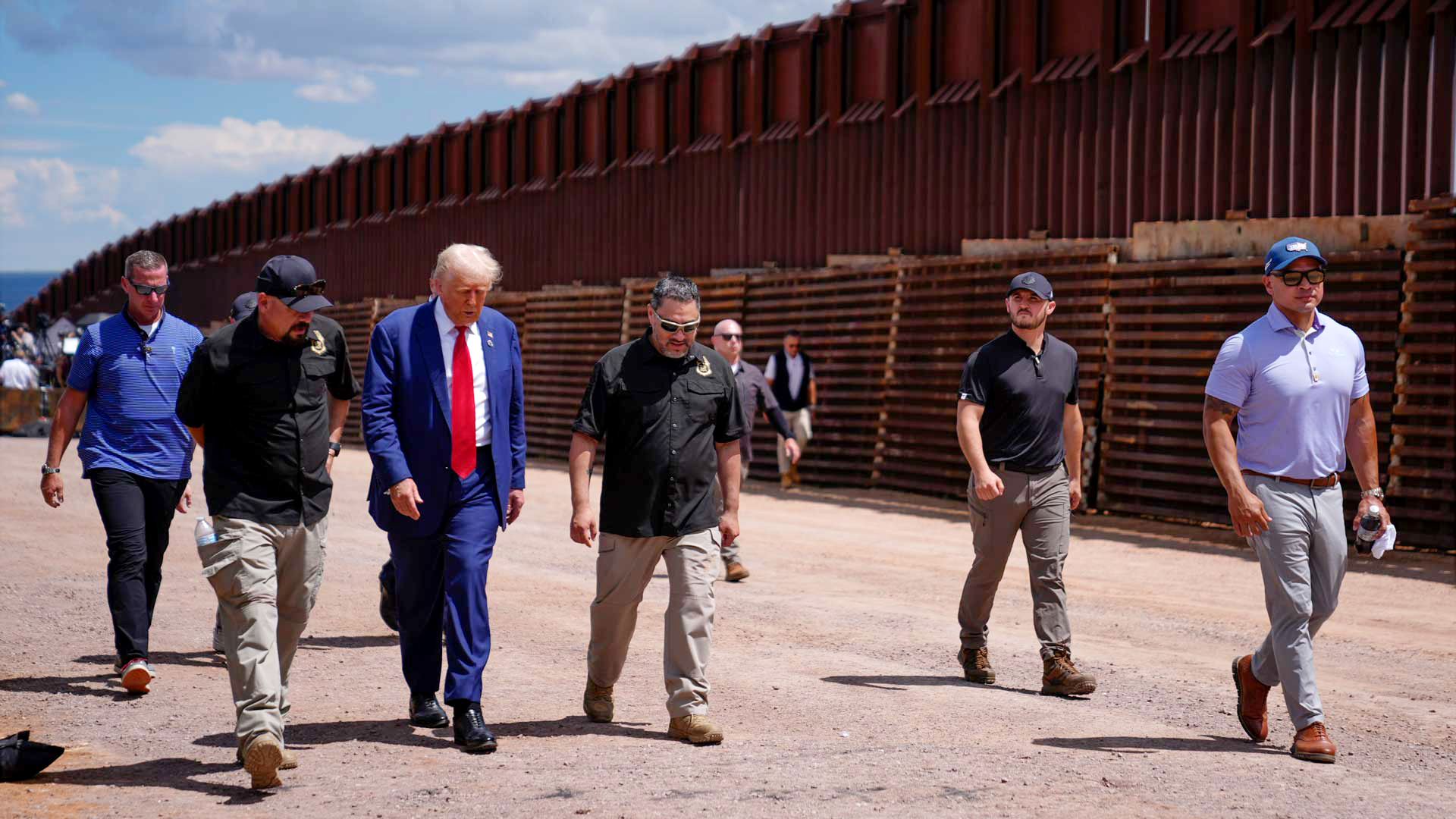
Following Donald Trump’s re-election and the beginning of his second presidential term on 20 January 2025, the United States’ immigration and asylum policies underwent rapid and significant changes. Returning to office with the slogan of halting the so-called “invasion of illegal migrants” and enforcing strict border laws, Trump revoked many of Joe Biden’s executive guidelines and policies, replacing them with a new, far more restrictive framework. In the first months of his second term, the Trump administration reinstated the so-called Zero-Tolerance Policy through several executive orders, and limited cooperation with countries of origin and transit unless they agreed to accept U.S.-deported asylum seekers. Under this policy, every undocumented adult entering the United States without authorization became subject to criminal prosecution—whereas previously, undocumented migrants were generally subject only to civil or administrative proceedings. Trump also resumed the plan to construct a fully fortified border wall with Mexico and ordered the deployment of National Guard forces along parts of the southern border in several states.
As part of his new policy known as “Make America Safe Again,” unauthorized migrants were severely restricted from accessing health care, education, and social services, and visa issuance for nationals of several predominantly Muslim countries was suspended. Simultaneously, refugee admission programs for individuals from the Middle East, Central America, and Africa experienced a sharp decline, and the budgets of agencies responsible for refugee resettlement and support were significantly reduced. In his public speeches, Trump framed immigration as a threat to “American identity” and pledged to use legal and security tools to establish full control over the borders. These policies triggered widespread criticism from human rights organizations, civil-society groups, and even some U.S. states and federal courts, which argued that the measures violated humanitarian principles and the international obligations of the United States.
Incidents
- Executive Order “Preserving the Meaning and Value of American Citizenship”
This order—also known as Executive Order 14160[1]—was issued on 20 January 2025, the first day of Donald Trump’s second presidency, with the aim of restricting the automatic granting of citizenship to certain children born on U.S. soil. Since his first term, Trump had repeatedly claimed that automatic birthright citizenship encourages illegal immigration and fuels so-called “birth tourism[2].” The order stipulates that children born in the United States whose parents are neither U.S. citizens nor lawful permanent residents should not be considered citizens by default, and that federal agencies must not issue citizenship certificates for such individuals.
Practically, this means that if a child is born in the United States to a mother who is not a U.S. citizen and a father who is neither a U.S. citizen nor a lawful permanent resident—or if the mother holds a legal but temporary status such as a tourist, work, or student visa—the child would no longer qualify for U.S. citizenship[3].
The order begins by stating:
“The privilege of United States citizenship is a priceless and profound gift, and under the Fourteenth Amendment, all persons born or naturalized in the United States and subject to the jurisdiction thereof are citizens of the United States and of the State wherein they reside[4].”
This measure has triggered serious legal challenges from at least 22 states, as well as migrant-rights advocates and groups supporting pregnant women[5], who argue that the order violates the Fourteenth Amendment and the long-standing constitutional principle of birthright citizenship. Critics emphasize that for more than a century, the U.S. Supreme Court has explicitly held that nearly all children born on American soil—regardless of the legal status of their parents—are citizens by right.
In this context, Judge Joseph Laplante, a federal judge of the U.S. District Court for the District of New Hampshire, stated:
“Stripping United States citizenship and abruptly altering a policy that has existed for such a long time constitutes an irreparable harm[6].”
- Executive Order “Protecting the American People Against Invasion”
This executive order, also issued on 20 January 2025, reflects the Trump administration’s security-driven and immigration-focused approach. The order defines illegal immigration and uncontrolled border crossings as a “threat to national security and public order,” and directs federal agencies to adopt stricter measures related to border control, migrant detention, accelerated removals, and the limitation of asylum procedures. It also emphasizes expanding the authority of border enforcement personnel and strengthening cooperation between states and the federal government.
Furthermore, the order instructs the Attorney General, the Secretary of State, and the Secretary of Homeland Security to prioritize the criminal prosecution of offenses related to illegal entry and unlawful presence[7]. This directive stands in contrast with constitutional interpretations indicating that the term “invasion” refers to an actual armed attack[8].
Nevertheless, the beginning of the order declares:
“Many aliens who illegally reside in the United States pose significant threats to national security and public safety and commit heinous and despicable acts against innocent Americans. Others engage in hostile activities, including economic espionage and preparations for terrorism-related conduct. Many have exploited the generosity of the American people, and their presence in the United States has cost taxpayers at the federal, state, and local levels billions of dollars. Enforcing our immigration laws is vital to the national security and public safety of the United States[9].”
This order has faced strong criticism from human rights organizations, which argue that it threatens the right to asylum, humanitarian protections, and the fundamental principles of migrant rights. Multiple legal challenges have also been filed against it.
- Executive Order Issued Under the “Alien Enemies Act”
This order, issued on 15 March 2025 by Donald Trump, relies on a very old statute dating back to 1798, which authorizes the President to detain or expel nationals of an enemy country without trial during times of declared war or foreign invasion. According to this law:
“Whenever there is a declared war between the United States and any foreign nation or government, or whenever any invasion or predatory incursion shall be perpetrated, attempted, or threatened against the territory of the United States by any foreign nation or government, and the President shall publicly declare the existence of such a state of affairs, then all natives, citizens, denizens, or subjects of the hostile nation or government, being males of the age of fourteen years or upward, who shall be within the United States and not actually naturalized, shall be liable to be apprehended, restrained, secured, and removed as alien enemies[10].”
On 15 March 2025, Trump invoked this law to declare members of a Venezuelan organized group known as “Tren de Aragua” as “alien enemies.” Under this designation, any Venezuelan aged fourteen or older suspected of affiliation with this group could be immediately arrested, detained, and deported.
On that same day—15 March—the U.S. government transferred over 200 individuals accused of belonging to the Venezuelan group to the notorious Terrorism Confinement Center (CECOT) in El Salvador, despite the fact that none had undergone judicial proceedings, and many had no proven or known connection to the group[11].
This executive action was met with swift legal challenges and widespread criticism. Opponents argue that the Alien Enemies Act was intended for use during armed conflict between nation-states—not against migrants or non-state groups—and that applying it in this manner violates fundamental principles of due process and basic migrant rights.
- Executive Order “Protecting American Communities from Criminal Aliens”
This order, signed by Donald Trump on 28 April 2025, seeks to intensify immigration enforcement and increase pressure on so-called “sanctuary cities.” The order instructs the Department of Justice (DOJ) and the Department of Homeland Security (DHS) to identify and publish a list of states and municipalities that fail to sufficiently cooperate with federal immigration law enforcement. It further requires these agencies to notify such jurisdictions of their potential violations of federal law and, if non-cooperation persists, to pursue legal action and even suspend or terminate federal funding.
The Department of Justice subsequently released a list of sanctuary jurisdictions, including 13 states, 18 cities, and 4 counties[12].
Although framed as part of the administration’s domestic-security policy with an emphasis on stricter actions against migrants who commit crimes, the order is legally and politically contentious because it pressures state and local autonomy and challenges the principles of federalism. Additionally, the order aims to counter state and local laws that may, in the administration’s view, “place aliens above American citizens,” particularly in areas such as education and criminal sentencing.
The Trump administration argues that the previous government allowed millions of undocumented migrants to enter the United States without adequate oversight, and that this situation—combined with the territorial presence of international cartels and transnational criminal organizations along the southern border, as well as terrorist actors seeking to harm the United States—poses serious risks to public and national security.
The opening section of the order states:
“The supremacy of the Federal Government with respect to immigration, national security, and foreign policy is undeniable[13].”
It further asserts:
“Some state and local officials continue to use their authority to violate, obstruct, and resist the enforcement of Federal immigration laws. This constitutes an unlawful rebellion against the supremacy of Federal law and the Federal Government’s duty to defend the territorial sovereignty of the United States[14].”
These statements illustrate that, beyond targeting migrants and asylum seekers, the Trump administration is also seeking to assert stronger federal dominance over state governments, especially regarding immigration enforcement.
- Executive Order “Securing Our Borders”
This order—also known as Executive Order 14165—is one of the Trump administration’s principal security measures issued on the first day of Trump’s second term. It aims to intensify U.S. border control, particularly along the southern border.
Immediately after the order was issued, the Pentagon announced the deployment of 1,500 active-duty military personnel to assist in securing the southern border[15]. This surge brought the total number of active-duty forces stationed along the U.S.–Mexico border to approximately 4,000 troops[16].
The order requires federal agencies to establish “full operational control” over the borders, which includes:
- Expanding the construction of walls or physical barriers;
- Increasing the presence of military personnel and border agents;
- Intensifying the detention of migrants lacking legal status[17].
Implementation of this order was accompanied by unprecedented security measures, such as:
- The use of spy satellites for border surveillance[18];
- Deployment of thousands of military personnel;
- Even the placement of a U.S. Navy destroyer to support border operations.
This executive order forms part of the Trump administration’s more aggressive immigration policy and has been described by many experts as legally and ethically contentious, given its sweeping security orientation and militarization of border control.
- Executive Order “Protecting the United States from Foreign Terrorists”
The executive order titled “Protecting the United States from Foreign Terrorists and Other National and Public Safety Threats”, issued on 20 January 2025, is designed to intensify security vetting for migrants and asylum seekers entering the United States. The order directs the Department of Homeland Security (DHS), the Department of State, and U.S. intelligence agencies to strengthen background checks, security screening systems, and risk-assessment procedures for visa applicants, asylum seekers, and even certain individuals already present inside the United States.
The order emphasizes identifying potential threats posed by foreign terrorist organizations and drug cartels, and it paves the way for broader restrictions on visa issuance and entry for nationals of specific countries. In this context, the Trump administration designated eight organizations in Latin America as “foreign terrorist organizations[19].”
Critics argue that this order represents an expanded and updated version of previous policies such as the Travel Ban, raising concerns that it may have discriminatory effects and violate the rights of non-citizens.
The order took effect on 9 June 2025, and the Department of State subsequently fully suspended all immigrant and nonimmigrant visa categories for nationals of the following countries:
Afghanistan, Myanmar, Chad, Democratic Republic of the Congo, Equatorial Guinea, Eritrea, Haiti, Iran, Libya, Somalia, Sudan, and Yemen[20].
Visa issuance for nationals of several additional countries—including Burundi, Cuba, Laos, Sierra Leone, Togo, Turkmenistan, and Venezuela—was partially suspended[21].
U.S. officials also announced that the government would revoke all visas held by citizens of South Sudan[22].
Following significant backlash and political pressure, the administration clarified that the restrictions would not apply retroactively to previously approved visa applications, but would instead apply to new applications submitted after implementation[23].
Challenges and Responses
- Security-Oriented Treatment of Migrants
One of the major challenges concerning migrants and asylum seekers entering U.S. territory after Donald Trump returned to power was the shift toward security-based responses. During the presidential campaign period and throughout the Trump–Harris race, Trump repeatedly used threatening language toward migrant communities, pledging to confront migrants and asylum seekers already inside the United States and to impose extremely restrictive laws governing entry—particularly for nationals of countries portrayed as potential threats to America.
Immediately after assuming office for his second term, Trump issued a series of immigration-related executive orders—several of which were discussed earlier in this report—but the treatment of migrant and asylum-seeking populations quickly took on a militarized character, with National Guard forces deployed in response to migrant movements.
On his first day in the Oval Office after being sworn in as the 47th President of the United States, Trump signed an executive order declaring a “national emergency,” thereby authorizing the deployment of military forces to the southern border. The order states:
“Given the gravity and urgency of the present danger and the imminent threat, it is necessary for the Armed Forces to take all appropriate measures to assist the Department of Homeland Security in achieving full operational control over the southern border[24].”
Alongside this measure, several additional actions underscored the administration’s shift toward a punitive and security-driven approach, including:
- Designating certain Central and Latin American organizations as terrorist groups;
- Separating migrant children from their parents;
- Sending asylum seekers and migrants to CECOT, a high-risk and maximum-security prison in El Salvador;
- Denying detainees meaningful and public court hearings;
- Rapidly removing individuals from U.S. territory without due process.
It is worth noting that family separation had already been practiced during Trump’s first term. As of December 2024, six years after the policy was first implemented, 1,360 children still had not been reunited with their families[25].
- Domestic Reactions
The legal battle over Trump’s executive order on “Preserving the Meaning and Value of American Citizenship” began in January 2025 and escalated after multiple nationwide injunctions were issued by federal courts. In response, the Trump administration appealed to the U.S. Supreme Court, not to challenge the substance of the order itself, but to contest the authority of district courts to issue nationwide injunctions.
On 27 June 2025, in the case Trump v. CASA, the Supreme Court ruled that nationwide injunctions generally exceed the authority of district courts. However, the Court simultaneously left room for class-based injunctions. Immediately afterward, a new class-action lawsuit was filed, and on 10 July, Judge Joseph Laplante issued a new nationwide injunction by certifying “at-risk newborns” as a class—temporarily suspending the implementation of Trump’s order once again.
As a result, the case has reached a complicated procedural stage, and despite the Supreme Court’s ruling, it remains unclear when or how a final decision will be made regarding the order’s compatibility with the Fourteenth Amendment[26].
Human Rights Watch also condemned Trump’s order issued under the Alien Enemies Act, describing it as one of the most dangerous human-rights regressions in modern U.S. history. The organization warned that using a 236-year-old law to collectively label an entire nationality as “enemy aliens” and transferring migrants to foreign prisons constitutes a blatant violation of the United States’ international obligations.
HRW emphasized that the U.S. government’s use of this law violates the principle of non-refoulement, as Venezuelans deported under this order face a serious risk of torture, ill-treatment, arbitrary detention, and enforced disappearance at the CECOT super-maximum-security prison in El Salvador. The organization further highlighted that:
- Denying detainees access to lawyers,
- Failing to notify families about legal status,
- Removing names from official detainee databases
all constitute forms of enforced disappearance.
HRW stressed that the government’s reliance on superficial indicators such as tattoos, clothing, or accidental similarities to determine gang affiliation is unreliable and could lead to the arrest and deportation of innocent people. The organization accused the U.S. government of using the Alien Enemies Act as a tool for mass expulsion without due process, calling it a severe threat to fair-trial guarantees, the right to asylum, freedom from arbitrary detention, and the prohibition of torture. HRW demanded the immediate cessation of the policy, the return of individuals already transferred, and the full repeal of the law by Congress[27].
The Brennan Center for Justice at New York University School of Law also published a detailed report analyzing the Alien Enemies Act. The report states that the Act and similar presidential authorities have historically allowed U.S. presidents to target individuals not based on conduct or real threats to national security, but rather on their identity. The report warns that in the event of a future declaration of war, a president could again use this sweeping authority to carry out mass detentions and expulsions.
Even more concerning, the report notes that the Act’s vague and overly broad language might enable a president to use it during peacetime as a way to bypass ordinary criminal and immigration laws. The report recalls that prior to Venezuelan nationals, the law was last invoked during World War II to justify the forced internment of Japanese, German, and Italian non-citizens. In 1988, when the U.S. government formally apologized and paid reparations for the internment of Japanese Americans, Congress acknowledged that the policy had been driven by racial prejudice. Later, Congress described the internment of Italians as a “fundamental injustice,” and the Department of Justice admitted that German non-citizens had been targeted based on race[28].
The Center for American Progress, an independent and nonpartisan policy institute, also released a report sharply criticizing Trump’s immigration approach. The report characterizes the administration’s policies as a series of theatrical, non-expert, and fear-driven measures that—rather than enhancing security—actually undermine public and national safety. The report states:
- Trump’s use of terms such as “invasion” is racist, dangerous, and legally baseless;
- Such rhetoric risks inciting domestic violence against migrants;
- His policies divert security resources away from serious crimes;
- They destroy trust between migrant communities and law enforcement;
- The threats of mass detention and deportation tear families and communities apart.
CAP also argues that Trump’s policies are economically damaging, causing reduced labor supply, increased prices, lower tax revenues, and harm to major sectors of the U.S. economy.
Ultimately, the report concludes that these policies do not create security, but instead pose threats to democratic values, the national economy, and human dignity[29].
The American-Arab Anti-Discrimination Committee (ADC) issued a strong statement condemning Trump’s executive order on “Protecting the United States from Foreign Terrorists,” describing it as a renewed and intensified version of the 2017 Muslim Ban. ADC characterizes the policy as discriminatory against predominantly Muslim and Arab countries and warns that it grants the government power to deny visas or even deport lawful residents based on:
- political beliefs,
- religious convictions, or
- cultural background.
ADC argues that the government’s use of “ideological exclusion” signals a return to historical periods in which individuals were punished not for posing a real threat, but simply for their viewpoints. The organization warned that such actions undermine free speech and the First Amendment of the U.S. Constitution, and reproduce an atmosphere of fear and discrimination. ADC added that earlier travel bans failed to identify any real threats but succeeded in fragmenting families. The organization called on the U.S. government to stop collectively targeting Arab and Muslim communities, arguing that violations of the rights of one group ultimately endanger the freedoms of all[30].
- International Reactions
Following the U.S. government’s new migration restrictions targeting Mexico—and the increasingly harsh and threatening tone used by American officials toward the country—the President of Mexico, Claudia Sheinbaum, issued a strong response. She warned that Mexico would never tolerate a U.S. violation of its national sovereignty. Her remarks came after Washington designated several Mexican cartels as foreign terrorist organizations without prior consultation with the Mexican government.
Sheinbaum stated that her administration had not been informed or consulted before the United States placed Mexican cartels on the global terrorist list. She further announced her intention to propose a constitutional amendment aimed at strengthening protections for Mexico’s national sovereignty. Her comments were interpreted as an implicit criticism of Donald Trump, who had repeatedly claimed that Mexico was responsible for enabling an “invasion” of migrants into the United States.
Sheinbaum also declared her plan to propose another constitutional amendment that would impose harsher penalties on both Mexicans and foreign nationals involved in weapons trafficking, noting that most firearms used in crimes inside Mexico are smuggled from the United States[31].
The Government of Colombia also reacted strongly after the United States carried out mass deportations of Colombian nationals. Bogotá initially refused to accept two U.S. aircraft transporting deported Colombians, a decision influenced by President Gustavo Petro’s anger over the treatment of Brazilian migrants deported around the same time, who were transported in handcuffs and shackles.
Following this diplomatic dispute, Colombia deployed two Air Force aircraft to repatriate 201 Colombian citizens, including children, from California and Texas. Upon sharing images of their arrival on social media, Petro stated:
“They are Colombian, free, and dignified—and now they are in their country, where everyone loves them.”
He added:
“A migrant is not a criminal, but a human being who wants to work, advance, and live[32].”
The Elcano Royal Institute, a Spain-based think tank, also analyzed Trump’s immigration policies in its report titled “The trail of Trump’s (anti-)immigration policies in Europe.” The report notes that European countries are experiencing a broader shift toward stricter migration policies:
- In the United Kingdom, Prime Minister Keir Starmer’s government has adopted a firm stance against irregular migration, including workplace raids and a proposed “Border Security, Asylum, and Immigration Bill.” This bill seeks to expand police powers, create new offenses related to illegal migration, and restrict access to citizenship for individuals entering the country irregularly.
- In Germany, the Christian Democratic Union (CDU) has cooperated with far-right groups, breaking the so-called “cordon sanitaire.”
- In France, comments by then-Prime Minister François Bayrou about a perceived “migratory surge” provoked widespread controversy.
The report argues that these developments reflect a spillover effect of the U.S. government’s framing of migration issues. However, it acknowledges that Europe’s shift toward restrictive migration policies predates Trump and intensified after the 2015 refugee crisis.
The analysis concludes that while historical evidence does not support assigning responsibility to the United States for European migration policies, the discursive frameworks and regulatory models used by the U.S. profoundly influence how other countries conceptualize and respond to migration. Under Trump’s “new migration policy,” no significant steps were taken to facilitate legal migration or support integration programs. Instead, migration was framed almost exclusively in connection with:
- crime,
- drug trafficking, and
- public expenditure,
while positive contributions—such as employment, economic growth, cultural diversity, and innovation—were largely ignored[33].
Conclusion
The collection of policies and executive orders issued by Donald Trump during his second presidential term represents not merely a return to earlier hardline approaches but the formation of a distinctly security-ideological model in U.S. immigration policy—one that reframes migration from a human and social issue into one defined by security, identity, and even ideology. This framework rests on three fundamental pillars: the securitization of migration, the extensive expansion of presidential authority, and the reconfiguration of American identity through altered citizenship mechanisms.
In the first layer, the securitization of migration is advanced by invoking terms such as “invasion,” “alien enemy,” and “foreign terrorist”. These terms give the government the power to effectively erase the distinctions between migrant, asylum seeker, and potential enemy. The consequences of this securitization are far-reaching: the weakening of judicial safeguards, violations of the principle of non-refoulement, the normalization of detention without judicial review, and the transformation of migrants from subjects of rights into subjects of security.
The use of the 1798 Alien Enemies Act in peacetime further illustrates that the Trump administration has removed this historical legislation from its original context and repurposed it to serve a modern political agenda—one based not on actual threats but on the construction of threat narratives, framing migration through a quasi-war lens.
In the second layer, this approach is reinforced by expanding federal power at the expense of state authority. Measures targeting sanctuary cities, threats to withhold federal funding, and claims that state resistance constitutes unlawful rebellion demonstrate how immigration has become a tool for restructuring the balance of power between the federal government and the states. Thus, Trump’s immigration policy is not only about migrants—it is also about consolidating a new model of federal governance in which the central government assumes maximum authority.
In the third layer, the redefinition of citizenship and national identity becomes central to this political project. Executive Order 14160 challenges not only the Fourteenth Amendment, but also introduces a conceptual shift: citizenship is treated not as a legal right, but as a privilege. This marks a deeper identity-oriented transformation in U.S. immigration policy, wherein migration is portrayed not only as a security threat but also as a threat to the essence of American identity.
The combination of these three pillars has produced domestic and international reactions that extend beyond human-rights critiques and into broader concerns about structural changes in American democracy. Many of the measures enacted in the field of immigration moved beyond traditional legal processes, prompting interventions by courts, objections from countries of origin, and warnings from human-rights organizations. These developments indicate that Trump’s immigration policies are gradually reshaping the legal and ethical foundations of the U.S. immigration system and risk normalizing discrimination, expanding detention without due process, and increasing policies rooted in negative identity construction.
References
[1] Travel.State.Gov. (n.d.). Executive Order 14160: Protecting the Meaning and Value of American Citizenship. Travel.State.Gov. From: https://travel.state.gov/content/travel/en/News/passports/EO14160.html
[2] Gambino, L. (2025, January 23). Trump citizenship order ‘overreached by a mile’ – California attorney general. The Guardian. From: https://www.theguardian.com/us-news/2025/jan/23/citizenship-california-rob-bonta-trump-birthright
[3] Holland & Knight. (2025, January 20). Executive Order: Protecting the Meaning and Value of American Citizenship. Holland & Knight. From: https://www.hklaw.com/en/insights/publications/2025/01/executive-order-protecting-the-meaning-and-value-of-american
[4] The White House. (2025, January 20). Protecting The Meaning And Value Of American Citizenship. The White House. From: https://www.whitehouse.gov/presidential-actions/2025/01/protecting-the-meaning-and-value-of-american-citizenship/
[5] Pinto, R. & Khan, L. (2025, February 7). Breaking down Trump’s attempt to end birthright citizenship. American Immigration Council. From: https://www.americanimmigrationcouncil.org/blog/breaking-down-trump-end-birthright-citizenship/
[6] Popli, N. (2025, July 10). Judge blocks Trump’s birthright citizenship order nationwide, reigniting legal fight. Time. From: https://time.com/7301583/birthright-citizenship-class-action-judge/
[7] US Congress. (2025, May 1). Recent Executive Branch Actions on Immigration (Part 2). Congress.gov. from: https://www.congress.gov/crs_external_products/LSB/HTML/LSB11300.web.html
[8] Somin, I. (2025, January 28). What Just happened: The “invasion” executive order and its dangerous implications. Just Security. From: https://www.justsecurity.org/106953/invasion-executive-order-implications/
[9] The White House. (2025, January 20). Protecting the american people against invasion. The White House. From: https://www.whitehouse.gov/presidential-actions/2025/01/protecting-the-american-people-against-invasion/
[10] Legal Information Institute. (n.d.). 50 U.S. Code § 21 – Restraint, regulation, and removal. Legal Information Institute. From: https://www.law.cornell.edu/uscode/text/50/21
[11] American Immigration Council Staff. (2025, May 16). New FOIA document undermines key assumption in Trump’s invocation of the Alien Enemies Act. American Immigration Council. From: https://www.americanimmigrationcouncil.org/blog/new-foia-undermines-assumption-in-trumps-the-alien-enemies-act/
[12] Contra Costa News. (2025, August 6). Justice department publishes list of sanctuary jurisdictions. Contra Costa News. From: https://contracosta.news/2025/08/06/justice-department-publishes-list-of-sanctuary-jurisdictions/
[13] The White House. (2025, April 28). Protecting American Communities From Criminal Aliens. Federal Register. From: https://www.federalregister.gov/documents/2025/05/02/2025-07789/protecting-american-communities-from-criminal-aliens
[14] Balltpedia. (n.d.). Executive Order: Protecting American Communities from Criminal Aliens (Donald Trump, 2025). Ballotpedia. From: https://ballotpedia.org/Executive_Order%3A_Protecting_American_Communities_from_Criminal_Aliens_%28Donald_Trump%2C_2025%29
[15] Baldor, L. & Copp, T. (2025, January 23). Pentagon is sending 1,500 active duty troops to help secure the US-Mexico border. AP News. From: https://apnews.com/article/troops-border-deploy-active-duty-09324578d2b89db5c44e0ba08f42df47
[16] Robertson, N. (2025, January 23). Pentagon to send 1,500 troops to border to start Trump-ordered surge. Military Times. From: https://www.militarytimes.com/news/pentagon-congress/2025/01/22/pentagon-to-send-1500-troops-to-border-to-start-trump-ordered-surge/
[17] The White House. (2025, January 20). Securing our borders. The White House. From: https://www.whitehouse.gov/presidential-actions/2025/01/securing-our-borders/
[18] Taylor, M. & Dastin, J. (2025, March 27). Exclusive: Trump administration is pointing spy satellites at US border. Reuters. From: https://www.reuters.com/world/us/trump-administration-directs-spy-satellite-agencies-surveil-us-mexico-border-2025-03-27/
[19] Knickmeyer, E. & Verza, M. (2025, February 19). Trump administration labels 8 Latin American cartels as ‘foreign terrorist organizations’. AP News. From: https://apnews.com/article/trump-cartels-foreign-terrorist-organizations-eb35567b69fc66f13f7f79fb90906a50
[20] Travel.State.Gov. (2025, June 7). Suspension of visa issuance to foreign nationals to protect the United States from foreign terrorists and other national security and public safety threats. Travel.State.Gov. From: https://travel.state.gov/content/travel/en/News/visas-news/suspension-of-visa-issuance-to-foreign-nationals-to-protect-the-united-states-from-foreign-terrorists-and-other-national-security-and-public-safety-threats.html
[21] Dorsey. (2025, July 1). Travel Ban for 19 Countries is Now in Effect; More Countries May Be Added to the List. Dorsey. From: https://www.dorsey.com/newsresources/publications/client-alerts/2025/7/travel-ban
[22] Le Monde. (2025, April 6). US to revoke all visas for South Sudanese. Le Monde. From: https://www.lemonde.fr/en/international/article/2025/04/06/us-to-revoke-all-visas-for-south-sudanese_6739881_4.html
[23] Lee, M. (2025, June 6). State Dept says current US visas from travel ban countries will not be revoked. AP News. From: https://apnews.com/article/us-visas-trump-rubio-797d5eaec642e53f06ef32dc53a8eec1
[24] Gambino, L. & Villarreal, A. & Pengelly, M. (2025, January 21). Trump declares national border emergency in immigration crackdown. The Guardian. From: https://www.theguardian.com/us-news/2025/jan/20/trump-immigration-emergency-executive-order
[25] Human Rights Watch. (2024, December 16). US: Lasting harm from family separation at the border. Human Rights Watch. From: https://www.hrw.org/news/2024/12/16/us-lasting-harm-family-separation-border
[26] Dallas, K. (2025, July 18). Where does Trump’s birthright citizenship order currently stand?. SCOTUSblog. From: https://www.scotusblog.com/2025/07/where-does-birthright-citizenship-order-currently-stand/
[27] Human Rights Watch. (2025, May 1). United States: Repeal the Alien Enemies Act. Human Rights Watch. From: https://www.hrw.org/report/2025/05/01/united-states-repeal-the-alien-enemies-act/a-human-rights-argument
[28] Yon Ebright, K. (2024, October 10). The Alien Enemies Act. Brennan Center for Justice. From: https://www.brennancenter.org/our-work/policy-solutions/alien-enemies-act
[29] Gandhi, D. & Greenho, B. & Wilson, N. (2025, February 27). Trump’s rash immigration actions place cruelty and spectacle above security. Center for American Progress. From: https://www.americanprogress.org/article/trumps-rash-immigration-actions-place-cruelty-and-spectacle-above-security/
[30] ADC. (2025, January 21). ADC Rejects President Trump’s “Travel Ban” Executive Order. ADC. From: https://adc.org/adc-rejects-president-trumps-travel-ban-executive-order/
[31] The Guardian. (2025, February 20). Mexico will not stand US ‘invasion’ in fight against cartels, president says. The Guardian. From: https://www.theguardian.com/world/2025/feb/20/claudia-sheinbaum-trump-terrorism
[32] Le Monde. (2025, January 29). End of ‘American nightmare’: Colombia brings migrants home. Le Monde. From: https://www.lemonde.fr/en/international/article/2025/01/28/end-of-american-nightmare-colombia-brings-migrants-home_6737529_4.html
[33] Casado, R. (2025, March 13). The trail of Trump’s (anti-)immigration policies in Europe. Real Instituto Elcano. From: https://www.realinstitutoelcano.org/en/analyses/the-trail-of-trumps-anti-immigration-policies-in-europe/


