Introduction
The protection of Iran’s cultural and historical heritage goes beyond the technical requirements of restoring and maintaining historic sites and monuments. It is a fundamental issue at the intersection of cultural governance, development policymaking, institutional accountability, and the preservation of the country’s historical identity. In recent years, reports of the demolition of historic buildings, construction activities within heritage sites and their protected buffer zones, excavations at archaeological sites, and the implementation of urban development and tourism projects have raised serious questions about the consideration given to conservation requirements in decision-making processes and the effectiveness of oversight mechanisms. These challenges, together with the gradual deterioration of historic sites and monuments, limited financial resources, delays in restoration efforts, and shortcomings in management, reflect the complex relationship between urban development and historical heritage conservation. If poorly managed, this relationship can pose serious risks to the authenticity, integrity, and historical value of heritage properties.
Meanwhile, the responses of the responsible authorities, ranging from orders to suspend operations and the initiation of judicial proceedings to the defense of previously issued permits and promises of expert assessments, highlight the need for closer scrutiny of the effectiveness of conservation measures and the accountability of the institutions concerned. This is because administrative and legal measures do not necessarily remedy damage already inflicted or eliminate underlying structural risks. The significance of this issue becomes even more apparent when cultural heritage is understood not merely as a collection of remnants of the past, but as an expression of a nation’s historical memory, collective identity, and civilizational continuity. The destruction of this heritage, or the weakening of the conditions necessary for its protection, particularly where the damage is irreversible, can deprive future generations of historical evidence and opportunities to benefit from the cultural achievements of their predecessors. The central issue, therefore, is not simply to identify damage and respond to instances of destruction, but to assess the capacity of the governance system to prevent risks, ensure compliance with legal and professional conservation standards, strike a balance between development needs and conservation requirements, and fulfill its intergenerational responsibility toward Iran’s cultural heritage.
Incidents
- The Historic Tumanian Building in Sabzevar
On September 9, 2026, parts of the historic Tumanian Building in Sabzevar, commonly known as the Russian Barracks and dating to the early Pahlavi period, were demolished using a loader, including its historically significant entrance gateway and sections of its architectural fabric[1]. Although the building was not listed on Iran’s National Heritage List, its historical significance and the regulations governing its protection had been formally communicated to the relevant authorities in October–November 2024[2]. According to the Ministry of Cultural Heritage, Tourism and Handicrafts, Sabzevar Municipality’s District 2 had authorized the demolition of the southern and eastern walls without obtaining the Ministry’s expert opinion, and the property owner proceeded with the demolition on the basis of that authorization.
Following intervention by the responsible authorities, the demolition was halted and a formal judicial complaint was filed. However, the final determination of responsibility remains subject to judicial proceedings[3]. According to an official from the Department of Cultural Heritage, Tourism and Handicrafts of Razavi Khorasan Province, approximately 65% of the historic Tumanian Building was demolished. Nevertheless, the evidence and records held by the Sabzevar Cultural Heritage Office, together with the detailed documentation previously prepared for the building, could make it possible to reconstruct the damaged sections[4].
- The Proposal to Incorporate Part of Persepolis’ Buffer Zone into Marvdasht
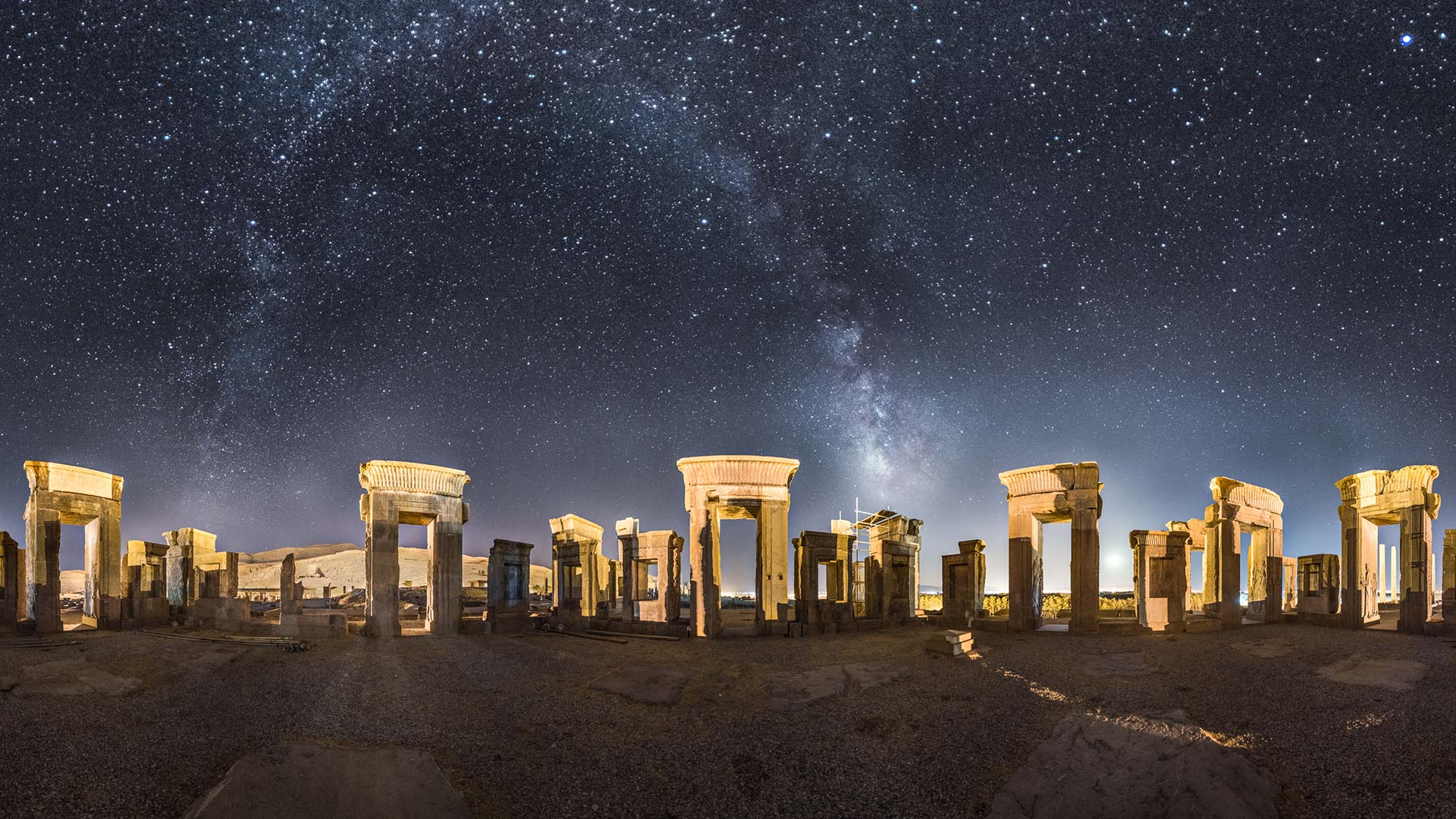
In August–September 2026, efforts to advance the proposal to incorporate the Mahdiyeh area, located within part of the Grade II buffer zone of Persepolis, into the municipal boundaries of Marvdasht prompted objections from officials of the Persepolis World Heritage Site and heritage conservation experts. The then acting director of the site warned of the implications of urban expansion for the protection of the site and its historic landscape and resigned in protest[5]. In contrast, the mayor of Marvdasht stated that the proposal was intended to regulate existing construction and organize tourism services. The disagreement highlighted the need for transparency in decision-making and respect for the assessments of heritage conservation experts.
On September 21, 2026, the Supreme Council of Urban Planning and Architecture of Iran approved a review of the proposal, while officials emphasized that the Marvdasht Comprehensive Urban Plan had not yet been finalized and that conservation regulations remained in force[6]. However, only time will determine whether such assurances prove accurate, particularly given the earlier statement by Mohammad Javad Jafari, the acting director of the Persepolis World Heritage Site:
“Unfortunately, it has been announced that the incorporation of Mahdiyeh village, located within the Grade II buffer zone of Persepolis, into the city of Marvdasht has been finalized, and that objections raised by the Persepolis World Heritage Site and the Department of Cultural Heritage, Tourism and Handicrafts can no longer be considered[7].”
- The Ancient City of Bishapur
In September–October 2024, the construction of concrete walkways to facilitate tourist access through parts of the ancient city of Bishapur sparked public concern. The ancient city of Bishapur is also included in the Sassanid Archaeological Landscape of Fars Region, a serial property inscribed on the UNESCO World Heritage List[8]. More than one kilometre of concrete had been laid across the floors of the palace and the ancient city of Bishapur alone. Reports indicated that concrete had been poured across the Cross-shaped Hall, the Mosaic Hall, and the corridors of the ancient city of Bishapur, forming surfaces approximately 2.5 metres wide and 15 to 20 centimetres thick. The concrete pathway reportedly extended as far as the entrance to the Temple of Anahita[9]. In total, approximately 250 metres of cement walkway had been constructed. Taking its varying widths into account, nearly 300 square metres of some of the most significant remains of the Sasanian period in the ancient city of Bishapur had been covered with cement[10].
Cultural heritage officials in Fars Province stated that the concrete pathways had been installed over separating layers, including plastic sheeting and foam, to prevent direct contact with the historic surfaces. Nevertheless, according to a report published by Amordad News on November 30, 2024, nearly two months after the project was implemented, the disputed concrete structures had still not been removed. The addition of new construction materials to sections of the pathways had also heightened concerns among experts[11]. No independent confirmation that these concrete pathways had ultimately been removed was found in the sources reviewed.
- The Historic Kamar-e Zarrin Passage in Isfahan
In June–July 2025, nighttime excavation operations involving three mechanical excavators and more than 20 trucks in the area opposite the Kamar-e Zarrin Mosque in Isfahan, as part of a project to connect the Gold Bazaar to Imam Ali Square (Kohneh Square), prompted protests from archaeologists and judicial intervention. Archaeological findings from excavations in this area date to the Qajar period as well as the pre-Islamic era[12]. According to Ali Shojaei, the excavation director, the operations damaged parts of the architectural remains and archaeological layers dating to the Seljuk period, while the removal of excavated soil resulted in the loss of archaeological data, although the precise extent of the damage had yet to be determined.
The Isfahan Prosecutor stated that the use of mechanical equipment violated previously agreed conservation arrangements, and an order was issued to suspend the operations and initiate judicial proceedings[13]. In contrast, the spokesperson for the Isfahan City Council defended the municipality’s financial support and conservation measures, attributing the contractor’s actions to delays in obtaining supplementary permits and uncertainty surrounding the project’s status[14]. Despite these developments, in July–August 2026, the Kamar-e Zarrin archaeological site, together with four other historic properties in Isfahan Province, was inscribed on Iran’s National Heritage List[15].
- The Elamite Site of Eshkaft-e Salman
In late August and early September 2025, the deployment of heavy machinery by the Izeh Municipality in Khuzestan Province to construct a “Health Road” within the 3,200-year-old Elamite site of Eshkaft-e Salman, also known as the Tarisha Temple, drew objections from cultural heritage activists. Faramarz Khoshab, secretary of the Association of Friends of Cultural Heritage in Izeh, reported the destruction of parts of the archaeological site and its protected buffer zone. Zeynab Sohrabi, acting head of the Izeh Cultural Heritage Office, confirmed that the operations had been carried out without authorization or prior coordination and announced that the activities had been halted[16]. The incident occurred several months after the Governor of Khuzestan Province had emphasized the need for immediate protection and appropriate restoration of the inscriptions and rock reliefs at Eshkaft-e Salman[17].
Eshkaft-e Salman is one of Iran’s historically significant archaeological sites, containing some of the most important Elamite rock reliefs and one of the longest known rock inscriptions from the Neo-Elamite period. One of the site’s distinctive features is the depiction of members of a local ruler’s family in some of its reliefs, including women and children, which gives the site particular significance in studies of Elamite art history and culture[18]. Beyond the controversy surrounding the Health Road project, Ardeshir Salehpour, a historical researcher, had reported that the municipality and the Izeh County Water Department had drilled three wells over previous years, approximately 500 to 1,000 metres from the springs at Eshkaft-e Salman. He warned that these activities could cause the water sources to dry up, with potentially harmful consequences for the preservation of the archaeological site[19].
- The Historic House of Amin al-Lashkar in Tehran
The historic House of Amin al-Lashkar, a Qajar-era building located in the Oudlajan neighbourhood of Tehran, was subjected to demolition on December 23, 2025, resulting in damage to parts of the property. The building had been inscribed on Iran’s National Heritage List in January–February 2024[20]. The building had already deteriorated as a result of ownership-related problems and delays in conservation and restoration, prompting warnings from cultural heritage activists about its condition. Mehdi Kalantari, a cultural heritage activist, accused the municipality of negligence and deliberate destruction, stating:
“The historic House of Amin al-Lashkar in Tehran, which has been owned by the Tehran Municipality for years, has suffered from municipal neglect and deliberate destruction, and the Tehran Municipality has taken no action to restore this historic building[21].”
The Deputy for Cultural Heritage of Tehran Province also reported that the operations had been halted following intervention by the Cultural Heritage Protection Unit and called on the municipality to restore the building[22]. The mayor of Tehran’s District 12 pledged to pursue legal action, and on January 2, 2026, reports emerged that restoration and structural reinforcement work had begun with the municipality’s participation and under the supervision of cultural heritage authorities.
- The Buffer Zone of Golestan Palace in Tehran
In October–November 2025, reports of the demolition of the historic Shams-ol Emareh Garage and the construction of the Marvi Center commercial complex within the Grade I buffer zone of Golestan Palace heightened concerns about the protection of this World Heritage Site. According to the Iranian Students’ News Agency (ISNA), despite a requirement to preserve the garage’s historic façade, it had been demolished. The issuance of permits for excavation and the construction of several underground floors also prompted objections from cultural heritage activists[23]. Critics warned of potential damage to the 700-year-old Mehrgerd Qanat and underground historical layers, the risks associated with excavation near Shams-ol Emareh, and changes to the historic urban fabric’s landscape and function. Vahid Shahab, a cultural heritage activist, criticized the permit approval process, telling ISNA:
“Although the property is located within the Grade I buffer zone of Golestan Palace, permission was granted to construct three to four underground floors, and the owner demolished the building’s historic façade without complying with conservation regulations[24].”
Cultural heritage officials emphasized the eight-metre height restriction and the requirement for archaeological supervision. On November 14, 2025, the Minister of Cultural Heritage, Tourism and Handicrafts ordered the suspension of construction activities and a review of the project. Nevertheless, a report published by Tasnim News Agency on August 24, 2026, indicated that construction activities had resumed and that uncertainties remained regarding the permits and the findings of technical assessments[25]. These developments left unresolved questions about the adequacy of oversight and the protection of the palace’s buffer zone.
- The Historic Jameh Mosque of Isfahan (Masjed-e Jāmé of Isfahan)
During the Iranian calendar year 1404 (March 2025–March 2026), the proposed route of Isfahan Metro Line 2 near the historic Jameh Mosque of Isfahan raised concerns about the potential effects of vibration and ground subsidence. The Director-General of Cultural Heritage in Isfahan Province also confirmed that studies assessing the effects of vibration in the vicinity of the mosque had not been completed. In January–February 2026, worsening dampness and the discovery of a broken water pipe in the passage along the mosque’s southern side highlighted shortcomings in the maintenance of surrounding utility infrastructure. However, the Deputy for Cultural Heritage rejected any connection between this damage and the metro project[26].
On September 30, 2026, the Minister of Cultural Heritage, Tourism and Handicrafts stated that any decision regarding metro construction activities would depend on specialized assessments and the opinion of UNESCO[27]. A few days later, on October 3, the manager of the mosque’s World Heritage Site Office reported that the utility infrastructure had been repaired and the water infiltration problem resolved. The official also stated that monitoring had detected no ground subsidence[28]. Subsequently, on October 7, 2026, the Director-General of Cultural Heritage in Isfahan Province announced that revised studies indicated the metro could pass through the area provided that conservation requirements were observed, adding that a final decision would be announced shortly[29].
However, on October 18, 2026, following a review of the submitted studies, the Council of World Heritage Sites of the Ministry of Cultural Heritage, Tourism and Handicrafts did not approve the passage of Metro Line 2 through the area under consideration adjacent to the historic Jameh Mosque of Isfahan and called for further expert assessments. Accordingly, as of that date, neither final approval for the metro route had been announced nor had a definitive decision been made to reject the proposed route or require its modification[30].
- The Historic Area Surrounding Hafezieh in Shiraz
In September–October 2024, the advance of excavation work on Shiraz Metro Line 2 near Hafezieh, the Tomb of Hafez, raised concerns among cultural heritage activists about threats to the historic Mosalla Cemetery, a buried water structure, and the archaeological layers surrounding the poet’s mausoleum. According to the Iranian Labour News Agency (ILNA), the continuation of excavation work was inconsistent with an earlier proposal to use a tram system to protect the historic area[31]. On October 13 of that year, despite an announcement by cultural heritage officials that the project had been suspended, Amin Tabatabaei, director of the Javidan House of Culture in Shiraz, reported that excavation work was continuing. He called for a scientific assessment of the effects of vibrations generated by metro operations and the construction of station access routes on the archaeological remains[32].
Three days later, the General Inspection Office of Fars Province announced that it was investigating the passage of the metro tunnel near Hafezieh as a separate case[33]. In November–December of the same year, the Cultural Heritage Technical Council required the municipality to conduct archaeological studies, prepare a cultural heritage impact assessment, and ensure expert supervision of the project[34]. Nevertheless, on November 29, 2025, Mostafa Dehpahlavan, former head of the Research Institute of Cultural Heritage and Tourism, stated that, by the end of his tenure, the Ministry had not issued authorization for this section of the project, and the agreement on continuous monitoring had not been finalized. At the same time, he referred to an increase in the tunnel’s depth and measures taken to reduce vibrations[35]. This case highlights shortcomings in institutional coordination, permit issuance, and oversight, although the sources reviewed do not provide conclusive evidence that the Tomb of Hafez itself was damaged.
Challenges and Responses
- Challenges of Intergenerational Justice
The destruction and inadequate maintenance of cultural heritage raise the issue of the unequal distribution of benefits and harms across generations. Today’s decision-makers may benefit from construction revenues or savings on conservation costs, while future generations are left to confront the loss of heritage properties over whose destruction they had no say. From this perspective, the present generation acts as a custodian of a heritage whose use carries a responsibility to preserve opportunities for future generations to benefit from it. Article 7 of the UNESCO Declaration on the Responsibilities of the Present Generations Towards Future Generations likewise emphasizes the protection and transmission of this common heritage[36]. Article 4 of the World Heritage Convention places primary responsibility for the protection and transmission of heritage covered by the Convention on States Parties. Accordingly, the scope of State responsibility in this field extends beyond the terms of office of public officials and the immediate demands of urban development to encompass the lasting consequences of their decisions[37].
A letter from the Society for Iranian Archaeology to the President of Iran, published on September 16, 2026, highlights this same conflict by warning against prioritizing short-term economic interests over the country’s intergenerational heritage. The letter’s emphasis on the irreversible nature of the destruction of archaeological sites and historical layers demonstrates that future budget allocations cannot recover historical evidence that has already been lost. Consequently, postponing conservation measures may result in permanent deprivation[38].
Beyond the considerations discussed thus far, from the perspective of cultural rights, General Comment No. 21 of the United Nations Committee on Economic, Social and Cultural Rights places the protection of historic monuments and the transmission of heritage to future generations within the framework of the right to take part in cultural life[39]. Viewed in this light, what is at risk of disappearing is the ability of future generations to understand, reinterpret, and even critically examine their own past. They may have different questions and employ different research methods, yet destruction in the present pre-emptively eliminates some of the sources through which they might find answers, thereby restricting their freedom of choice. The challenge of intergenerational justice lies precisely in this inequality: decision-making authority rests with the present generation, while part of the irreversible costs of its decisions is imposed on generations that do not yet have the opportunity to defend their own interests.
- Domestic Responses
In an interview with Miras-e Arya on September 14, 2026, Behzad Moridi, Director-General of Cultural Heritage, Tourism and Handicrafts of Fars Province, announced the Ministry of Cultural Heritage, Tourism and Handicrafts’ opposition to incorporating part of the Grade II buffer zone of Persepolis into the municipal boundaries of Marvdasht. He stated that the resolution concerning the proposal had been officially communicated in August–September 2025, but had faced opposition from the Ministry, the Fars Provincial Department of Cultural Heritage, Tourism and Handicrafts, and the Persepolis World Heritage Site Office from the outset. According to Moridi, correspondence and follow-up measures undertaken by these institutions had led to the suspension of the proposal’s implementation process and its referral for further review and revision. He emphasized that implementing the resolution would be impossible without meeting the conservation requirements of Persepolis, and that urban development must not undermine the protection of this World Heritage Site. Moridi also identified the preservation of the historical, cultural, and landscape integrity of Persepolis as one of the Ministry’s priorities and announced that legal and expert-level follow-up efforts would continue[40].
In a documented report published on December 14, 2025, the Iranian Students’ News Agency (ISNA) questioned the procedures through which construction permits had been issued within the buffer zone of Golestan Palace, presenting administrative correspondence and building permits as supporting evidence. By comparing the cultural heritage authorities’ requirement to preserve the historic façade of the Shams-ol Emareh Garage with subsequent permits authorizing demolition and reconstruction, the news agency highlighted conflicting decisions made by the responsible authorities. ISNA also reported that a permit for a seven-storey building had been issued without the plans having been approved by the Provincial Department of Cultural Heritage, and that construction had begun under a permit that was not valid for carrying out the work. The news agency identified the reissuance of a building permit following the Minister’s suspension order and the absence of a transparent explanation of the review’s findings as further unresolved issues in the case. It also raised the need for accountability regarding compliance with conservation regulations and the prioritization of the public interest[41].
- International Responses
Reflecting international concerns about the protection of the historic Jameh Mosque of Isfahan, Baharak Ashrafi, Michael Kloos, and Christa Reicher, researchers affiliated with RWTH Aachen University and RheinMain University of Applied Sciences in Germany, examined the implications of the Imam Ali Square development project and Isfahan Metro Line 2 in an article published on December 24, 2024. Drawing on expert assessments, they identified vibrations generated by excavation activities and continuous train movements, together with the potential for ground subsidence, as factors that could cause structural cracks, damage to foundations, and deterioration of the mosque’s brickwork and tile decorations. The study also found that the disproportionate scale of the new square in relation to the surrounding historic urban fabric weakened the area’s visual integrity and the mosque’s prominence within its urban setting. The authors recommended rerouting the metro outside the mosque’s buffer zone and, if this proved impossible, implementing vibration control measures and continuous monitoring. They also called for a comprehensive assessment of the structure’s vulnerability, protection of the historic bazaar, and measures to support the continued presence of local residents and businesses[42]. While acknowledging the potential benefits of transport development, the research underscores the importance of conducting heritage impact assessments before decisions are made. Its findings concerning the metro, however, describe anticipated risks and do not establish that all the identified forms of damage have actually occurred.
The specialist platform Geoengineer also reported on expert warnings about the threat posed to Iran’s historical heritage by land subsidence in an article published on November 3, 2025. Referring to decades of excessive groundwater extraction, the report identified sites such as Persepolis, Naqsh-e Jahan Square, and the Tomb of Cyrus as being exposed to risks associated with land subsidence. According to the platform, evidence of ground cracking and instability had been observed near historic structures in Isfahan, Fars, and Tehran provinces. The report linked concerns about historical monuments in Isfahan to the drying of the Zayandeh Rud River and declining groundwater resources, while also warning about the consequences of subsidence in the Marvdasht Plain for Persepolis. Drought, uncontrolled water extraction, and a lack of coordination in water resource management were also identified as factors aggravating the crisis. Nevertheless, the report distinguished between gradual deterioration and imminent collapse. Citing experts, it emphasized that, unless existing trends were addressed by curbing groundwater extraction and restoring groundwater resources, irreversible damage could be inflicted on historical heritage over the coming decades[43].
Finally, Agence France-Presse (AFP), in a report by Menna Zaki and Ahmad Parhizi, published on September 16, 2024, and republished by Phys.org, highlighted the threat posed by lichens to Persepolis and the shortage of financial resources for conserving Iran’s historical heritage. The report described the growth of lichens on stone surfaces as a gradual threat to the integrity of historic structures and relief carvings. Shahram Rahbar, one of the site’s conservators, warned that, without intervention, these organisms could severely damage the stone monuments over a period of 50 to 100 years. Mohammad Sohrabi, a lichenologist, also reported the loss of a number of relief carvings at Persepolis, linking the spread of lichens to industrialization, acid rain, and climatic conditions. Alongside these warnings, the report described the sustained efforts of conservators to clean the stone surfaces using specialized techniques. Agence France-Presse also reported remarks by Ali Darabi concerning severe budgetary constraints on the restoration of historic monuments, demonstrating that the protection of this heritage, beyond requiring specialized conservation interventions, also faces the challenge of securing adequate financial resources[44].
Conclusion
An examination of the cases discussed in this report indicates that threats to Iran’s historical heritage are, in many instances, manifestations of structural shortcomings in decision-making, institutional coordination, and preventive oversight. The demolition of the Tumanian Building, damage to the archaeological remains at Kamar-e Zarrin, and interventions at Bishapur, together with disputes concerning the buffer zones of Persepolis and Golestan Palace and the potential risks posed by metro projects near the historic Jameh Mosque of Isfahan and Hafezieh, reveal a gap between legal and professional conservation requirements and actual implementation practices. Although judicial interventions, the suspension of certain operations, and the initiation of expert assessments demonstrate efforts to contain the damage, the recurrence of such incidents and uncertainty surrounding the outcomes of corrective measures raise questions about the effectiveness of existing mechanisms. The fundamental problem is the predominance of a reactive approach over preventive conservation, with protective measures sometimes initiated only after irreversible damage has occurred. From the perspective of intergenerational justice, the consequences of this situation extend beyond the loss of part of the country’s tangible heritage. They also include restricting future generations’ opportunities to understand, study, and benefit from authentic historical evidence, a deprivation that even the physical reconstruction of historic structures may not necessarily remedy.
This situation is also significant under international law, as Articles 4 and 5 of the 1972 Convention Concerning the Protection of the World Cultural and Natural Heritage establish the responsibility of States Parties to protect and transmit heritage covered by the Convention to future generations and emphasize the adoption of appropriate legal, administrative, scientific, and financial measures. Furthermore, Article 15(1)(a) of the International Covenant on Economic, Social and Cultural Rights and General Comment No. 21 of the United Nations Committee on Economic, Social and Cultural Rights, which monitors the implementation of the Covenant, link the protection of cultural heritage to the right to take part in cultural life. This connection, together with Article 7 of the UNESCO Declaration on the Responsibilities of the Present Generations Towards Future Generations, provides a basis for legally assessing the long-term consequences of development decisions.
To ensure the effective implementation of these obligations, independent heritage impact assessments, the examination of alternative routes and development proposals, and expert approval should be made mandatory before permits are issued for construction and infrastructure projects within historic sites and their protected buffer zones. A shared system for registering and monitoring permits should also be established among the Ministry of Cultural Heritage, Tourism and Handicrafts, municipalities, and urban planning authorities. In addition, temporary protection measures for historically valuable properties that have not been inscribed on Iran’s National Heritage List, along with the public disclosure of the outcomes of proceedings concerning heritage destruction, should be placed on the relevant authorities’ agenda. At the level of individual cases, there is also a need for documented decisions resolving the status of development proposals within the buffer zones of Persepolis and Golestan Palace, the publication of technical assessment findings concerning metro projects in Isfahan and Shiraz, and clarification of the outcomes of judicial proceedings and restoration measures in the cases involving the Tumanian Building, Kamar-e Zarrin, and House of Amin al-Lashkar. Ultimately, the criterion for assessing the success of the historical heritage protection system must shift from the number of interventions undertaken after destruction has occurred to the extent to which irreversible damage is prevented and the transmission of authentic and intact heritage to future generations is ensured.
References
[1] Radio Farda. (2026, September 10). Historic Caravanserai in Sabzevar Demolished with a Loader in Broad Daylight. Radio Farda. From: https://www.radiofarda.com/amp/33851597.html
[2] Tasnim News. (2026, September 13). Khorasan Razavi’s Cultural Heritage Department Files Formal Complaint Against Those Responsible for Demolishing the “Russian Barracks”. Tasnim News. From: https://www.tasnimnews.ir/fa/news/1405/06/22/3695360/%D8%B4%DA%A9%D8%A7%DB%8C%D8%AA-%D8%B1%D8%B3%D9%85%DB%8C-%D9%85%DB%8C%D8%B1%D8%A7%D8%AB-%D8%AE%D8%B1%D8%A7%D8%B3%D8%A7%D9%86-%D8%B1%D8%B6%D9%88%DB%8C-%D8%A7%D8%B2-%D8%B9%D9%88%D8%A7%D9%85%D9%84-%D8%AA%D8%AE%D8%B1%DB%8C%D8%A8-%D9%BE%D8%A7%D8%AF%DA%AF%D8%A7%D9%86-%D8%B1%D9%88%D8%B3-%D9%87%D8%A7/amp
[3] Noor Ali, M. (2026, September 10). What You Need to Know About the Demolition of “Tumanian Saray” in Sabzevar. Miras Aria News Agency. From: www.chtn.ir/x4vyD
[4] ISNA. (2026, September 13). 65% of Tumanian Building’s Entrance Portal Demolished; Khorasan Razavi’s Cultural Heritage Department Pursues Reconstruction. ISNA. From: https://isna.ir/xdX4BL
[5] Khabar Nab. (2026, September 13). 160 Hectares of Persepolis’s Buffer Zone on the Verge of Incorporation into Marvdasht; Dispute Continues; World Heritage Site Director Resigns. Khabar Nab. From: https://www.khabarnab.com/art/178939902485/160-hectares-of-the-sanctuary-of-persepolis-is-on-the-verge-of-being-annexed-to-merovdasht-the-dispute-over-the-sanctuary-continues-the-resignation-of-the-head-of-the-world-heritage-site
[6] ISNA. (2026, September 21). Supreme Council of Urban Planning and Architecture Approves Review of Plan to Incorporate Persepolis’s Grade II Buffer Zone into Marvdasht. ISNA. From: https://isna.ir/xdX72F
[7] Tasnim News. (2026, September 5). Incorporating Mahdiyeh into Marvdasht Poses a Threat to World Heritage. Tasnim News. From: https://www.tasnimnews.ir/fa/news/1405/06/14/3689350/%D8%A7%D9%84%D8%AD%D8%A7%D9%82-%D9%85%D9%87%D8%AF%DB%8C%D9%87-%D8%A8%D9%87-%D9%85%D8%B1%D9%88%D8%AF%D8%B4%D8%AA-%D8%AE%D8%B7%D8%B1%DB%8C-%D8%A8%D8%B1%D8%A7%DB%8C-%D9%85%DB%8C%D8%B1%D8%A7%D8%AB-%D8%AC%D9%87%D8%A7%D9%86%DB%8C-%D8%A7%D8%B3%D8%AA/amp
[8] Radio Farda. (2024, October 8). Experts Criticize Concrete Pouring in the Sasanian City of Bishapur. Radio Farda. From: https://www.radiofarda.com/amp/33150440.html
[9] Tabnak. (2024, October 7). Concrete Poured at the Bishapur Archaeological Site. Tabnak. From: https://www.tabnak.ir/005IsW
[10] Ettehad Khabar. (2024, October 8). Details of an Unusual Intervention at a World Heritage City: What Is Concrete Doing in Bishapur. Ettehad Khabar. From: https://www.ettehadkhabar.ir/fa/posts/197700
[11] Amordad. (2024, November 30). The Domino Effect of Mistakes in the Concreting Project at Bishapur Continues. Amordad. From: https://amordadnews.com/234139/
[12] Fallah Kordi, A. (2025, July 13). Legal Proceedings Opened against Those Responsible for Encroachment on Isfahan’s Historic Kamarzarrin Passage. IRNA. From: https://irna.ir/xjV3qb
[13] Mehr News Agency. (2025, July 13). Isfahan Prosecutor: Cultural Heritage Authorities and the Municipality Share Responsibility for Damage to Kamarzarrin. Mehr News Agency. From: mehrnews.com/x38vW6
[14] IMNA. (2025, July 14). The Full Story of What Is Happening at Kamarzarrin Passage. IMNA. From: imna.ir/x9xm7
[15] Tasnim News. (2026, August 17). Five Historic Treasures in Isfahan Receive National Heritage Status: From an Underground City to the Kamarzarrin Site. Tasnim News. From: https://www.tasnimnews.ir/fa/news/1405/05/26/3673207/
[16] ILNA. (2025, August 24). Izeh Municipality Damages the 3,200-Year-Old Eshkaft-e Salman Site; World Heritage Nomination at Risk. ILNA. From: https://www.ilna.ir/fa/tiny/news-1677191
[17] EIZNA. (2025, April 27). Khuzestan Governor Emphasizes Restoration and Site Improvements at Eshkaft-e Salman in Izeh. EIZNA. From: https://www.eizna.ir/?p=9449
[18] Mehr News Agency. (2025, August 28). What Happened during the Municipality’s Earthworks at the Historic Eshkaft-e Salman Site. Expressna. From: https://eexpressna.ir/economic-news-of-the-provinces/172357/
[19] Memar, D. (2025, August 25). Encroachment on Izeh’s 3,200-Year-Old Heritage: Eshkaft-e Salman and the Tarisha Temple Face Destruction. Independent Persian. From: https://www.independentpersian.com/node/416306/%D9%81%D8%B1%D9%87%D9%86%DA%AF-%D9%88-%D9%87%D9%86%D8%B1/%D8%AA%D8%B9%D8%B1%D8%B6-%D8%A8%D9%87-%D9%85%DB%8C%D8%B1%D8%A7%D8%AB-%DB%B3%DB%B2%DB%B0%DB%B0-%D8%B3%D8%A7%D9%84%D9%87-%D8%A7%DB%8C%D8%B0%D9%87%D8%9B-%D8%A7%D8%B4%DA%A9%D9%81%D8%AA-%D8%B3%D9%84%D9%85%D8%A7%D9%86-%D9%88-%D9%85%D8%B9%D8%A8%D8%AF-%D8%AA%D8%A7%D8%B1%DB%8C%D8%B4%D8%A7-%D8%B2%DB%8C%D8%B1-%D8%AA%DB%8C%D8%BA-%D8%AA%D8%AE%D8%B1%DB%8C%D8%A8
[20] ISNA. (2025, December 23). Amin Lashkar House Demolished + Video. ISNA. From: https://isna.ir/xdVGFB
[21] KhabarOnline. (2025, December 27). The Loss of a Historic House: Tehran Municipality Acquired Amin Lashkar House Without Restoring It. KhabarOnline. From: khabaronline.ir/xpppS
[22] Ghasemi, V. (2025, December 23). Demolition of the Historic Amin Lashkar House in Oudlajan Halted. Miras Aria News Agency. From: www.chtn.ir/x4kxc
[23] ISNA. (2025, November 2). Encroachment on Golestan Palace and a 700-Year-Old Qanat. ISNA. From: https://isna.ir/xdVnzN
[24] Independent Persian. (2025, November 4). Shams-ol-Emareh Garage Demolished and a 700-Year-Old Qanat Threatened: Marvi Center Rises with Heritage Authorities’ Approval. Independent Persian. From: https://www.independentpersian.com/node/417522/%D9%81%D8%B1%D9%87%D9%86%DA%AF-%D9%88-%D9%87%D9%86%D8%B1/%D8%AA%D8%AE%D8%B1%DB%8C%D8%A8-%DA%AF%D8%A7%D8%B1%D8%A7%DA%98-%D8%B4%D9%85%D8%B3%E2%80%8C%D8%A7%D9%84%D8%B9%D9%85%D8%A7%D8%B1%D9%87-%D9%88-%D8%AA%D9%87%D8%AF%DB%8C%D8%AF-%D9%82%D9%86%D8%A7%D8%AA-%DB%B7%DB%B0%DB%B0-%D8%B3%D8%A7%D9%84%D9%87%D8%9B-%C2%AB%D9%85%D8%B1%D9%88%DB%8C%E2%80%8C%D8%B3%D9%86%D8%AA%D8%B1%C2%BB-%D8%A8%D8%A7-%DA%86%D8%B1%D8%A7%D8%BA-%D8%B3%D8%A8%D8%B2-%D9%85%DB%8C%D8%B1%D8%A7%D8%AB
[25] Tasnim News. (2026, August 24). Marvi Center Returns to Golestan Palace’s Buffer Zone: Uncertainty Returns to the Heart of Tehran. Tasnim News. From: https://www.tasnimnews.ir/fa/news/1405/06/02/3679063/%D9%85%D8%B1%D9%88%DB%8C-%D8%B3%D9%86%D8%AA%D8%B1-%D8%AF%D9%88%D8%A8%D8%A7%D8%B1%D9%87-%D8%AF%D8%B1-%D8%AD%D8%B1%DB%8C%D9%85-%DA%A9%D8%A7%D8%AE-%DA%AF%D9%84%D8%B3%D8%AA%D8%A7%D9%86-%D8%A8%D8%A7%D8%B2%DA%AF%D8%B4%D8%AA-%D8%A7%D8%A8%D9%87%D8%A7%D9%85-%D8%A8%D9%87-%D9%82%D9%84%D8%A8-%D8%AA%D9%87%D8%B1%D8%A7%D9%86/amp
[26] Dibaj, K. (2026, February 8). Debate over the Source of Dampness at Isfahan’s Jameh Mosque: Metro Line 2 or an Aging Water Network. Mehr News Agency. From: mehrnews.com/x3bkcT
[27] Mehr News Agency. (2026, September 30). Metro Line 2 Works Near the Atiq Jameh Mosque to Be Decided Following UNESCO’s Assessment. Asre Gardeshgari. From: https://asregardeshgari.com/cultural-heritage-news/369688/
[28] Tasnim News. (2026, October 3). Latest Update on Subsidence in Isfahan: Jameh Mosque Has Not Been Affected. Tasnim News. From: https://tasnimnews.ir/3712277
[29] Mehr News Agency. (2026, October 7). Final Decision on Metro Line 2 Passing Beside the Atiq Jameh Mosque to Be Announced Next Week. Mehr News Agency. From: mehrnews.com/x3dggV
[30] Mehr News Agency. (2026, October 18). Isfahan Metro Line 2 Route near the Historic Jameh Mosque Not Approved; Further Reviews to Continue. Mehr News Agency. From: https://www.mehrnews.com/news/6981975
[31] ILNA. (2024, October 5). Alarm Raised over Shiraz’s Hafezieh: Metro Line Threatens Hafez’s Tomb. Sarpoosh. From: https://www.sarpoosh.com/culture-thought/culturalheritage/culturalheritage1403070834.html
[32] ILNA. (2024, October 13). Metro Construction beside Hafezieh Has Not Stopped; Tunnel-Boring Machines Remain at Work. Sarpoosh. From: https://www.sarpoosh.com/culture thought/culturalheritage/culturalheritage1403071324.html
[33] Tasnim News. (2024, October 16). Fars Inspectorate Investigates the Shiraz Metro Tunnel’s Passage near Hafezieh. Tasnim News. From: https://tasnimnews.ir/3179869
[34] Borna News Agency. (2024, December 15). Municipality’s Obligations for the Hafezieh Metro Project Defined. Tourism Economy. From: https://eghtesadegardeshgari.com/?p=4828
[35] Fararu. (2025, November ). Behind the Scenes of the Shiraz Metro’s Passage through Hafezieh’s Protected Zone: Which Warnings Were Ignored. ILNA. From: https://fararu.com/fa/tiny/news-927496
[36] UNESCO. (1997, November 7). Declaration on the Responsibilities of the Present Generations Towards Future Generations. UNESCO. From: https://www.unesco.org/en/legal-affairs/declaration-responsibilities-present-generations-towards-future-generations
[37] UNESCO. (1972, November 16). Convention Concerning the Protection of the World Cultural and Natural Heritage. UNESCO. From: https://whc.unesco.org/en/conventiontext
[38] Beytoote. (2026, September 16). Appeal to the President: Save Persepolis Immediately. Beytoote. From: https://www.beytoote.com/news/cultural-news/newshj116260.html
[39] UN. (2009, December 21). Right of everyone to take part in cultural life (art. 15, para. 1 (a), of the International Covenant on Economic, Social and Cultural Rights). UN. From: https://docstore.ohchr.org/SelfServices/FilesHandler.ashx?enc=xRAnUugvv8hnSKB3UKt7JnsYurb9Bw4eoInjqfmUIriw2pmsgNuAnaswSZpNgHS3M2cb3thoYCDnmy%2BE%2FzFY0w==
[40] Noor Ali, M. (2026, September 14). Incorporating Persepolis’s Grade II Buffer Zone into Marvdasht Is Unacceptable; We Will Not Allow Encroachment on the World Heritage Site or Its Buffer Zones. Miras Aria News Agency. From: www.chtn.ir/x4vJR
[41] ISNA. (2025, December 14). Documents Behind a Controversial Construction Project: How Were Permits Issued in Golestan Palace’s Buffer Zone. ISNA. From: https://isna.ir/xdVCMJ
[42] Ashrafi, B., & Kloos, M., & Reicher, C. (2025). Heritage Impact Assessment Index Within Urban Development Context: The Case of Masjed-e Jame of Isfahan in Iran. Heritage, 8(1), 3. From: https://doi.org/10.3390/heritage8010003
[43] Geoengineer. (2025, November 3). Iran’s heritage sites threatened by accelerating land subsidence, experts warn. Geoengineer. From: https://www.geoengineer.org/index.php/news/irans-heritage-sites-threatened-by-accelerating-land-subsidence-experts-warn
[44] Zaki, M., & Parhizi, A. (2024, September 16). The Stone-Eaters That Threaten Iran’s Ancient Persepolis. Phys.org. From: https://phys.org/news/2024-09-stone-eaters-threaten-iran-ancient.html