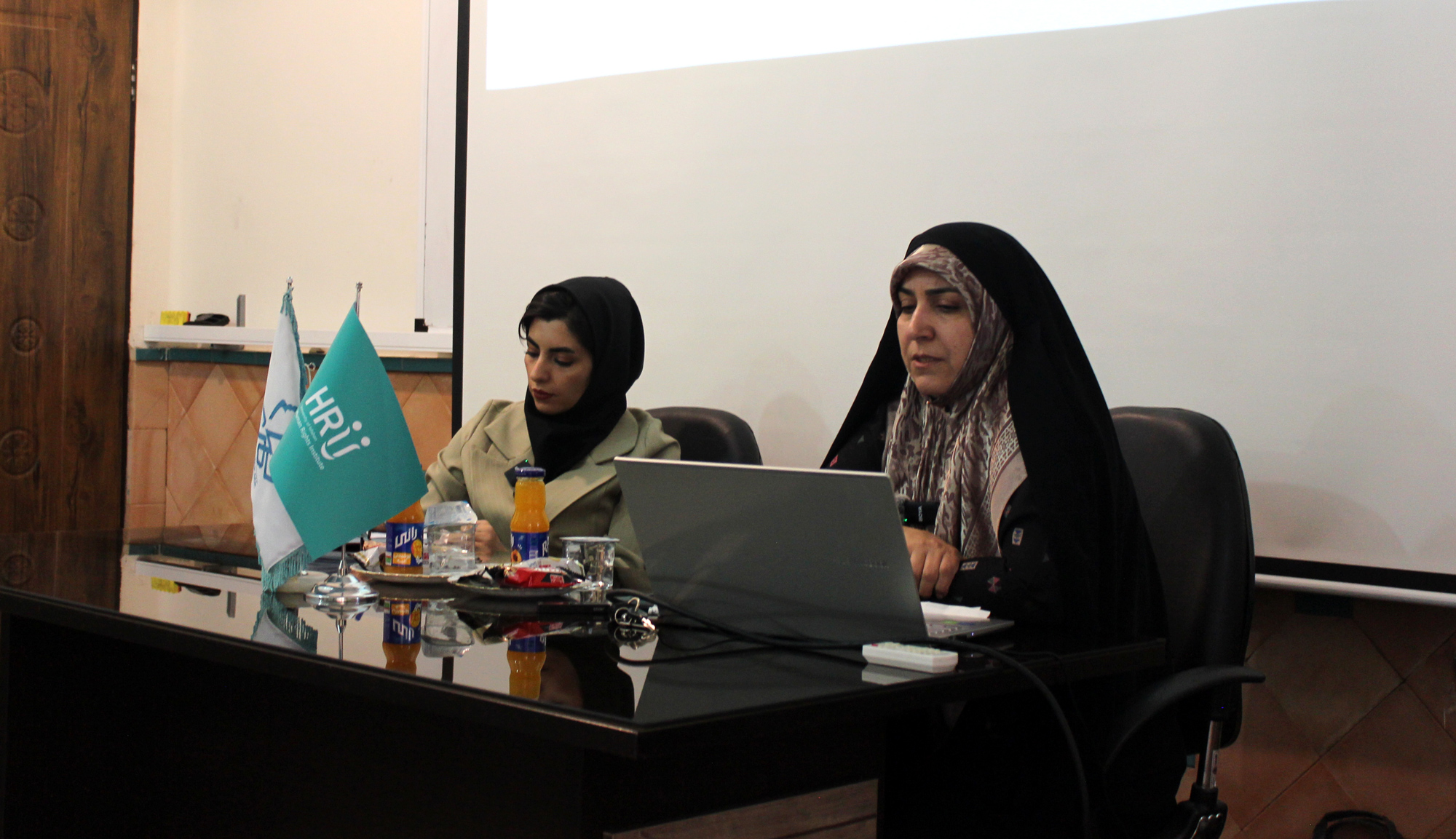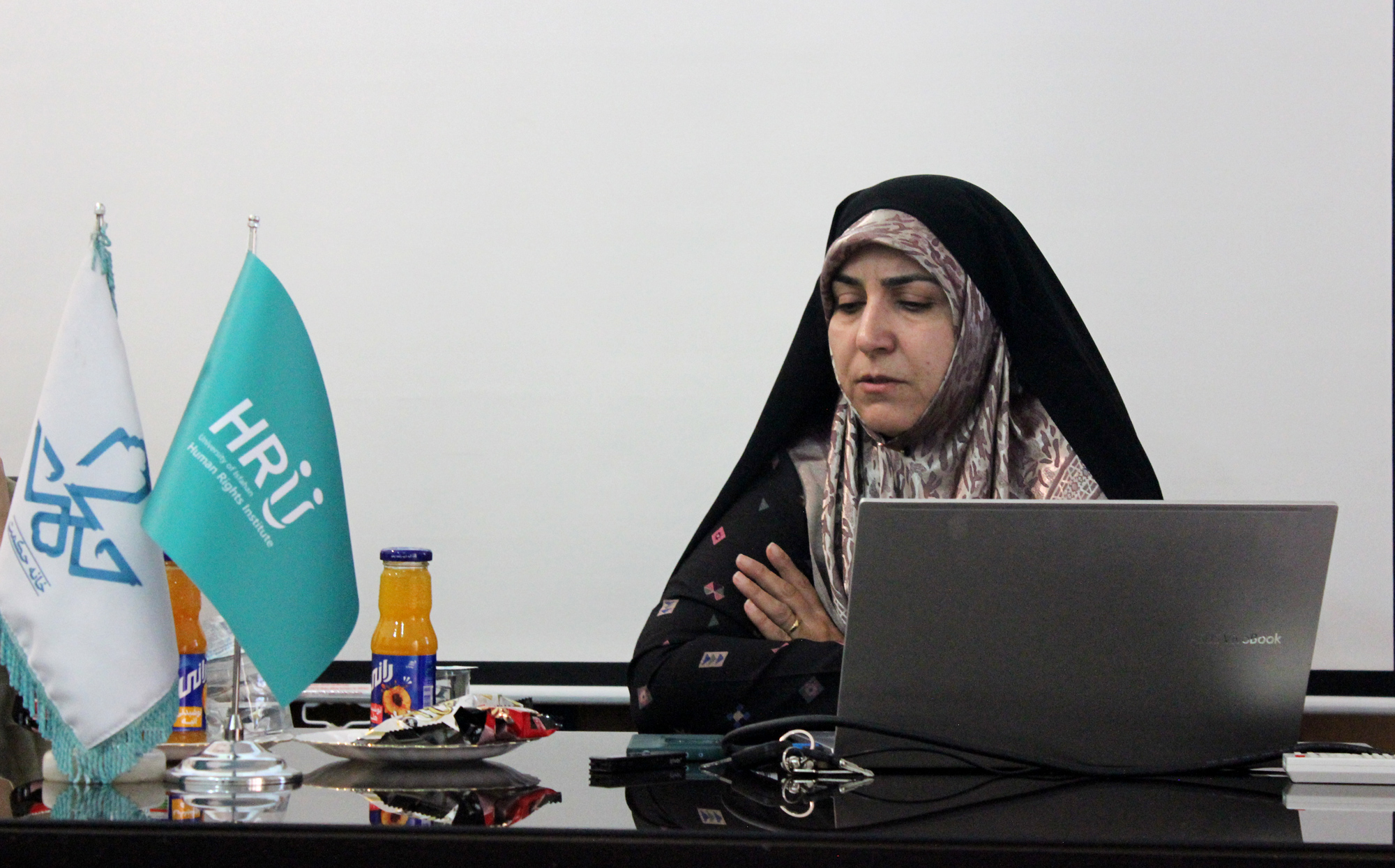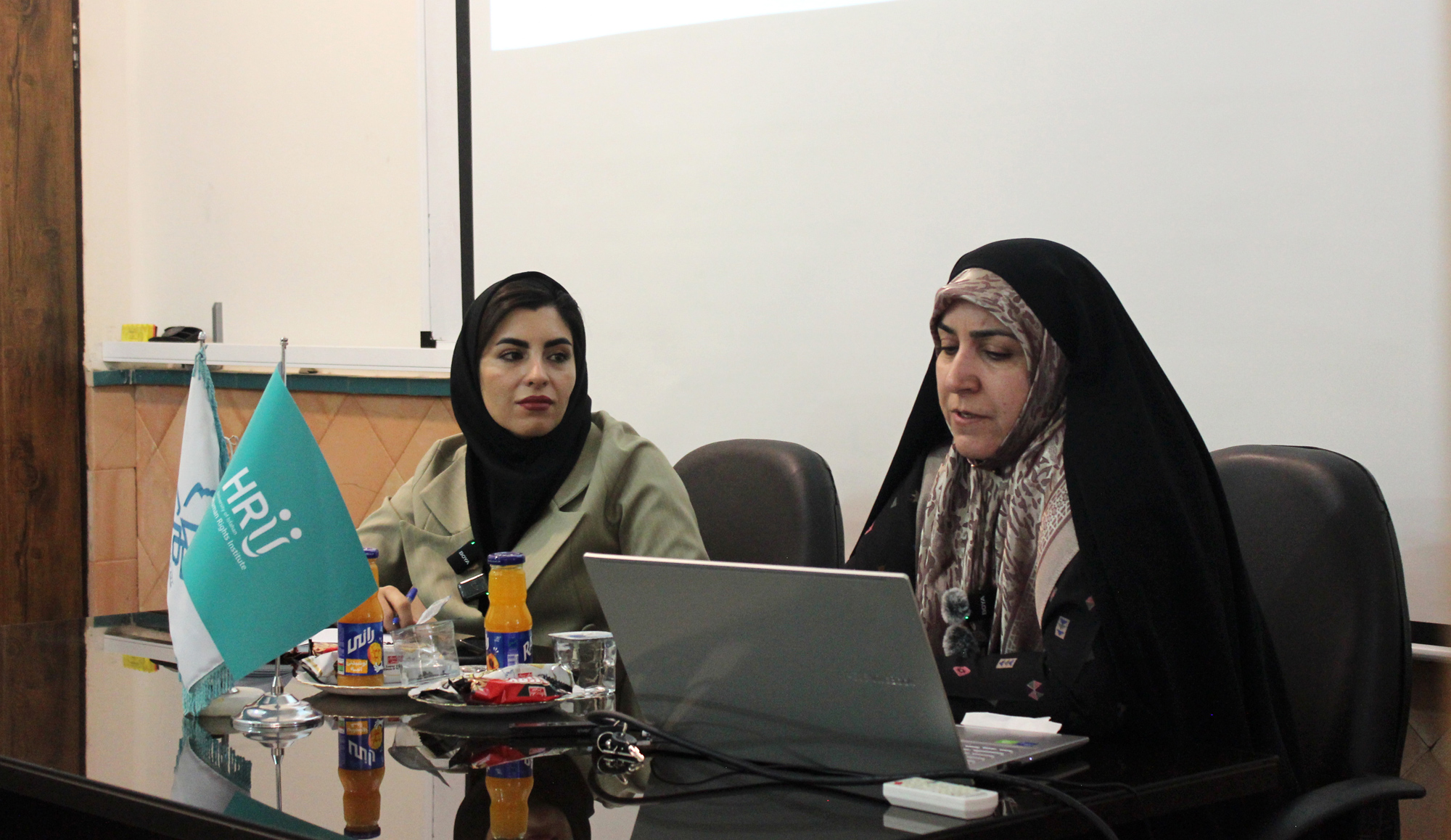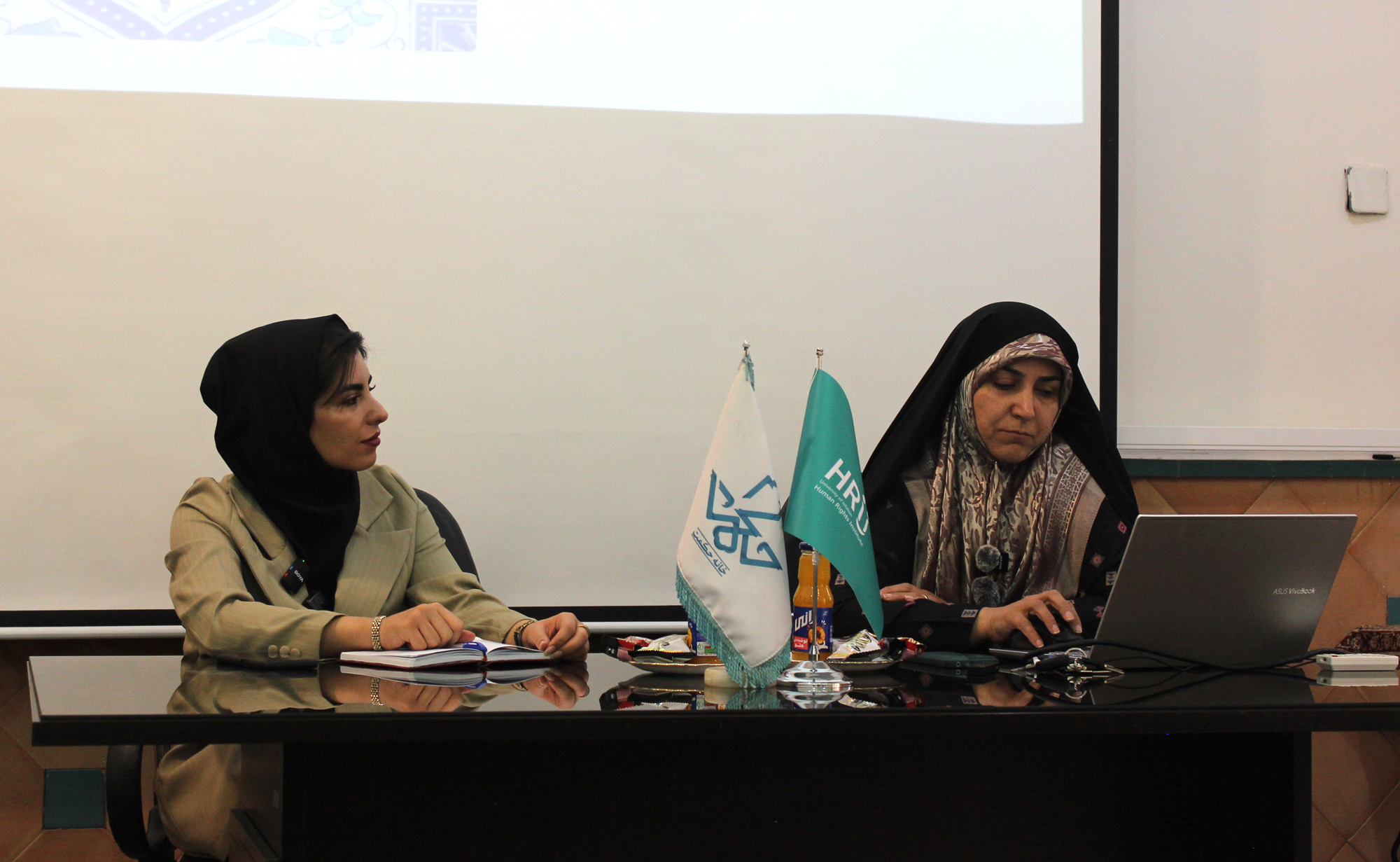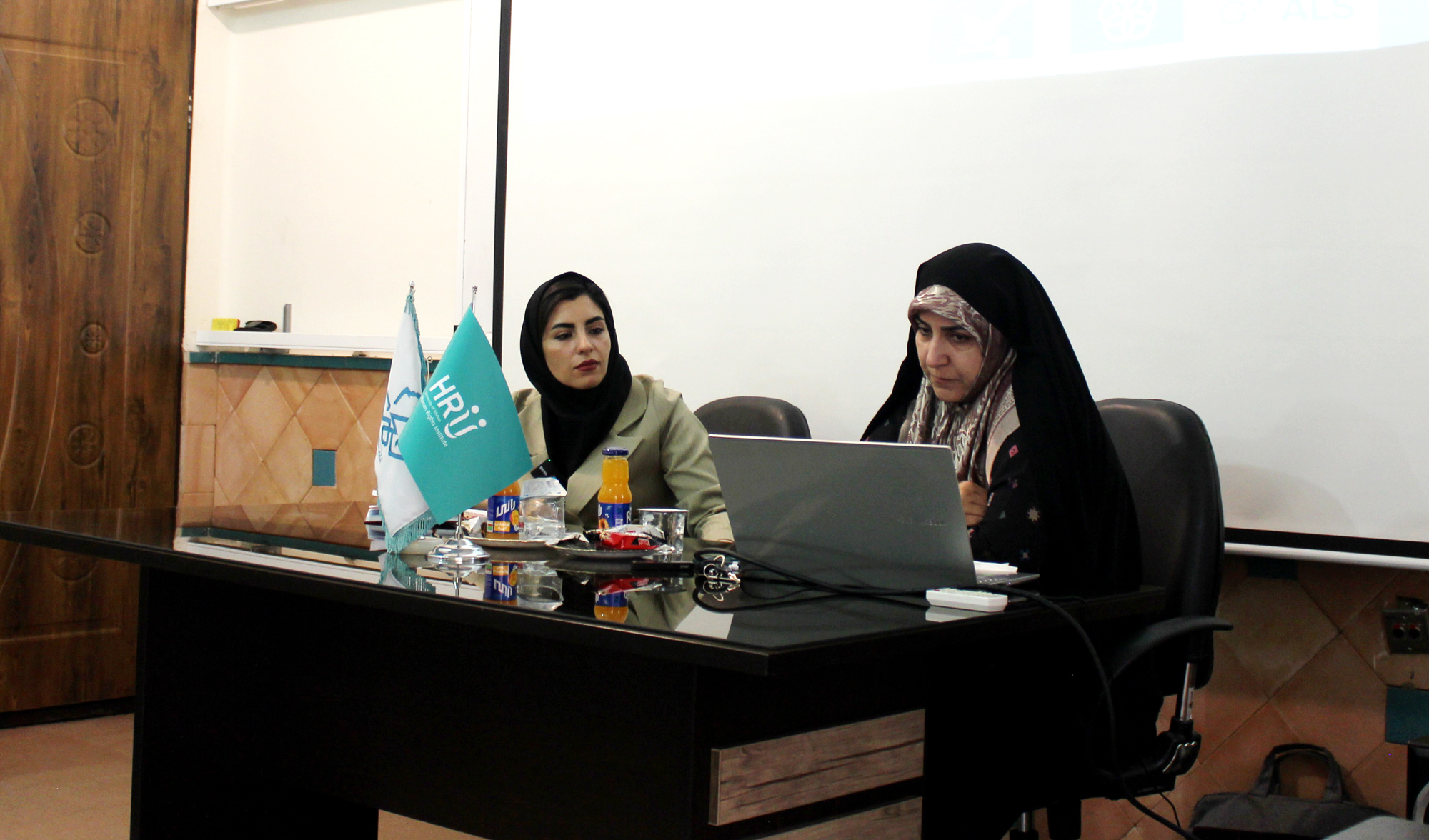
The specialized session titled “Sustainable Economy and Responsible Tourism in Isfahan: Opportunities and Challenges” was held in October 2025 through the collaborative efforts of the Human Rights Research Group of the University of Isfahan (HRIUI) and the the Department of Politics and Philosophy of Human Rights of Khane Hekmat (House of Wisdom).
The aim of this session was to examine the opportunities and challenges of developing sustainable tourism in Isfahan Province and to analyse the region’s capacity for achieving a sustainable economy within the framework of the United Nations Sustainable Development Goals (SDGs).
Session Information
- Moderator: Sahar Barati Boroujeni, PhD Student in International Relations, University of Isfahan
- Speaker: Dr. Fatemeh Sabokkhiz, Faculty Member, Department of Geography and Rural Planning, University of Isfahan
- Topics Covered:
- Theoretical foundations and key concepts of sustainable development
- The pillars of sustainable development and their linkage with tourism
- Responsible tourism and its role in achieving a sustainable economy
- Opportunities and potentials of Isfahan in sustainable tourism
- Challenges of sustainable tourism development in Isfahan
- Date: Tuesday, 14 October 2025
- Time: 16:00 – 18:00
- Venue: Khane Hekmat (House of Wisdom)
Summary of Presentation
Dr. Fatemeh Sabokkhiz began her presentation by defining the fundamental concepts of development and sustainable development, explaining that while development generally refers to growth, progress, and empowerment, sustainable development embodies balanced growth that meets the needs of the present generation without compromising the ability of future generations to meet their own.
She referred to the historical background of this concept, identifying the 1987 Brundtland Commission Report, titled “Our Common Future,” as a milestone in shaping global awareness about sustainable development. Dr. Sabokkhiz also highlighted three major global events that paved the way for this paradigm:
- The Stockholm Conference (1972), which for the first time linked environment and development at an international level;
- The Brundtland Report (1987), which provided the official definition of sustainable development;
- The Rio Earth Summit (1992), attended by more than 170 countries, which adopted Agenda 21 as a global blueprint for sustainable development.
She then elaborated on the 17 Sustainable Development Goals (SDGs) set by the United Nations, emphasizing their strong interconnection with tourism. Among them, she particularly underlined the relevance of the goals addressing the eradication of poverty and hunger, good health and well-being, quality education, gender equality, clean water and affordable energy, decent work and economic growth, reduced inequalities, sustainable cities and communities, responsible consumption, and climate action — all of which, she noted, directly intersect with the field of sustainable tourism.
Dr. Sabokkhiz explained that sustainable development rests on three interdependent pillars — environment, society, and economy — and true sustainability is achievable only when these three dimensions function in balance and harmony. In this framework, sustainable tourism entails managing all resources in such a way that both the economic and social needs of the host community and the visitors are met while preserving cultural identity, biodiversity, and environmental systems.
She further introduced the concept of “carrying capacity” as one of the core principles of sustainable tourism planning. Carrying capacity, she explained, refers to the maximum number of visitors that a destination can accommodate during a specific period without degrading natural and cultural resources or diminishing the quality of visitor experience. Ignoring this principle, she cautioned, leads to long-term deterioration of destination quality, environmental degradation, and economic decline.
Expanding upon this, Dr. Sabokkhiz presented “responsible tourism” as an effective strategy toward realizing a sustainable economy. This form of tourism, she noted, is based on the following principles:
- Giving special attention to environmental conservation and minimising negative ecological impacts;
- Respecting local culture, customs, and traditions;
- Preserving cultural and historical heritage;
- Ensuring that economic benefits return to local communities;
- Educating both tourists and host societies to foster mutual understanding and responsible behaviour.
In the next section, Dr. Sabokkhiz examined the current situation of tourism in Isfahan Province, describing the region as the “jewel of Iranian tourism” and “a global brand in cultural heritage.” With more than 22,000 historical sites, 2,000 nationally registered monuments, and three UNESCO World Heritage sites — Naqsh-e Jahan Square, Jameh Mosque of Isfahan, and Chehel Sotoun Palace — Isfahan, she noted, possesses exceptional cultural and architectural assets.
She pointed out that the province offers a diverse range of tourism types — including cultural, religious, health, eco-, and geo-tourism — creating significant opportunities for employment and sustainable income generation. Quoting recent statistics, she mentioned that during Nowruz 2024, Isfahan hosted over 4.6 million domestic visitors, while in 2022, more than 35,000 international tourists visited the province. She also highlighted new visa-free travel arrangements for citizens of 32 countries, which are expected to enhance international tourist arrivals.
Isfahan’s diverse handicrafts — such as Khatamkari, Minakari, and Ghalamkari — were also cited as unique economic and cultural attractions. Moreover, she referenced the city’s selection as the “Tourism Capital of the Islamic World 2025” and the establishment of the Isfahan Tourism Consortium, initiated by the Governorate in collaboration with universities, describing it as an indicator of a new, research-oriented governance model in the tourism sector.
Despite these promising opportunities, Dr. Sabokkhiz devoted a substantial portion of her lecture to addressing the key challenges facing tourism in Isfahan, categorising them into environmental, social, and economic dimensions:
- Environmental Crisis: Drying of the Zayandeh-Rud River and Gavkhouni Wetland, land subsidence caused by excessive groundwater extraction, air pollution from industrial concentration, biodiversity loss, and inter-basin water transfer projects were cited as major threats;
- Social and Economic Sustainability: She emphasised the need for fair distribution of tourism benefits among local communities and for enhancing their participation in decision-making processes;
- Visitor Management and Infrastructure: The absence of smart systems to monitor and regulate carrying capacity in historical and touristic sites was identified as a major managerial weakness;
- Specialised Education: She stressed the urgent need for professional training among tour guides, artisans, and local communities to safeguard cultural heritage and natural resources.
During the Q&A session, participants raised questions regarding carrying capacity, tourism governance, and the environmental crisis in Isfahan. In response, Dr. Sabokkhiz acknowledged that no scientifically implemented or smart system currently exists for managing visitor capacity in Isfahan’s heritage sites, and that the province lacks accurate monitoring mechanisms for tourist flow. This gap, she asserted, is a serious shortcoming that must be addressed through modern technology and data-driven management.
She also commended the Isfahan Tourism Consortium, led by the Governorate and supported by academic institutions, as an intelligent and promising initiative that can align university research with real-world challenges and lay the groundwork for a sustainable transformation in the province’s tourism landscape.
In addressing concerns about the environmental future of Isfahan and the growing threat of desertification, Dr. Sabokkhiz affirmed that these worries are entirely justified. She underscored that environmental considerations have long been the neglected dimension of development in Isfahan and condemned misguided policies such as inter-basin water transfers and excessive dam construction, calling them among the gravest management errors of recent decades. “Nature reacts,” she warned, “and land subsidence is an irreversible phenomenon.” Therefore, she argued, reviving the Zayandeh-Rud River and the Gavkhouni Wetland must become the top priority of all executive and decision-making institutions to prevent the deepening of the crisis.
Conclusion
In concluding her presentation, Dr. Sabokkhiz outlined the pathways to achieving a sustainable tourism economy in Isfahan, identifying five strategic pillars:
- Prioritising Environmental Protection and Avoiding Destructive Projects: Tourism development must be aligned with the ecological capacity of the region. Projects such as inter-basin water transfers, she warned, are not only unsustainable but also carry profound social and environmental consequences. Natural resource management should form the foundation of all tourism-related policymaking.
- Community Participation in Decision-Making and Benefit Sharing: Local communities must play an active role in planning, implementing, and monitoring tourism projects. Their engagement enhances the sense of ownership and responsibility toward their environment and cultural assets, while fair distribution of economic benefits fosters balanced regional development and reduces inequalities.
- Harnessing Modern Technologies and Artificial Intelligence: Emerging technologies such as AI can facilitate data analysis, carrying capacity prediction, and smart visitor management. These tools enable real-time monitoring of environmental and social impacts, leading to more informed decision-making and reduced pressure on natural ecosystems.
- Strengthening Public and Professional Education in Tourism: Specialised education equips tourism professionals with the principles of sustainability and accountability, while public education fosters responsible behaviour among citizens and visitors. This dual approach enhances the quality of tourism experiences and safeguards cultural and natural heritage.
- Supporting the Participatory Governance Model of the Isfahan Tourism Consortium: The consortium model, integrating governmental, private, and civil sectors, creates an efficient structure for collective decision-making. It promotes institutional synergy, transparency, and equitable distribution of tourism benefits, serving as a replicable model of participatory governance.
Overall, the session underscored that the pursuit of a sustainable tourism economy in Isfahan depends on reconciling development with environmental stewardship, local participation, technological innovation, and inclusive governance. When tourism is redefined within the framework of justice, responsibility, and ecological balance, it can evolve into a powerful driver of sustainable growth, social cohesion, and cultural preservation — shaping a future where economic prosperity coexists with environmental harmony and community well-being.