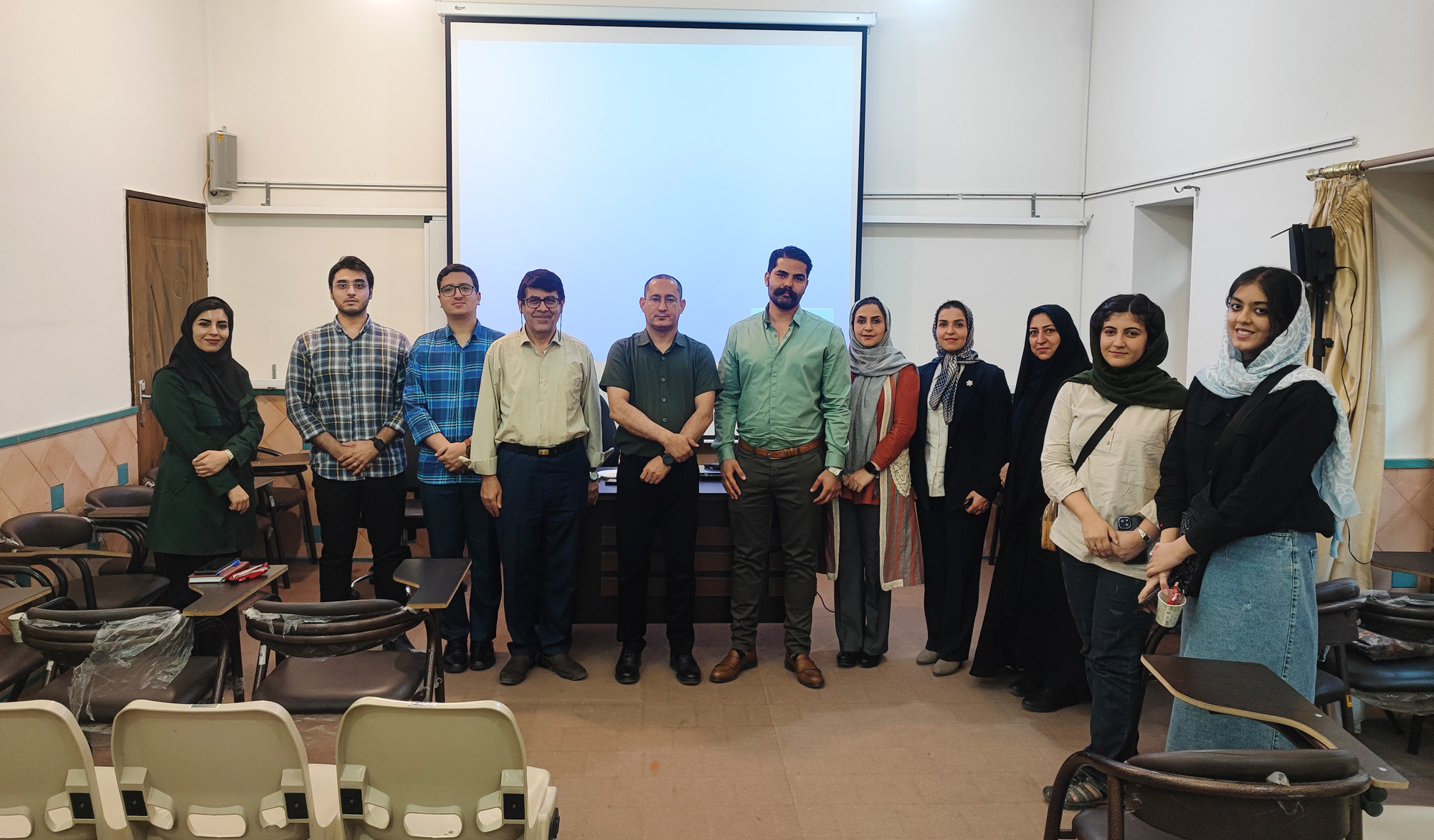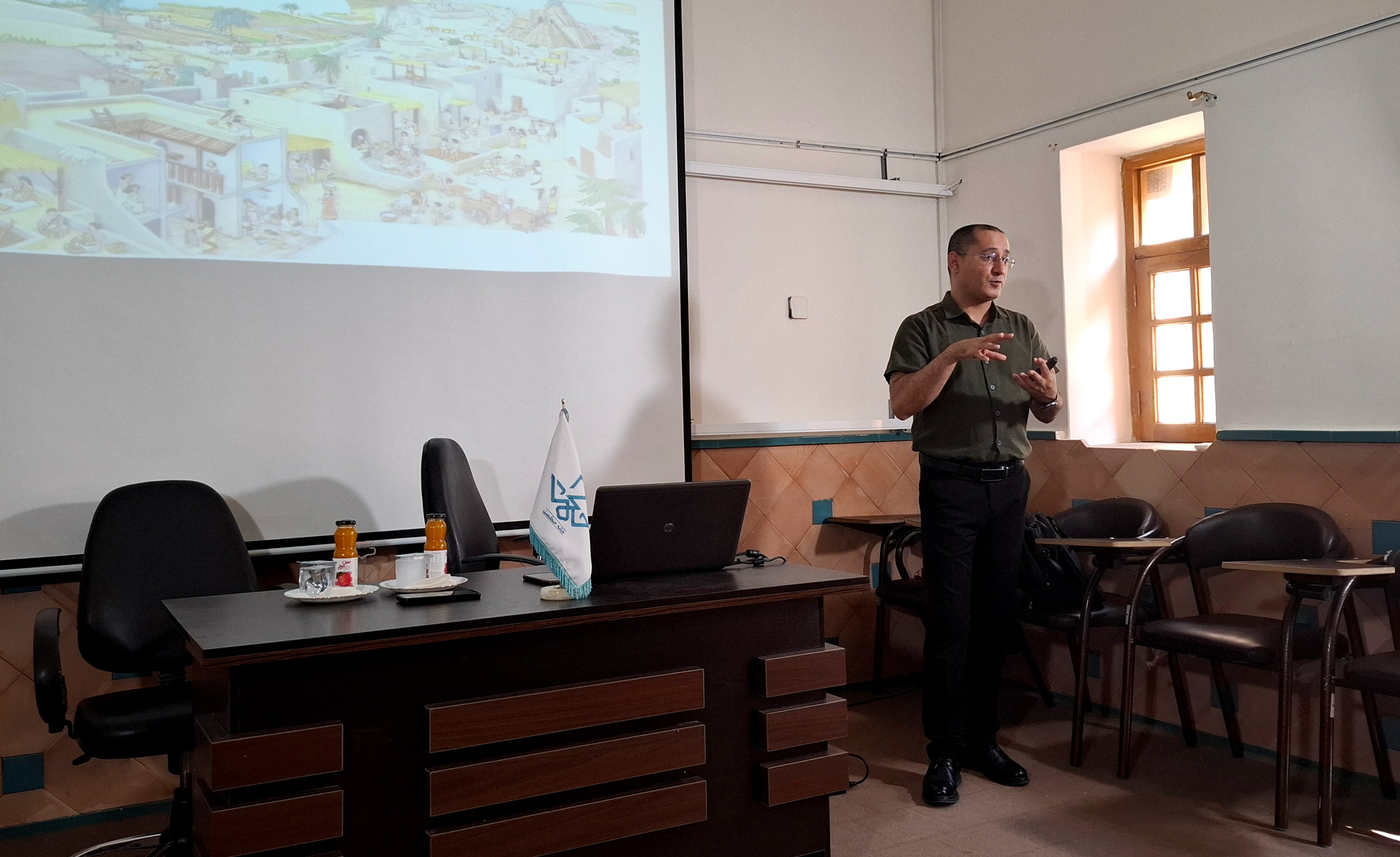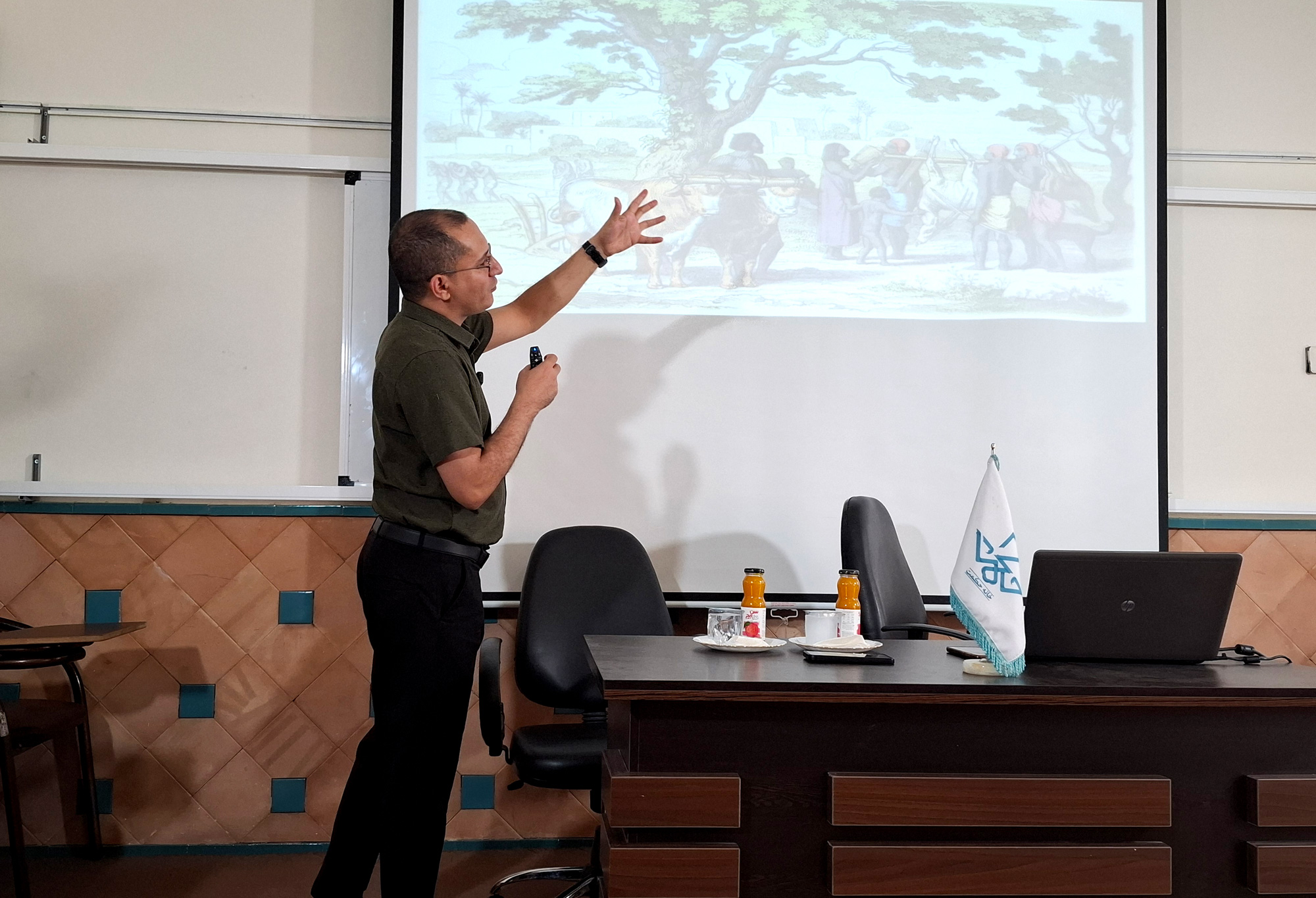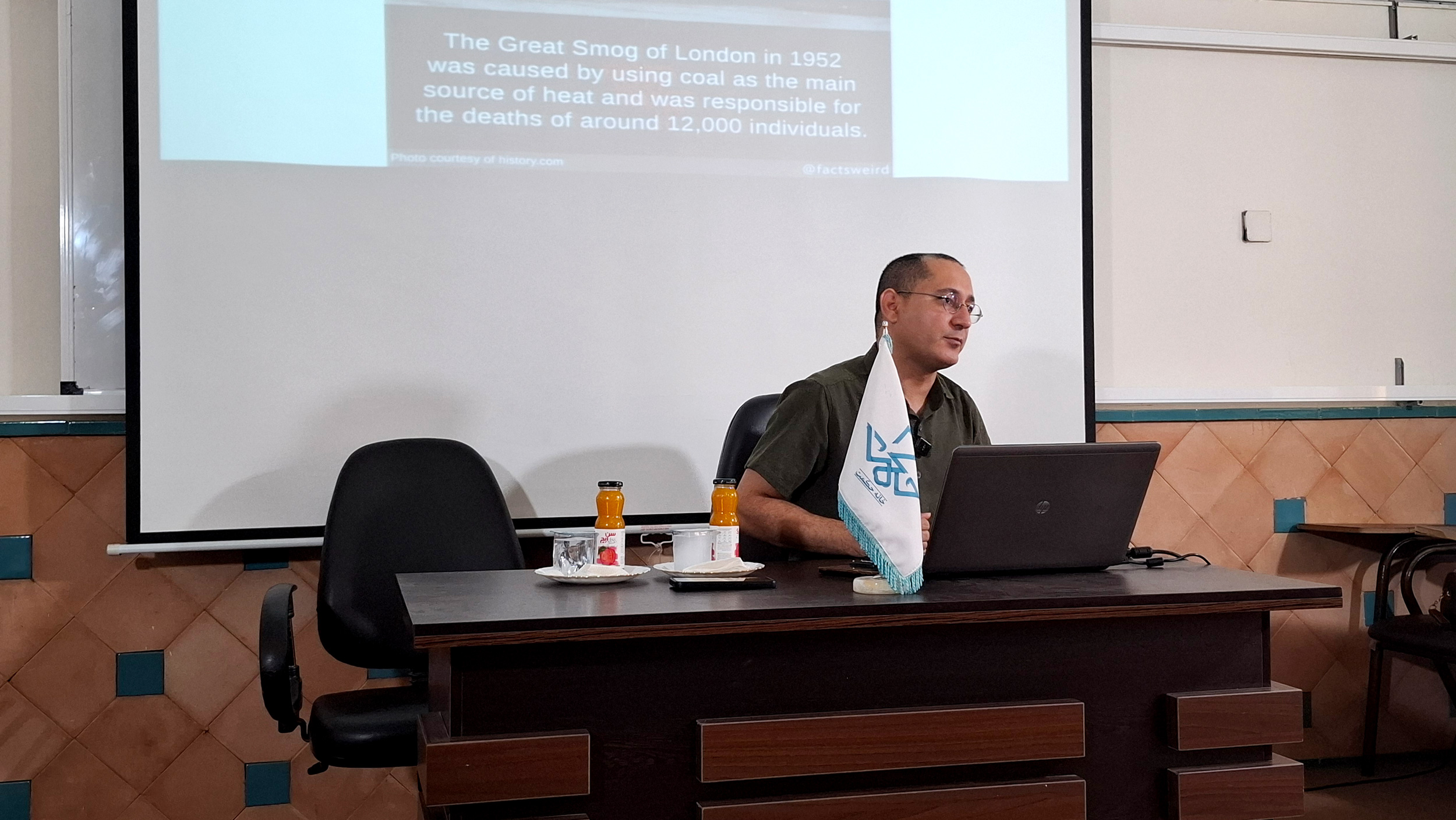
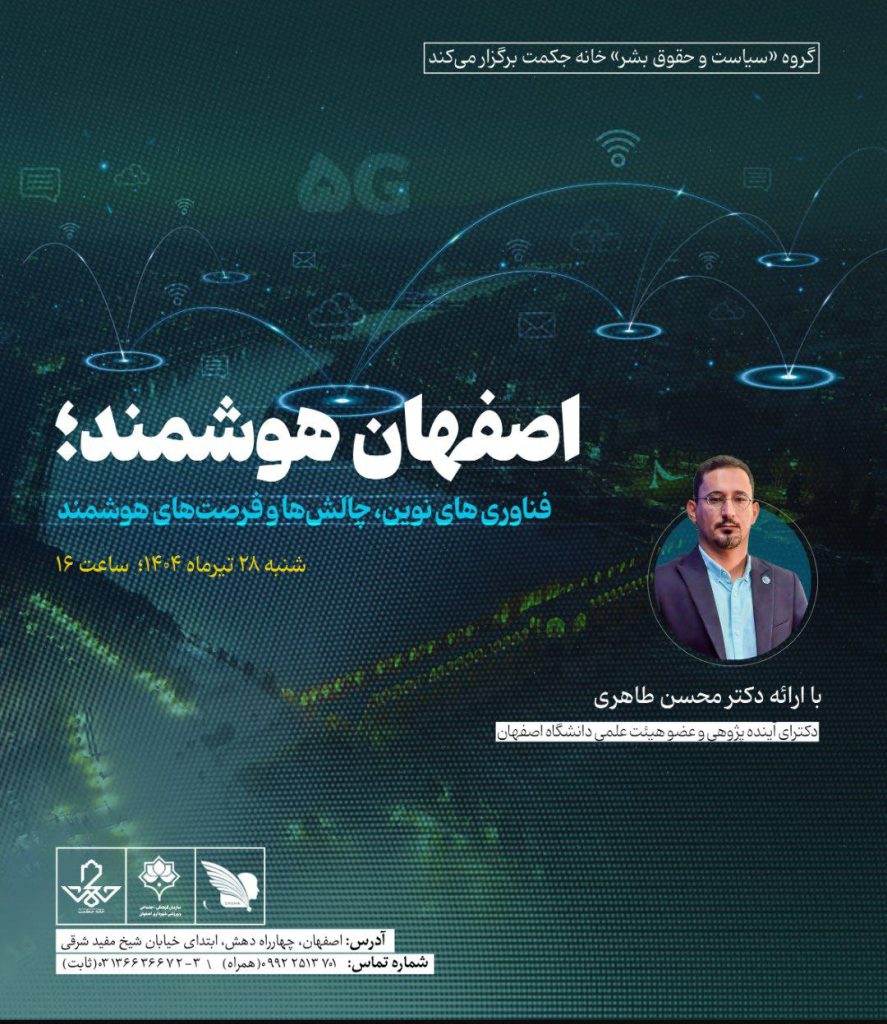
The specialized session titled “Smart Isfahan; Emerging Technologies, Challenges, and Smart Opportunities” was held in July 2025 through the collaborative efforts of the Human Rights Institute of the University of Isfahan (HRIUI) and the “Politics and Philosophy of Human Rights” group of the Khane Hekmat (House of Wisdom). The aim of this session was to explore the concept of smart urbanization in depth, assessing its impact on citizens’ quality of life, the efficiency of urban services, and the pursuit of sustainable development in the future.
Session Information
- Moderator: Sahar Barati Boroujeni, PhD Candidate in International Relations, University of Isfahan
- Speaker: Dr. Mohsen Taheri, Faculty Member, Department of Industrial Engineering and Futures Studies, University of Isfahan
- Topics Covered:
- Examination of the concept of the smart city, available resources, and sustainable development
- Analysis of current challenges in urban smartification, resources, and future trajectories
- Presentation of proposed solutions to these challenges
- Date: Saturday, July 19, 2025
- Time: 16:00 – 18:00
- Venue: Khane Hekmat (House of Wisdom)
Summary of Presentation
Dr. Mohsen Taheri began his lecture by emphasizing the fundamental significance of the concept of the future, describing it as a dynamic and ever-surprising element that compels human beings to think, plan, and even imagine. Futures studies, he argued, should not be reduced to an academic specialization; rather, it is a social responsibility that requires experts to adopt a holistic, analytical perspective to identify the future needs of society and share their knowledge with the public.
He explained that his analytical approach is grounded in observing realities while simultaneously distancing from the immediate details of everyday life, thus adopting a broader and more historical perspective. According to Dr. Taheri, concepts such as the “smart city” cannot be properly understood without this elevation in perspective: the city must be seen as a historical and civilizational subject, requiring foresight and comprehensive analysis to anticipate potential futures. He warned against the narrowness of purely technical expertise, cautioning that specialization without broader vision produces the phenomenon of the “learned ignorant.” Thus, participants were invited to look “from above,” moving beyond mere situational analysis and focusing on the why of smart urbanization rather than only the how. This approach raised a fundamental question: Is becoming a smart city an inherent necessity for Isfahan?
In contextualizing the current debate, Dr. Taheri traced the historical roots of human civilization back to the Neolithic Revolution, the transition from nomadic hunting to sedentary agriculture, identifying it as a turning point in human history. He noted that technology has always been intertwined with civilization, often preceding science itself, as in the case of the wheel’s use before the formal understanding of geometry. The driving force behind these innovations, he explained, has always been material and social needs.
The slow but steady growth of human population from antiquity until the eighteenth century sharply accelerated with the Industrial Revolution. The advent of steam engines, electricity, and modern medicine reduced mortality, extended life expectancy, and fueled rapid urbanization. Yet, he warned, this rapid expansion also brought unintended consequences: environmental crises, the rise of sprawling metropolises stripped of poetry and local identity, and the emergence of “copy-paste cities” devoid of cultural spirit.
Dr. Taheri then addressed the critical imbalances in three vital domains—water, energy, and food—which he described as the triangular foundation of global ecological crises. Imbalances occur, he explained, when demand surpasses supply, exacerbated by population growth and increasingly consumption-driven lifestyles.
- Energy imbalance in Iran: Frequent electricity outages now threaten essential infrastructure.
- Water scarcity: A chronic crisis in the Middle East, particularly in Isfahan, where poor resource management jeopardizes urban livability. He referred to the water crisis as a “gray rhino,” a recognized but neglected threat.
- Global food insecurity: By 2050, rising population and consumption patterns will render increased demand for food, water, and energy unavoidable.
Against this backdrop, Dr. Taheri argued that smart urbanization must not be reduced to surveillance or superficial technological trends. A genuinely smart city should strategically employ digital technologies, artificial intelligence, and data-driven solutions to address these fundamental crises: improving energy efficiency, advancing agricultural productivity, reducing food waste, and managing water resources sustainably. He highlighted renewable energy, vertical farming, and AI-driven systems as realistic pathways, but cautioned against “technological fashionism” disconnected from real needs.
Adopting a historical-civilizational perspective, he traced four waves of industrial revolution:
- Steam engines
- Electricity and automation
- Computers and digitization
- Artificial intelligence, Internet of Things, and big data
While these revolutions extended human welfare and lifespan, they also created profound inequalities, fragile dependencies, and alienation from nature. Dr. Taheri characterized the modern city as a product of these transformations—marked by mass consumption and imitation of dominant patterns, yet bereft of poetic identity. Unlike traditional cities shaped organically by local culture and environment, modern cities face crises of marginalization, crime, and deepening socio-economic inequality, all fueled by unchecked growth narratives and weak planning.
In a forward-looking analysis, he drew attention to the emergence of mega-urban clusters, where interconnected cities erase inter-urban boundaries. Without rethinking development paradigms and reorienting technology toward genuine human needs, he warned, such trends could culminate in the collapse of resources, ecosystems, and social structures. Technologies such as solar energy, smart recycling, and urban agriculture, he argued, will only be meaningful if placed at the service of sustainability, justice, and resilience.
Dr. Taheri highlighted the acute vulnerability of Global South cities, particularly in arid and semi-arid regions like the Middle East. Cities such as Isfahan, Lahore, Dhaka, and urban centers across Africa and South Asia already face extreme resource stress. He reiterated that the water crisis in Iran’s central plateau is a pressing “gray rhino,” and without fundamental reforms in consumption patterns, urban planning, and resource governance, cities like Isfahan could face uninhabitability. By 2050, an estimated four billion people—half the world’s population—will live in areas of severe water stress, with Iran among the most critical zones unless urgent technological and managerial reforms are implemented.
He then outlined three strategic domains for smart cities:
- Sustainable Energy: Transition to renewable energies, smart grids, energy-producing buildings, and decentralization from fragile centralized systems.
- Water Management: Technologies for rainwater harvesting, reduction of network losses, graywater recycling, water-efficient smart agriculture, and restructured consumption policies.
- Urban Food Security: Vertical farming, smart greenhouses, soil-less cultivation, cellular protein production, and reducing food waste through digital tools and localized supply chains.
By referencing international experiences from Sydney, Dhaka, and Paris, he demonstrated that technological innovation coupled with policy innovation could rebalance resources, but only if accompanied by a paradigmatic shift from consumption-driven growth to resilience-centered urban governance.
At the conclusion of his presentation, Dr. Taheri defined the smart city as a strategic instrument to meet humanity’s fundamental needs—sustainable energy, safe water, secure food, long-term livability, and social justice. Technological innovation, he stressed, must be grounded in urban realities and future-oriented needs to achieve genuine value and durability. He introduced the concept of the “prosumer” (producer-consumer)—citizens who both produce and consume resources—as a vital model for urban resilience in the face of resource imbalances.
He further emphasized the necessity of a “mental revolution” as a prerequisite for real smart cities: societies must balance preservation with innovation. To this end, he proposed the creation of “ambidextrous organizations”—structures capable of simultaneously safeguarding and optimizing past achievements while innovating for the future. Such a dual-capacity approach, he argued, is critical in urban governance, where future cities will require leaders who are meaning-makers, visionaries, and integrators, perceiving the city as a living organism.
Dr. Taheri concluded with a provocative question: Are we building a smart city for human beings, or are we creating human beings to serve the smart city? He emphasized that the answer to this question will shape future policies, education, research, and investment in the urban domain. A genuine smart city, he concluded, is one that creates meaning rather than mere data, fosters belonging rather than mere services, and enables citizen participation and production rather than passive consumption—ultimately building a future that future generations can take pride in.
Conclusion
Overall, this specialized session was a constructive effort to critically reconsider the relationship between the city, technology, and justice. Within this framework, the smart city was not viewed merely as a technological tool but as a strategic concept with civilizational, social, and ethical dimensions—a model that can foster resilience, sustainability, and improved quality of urban life.
The discussion highlighted that when smart urbanization is redefined based on real needs, sustainable resource management, and indigenous values, it can weave a stronger connection between development, justice, and the meaning of urban life. Conversely, historical analysis of industrial and civilizational trajectories showed that hasty technological development, while offering welfare, has also generated crises such as resource imbalances, ecological instability, and the erosion of urban identity.
The session concluded with a strong emphasis on the necessity of moving beyond purely technological and fashion-driven models toward a holistic, multidimensional paradigm, where technology is placed in the service of human dignity, cultural identity, justice, and sustainability. Realizing such a vision requires nothing less than a mental revolution and a redefinition of the city’s role in relation to human beings, ecosystems, and social justice. This paradigm holds the promise of creating cities that are not only efficient and resource-conscious but also livable, meaningful, and future-oriented for generations to come.