

Natasha Matloob
Research Assistant, Oxford Global Society – Mphil Strategic Studies, National Defense University, Islamabad, Pakistan
Introduction
On a dirt road winding out of the Tirah Valley, a convoy of trucks inches toward Jamrud, the gateway to Pakistan’s Khyber District. Beneath sacks of grain and bundles of cloth lie packets of crystal meth and heroin, the lifeblood of a shadow economy that stretches from the Afghan mountains to Karachi’s ports. The men behind the wheel know each journey could cost them their lives, yet they return to the road because they must. “There is no other option,” one driver says, while another admits he “doesn’t consider it wrong anymore.”
The Ideology of Narco-Jihad: When Faith and Profit Converge
Afghanistan has long been the epicenter of the global opium economy. While the Taliban banned[1] all opium poppy cultivation under strict new laws in 2022, it was a partly effective move. A new UNODC report[2] released on 6 November 2025 shows that only 10,200 hectares were under opium cultivation this year, down from 12,800 hectares in 2024 and far below the 232,000 hectares recorded before the Taliban’s ban. This marks a significant achievement.
However, a worrisome trend is emerging: while poppy fields shrink, synthetic drug production, particularly methamphetamine, continues to accelerate[3], the same report suggests. Seizures in and around Afghanistan climbed by 50 per cent by late 2024[4] compared to the previous year. UNODC warns[5] that organized crime groups may increasingly pivot toward synthetics, which are easier to manufacture, harder to detect, and less vulnerable to climate shocks than traditional opiates.
The impact of Afghanistan’s narcotics economy is not confined to its borders. The porous Durand Line allows smuggling networks to extend deep into Pakistan’s tribal districts, carrying not only drugs but also the logistical expertise and ideological rationales developed over decades of conflict. Since the Taliban’s return to power in 2021, these cross-border flows have surged[6], sustaining both livelihoods and insurgencies on either side of the frontier. Even amid ongoing tense Pakistan-Afghanistan political relations, with Afghan First Deputy Prime Minister for Economic Affairs Mullah Abdul Ghani Baradar warning[7] traders to sever ties with Pakistan, the illicit economy shows no signs of slowing. “Formal trade can stop,” a local source notes, “but smuggling never does.”
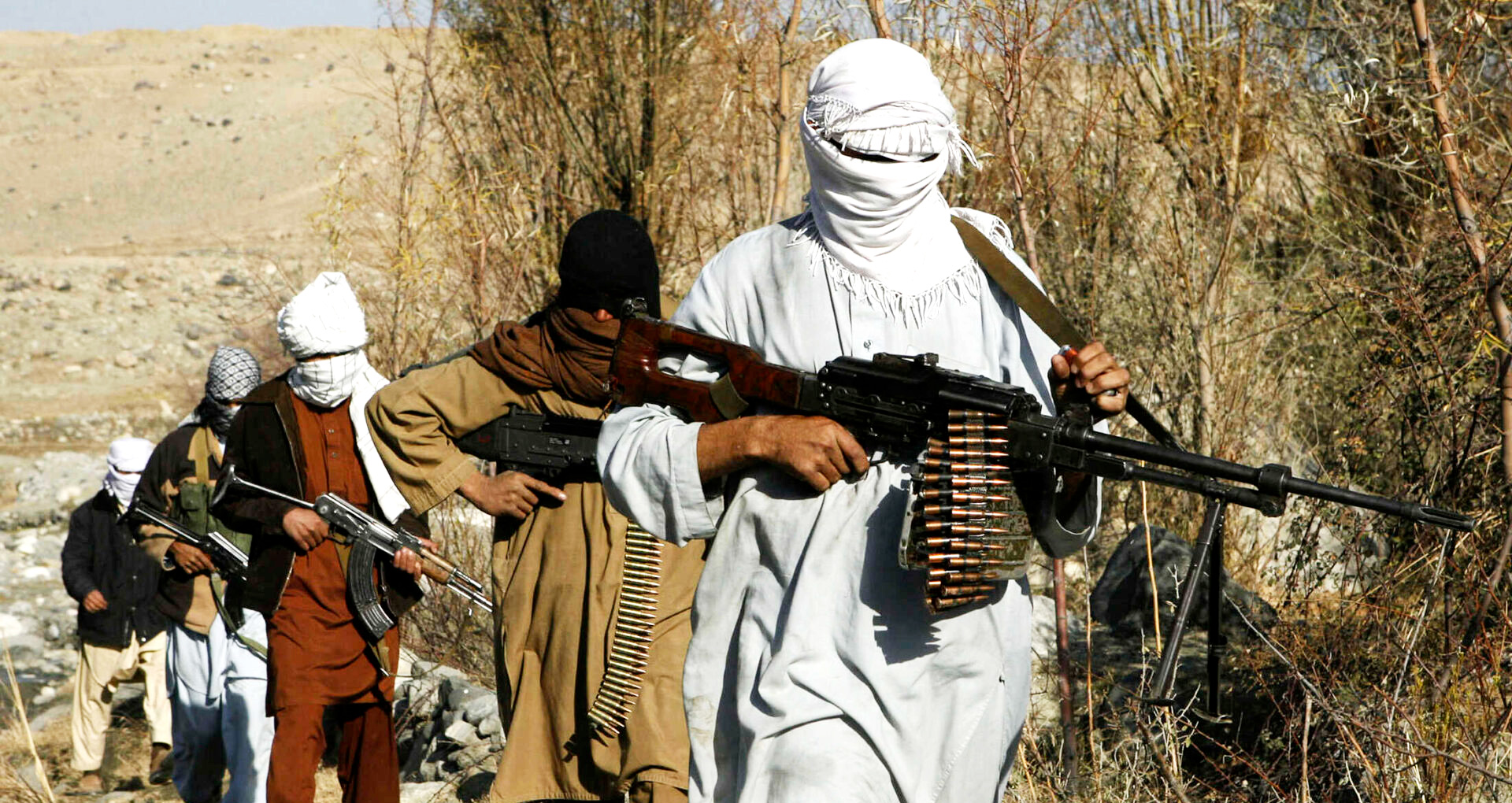
For Taliban commanders, narcotics were once rationalized as a tool of warfare. The moral justification was simple: drugs consumed by non-Muslims were not sinful if the proceeds funded jihad. This logic, the sanctification of vice for a perceived sacred cause, became institutionalized during the Afghan wars of the 1980s and 1990s, when warlords financed resistance through opium. The ideological and economic model did not remain confined within Afghanistan. Militants and criminal networks increasingly crossed the Durand Line, bringing with them the moral rationales and logistical expertise of the Afghan narco-economy. In Pakistan’s tribal districts, local factions of the Tehreek-e-Taliban Pakistan (TTP) adopted similar practices, framing narcotics not just as revenue but as a necessary means to sustain jihad, a fusion of piety and profit. U.S. and Pakistani security officials have repeatedly acknowledged[8] that the TTP’s operations are financed in part through drug trafficking and cross-border smuggling. Militants provide security for traffickers; traffickers provide steady funding.
Experts increasingly describe this system as narco-jihad[9], a fusion of militant ideology, criminal enterprise, and economic desperation. Today, this ideology informs the TTP’s operations across Pakistan. In militant discourse, narcotics profits are not seen as corruption but as a necessity, funding an insurgency against a secular, Western-aligned state. The fusion of religious justification and economic survival blurs moral boundaries, turning criminality into a quasi-religious obligation. This is the essence of narco-jihad: an economy that thrives on contradiction, where moral codes bend to the demands of insurgency.
Inside Pakistan’s Narco Network: From Tirah to Urban Centers
The networks and ideology that originated in Afghanistan have not remained confined to militant strongholds; they have permeated Pakistan’s urban centers. What was once largely a transit route[10] has evolved into a domestic consumer market, linking insurgent revenue streams with everyday urban life.
In Islamabad, a 24-year-old university student, Ali, in the E-11 sector, quietly describes how methamphetamine found its way into his circle. “It started with a friend offering me a hit at a party,” he says, shrugging. “At first, it was just curiosity. Now… It’s part of life. You see it everywhere. People don’t talk about it, but everyone knows someone who uses.” His experience mirrors that of many others, showing how narco-jihad extends beyond the mountains and tribal areas, quietly shaping routines and blurring moral lines, just as militants rationalize their trade. Official estimates[11] from 2022 suggest nearly eight million Pakistanis use drugs, a sharp rise from 6.7 million in 2012[12]. Cannabis remains widespread, but crystal meth and injectable drugs are surging, especially among urban youth like Ali. Local dealers source supplies from the same networks that move drugs to Iran, the Gulf, and Africa. In Karachi, Quetta, and Peshawar, narcotics profits[13] are laundered into real estate, transport, and informal banking systems, making enforcement nearly impossible.
The social cost is immense. Rising addiction rates coincide with growing unemployment, urban poverty, and mental health crises. In some border communities, entire households rely on smuggling-related income, from loaders and drivers to informal money handlers. These individual and community-level impacts, however, are only one dimension of a much larger, transnational system, one that sustains insurgencies and enriches traffickers alike.
What Pakistan’s Seizures Reveal About the Trade
The domestic drug market in Pakistan is a small, visible slice of this sprawling shadow economy. In October 2025, the scale of this trade became starkly clear when Pakistan Navy Ship Yarmook seized[14] narcotics worth $972 million in the Arabian Sea during Operation Al Masmak. Days later, Pakistan’s Customs Enforcement Collectorate in Quetta intercepted[15] a truck near Noshki carrying 300 kilograms of crystal meth, concealed in a modified fuel tank, valued at Rs18.67 billion.
These seizures, while not directly linked to militant groups, reveal the persistence and magnitude of a shadow economy thriving amid fragile state control and resurgent militancy. The system took root in the early 2000s[16], when Pakistan’s Taliban factions consolidated control over the tribal belt, absorbed criminal syndicates, eliminated rivals, and imposed[17] taxation on drug shipments. GIATOC notes that the TTP “tapped the drug trade for revenue, mostly through taxing movement and extorting traffickers.” Over time, this collaboration hardened into systemic interdependence[18]: militants guarded routes, traffickers supplied cash, and both thrived in the vacuum left by weak governance.
Military operations like Zarb-e-Azb and Radd-ul-Fasaad disrupted many networks by the mid-2010s, but the system itself was never dismantled. Routes, intermediaries, and financiers adapted, waiting for a new opening, which arrived with the fall of Kabul[19] in 2021. While Pakistan fenced[20] its 2,600-kilometre border to control insurgent infiltration and smuggling, traffickers shifted southward, exploiting the rugged terrain of Baluchistan and southern Khyber Pakhtunkhwa. GIATOC reports that southern route controllers “no longer face tough competition from traffickers in northern tribal districts and can extract higher rents for use of those routes.”
The resilience of the narco-jihad network is evident not only in its reach and revenue streams but also in its constant innovation. The methods of concealment[21] are ever-evolving. Narcotics are pressed into resin bricks, dissolved into textile dyes, or hidden in food shipments. Women traders sometimes carry garments soaked with liquid meth, while Afghan refugee children are reportedly used to move small packets across checkpoints in their school bags.
From high seas seizures to border checkpoints, the evidence paints a clear picture: the narco-jihad network is multi-layered, resilient, and deeply embedded, connecting insurgent funding, trafficking logistics, and domestic consumption into a single, robust system.
The Architecture That Keeps Narco-Jihad Alive
The narco-jihad network endures not just because of its routes and logistics, but because of the political, economic, and social conditions that allow it to endure.
Security analysts describe Pakistan’s borderlands as governed by an “iron triangle[22]”: warlords, corrupt officials, and militant groups such as the TTP, Taliban, and Al-Qaeda. Drug money funds militancy; militants provide muscle and ideological cover; officials and local elites ensure impunity. These interlinked actors exploit the same routes, checkpoints, and transport corridors that sustain the illicit economy, making enforcement difficult and selective.
Long-standing structural weaknesses compound the problem. Traditional authority has broken down after decades of conflict, leaving the state without reliable local intermediaries. The 25th Constitutional Amendment aimed to integrate the former FATA regions with formal policing, courts, and district administration, but progress has been slow: police stations remain understaffed, judicial access is limited, and civil institutions struggle under persistent security pressures.
Multiple enforcement agencies, ANF, Frontier Corps, Customs, FIA, operate along the border, yet coordination is fragmented. Jurisdictional overlaps, understaffing, and political interference allow major traffickers to evade prosecution[23]. Arrests overwhelmingly target low-level couriers, while financiers and militant intermediaries orchestrating the trade remain largely untouched. Between July 2023 and June 2024, the ANF recorded[24] over 93,000 drug-related arrests and disrupted 16 trafficking networks, but prosecutions rarely reach the upper layers, which are shielded by corruption, fear, and local patronage. An ANF officer summed up the challenge more plainly. Reflecting on recent interdictions, he said, “We stop what comes through our checks. But the routes are many. They always find another way.” His observation underscored the quiet reality that enforcement, while necessary, cannot by itself dismantle an economy shaped by geography, profit, and survival.
Absence of viable livelihoods[25] in districts like Khyber, Orakzai, and North Waziristan reinforces these dynamics. With poverty, disrupted markets, and limited alternative livelihoods, entire communities increasingly rely on the narco-economy for survival. Military-focused policies, while temporarily disrupting trafficking, have often deepened the roots of these illicit networks rather than eradicating them.
Border crossings remain vital arteries[26] for trade. Despite high-profile seizures—such as the Torkham cache in April 2024 worth one billion rupees, including 14 kilograms of crystal meth and 18 kilograms of heroin—these points remain militarized yet porous. The same routes highlighted in the previous section, which support large-scale trafficking and insurgent financing, are kept operational by structural weakness, corruption, and local complicity, ensuring the resilience of narco-jihad.
In essence, the network’s endurance is as much a function of governance, enforcement, and socioeconomic conditions as of trafficking routes themselves. Without addressing these underlying factors, enforcement actions and seizures, however large, will remain temporary victories in a system built to adapt and survive.
Ending the Cycle: Reforming the War on Narco-Jihad
Pakistan’s security community has long recognized[27] the financial overlap between terrorism and narcotics, yet enforcement remains scattered across multiple agencies with overlapping mandates and uneven priorities. The result is a system that reacts, rather than one that shapes outcomes.
A growing number of regional scholars argue that breaking the narco-militant nexus requires a different starting point: regulation rather than perpetual crackdowns. They propose shifting the trade from the shadows into a transparent, state-managed economy.
As one senior Afghan researcher put it, “If I had the authority, I would legalize and regulate the production of certain narcotics in Afghanistan. The land is naturally capable of producing these crops, and many essential medicines are derived from them. By keeping production illegal, the government has allowed the trade to remain in the black market, which only fuels crime and instability.”
His view, controversial but increasingly discussed in policy circles, opens a wider regional possibility. A coordinated framework involving Afghanistan, Pakistan, and international health and development bodies could convert narcotics from an insurgent revenue stream into a licit, tightly monitored industry for medicinal use. Pakistan’s growing pharmaceutical sector could become a formal buyer of Afghan opiates and ephedra (a plant used in the production of narcotic substances) under strict UN oversight, creating legal value chains that undermine militant financing and generate livelihoods on both sides of the border.
The researcher added another point gaining global traction: “Cannabis use was legalized in Germany in 2024, and many countries have adopted similar policies. If using cannabis is legal, then logically its production should be regulated as well. Legal production could strengthen the local economy, create jobs, and make the region more self-reliant.”
Such an approach would require deep cooperation, joint licensing regimes, transparent border monitoring, and shared oversight mechanisms, but it may be the only path that addresses both the economic and security dimensions of the crisis. Without reframing the narcotics economy as a regional development challenge rather than just a criminal enterprise, Pakistan and Afghanistan will remain tied to a conflict fuelled by powder and crystal.
Ultimately, the struggle is not only bureaucratic but moral. As long as narcotics remain an acceptable source of income, for militants, for corrupt officials, and for farmers with no alternatives, every crackdown will be temporary and every success short-lived. Breaking the cycle demands political courage, regional imagination, and a willingness to turn a long-standing vice into a controlled instrument of reform.
Conclusion
The present study shows that “narco-jihad” cannot be understood merely as a coincidental overlap between drug trafficking and militant violence; rather, it should be viewed as a durable economic–ideological order that has emerged within a context of governance collapse, structural poverty, and protracted conflict. Within this order, narcotics are not treated as a moral deviation but are transformed into a legitimate source of survival, power projection, and the reproduction of insurgency. The repeated failure of security-centered policies demonstrates that coercive approaches, in the absence of interventions targeting livelihood and financial infrastructures, merely displace trafficking routes rather than dismantling the logic that sustains them. What perpetuates this cycle is not only networks and routes, but the normalization of crime as a solution to survival. From this perspective, proposals for regulation and legally managed production are not simplistic prescriptions, but rather reflections of a deeper crisis in prevailing models of drug control. As long as the formal economy cannot provide a genuine alternative for livelihoods, and the state cannot offer a credible alternative for order, narco-jihad will continue to reproduce itself. Breaking this cycle lies not in the intensification of war, but in rebuilding the relationship between economy, ethics, and governance.
References
[1] UN. (n.d). Taliban’s Poppy Ban in Afghanistan: Can It Work. UN. From: https://www.un.org/en/video/talibans-poppy-ban-afghanistan-can-it-work
[2] UN News. (2025, November 6). Afghanistan: Opium cultivation drops sharply, but regional trafficking rises. UN News. From: https://news.un.org/en/story/2025/11/1166286
[3] Al Jazeera. (2025, November 6). Afghanistan’s opium crop falls 20 percent as synthetic drugs surge. Al Jazeera. From: https://www.aljazeera.com/news/2025/11/6/afghanistans-opium-crop-falls-20-percent-as-synthetic-drugs-surge
[4] UN. (2025, November 6). Afghanistan: Opium cultivation drops sharply, but regional trafficking rises. UN. From: https://www.ungeneva.org/en/news-media/news/2025/11/112574/afghanistan-opium-cultivation-drops-sharply-regional-trafficking
[5] UN News. (2025, November 6). Afghanistan: Opium cultivation drops sharply, but regional trafficking rises. UN News. From: https://news.un.org/en/story/2025/11/1166286
[6] Azizi, H. (2024). The nature and extent of the Taliban’s involvement in the drug trade before and after the regime change (1994–2022): insights from experts. Taylor & Francis. From: https://doi.org/10.1080/09592318.2024.2381847
[7] Mehsud, R. (2025, November 12). Quit Pakistan routes or lose state support, Afghan deputy premier warns traders. Arab News. From: https://www.arabnews.com/node/2622338/pakistan
[8] Iqbal, A. (2014, December 9). TTP using drug money to fund activities. DAWN. From: https://www.dawn.com/news/1149674
[9] European Foundation for South Asian Studies. (2017, November). ‘Narco-Jihad’ – Haram money for a Halal cause. EFSAS. From: https://www.efsas.org/publications/study-papers/%E2%80%98narco-jihad%E2%80%99-%E2%80%93-haram-money-for-a-halal-cause/
[10] United States Department of State. (2025, March). United States Department of State Bureau for International Narcotics and Law Enforcement Affairs. United States Department of State. From: https://www.state.gov/wp-content/uploads/2025/03/2025-International-Narcotics-Control-Strategy-Volume-1-Accessible.pdf
[11] Chuadry, M., & Niaz, M., & Liaqut, S. (2022). Prevalence of Drug Use among University Students in Pakistan. Annals of Medical and Health Sciences Research. From: https://www.amhsr.org/articles/prevalence-of-drug-use-among-university-students-in-pakistan-11195.html
[12] UN. (2022, October 26). National Drug Use Survey Pakistan 2022-24, Launched. UN. From: https://www.unodc.org/copak/en/PR/national-drug-use-survey-pakistan-2022-24–launched.html
[13] Peters, G. (2009). How Opium Profits the Taliban. Peace Workers. From: https://www.usip.org/sites/default/files/resources/taliban_opium_1.pdf
[14] Momand, A. (2025, October 22). Pakistan Navy ship seizes drugs worth nearly $1bn in Arabian Sea. DAWN. From: https://www.dawn.com/news/1950551
[15] Zeb Khan, M. (2025, October 26). Govt intensifies crackdown on illicit trade, narcotics. DAWN. From: https://www.dawn.com/news/1951280
[16] Cassidy, R. (2012). War, Will and Warlords. Marine Corps University Press. From: https://www.marines.mil/Portals/1/Publications/War,%20Will,%20and%20Warlords.pdf
[17] Fazli, S. (2022, June). Narcotics Smuggling in Afghanistan: Links between Afghanistan and Pakistan. SOC ACE Research Paper. From: https://globalinitiative.net/wp-content/uploads/2022/06/narcotics-smuggling-in-afghanistan-paper.pdf
[18] Iqbal, A. (2014, December 9). TTP using drug money to fund activities. DAWN. From: https://www.dawn.com/news/1149674
[19] Menzfeld, M. (2022). Editorial: The Fall of Kabul in 2021 – Background, Effects, Resonance: A Special Issue (not only) for the Interested Public. Ethno Scripts. 24(1). From: https://www.ssoar.info/ssoar/bitstream/handle/document/93121/ssoar-ethnoscripts-2022-1-menzfeld-Editorial_The_Fall_of_Kabul.pdf?sequence=1&isAllowed=y
[20] Basit, A. (2021, February 25). Pakistan-Afghanistan border fence, a step in the right direction. Al Jazeera. From: https://www.aljazeera.com/opinions/2021/2/25/the-pak-afghan-border-fence-is-a-step-in-the-right-direction
[21] Fazli, S. (2022, June). Narcotics Smuggling in Afghanistan: Links between Afghanistan and Pakistan. SOC ACE Research Paper. From: https://globalinitiative.net/wp-content/uploads/2022/06/narcotics-smuggling-in-afghanistan-paper.pdf
[22] Mandaville, P. (2009). Drug Trafficking and Security in Afghanistan and Pakistan. NBR special report. From: https://gisf.ngo/wp-content/uploads/2020/02/0297-Mandaville-et-al-2009-Narco-Jihad-Drug-Trafficking-and-Security-in-Afghanistan-and-Pakistan.pdf
[23] United States Department of State. (2025, March). United States Department of State Bureau for International Narcotics and Law Enforcement Affairs. United States Department of State. From: https://www.state.gov/wp-content/uploads/2025/03/2025-International-Narcotics-Control-Strategy-Volume-1-Accessible.pdf
[24] Jamshed, J., & Bakhsh, F. (2024). Challenges and Reforms in Pakistan’s Narcotics Law: A Critical Analysis of the Control of Narcotics Substances Act 1997. Pakistan Journal of Humanities and Social Sciences. 12(1), 188-199. From: https://journals.internationalrasd.org/index.php/pjhss
[25] Jamal, G. (2025, March 26). Merged areas: livelihood dilemma. DAWN. From: https://www.dawn.com/news/1900409
[26] Associated Press of Pakistan. (n.d). ANF foils trans-border drug trafficking at Torkham Border. APP. From: https://www.app.com.pk/domestic/anf-foils-trans-border-drug-trafficking-at-torkham-border/
[27] Haq, I., & Bukhari, H. (2019, June 23). Menace of narco-terrorism. The News on Sunday. From: https://www.thenews.com.pk/tns/detail/567998-menace-narco-terrorism


