Introduction
In recent years, the Republic of Albania has faced serious and persistent challenges in ensuring freedom of expression and media freedom. Numerous reports from international human rights and press-freedom organizations indicate that the country’s media landscape remains heavily influenced by political and economic interests and by entrenched power networks. Journalists—especially those who report critically on the performance of the government or powerful institutions—have increasingly become targets of intimidation, threats, judicial prosecution, and orchestrated smear campaigns.
Although some global indicators suggest a relative improvement in Albania’s ranking regarding press freedom, this progress reflects formal adjustments in legal frameworks and regulatory structures rather than genuine reforms. Independent observers emphasize that media independence in Albania remains fragile, and the public space for journalists and media outlets to operate freely continues to be restricted.
Weak regulatory bodies, the economic dependence of media organizations on political or corporate elites, and the instrumental use of laws to suppress criticism and investigative reporting have all contributed to the continued violation of freedom of expression and the precariousness of journalists’ professional security.
Incidents
- The Case of Elton Qyno
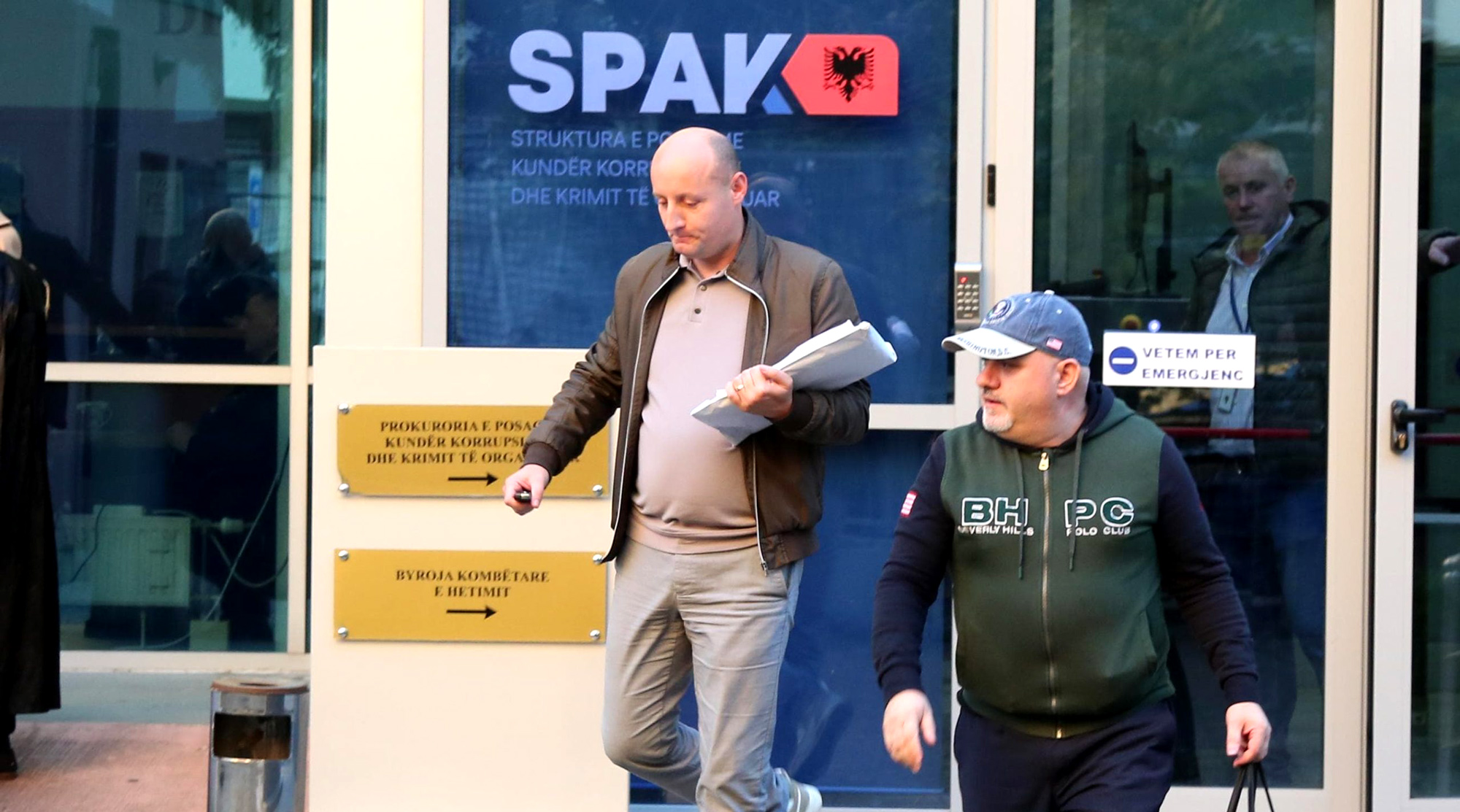
Elton Qyno, a prominent investigative journalist and member of the media outlet Ora News, has in recent years faced judicial persecution due to his exposés on corruption and organized crime. On December 13, 2023, the Special Structure against Corruption and Organized Crime (SPAK) searched his home and seized his personal equipment in an attempt to access his confidential journalistic sources; even his private vehicle was searched without a court warrant[1]. He was interrogated for nearly seven hours at SPAK’s headquarters in Tirana[2].
The Supreme Court rejected his appeal against the decision of the Special Court authorizing the seizure of his professional devices and the searches conducted in his home and workplace[3]. This measure sparked widespread reactions from domestic and international press freedom organizations.
Shortly afterward, Qyno and another journalist were charged with “active corruption in the private sector,” though no evidence of wrongdoing was presented. Ultimately, on April 22, 2025, the Constitutional Court of Albania ruled that the actions taken against him violated the principles of freedom of expression and media independence. By an 8–0 ruling, the Court annulled the lower court decisions authorizing the searches and seizures of Qyno’s electronic equipment and ordered that all data extracted from those devices be destroyed[4].
The case of Elton Qyno has since become a symbol of judicial pressure on independent journalists in Albania. Journalist Juxhin Mustafaj commented that this case “sets a dangerous precedent.” He wrote:
“Such treatment of a journalist by judicial authorities—raiding his home, instilling fear in his family and children—is a shameful and disturbing scene for anyone practicing this profession[5].”
- Draft Criminal Code Proposal
In the summer of 2025, the Ministry of Justice of Albania introduced a draft of a new Criminal Code, which provoked a wave of concern and criticism among human rights and media organizations[6]. The draft includes articles on defamation, insult, and discrediting the judiciary, which, according to critics, could be used to restrict freedom of expression and criminalize journalistic work[7].
Specifically, Article 865, by removing the condition of “knowledge of falsity,” opens the door to broad defamation complaints against journalists, while Article 863, with its vague definition of “offending public morality,” could criminalize critical reporting. Furthermore, Article 536 makes any statement that “undermines public trust in the courts” punishable by law[8].
The government responded to criticism by claiming that the legislation was still under public consultation. However, legal experts warned that its ambiguous and punitive language could easily become a political tool to pressure journalists and silence dissent.
- The Prime Minister’s Press Conference Incident
On Tuesday, March 19, 2024, Albanian journalist Ambrozia Meta, from Syri TV, questioned Prime Minister Edi Rama during a press conference in Tirana about a controversial project to build 10,000 housing units on Sazan Island, a protected environmental area[9] allegedly involving Jared Kushner[10], the son-in-law of former U.S. President Donald Trump.
Dissatisfied with the tone and content of her question, Rama abruptly approached the journalist in front of cameras and touched her cheek—a gesture that media organizations condemned as humiliating and an instance of physical intimidation. Government officials, however, attempted to downplay the act, describing it as a “friendly gesture.”
Despite these claims, Meta herself reported that she had been banned from asking questions for three months following the incident, suggesting a coordinated effort to limit her professional activity[11].
- Arrest of the Mayor of Tirana
In February 2025, the arrest of Erion Veliaj, then-Mayor of Tirana, by SPAK, triggered a political and media storm across Albania. Only days later, on February 11 and 12, Prime Minister Rama launched a series of public and social media attacks against the press—particularly the Balkan Investigative Reporting Network (BIRN) Albania—accusing it of misrepresenting his remarks on the mayor’s arrest.
In a post on the social media platform X, Rama described the media outlet as a “bunker of attacks[12],” a phrase that journalists interpreted as evidence of his hostile stance toward independent media. BIRN had reported that Rama allegedly called the arrest “unusual and inconsistent with the spirit of the Constitution.” The Prime Minister denied this, accusing BIRN of pursuing political motives.
The following day, Rama broadened his criticism, labeling the entire media discussion surrounding the case a “political-media swamp.” Meanwhile, Mayor Veliaj—charged with €1.1 million in corruption[13]—used his social media accounts, just hours after his arrest, to attack journalists covering his case, calling them “dogs” and describing television studios as “spitting and biting studios.” He further dismissed critical media outlets as “sewage channels,” claiming that their reporting constituted a “smear campaign[14].”
These statements, documented by international press freedom observers, were interpreted as further evidence of the Albanian government’s antagonistic tone toward independent journalism.
- Police and the Media
In August 2024, following a fatal altercation in the city of Pogradec, in which a 42-year-old man named Egli Proga was killed, Albanian media outlets reported—quoting the victim’s family—that the police and emergency services had delayed their response. However, Skender Brataj, head of the National Emergency Service, claimed that the emergency team had arrived at the scene within seven minutes[15].
The reports apparently angered authorities. Muhamet Rumbullaku, a senior police official, publicly accused journalists of spreading “lies” and “shameful accusations” against the police during a press conference. He asserted that the official police version was the only reliable account and denounced the media coverage as deliberately misleading[16]. Rumbullaku also announced that state police would take legal action against certain journalists and social media users[17].
Prime Minister Rama subsequently described the accusations against the police as “repugnant[18].” Such statements and threats from state officials reflect a clear pattern of institutional pressure against the media and a continuing violation of journalists’ rights.
Challenges and Responses
- Conflict of Interests between Politics and Economy
The conflict of interest between politics and business represents one of the central structural challenges to media independence in Albania. Many media owners maintain direct connections with political parties and large corporations, using their outlets as instruments of influence or political bargaining.
A significant portion of television networks and newspapers are owned by individuals who simultaneously operate in sectors such as construction and energy, making their economic interests highly dependent on government decisions. Consequently, the audiovisual media landscape has become heavily concentrated[19]: according to data, four major television owners control between 48% and 58% of total viewership[20].
This concentration has led editorial policies to follow the economic and political agendas of owners rather than professional journalistic standards[21]. The financial dependence of media outlets on state advertising and government contracts has also created a form of indirect censorship, placing critical and investigative outlets under significant pressure[22].
The lack of transparency in media ownership has further eroded public trust and blurred the boundaries between information and partisan propaganda, weakening both media pluralism and democratic accountability.
- Domestic Reactions
The Albanian non-profit organization Citizens Channel, in its report titled “Press freedom in Albania for 2025: Improvement in ranking, but challenges remain,” examined the state of the media in the country. The report notes that Albania rose sharply from 99th to 80th place in global press freedom rankings. However, it stresses that the media landscape continues to face deep structural problems.
According to the report, the independence of the press remains undermined by conflicts of interest between political and economic elites, a weak legal framework, and politicized regulatory institutions. Most private media outlets are controlled by a handful of individuals closely linked to politicians, especially in the construction sector.
Despite the presence of hundreds of online media platforms, only a small fraction possess financial transparency or sustainable revenue models. The report further states that journalists, particularly during election periods, face political pressure and restricted access to public information, while politicians frequently engage in verbal attacks against critical reporters.
Domestic watchdogs have warned that the improved ranking should not be presented as a success story but rather as a wake-up call for structural reform. While there have been minor advances in legal and safety indicators—such as the Constitutional Court’s recent decision to protect journalistic sources—political and economic indicators have declined to concerning levels. These partial improvements have not altered the broader reality of an uncertain and fragile environment for free journalism in Albania[23].
On April 22, 2025, the Constitutional Court of Albania issued a landmark ruling in favor of journalist Elton Qyno, declaring that all actions taken by SPAK—including home and workplace searches, electronic equipment seizures, access to personal data, and pressure to reveal sources—were unconstitutional and inconsistent with Albania’s international obligations to protect freedom of expression and journalistic confidentiality.
The Court annulled all prior rulings of the Special Court, Court of Appeal, and Supreme Court, and ordered that all data extracted from Qyno’s devices be permanently destroyed, prohibiting any future access, analysis, or duplication. In its reasoning, the Court reaffirmed that the confidentiality of journalistic sources is a cornerstone of media freedom and democracy, which may be breached only under exceptional circumstances supported by compelling justification. The Court concluded that SPAK’s actions lacked such justification and constituted a disproportionate interference with both freedom of expression and journalists’ privacy[24].
- International Reactions
On January 10, 2024, the International Press Institute (IPI), Safe Journalists Network, Media Freedom Rapid Response (MFRR), and Reporters Without Borders (RSF) sent a joint letter to Altin Dumani, the head of SPAK, expressing serious concern over the judicial actions against Albanian journalist Elton Qyno.
The letter condemned the seizure of Qyno’s professional and personal equipment and the demand to disclose his confidential sources as a violation of press freedom and a threat to journalistic independence. The signatories emphasized that protecting the confidentiality of sources is a fundamental principle of democracy and media freedom, and any violation undermines public trust and citizens’ right to information. They urged Albanian authorities to return all confiscated materials and cease any efforts to compel source disclosure, calling for compliance with international standards and the jurisprudence of the European Court of Human Rights[25].
The European Federation of Journalists (EFJ), along with several other human rights organizations, also voiced grave concern over the draft criminal code. They warned that the proposed reforms represent a direct threat to media freedom, journalist safety, and the fundamental right to free expression. According to these organizations, key provisions of the draft contradict Council of Europe standards and Article 10 of the European Convention on Human Rights, potentially serving as instruments for political suppression and censorship.
Their joint statement urged the Albanian government to revise the law in line with democratic principles, transparency, and the rule of law. It called for the decriminalization of defamation and insult, robust protection for journalists, and safeguards against disproportionate penalties imposed on media outlets. Furthermore, the organizations emphasized the need for genuine consultations with the media community, academia, and civil society to ensure that legal reforms strengthen—not restrict—freedom of expression and public oversight.
The statement concluded by reaffirming that respect for press freedom is a precondition for democratic development and an essential criterion for Albania’s EU accession process[26].
Similarly, the Committee to Protect Journalists (CPJ) called on Albanian authorities to end the erosion of press freedom through the use of insulting rhetoric and intimidating behavior toward journalists who ask critical questions.
Attila Mong, CPJ’s Europe representative, said:
“We are shocked and angered by the threatening behavior of Prime Minister Edi Rama toward journalist Ambrozia Meta. This act is part of a disturbing pattern in which Albanian officials use language of humiliation and intimidation against critical journalists.”
He added that such behavior undermines media freedom and legitimizes violence against the press. This was not the first instance of Rama’s confrontational behavior—back in March 2022, he told Meta that she “needed retraining” and banned her from press conferences for 60 days[27].
Conclusion
The overall assessment indicates that the state of media freedom in Albania is not the outcome of a few isolated incidents but rather the manifestation of a systemic pattern of political pressure and structural weakness in ensuring journalistic independence. Both the government and judicial institutions have employed legal and security mechanisms to effectively constrain the professional space of journalists.
Cases such as that of Elton Qyno exemplify the criminalization of journalistic activity, in which legal processes are used to silence critical reporting and discourage investigative journalism. Similarly, the draft criminal code represents an effort to institutionalize control over the media, introducing vague and broadly interpretable legal definitions that can transform legitimate public criticism into punishable offenses.
Moreover, the financial and ownership dependence of media outlets on political and corporate elites has eroded their autonomy from within. This internal vulnerability—combined with external intimidation—creates a dual pressure on journalists: from above, through threats, defamation, and judicial harassment, and from below, through economic insecurity and employment instability.
Even the Prime Minister’s public behavior toward journalists, including demeaning gestures and verbal assaults, illustrates a deeply rooted authoritarian political culture that views a free press not as a constitutional right or democratic necessity but as a challenge to political control. Such conduct reinforces a hostile environment in which journalists are stigmatized rather than respected as watchdogs of democracy.
International monitoring organizations have repeatedly highlighted that Albania’s alignment with European values of freedom of expression faces a serious credibility gap. While limited institutional reforms and constitutional rulings have provided moments of legal progress, these have not translated into meaningful changes in practice. The gap between formal guarantees and actual implementation remains wide.
Ultimately, the current crisis in Albania’s media landscape stems not only from the absence of press freedom, but from the absence of mutual trust between the state, the media, and society. Until this trust and independence are genuinely restored—through legal safeguards, transparent ownership structures, and political accountability—the media environment in Albania will remain fragile, polarized, and costly for those who seek to speak truth to power.
References
[1] Safety of Journalists Platform. (2025, May 22). TV Ora News Journalist Elton Qyno Questioned, Home Raided, Materials Seized in Search for Sources. Safety of Journalists Platform. From: https://fom.coe.int/en/alerte/detail/107640423
[2] Sindikat Medija. (2023, December 21). SafeJournalists: Dismay Regarding Seizure of Equipment of Albanian Journalist and Pressure to Reveal His Sources. Sindikat Medija. From: https://sindikatmedija.me/en/safejournalists-en/safejournalists-dismay-regarding-seizure-of-equipment-of-albanian-journalist-and-pressure-to-reveal-his-sources/
[3] Telegrafi. (2024, February 27). Journalist Elton Qyno had his phones seized and his apartment searched, Safe Journalists reacts to the decision of the Supreme Court. Telegrafi. From: https://telegrafi.com/en/journalist-Elton-Qyno%27s-phones-were-seized-and-the-apartment-was-searched%2C-safe-journalists-react-to-the-decision-of-the-high-court/
[4] ECPMF. (2025, April 29). Constitutional court of Albania strengthens freedom of expression in Elton Qyno case. European Centre for Press & Media Freedom. From: https://www.ecpmf.eu/constitutional-court-of-albania-strengthens-freedom-of-expression-in-elton-qyno-case/
[5] Sinoruka, F. (2023, December 14). Albanian prosecution criticised for grilling journalist over his sources. Balkan Insight. From: https://balkaninsight.com/2023/12/14/albanian-prosecution-criticised-for-grilling-journalist-over-his-sources/
[6] Tirana Times. (2025, August 5). Albania’s penal code draft sparks outcry. Tirana Times. From: https://www.tiranatimes.com/albanias-penal-code-draft-sparks-outcry/
[7] Sinoruka, F. (2025, August 12). Alarm in Albania at proposed criminal code changes; Govt Denies involvement. Balkan Insight. From: https://balkaninsight.com/2025/08/12/alarm-in-albania-at-proposed-criminal-code-changes-govt-denies-involvement/
[8] Hasa, G. (2025, August 14). [Opinion]: Why is Albania criminalising ‘mockery’ yet going easy on corruption?. DTT-Net. From: https://dtt-net.com/opinion-why-is-albania-criminalising-mockery-yet-going-easy-on-corruption/
[9] Sinoruka, F. (2024, March 19). Albanian PM’s ‘intimidation’ of woman journalist condemned. Balkan Insight. From: https://balkaninsight.com/2024/03/19/albanian-pms-intimidation-of-woman-journalist-condemned/
[10] Gjatolli, E. (2024, April 3). Media in Albania, under the blows of power. Media Freedom Rapid Response. From: https://www.mfrr.eu/media-in-albania-under-the-blows-of-power/
[11] Kadriu, E. (2024, March 19). Edi Rama, from the era of re-education to the era of physical touches to journalists!. Citizens Channel. From: https://citizens.al/en/2024/03/19/edi-rama-nga-epoka-e-riedukimit-ne-epoken-e-prekjeve-fizike-ndaj-gazetareve/
[12] Albania Legislation. (2025, February 11). Prime Minister Rama claims BIRN Albania distorted his statements on Tirana mayor’s arrest. Mapping Media Freedom. From: https://www.mapmf.org/alert/32934
[13] Semini, L. (2025, February 10). An Albanian court orders the capital’s mayor into custody and accuses him of corruption. AP News. From: https://apnews.com/article/albania-tirana-mayor-corruption-arrest-98d0fa2e987eaf57b9e41123c832e8dc
[14] Bino, B. (2025, February 18). Pressuring the watchdogs: independent journalism under attack amid political and ethical challenges in Albania. SafeJournalists. From: https://safejournalists.net/pressuring-the-watchdogs-independent-journalism-under-attack-amid-political-and-ethical-challenges-in-albania/
[15] CNA. (2024, August 14). The murder of the 42-year-old/ Brataj: The emergency arrived at the scene in 7 minutes, there were no delays. CNA. From: https://www.cna.al/english/aktualitet/vrasja-e-42-vjecarit-brataj-urgjenca-mberriti-ne-vendngjarje-per-7-mi-i405856
[16] South East Europe Media Organization. (2024, August 21). Police representative in Albania accuses journalists of disinformation, alleged legal action announced. SEEMO. From: https://seemo.org/ressources/21-08-2024-police-representative-in-albania-accuses-journalists-of-disinformation-alleged-legal-action-announced/
[17] Kryeziu, E. (2024, August 15). Reactions: The police attacked the media for reporting the murder in Pogradec. Citizens Channel. From: https://citizens.al/en/2024/08/15/reagime-policia-sulmoi-mediat-per-raportimin-e-vrasjes-ne-pogradec/
[18] Tema. (2024, August 14). Albanian PM defends police after Pogradec killing. Tema. From: https://english.gazetatema.net/politics/albanian-pm-defends-police-after-pogradec-killing-i336261
[19] Centre for Media Pluralism and Media Freedom. (2025). Albania. Centre for Media Pluralism and Media Freedom. From: https://cmpf.eui.eu/country/albania/
[20] Gjatolli, E. (2024, March 4). Media in Albania, under the blows of power. Balcani Caucaso. From: https://www.balcanicaucaso.org/eng/Areas/Albania/Media-in-Albania-under-the-blows-of-power-230677
[21] Albania Media Ownership Monitor. (2023, December 13). Who controls the media in Albania?. Albania Media Ownership Monitor. From: https://albania.mom-gmr.org/en/findings/whocontrolsthemediainalbania/
[22] Kadriu, E. (2023, December 12). Who controls the media in Albania?. Citizens Channel. From: https://citizens.al/en/2023/12/12/kush-e-kontrollon-median-ne-shqiperi/
[23] Cibuku, A. (2025, May 2). Press freedom in Albania for 2025: Improvement in ranking, but challenges remain. Citizens Channel. From: https://citizens.al/en/2025/05/02/liria-e-shtypit-ne-shqiperi-per-vitin-2025-permiresim-ne-renditje-por-sfidat-vijojne/
[24] Constitutional Court of the Republic of Albania. (2025, April 22). Decision no. 21. Gjykata Kushtetuese. From: https://www.gjykatakushtetuese.gov.al/wp-content/uploads/2025/06/Decision-no.-21-Date-22.04.2025.pdf
[25] International Press Institute. (2024, January 10). Albania: SPAK must respect source protection in case of journalist Elton Qyno. International Press Institute. From: https://ipi.media/albania-spak-must-respect-source-protection-in-case-of-journalist-elton-qyno/
[26] European Federation of Journalists. (2025, August 5). Albania: the draft penal code represents a step backwards for freedom of the media and expression. EFJ. From: https://europeanjournalists.org/blog/2025/08/05/albania-the-draft-penal-code-represents-a-step-backwards-for-freedom-of-the-media-and-expression/
[27] Committee to Protect Journalists. (2024, March 27). Albanian PM accused of trying to intimidate journalist Ambrozia Meta. Committee to Protect Journalists. From: https://cpj.org/2024/03/albanian-pm-accused-of-trying-to-intimidate-journalist-ambrozia-meta/