In the turbulent arena of international relations, concepts such as self-defense are far from being sterile legal abstractions. Rather, they narrate an age-old struggle between security and domination, survival and aggression. Among these, the right to self-defense constitutes not only a foundational norm under general international law but also embodies concepts deeply intertwined with the core principles of human rights. Indeed, the right to life, dignity, and immunity from aggression are all contingent upon the effective realization of self-defense.
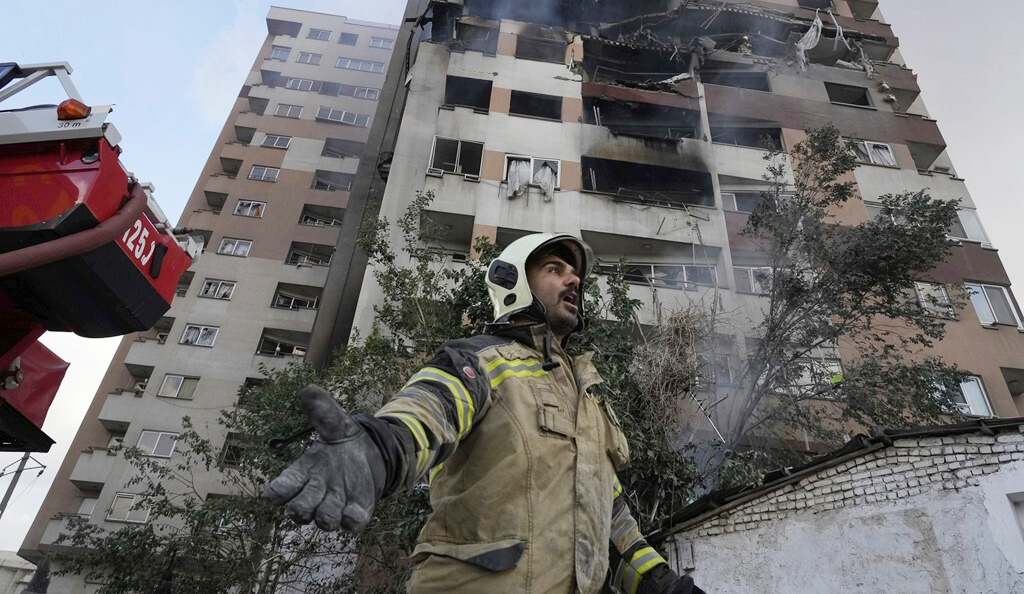
In this context, the blatant and unrestrained military attack carried out by the Israel on Iranian soil in the early hours of June 13, 2025, has once again compelled international organizations and world governments to confront fundamental questions:
- Can Israel’s justification of its large-scale military assault under the doctrine of preemptive self-defense be considered legally valid?
- Is the Islamic Republic of Iran, as a sovereign state and a member of the international community, not entitled to invoke its inherent right to self-defense in the face of such aggression?
To address these questions, one must turn to the foundational legal instruments and authoritative interpretations within international law that affirm and elaborate the right to self-defense and the prohibition of the use of force:
- The United Nations Charter (1945)
- Article 2(4) sets forth a cornerstone of international law: the prohibition of the threat or use of force against the territorial integrity or political independence of any state. This principle underpins international peace, security, and mutual respect for national sovereignty.
- Article 51 recognizes the inherent right of individual or collective self-defense in the event of an armed attack, stating: “Nothing in the present Charter shall impair the inherent right of individual or collective self-defense if an armed attack occurs…” This provision forms the legal bedrock for legitimate defensive measures and is subject to three key conditions derived from customary international law: 1. The existence of an actual, verifiable armed attack; 2. An urgent and unavoidable necessity to defend for the sake of national survival and security; 3. Proportionality of the defensive response relative to the scale and intensity of the attack.
Although Article 51 is embedded within the collective security system of the UN Security Council, it simultaneously affirms the customary and pre-existing nature of this right.
- The Universal Declaration of Human Rights (1948)
- Article 3 states that “Everyone has the right to life, liberty and security of person.”
In scenarios where state or non-state actors resort to force and jeopardize the lives of a nation’s citizens, the right to self-defense emerges as a legitimate instrument for protecting these fundamental rights. Thus, self-defense transcends its status as a sovereign entitlement and becomes a guarantee for the collective realization of human rights.
- International Covenant on Civil and Political Rights (1966)
- Article 6(1) affirms that “Every human being has the inherent right to life… No one shall be arbitrarily deprived of his life.”
In General Comments by the UN Human Rights Committee, it is emphasized that states are not only prohibited from arbitrary killings but are also under positive obligations to take effective measures to safeguard lives against external threats.
- The Four Geneva Conventions (1949) and Their Additional Protocols (1977)
- The Fourth Geneva Convention, focused on the protection of civilians during armed conflict, codifies essential customary principles including: 1. Distinction (between civilians and combatants); 2. Proportionality (avoidance of excessive harm); 3. Precaution (minimizing harm to civilians).
- Article 48 of Additional Protocol I states: “In order to ensure respect for and protection of the civilian population and civilian objects, the Parties to the conflict shall at all times distinguish between the civilian population and combatants…”
This underscores that any invocation of self-defense must remain within the parameters of humanitarian law, maintaining both legal and moral legitimacy.
- Nicaragua v. United States (ICJ, 1986)
- In this landmark case, the International Court of Justice (ICJ) ruled that self-defense is triggered only by armed attacks of sufficient scale and intensity. Three guiding principles emerge from this ruling: 1. The occurrence of a military-scale armed attack; 2. Proportionality of the defensive response; 3. Immediate necessity, precluding deferral to the Security Council.
The Nicaragua judgment remains one of the most authoritative interpretations of the right to self-defense in international law.
- UN Human Rights Committee General Comment No. 36 (2018)
- This comment identifies the right to life under Article 6 of the ICCPR as the most fundamental of all human rights. It absolutely prohibits arbitrary or intentional deprivation of life. It affirms that states are obligated to take lawful and proportionate measures to protect citizens from both domestic and external threats, including through legitimate defensive action.
- Contemporary Legal Theories
- Antonio Cassese, former chair of the UN Commission of Inquiry, states in International Law that the right to self-defense must be interpreted in harmony with human dignity and humanitarian law. Where massive violations of fundamental human rights occur, self-defense may become not only permissible but morally imperative.
- Rosalyn Higgins, former President of the ICJ, has repeatedly cautioned against the abuse of self-defense as a pretext for aggression or preemptive strikes. In her view, such interpretations are incompatible with the UN Charter and undermine the international legal order.
- Christine Gray, professor at Cambridge University, in International Law and the Use of Force, argues that self-defense is strictly limited by conditions of necessity, proportionality, and temporal immediacy. She concludes that expanding the concept of self-defense to include anticipatory actions deviates dangerously from its legitimate foundations.
When legally analyzing Israel’s attack on Iran, it must be emphasized that the invocation of preemptive self-defense is incompatible with the foundational principles of international law. According to the aforementioned legal instruments and interpretations, the use of force is permissible only in response to a real and imminent armed attack.
Furthermore, Israel’s strike targeted multiple civilian sites, including residential homes, economic infrastructure, and urban facilities. Numerous non-combatant Iranian civilians, including women and children, were killed. The Natanz nuclear facility—operating under the supervision of the International Atomic Energy Agency (IAEA) and lacking any registered military function—was also deliberately targeted, with complete disregard for the severe environmental and humanitarian risks involved.
These acts clearly constitute grave violations of international human rights and humanitarian law. In this context, Iran is fully entitled—and indeed legally obligated—to defend itself comprehensively under international law. This is not a matter of discretion, but a necessity for preserving national dignity and survival. A legitimate defensive response therefore becomes both a legal right and a moral imperative—not only for Iran, but for the international community as well—to prevent egregious violations of human rights and jus cogens norms by the Israel.
Israel’s unlawful aggression represents yet another test for those who claim to uphold human rights. If the international community—particularly the UN Human Rights Council, the European Union, and self-proclaimed moral states—remains silent in the face of such blatant violations, the credibility of the international legal and human rights framework will be gravely undermined.
Accordingly, these actors are expected to:
- Issue clear and public condemnations of Israel’s aggression;
- Establish an independent fact-finding mission to investigate the violations;
- Create effective preventive mechanisms to deter the recurrence of such actions.
In a world where impunity normalizes violence, silence is not neutrality—it is complicity in disguise.