

In recent years, the scope and frequency of unilateral sanctions imposed by individual states or regional organizations without authorization from the UN Security Council have expanded at an alarming pace. These measures—often justified on political or security grounds—now exceed traditional limitations and extend to domains such as financial transactions, trade, technology transfer, and even humanitarian cooperation. This trend not only undermines foundational principles of international law, including the sovereign equality of states and non-intervention in internal affairs, but also produces far-reaching effects on economic development, social welfare, and the realization of human rights in targeted countries. Unilateral sanctions—especially when applied extraterritorially—can obstruct people’s access to medicines, food, and essential services, thereby exacerbating humanitarian conditions. Consequently, many international bodies and human rights experts have called for serious reassessment of the legitimacy and consequences of such measures.
Interview Details
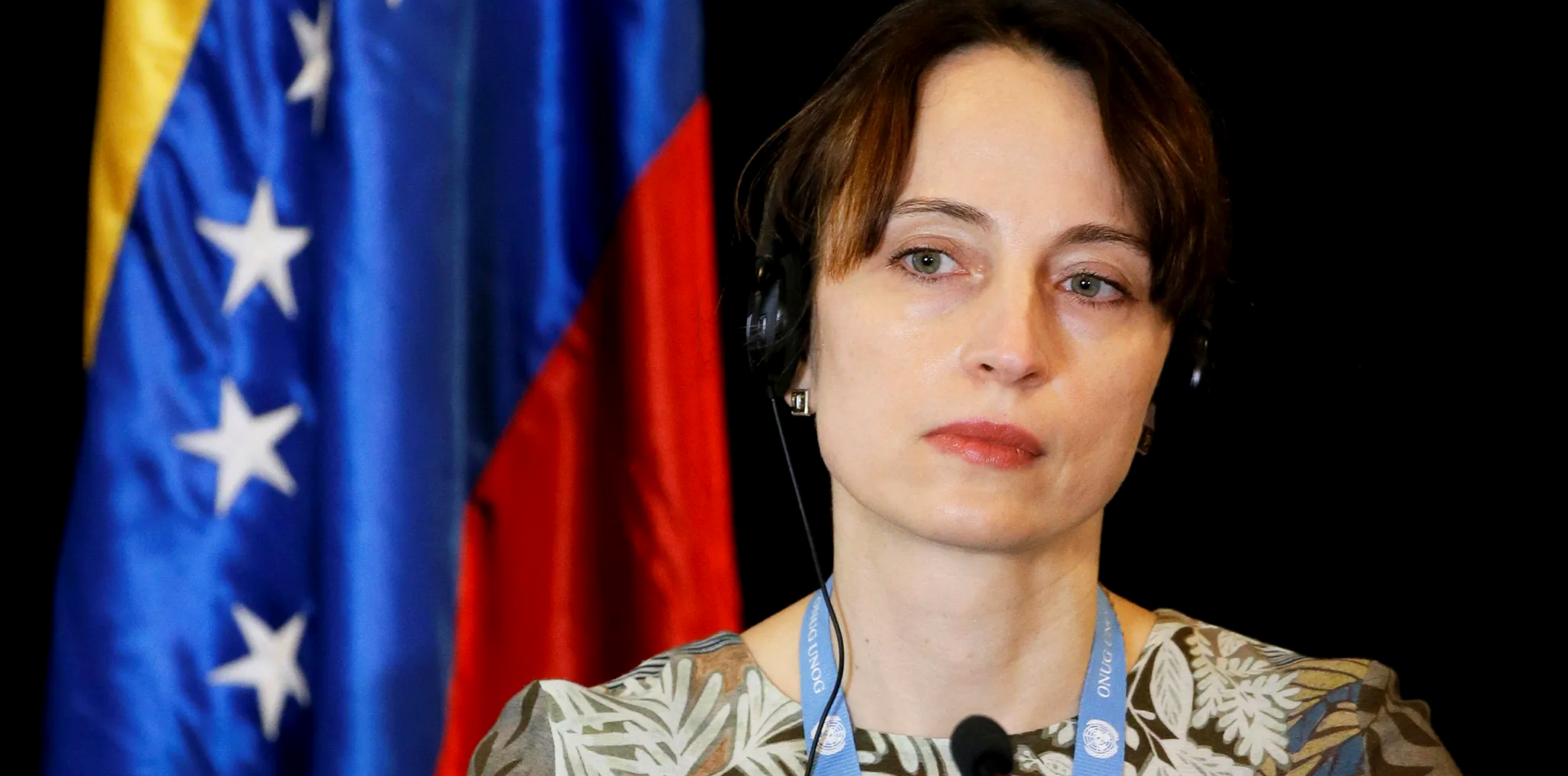
Interviewee: Professor Alena Douhan, UN Special Rapporteur on the negative impact of unilateral coercive measures on the enjoyment of human rights
Main Topics:
- The expansion of unilateral sanctions and legitimacy challenges under international law
- Humanitarian and human-rights consequences of unilateral sanctions
Note: To preserve academic independence and diversity of perspectives, it is emphasized that the opinions expressed in this interview reflect solely the personal views of the interviewee and do not necessarily imply endorsement or adoption of a position by the Human Rights Research Group of the University of Isfahan.
Interview Report
- The Expansion of Unilateral Sanctions and Legitimacy Challenges under International Law
Professor Douhan notes, as an illustrative starting point, that economic and financial sanctions can disrupt entire national economies. She also points to so-called “targeted” or “secondary” sanctions imposed against specific individuals, companies, or institutions alleged to have violated or circumvented existing restrictions. Yet, when attempting to identify and define precisely what constitutes unilateral sanctions, it becomes clear that the modalities of their implementation must also be considered. Such measures are frequently accompanied by civil or criminal penalties for natural or legal persons who refuse to comply—even when no authorization has been granted by the United Nations. This reality makes it increasingly difficult to assess the legitimacy and lawfulness of these actions within the framework of international law.
Under international law, only states or organizations acting pursuant to authorization by the UN Security Council have a recognized mandate to impose sanctions. Any unilateral action outside this framework must conform to the rules on state responsibility and, in particular, the principles governing countermeasures. This means such measures are only justifiable if adopted in response to a prior internationally wrongful act, are strictly proportionate to that breach, and do not violate human rights or other erga omnes obligations (i.e., obligations owed to the international community as a whole).
Regrettably, most unilateral sanctions in place today meet none of these criteria. Lacking Security Council authorization, they contravene foundational rules of international law and, as such, constitute unlawful unilateral coercive measures.
- Humanitarian and Human-Rights Consequences of Unilateral Sanctions
Unlike UN sanctions—which should be accompanied by assessments of humanitarian impact—unilateral sanctions rarely include any such evaluation. Only a limited number of mechanisms, including the mandate of the Special Rapporteur on the negative impact of unilateral coercive measures and, occasionally, ad hoc initiatives by the Office of the High Commissioner for Human Rights, engage with their consequences. The evidence clearly indicates that virtually all categories of human rights—civil and political, economic, social, and cultural, as well as collective rights such as the right to development—are substantially harmed by these measures. The direct effects of economic, financial, and trade restrictions are devastating. When major sectors of a country’s economy are targeted, the entire population is inevitably affected. Mechanisms ostensibly designed to exempt humanitarian goods often prove ineffective in practice, preventing countries from purchasing items essential to the normal functioning of society.
This problem became particularly acute during the COVID-19 pandemic, when sanctioned countries were unable to procure medicines, vaccines, and medical equipment necessary for disease prevention and treatment. Even today, some countries face serious obstacles in transferring funds for the import of medicines or to support humanitarian operations.
The scope of harm is not limited to food and medicine. Restrictions on importing medical equipment, spare parts, and industrial materials impair the maintenance of critical infrastructure such as electricity, water, communications, and transportation. As these systems erode, citizens are forced to resort to unsafe alternatives—such as outdoor wood-fuel cooking—which jeopardize both human health and the environment.
Children are particularly vulnerable. In many sanctioned countries, the deterioration of transport and communications has hindered students’ access to schools. During the pandemic, when education moved online, the lack of electricity and internet deprived countless children of digital learning opportunities and exacerbated existing inequalities. In this way, sanctions do not merely target governments; they systematically weaken and degrade the social and economic foundations of entire nations.
Moreover, “targeted” or individual sanctions—purportedly limited to political or military elites—often lack clear legal bases. Many individuals are designated without reliable evidence, due process, or access to judicial remedies. Even where limited judicial avenues exist (e.g., in the European Union), such options are largely absent in other legal systems, resulting in violations of the right to a fair trial and the presumption of innocence. In addition, secondary sanctions have created a climate of fear and over-compliance. Banks and private companies, fearing multi-billion-dollar penalties, avoid any engagement with entities from sanctioned countries—even when transactions are entirely lawful and humanitarian in nature. This over-compliance further isolates targeted societies and intensifies the suffering of innocent civilians.
The cumulative effect is that all fundamental human rights are undermined by unilateral sanctions: the right to health (due to restricted access to medicines and equipment), the right to education, the right to work, the right to an adequate standard of living, freedom of expression and communication (due to constrained access to global platforms), and ultimately the right to life. When a country’s economy is comprehensively constrained by sanctions, development stalls. States are compelled to divert resources away from long-term objectives—including the Sustainable Development Goals (SDGs)—toward basic survival needs. In this way, unilateral sanctions directly weaken the global commitment to sustainable development and collective progress. Beyond direct victims, there are indirect victims as well: workers in affected industries, owners of private businesses, families of designated individuals, and humanitarian organizations prevented from delivering aid—or even prosecuted for engaging in humanitarian activities. In many cases, humanitarian actors themselves face restrictions or criminalization for attempting to assist. For these reasons, it is essential that any action by any state or regional organization be preceded by comprehensive legal and humanitarian assessment. States must ensure that their measures fully comply with international law and do not inflict civilian suffering.
Ultimately, the active participation of international organizations, civil society, and UN specialized bodies in monitoring and assessing the impact of unilateral sanctions on the enjoyment of human rights—including the rights of workers, women, children, and persons with chronic illnesses—is vital. Only through such comprehensive evaluation and effective accountability can the international community uphold the rule of law and guarantee human dignity in inter-state relations.
Policy Recommendations
- Mandatory Humanitarian Impact Assessment Prior to Sanctions
Every state or entity imposing sanctions must evaluate potential effects on human rights and humanitarian conditions before implementation. This assessment should be independent, transparent, and based on field data to prevent harm to civilians.
- Establish a UN-Level Monitoring Mechanism
A permanent mechanism should be created within the Human Rights Council or the Office of the High Commissioner for Human Rights to monitor the effects of unilateral sanctions. This body could issue annual reports and require greater transparency and accountability from states regarding the human impact of their measures.
- Strengthen Humanitarian Safeguards and Facilitate Humanitarian Transactions
States and international banks should establish special mechanisms to ensure the unhindered transfer of medicines, food, medical equipment, and humanitarian assistance. Guaranteeing protections for relief organizations can prevent unnecessary deaths and suffering in targeted countries.
- Promote Dialogue and Multilateral Diplomacy Instead of Unilateral Pressure
Rather than relying on coercive sanctions, states should resolve disputes through negotiation, mediation, and regional cooperation. Multilateral diplomacy not only enjoys greater international legitimacy but also enhances prospects for sustainable peace and mutual respect.
Conclusion
Unilateral sanctions imposed without UN Security Council authorization—often for political or security aims—have become one of the central challenges to the contemporary international legal order and human rights. By violating foundational principles such as sovereign equality and non-intervention, these measures generate sweeping effects on nations’ development and welfare.
Experience shows that the human and social consequences of such measures far exceed their stated political objectives. They fragment national economies, erode critical infrastructure, and restrict public access to medicines, food, and education. In practice, unilateral sanctions function not merely as tools of political pressure but as instruments of systematic human-rights violations. From the standpoint of international law, most such measures lack legitimacy and fail to conform to the rules governing lawful countermeasures. Their continued use poses a serious threat to the international legal order and the rule of law, and risks undermining trust among states. In these circumstances, the international community must adopt a responsibility-based, accountable, and human-centered approach. Developing monitoring mechanisms, advancing multilateral dialogue, and conducting pre-imposition humanitarian assessments are urgent imperatives. Ultimately, only through strengthened international cooperation and adherence to the principles of the UN Charter can a balance be achieved among security, justice, and human dignity.


