

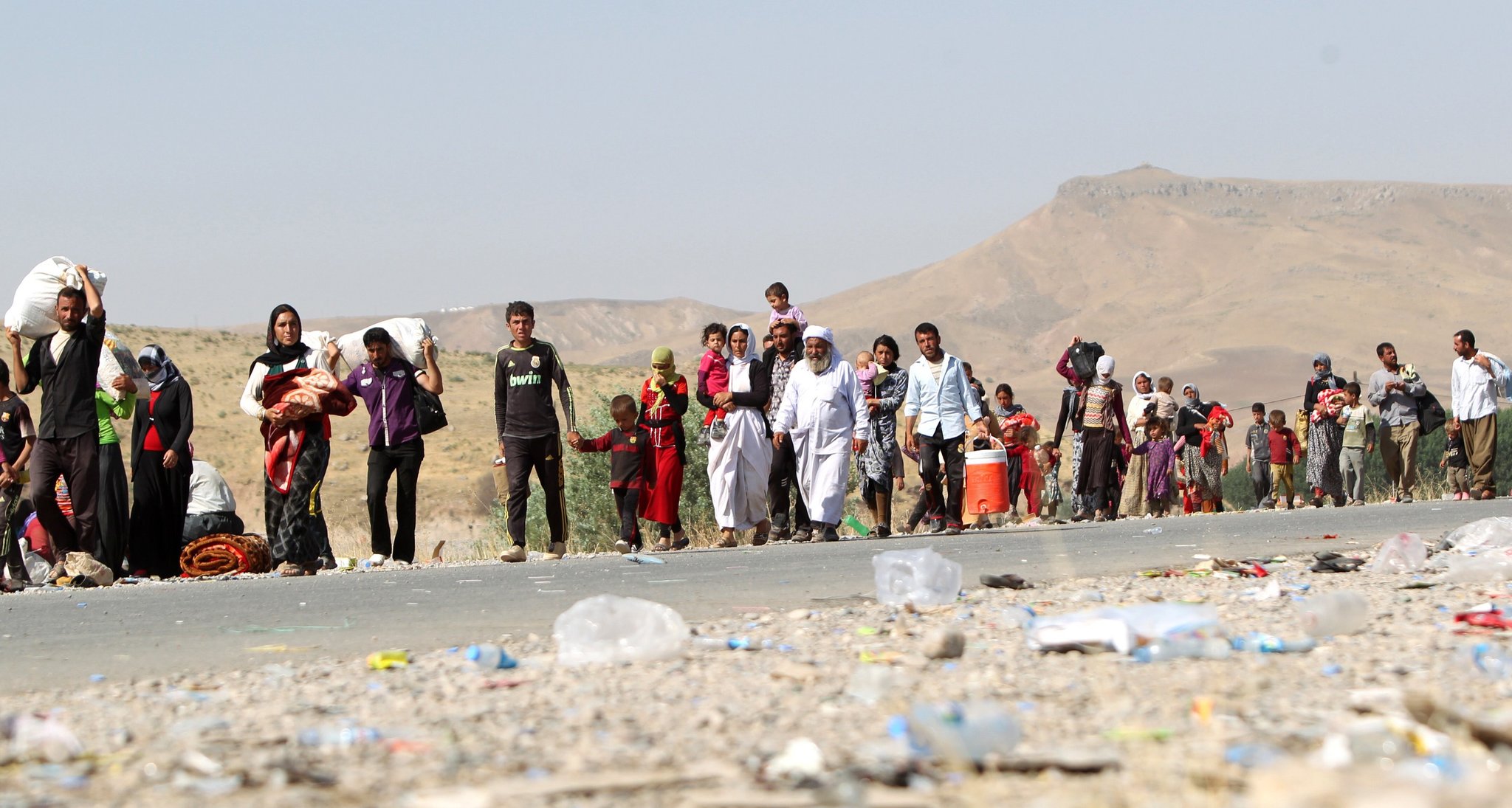
The issue of refugees and displaced persons in Iraq and the Middle East represents one of the most profound and complex humanitarian crises of our time. On one hand, Syrian refugees—more than a decade after the outbreak of their country’s civil war—continue to live in temporary camps in Iraq under harsh and insecure conditions, with reports of forced returns despite legal prohibitions. On the other hand, the Yazidi community, after the ISIS attacks of 2014, faced atrocities that clearly amounted to genocide and crimes against humanity—atrocities whose psychological, social, and security consequences persist and significantly hinder the reconstruction of this community. Alongside these two bitter experiences, the situation of Iraqi refugees in neighboring countries, particularly Iran and Syria, also reflects the repercussions of decades of war and instability in Iraq, with wide-ranging legal, political, and social dimensions. Taken together, these crises not only highlight the vulnerability of different groups to violence and instability but also serve as a critical test of the commitment of states and the international community to fundamental human rights principles, refugee protection, and genocide prevention. Examining these situations from legal, humanitarian, and security perspectives can provide a foundation for proposing fair and sustainable solutions to prevent the recurrence of similar atrocities and to pave the way for a return to normal life for these groups.
Interview Details
- Interviewer: Dr. Mohammad al-Khaledi, PhD in International Relations, University of Isfahan, and staff member of the Najaf Provincial Council, Iraq
- Interviewee: Dr. Fares Abdulrahim Hatim, Faculty Member of Law, University of Kufa, Iraq
- Date of Interview: Sunday, July 27, 2025
Main Topics
- Analysis of the forced return of Syrian refugees from Iraq and its legal consequences
- The crisis of Yazidi return to Sinjar: legal, security, and infrastructure reconstruction challenges
- The situation of Iraqi refugees and migrants in neighboring countries (Iran, Syria, and Europe)
Interview Report
- Analysis of the Forced Return of Syrian Refugees from Iraq and Its Legal Consequences
At the outset of this topic, Dr. Abdulrahim emphasized the legal and humanitarian dimensions of the return of Syrian refugees from Iraq, stressing that more than a decade after the outbreak of the Syrian crisis, the presence of tens of thousands of refugees on Iraqi soil has become one of the region’s most complex challenges. This issue gained particular significance and sensitivity from November 2023 onwards, following a ruling by the Federal Supreme Court prohibiting the forced return of refugees. Despite this explicit judgment, reports indicate that the return of a segment of refugees has nevertheless continued—an issue that raises serious questions about Iraq’s international obligations, the implementation of the rule of law, and the effectiveness of the country’s executive institutions.
He further explained that the root of this contradiction between judicial rulings and executive practice lies in the lack of institutional coordination between Iraq’s judicial, security, and executive bodies. While the Federal Supreme Court declared forced return to be in violation of the Constitution and the country’s international obligations, field evidence shows that in certain areas, particularly along border zones, this ruling is ignored. In these regions—where the central government’s authority is noticeably weaker—non-state armed groups operating outside judicial oversight sometimes play a direct role in returning refugees. Such circumstances render effective judicial monitoring over the return process extremely difficult and have led to the continued violation of refugees’ fundamental rights.
- Iraq’s International Obligations and Their Neglect
As a state party to international human rights treaties—including the 1951 Refugee Convention and the International Covenant on Civil and Political Rights (ICCPR)—Iraq is bound by the fundamental principle of non-refoulement. Any forced return of refugees to Syria thus constitutes a clear violation of international law. Dr. Abdulrahim explained that Article 33 of the 1951 Convention and Article 7 of the ICCPR explicitly stipulate that no person should be returned to a country where they face the risk of torture, persecution, or serious threats. Considering that large parts of Syrian territory remain insecure, the return of refugees to that country is in direct contradiction with these principles.
In analyzing Iraq’s legal structure in this regard, he pointed out that one of the fundamental problems is the absence of a comprehensive national asylum law. In the absence of such a law, the rights and obligations of refugees are not clearly defined. This structural gap, combined with legal weaknesses, has resulted in executive processes lacking effective and accountable mechanisms. Furthermore, Iraq lacks specialized courts to address claims related to human rights or refugee status. This institutional shortcoming means that sensitive cases are often assigned to judges who have not necessarily received sufficient training in international humanitarian law—an issue that increases the likelihood of refugees’ rights being undermined.
- The Role of External Factors and Political Pressures
The influence of regional actors on Iraq’s migration policies, particularly in border areas, is undeniable. Reports indicate that certain security institutions under external influence have facilitated forced returns—an element that seriously undermines the legitimacy and independence of Iraq’s internal decision-making. Dr. Abdulrahim explained that neighboring states, including Turkey, within the framework of their security and geopolitical considerations, may pursue policies aimed at reducing the Syrian refugee population in border regions. Such pressures, even if unofficial, can directly shape the orientation of local policies and decision-making, adding further complexity to the humanitarian and legal situation.
- The Deteriorating Conditions of Refugee Camps
Referring to the situation in refugee camps, Dr. Abdulrahim emphasized that reports by international organizations, including Human Rights Watch, indicate that camps such as al-Jadida lack even the most basic living conditions. Severe restrictions on access to safe drinking water, shortages of medical services, and the absence of psychosocial support are among the problems identified. This situation constitutes a clear violation of Article 11 of the International Covenant on Economic, Social and Cultural Rights (ICESCR), to which Iraq is a party. He noted that, in practice, these conditions sometimes force refugees to return to Syria. Such returns are presented as “voluntary,” yet in reality, they occur under pressure and without genuine choice.
In continuation, he pointed to the instrumental use of security-related accusations, explaining that in some cases, Iraqi authorities forcibly return refugees without valid judicial rulings. These actions are often justified by unsubstantiated allegations regarding the possible association of certain refugees with terrorist groups, while sufficient evidence or fair trial procedures are absent in many instances. Dr. Abdulrahim emphasized that the presumption of innocence and the requirements of fair trial standards are not observed in such processes. Moreover, no official institution in Iraq has published transparent statistics on the number of Syrian refugees accused of security-related crimes. This lack of data has effectively created a space for the instrumentalization of security accusations and political manipulation.
- Available Legal Remedies
From a legal perspective, one of the important options for protecting Syrian refugees in Iraq lies in resorting to international mechanisms. Complaints can be submitted to bodies such as the UN Human Rights Committee or the Committee Against Torture. Although these bodies lack strong enforcement powers, their reports and statements can exert considerable political and media pressure on the Iraqi government. In this regard, the use of the UN special procedures system is also important. The Special Rapporteur on Refugees or on Torture can, through the publication of official reports on the situation of Syrian refugees in Iraq, raise international awareness and place the government under scrutiny.
Another option is the establishment of a joint monitoring mechanism. A joint committee between Iraq and Syria, under the supervision of the United Nations, could oversee the process of voluntary refugee return and ensure the protection of vulnerable groups, particularly women and children. This body must operate with the active participation of international organizations to guarantee that returns are truly voluntary and in line with international standards.
Dr. Abdulrahim also emphasized the need to utilize resettlement programs in third countries. In his view, countries such as Germany, Sweden, and Canada could, within the framework of humanitarian resettlement initiatives, help reduce Iraq’s heavy burden. This measure should be pursued in close coordination with the Iraqi government and in full respect of the principle of national sovereignty.
In summation, he stressed that the issue of the return of Syrian refugees from Iraq cannot be analyzed solely through security or political lenses. It constitutes a serious test of the commitment to human dignity and the fundamental principles of international law. The current situation not only represents a flagrant violation of international legal norms but, if it continues, could also result in the emergence of a humanitarian catastrophe. Achieving a sustainable solution requires close cooperation between the Iraqi government, the international community, and human rights organizations. Ensuring safe and dignified conditions for voluntary return, strengthening protective systems in refugee camps, and expanding resettlement programs in third countries are essential steps toward reducing the scope of this humanitarian crisis.
- The Crisis of Yazidi Return to Sinjar: Legal, Security, and Infrastructure Reconstruction Challenges
At the beginning of the second topic, Dr. Abdulrahim stressed that the issue of Yazidi return to Sinjar is not merely a domestic Iraqi crisis but one with international legal and moral dimensions. He stated that the catastrophe that began in 2014 with the ISIS assault on the Sinjar region represents one of the most horrific instances of genocide since World War II. This attack combined elements of ethnic cleansing, crimes against humanity, and genocide. According to United Nations reports, more than 5,000 Yazidi men were killed, and over 6,500 women and children were abducted—many of whom were subjected to torture, sexual slavery, and trafficking. Additionally, more than 350,000 people were displaced.
Despite the passage of years since these atrocities, a significant portion of the Yazidi community has still not returned to their homes and lands. According to the International Organization for Migration (IOM), by the end of 2023, only around 35 percent of displaced Yazidis had managed to return to Sinjar. This figure is considerably lower than that of displaced persons from other Iraqi regions and clearly reflects the magnitude of the obstacles to return.
Dr. Abdulrahim identified the main factors behind this delay and difficulty as follows:
- Destruction of Essential Infrastructure: Over 70 percent of Sinjar’s urban and rural infrastructure—including schools, hospitals, and water and electricity systems—was destroyed during the ISIS attack. Reconstructing such widespread devastation requires political will, extensive financial resources, and lasting security stability, none of which have yet been adequately provided. International and Iraqi reports confirm that many rural areas around Sinjar still lack reliable electricity and safe transportation routes.
- Lack of Basic Services: Findings from UNICEF and the World Health Organization indicate that many of Sinjar’s medical centers suffer from shortages of medicines, equipment, and personnel. Even in areas where returns have occurred, services such as healthcare, education, and public transport remain extremely limited or nonexistent.
- Persistent Insecurity and Military Fragmentation: Sinjar remains devoid of stable security governance. The presence of multiple armed groups—including the Popular Mobilization Forces (PMF), the Peshmerga, the Iraqi army, and local militias—has turned the region into a battleground of competing forces. Given the Yazidis’ history of displacement and betrayal, their distrust of return under such circumstances is understandable.
- Absence of Transitional Justice and Accountability: The lack of justice is a key obstacle to return. Although limited prosecutions against ISIS members have been held in Europe—including the conviction of a woman in Germany for sexual enslavement—these efforts remain insufficient. Justice must be comprehensive, both locally and internationally. Otherwise, return risks reproducing trauma. A fundamental question persists among Yazidis: Where are the perpetrators of these crimes, and who will be held accountable?
- Lack of Effective Government Response
Regarding the Iraqi government’s performance, Dr. Abdulrahim observed that although the parliament has passed resolutions in support of the Yazidis, most have either not been implemented or have remained largely symbolic. He outlined four primary reasons for this failure:
- Budgetary crisis and financial constraints: Despite Iraq’s oil revenues, actual budget allocations for Sinjar’s reconstruction and victim compensation have been insufficient.
- Administrative corruption and bureaucratic complexity: These have disrupted and undermined reconstruction and aid processes.
- Political disputes between Baghdad and Erbil: These rivalries have turned Sinjar into a bargaining tool in their power struggles.
- Exclusion of the Yazidi community from decision-making: Without the participation of women, local leaders, and representatives of this community in planning and reconstruction processes, no project will enjoy sufficient social legitimacy.
- Responsibility of the International Community
Dr. Abdulrahim criticized the passive approach of the international community toward the Yazidis, stressing that no decisive action has been taken to end this community’s homelessness and injustice. Yet the UN Charter, the Rome Statute, and other international conventions hold states accountable for genocide. Urgent measures must include:
- Engagement of the UN Human Rights Council in the Sinjar case and the deployment of field monitors,
- Encouraging the International Criminal Court to open formal investigations,
- Allocating targeted budgets by donor countries,
- Strengthening civil society organizations to document violations and provide legal assistance to survivors.
- Preconditions for Sustainable Yazidi Return to Sinjar
He identified five essential preconditions for a durable return of the Yazidis:
- Security guarantees led by neutral local police forces composed of Yazidis and under central government authority;
- Transitional justice through a dedicated truth commission and special courts to investigate crimes;
- Authentic reconstruction of economic, social, educational, and cultural infrastructure, coupled with training of skilled workers;
- Psychosocial support and empowerment programs for women and child survivors;
- Ensuring Yazidi political and administrative participation at both regional and national levels.
In conclusion, Dr. Abdulrahim argued that the Yazidi tragedy represents one of the darkest chapters of contemporary Middle Eastern history and that addressing it requires global determination. He stressed that humanitarian disasters do not end when wars cease; they persist through ongoing injustice and neglect. Achieving justice for the Yazidi community is not a matter of choice but an ethical and legal necessity. The international community must, in cooperation with the Iraqi government, guarantee that such atrocities are never repeated and that Yazidi return to Sinjar takes place under conditions of security, dignity, and justice.
- The Situation of Iraqi Refugees and Migrants in Neighboring Countries: Iran, Syria, and Europe
At the beginning of the final topic of this interview, Dr. Abdulrahim emphasized that the issue of Iraqi refugees is one of the most chronic and deeply rooted cases, intertwined with Iraq’s history for decades, and continues to face multiple structural and political challenges. He pointed out that prolonged security crises, political instability, sectarian discrimination, and pressures from host countries have left many refugees living in uncertain conditions, with little hope of safe return to their homeland.
Drawing on data from the United Nations High Commissioner for Refugees (UNHCR) and reports from Iraq’s Ministry of Foreign Affairs, he explained that although the number of Iraqi refugees has decreased in recent years, this does not mean that the problem has been resolved. In Iran, between 200,000 and 300,000 Iraqis reside, most of whom arrived during the 1980s and 1990s. The majority were Shia Muslims from southern Iraq who sought refuge in Iran under Saddam Hussein’s regime. However, the second generation of these refugees continues to face problems such as renewing residence permits and lacking full access to the legal rights of asylum.
With respect to Syria, he recalled that before the outbreak of the civil war in 2011, about 2.1 million Iraqis lived in the country. Yet the majority were forced either to re-migrate or to return to Iraq. Current estimates suggest that only 30,000 to 50,000 Iraqis remain in Syria, with extremely difficult conditions—particularly in camps such as Al-Hawl. In contrast, the situation in Europe is considerably better, given that European states possess robust legal frameworks and infrastructure for refugee protection. According to UNHCR statistics, by 2022 more than 250,000 Iraqis in Europe had international protection status, with Germany, Sweden, and the Netherlands hosting the largest numbers. Many of these refugees have secured permanent residency and enjoy fundamental citizenship rights.
- Iraq’s Asylum and Migration Law
Regarding Iraq’s domestic legislation, Dr. Abdulrahim explained that the country lacks a comprehensive asylum law and instead relies on Residence Law No. 76 of 2017 and some scattered provisions of the Penal Code. He stressed that Iraq has yet to accede to the 1951 Refugee Convention and its 1967 Protocol, a factor that undermines the country’s international credibility. Moreover, the absence of a national specialized institution for refugee affairs constitutes a critical gap. The Ministry of Migration and Displacement remains preoccupied with internal crises and lacks the capacity to comprehensively manage the file of Iraqi refugees abroad. Cooperation between Iraq and international organizations has largely been limited to voluntary return programs, which have been unsuccessful due to the shortage of infrastructure and the continuation of security instability.
Concerning the role of international organizations such as UNHCR and the International Organization for Migration (IOM), he explained that although these bodies are active in areas such as voluntary return, cash assistance, psychosocial support, and family reunification, they face obstacles including financial shortages, weak coordination with the Iraqi government, and security challenges in provinces such as Nineveh and Salah al-Din. These factors have limited the scope and effectiveness of their programs.
- Political and Humanitarian Dimensions of Iraqi Refugeehood
Dr. Abdulrahim further elaborated on the political and humanitarian dimensions of this crisis, noting that migration and residency laws in Iran and Syria impose severe restrictions on refugees. In Iran, many Iraqi refugees without formal residence permits are deprived of legal employment opportunities or access to higher education. In Syria, the situation is even more dire. Human Rights Watch reports indicate that arbitrary arrests in Al-Hawl camp and pressure on Sunni Iraqi refugees to return forcibly are among the major challenges. Returning to conflict-affected areas of Iraq poses grave risks for these individuals.
He also referred to the presence of Iraqi Sunnis in areas under Turkish control (Idlib, Afrin, and northern Aleppo), warning that some reports suggest Turkey may be using this population within the framework of its geopolitical projects—whether through altering demographic balances or leveraging migration issues in negotiations with Europe. Although this has not been officially confirmed, it has generated considerable concern.
Overall, the assessment of Iraqi refugees in Iran, Syria, and Europe underscores that this humanitarian crisis requires a multilateral, coordinated, and sustainable approach. Improving conditions for Iraqi refugees is not only a humanitarian necessity but also a critical factor for regional stability. As Dr. Abdulrahim highlighted, neglecting this issue could result in grave social and security repercussions. Therefore, urgent and coordinated action by all stakeholders to find sustainable solutions is more necessary than ever.
Policy Recommendations
The issue of Iraqi refugees is a multidimensional and chronic crisis requiring urgent and medium-term measures at the domestic, regional, and international levels. Accordingly, the following recommendations were proposed:
- Adoption of a Comprehensive Asylum Law in Iraq
The establishment of a comprehensive, transparent, and binding legal framework can clearly define refugee rights and guarantee necessary legal protections. Such legislation must align with international standards and explicitly codify the principle of non-refoulement. Effective monitoring mechanisms must also be incorporated to ensure proper implementation.
- Accession to the 1951 Refugee Convention and its 1967 Protocol
Iraq’s formal accession to these international instruments would strengthen its legal and political commitments toward refugees. This step would enable refugees to benefit from internationally recognized protections and foster more effective cooperation with UNHCR and other international bodies.
- Creation of an Independent National Institution for Refugee Affairs
Establishing an independent body with executive authority would prevent institutional overlap and inefficiency in refugee management. This institution should specialize in addressing refugees’ legal, livelihood, health, and educational needs. Its independence would ensure that day-to-day political considerations do not obstruct effective refugee protection.
- Formation of a Permanent Parliamentary Committee to Monitor Iraqis Abroad
Such a committee could continuously track the status of Iraqi migrants and refugees abroad while coordinating with Iraq’s diplomatic apparatus. This would provide a key tool for ensuring governmental accountability regarding the rights of Iraqis outside the country and enhance transparency and public trust in policymaking.
- Strengthening Regional Diplomatic Alliances with Iran, Syria, Turkey, and the Organization of Islamic Cooperation (OIC)
Regional cooperation can help share the burdens of hosting refugees among different states. It also opens the way for bilateral or multilateral agreements on voluntary repatriation, resettlement, and joint protection efforts. The OIC can serve as an important platform for coordination and legitimacy.
- Development of Documentation Systems for Refugee Rights Violations and Submission of Periodic Reports to International Bodies
Systematic documentation of refugee rights violations is a key instrument for drawing international attention and ensuring accountability of perpetrators. These systems could include digital databases, community-based reporting mechanisms, and collaboration with human rights organizations. Regular submission of reports would also increase the capacity of international bodies to intervene and provide effective support.
Conclusion
The refugee issue in Iraq—whether in the form of the forced return of Syrians, the reconstruction crisis of the Yazidis in Sinjar, or the plight of Iraqi refugees in neighboring countries—reflects the country’s legal, institutional, and political gaps. The ongoing forced return of Syrian refugees constitutes a blatant violation of the principle of non-refoulement and Iraq’s international obligations, underscoring the urgent need for immediate legal and institutional reforms. At the same time, the situation of the Yazidis demonstrates that without transitional justice, infrastructural reconstruction, and active victim participation, sustainable return will remain impossible. The experience of Iraqi refugees in Iran, Syria, and Europe further illustrates that protracted crises, in the absence of a comprehensive national policy, inevitably reproduce harm and discrimination.
In light of Dr. Abdulrahim’s insights, reforming Iraq’s domestic legal framework through the adoption of a comprehensive asylum law, accession to international conventions, and the creation of independent institutions is essential. Regional cooperation and the mobilization of international mechanisms can help ease burdens and enhance protections. Improving camp conditions, safeguarding vulnerable groups, and establishing transparent monitoring mechanisms are also immediate priorities.
At a broader level, the Iraqi refugee crisis constitutes a test of both Iraq’s commitment to fundamental human rights principles and the international community’s responsibility toward humanitarian catastrophes. Only through a multidimensional and sustainable approach can ongoing violations be prevented and conditions secured for safe and dignified return.


