In recent decades, international security and human rights have confronted a complex phenomenon often described as “selective justice” or double standards. Crises that were once expected to be addressed under universal human rights principles now enter the international agenda in a decidedly selective manner. Ukraine quickly became the focal point of the UN and global institutions, while grave humanitarian crises in Gaza, Yemen, Myanmar, and other regions were met with relative indifference. This pattern suggests that responses to crises are shaped less by universal ethical criteria and more by geopolitical calculations and great-power interests. The result is a fundamental challenge to the legitimacy and justice of the international order: Are human rights truly universal and non-negotiable values, or are they instrumentalized to legitimize hegemonic policies?
This dilemma becomes even more acute in the context of weapons of mass destruction (WMDs). The use—or threat—of such weapons poses a direct danger to human life and collective security, yet international reactions remain highly politicized and selective. Drawing on the realist framework of Dr. Ebrahim Mottaghi, this interview analyzes the hidden rules and hierarchies of international institutions, the formation of double standards, and their consequences for global security. The central problem is the gap between proclaimed principles and actual practice by powerful states—a gap that produces double standards, weakens deterrence, alters security balances, and multiplies sources of instability.
This conversation is organized around three analytical axes:
- Theoretical Foundations of Selective Justice: Power as the Basis of Legitimacy;
- Operational Mechanisms of Selective Justice: Hegemonic Narratives and Attritional Sanctions;
- The Transformation of Deterrence and the Fragile Future of International Security.
Interview Details
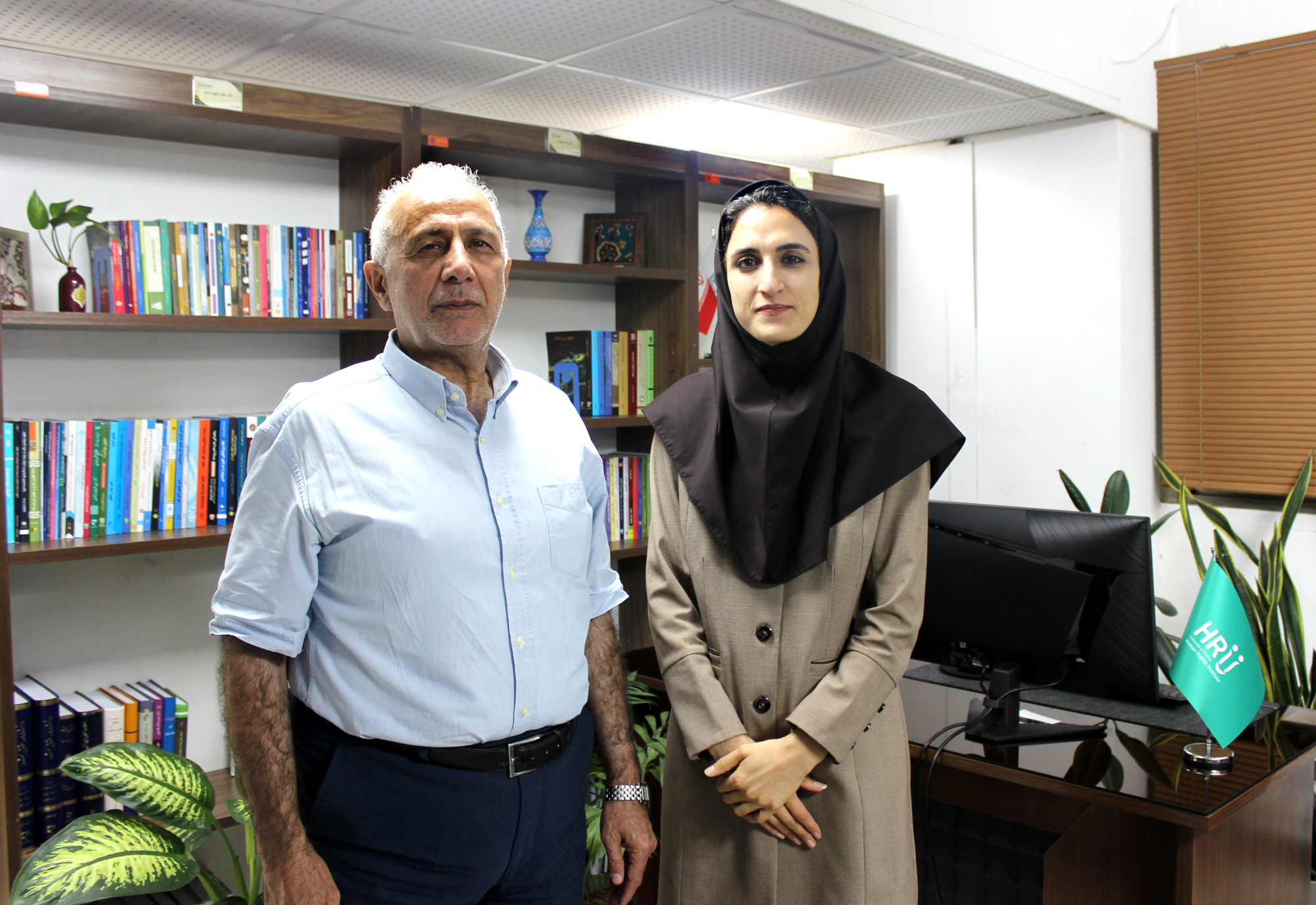
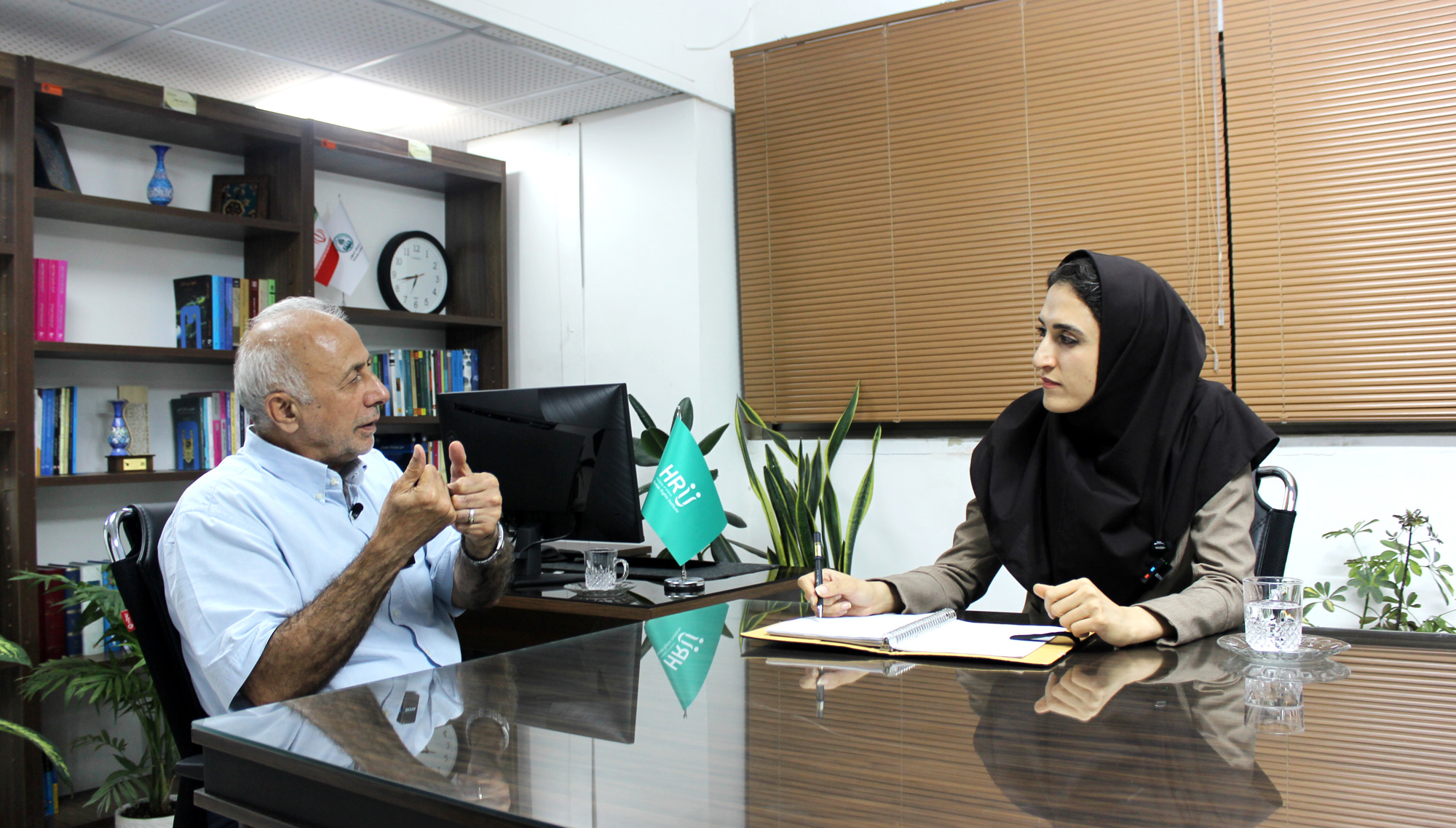
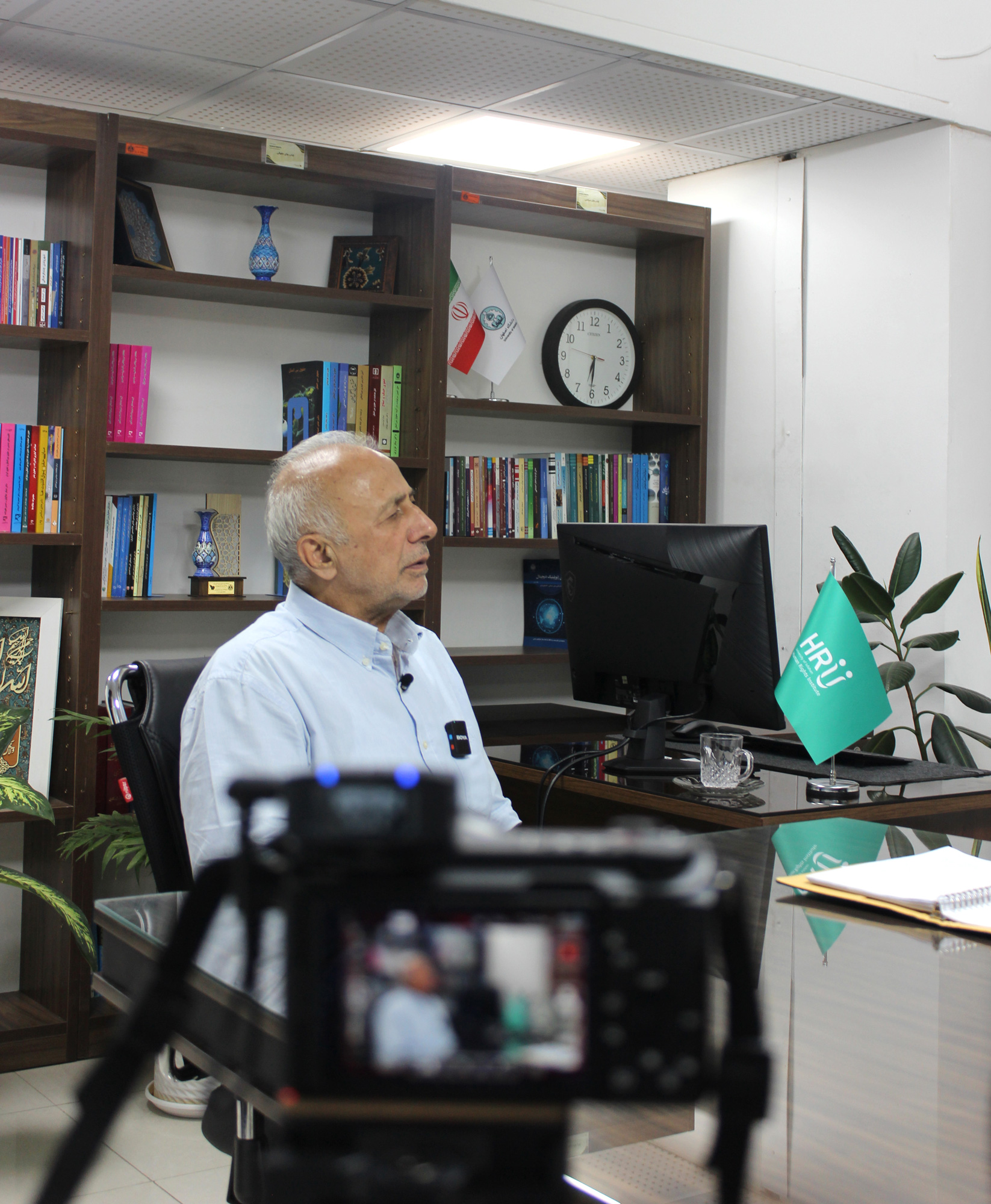
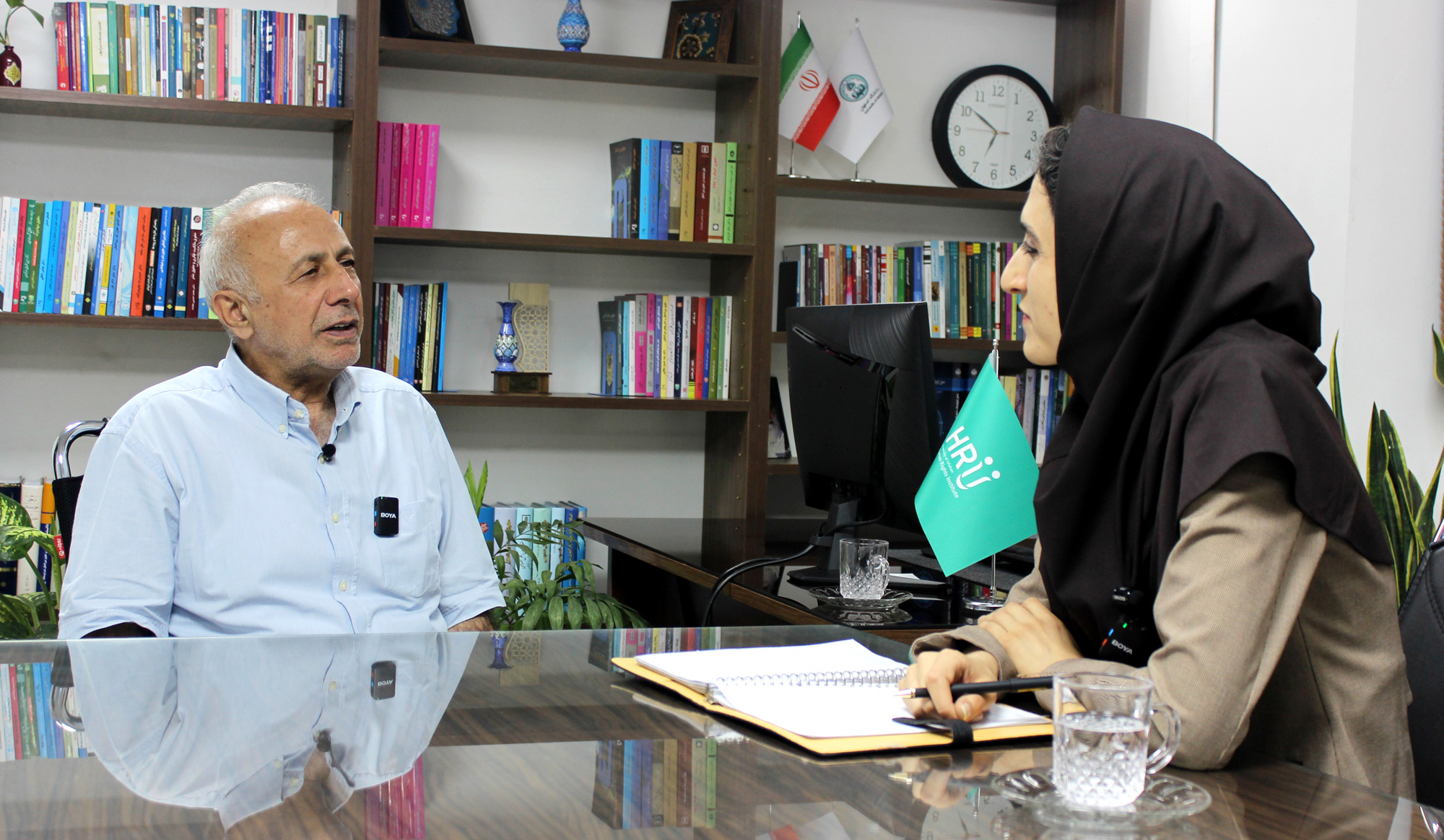
- Interviewer: Marzieh Tajmiri, PhD Candidate in International Relations, University of Isfahan
- Interviewee: Dr. Ebrahim Mottaghi, Faculty Member, Faculty of Law & Political Science, University of Tehran
- Date of Interview: Saturday, September 14, 2025
- Main Topics:
- Theoretical Foundations of Selective Justice: Power as the Basis of Legitimacy
- Operational Mechanisms of Selective Justice: Hegemonic Narratives and Attritional Sanctions
- The Transformation of Deterrence and the Fragile Future of International Security
Note: In order to preserve academic independence and diversity of perspectives, it should be emphasized that the opinions expressed in this interview reflect solely the personal views of the interviewee and do not necessarily imply endorsement or adoption of a position by the Human Rights Institute of the University of Isfahan.
Interview Report
- Theoretical Foundations of Selective Justice: Power as the Basis of Legitimacy
At the core of Dr. Mottaghi’s analysis lies a fundamental redefinition of justice. There is no single, universally shared understanding of justice; the perspectives of strong and weak states diverge sharply. Justice is not universal—it is contingent on power. Through a realist lens, justice is shaped by hierarchies of material capabilities (economic resources, military capacity) and political influence. Citing Thucydides and The History of the Peloponnesian War, Dr. Mottaghi underscores the dictum that justice exists primarily among actors with comparable power. This proposition undergirds realist thought: any discourse of “global justice” that overlooks power balances is idealistic and impractical.
In practice, states with superior financial, military, and diplomatic power impose their definition of justice; weaker states are compelled to accept external standards. This explains the most visible manifestation of selective justice—double standards within international institutions (the UN, the ICC, and regional bodies). These institutions are not neutral fora hovering above power; they are products of power hierarchies and reflect geopolitical realities.
Illustratively, the spectacle of nine European leaders waiting outside and later sitting on ordinary chairs before President Donald Trump symbolized the tacit recognition of hierarchy even among close allies. Such informal acceptance of inequality shapes the behavior and decisions of international bodies. Thus, universalist debates on human rights and justice often operate as a kind of “legal mystification”—an instrument of soft power used by hegemonic systems to legitimize their actions. In this paradigm, human rights function less as intrinsic ends and more as tools for securitization and power reproduction. Cases like Ukraine entering the global agenda with speed, while Gaza and others are marginalized, are consistent with this logic: justice is pursued when it does not conflict with the security and interests of great powers.
Within this framework, deterrence and WMDs are also power-contingent. States that possess advanced or nuclear capabilities can consolidate security and legitimacy, while others—even facing similar threats—receive scant international support. This structural inequality turns human-rights criteria into mechanisms of control and legitimation by dominant powers. Dr. Mottaghi further invokes the notion of “scalable justice,” whereby the same act is judged differently depending on the actor’s power. Military interventions by powerful states may be narrated as human-rights protection—or condemned as aggression—depending on geopolitical alignment. These double standards carry heavy implications for international security, regional stability, and interstate trust, embedding selective justice as a structural feature of world politics and paving the way for the operational mechanisms—hegemonic narration and sanctions.
- Operational Mechanisms of Selective Justice: Hegemonic Narratives and Attritional Sanctions
- Hegemonic Narration
Hegemons sustain dominance by constructing narratives that render their policies legitimate and rational. These narratives are produced and amplified through international institutions, mass media, and cultural industries. Drawing on theorists such as Steven Lukes and Michel Foucault, Dr. Mottaghi explains how the “third dimension” of power (cultural/narrative power) engineers perceptions, reframing crises to align with hegemonic interests.
A salient example is Iraq’s chemical weapons. In the 1980s—when Iraq aligned with the West against Iran—its chemical use was not met with categorical condemnation and even benefited from technological support. Later, when Iraq clashed with the West, the same conduct became the central pretext for a large-scale military intervention. This illustrates how identical acts can yield opposite narratives depending on the actor’s position.
Media control is pivotal. Many mainstream outlets in the U.S. and Europe operate under the influence of powerful lobbies and governments, enabling global publics and elites to experience crises through a hegemonic lens. Cultural products—films, animations, advertising—often prime audiences to recognize “friends” and “enemies” per hegemonic scripts. Prior to the 2003 invasion of Iraq, for example, content circulated that painted the adversary as absolute evil while elevating Western protagonists as saviors. The narrative goal is a form of consensual capture: subjects (including foreign elites) voluntarily inhabit the hegemonic discourse, unaware of the cognitive engineering at work—where executioners and martyrs trade places.
- International Sanctions
Sanctions epitomize selective justice: imposed under human-rights pretexts yet often amounting to systematic rights violations. For Dr. Mottaghi, sanctions are less legal remedy than strategic instruments aimed at eroding state capacity by degrading social and economic structures. Two destructive outcomes feature prominently:
- Violations of the rights to life and health: By destabilizing economies, sanctions precipitate poverty, reduce public health, trigger forced migration, and strain family structures—amounting, in severe instances, to crimes against humanity.
- Weakening the right of self-defense: By restricting access to technology and resources, sanctions undermine a country’s defensive capabilities.
Sanctions also reshape state–society relations. Resource scarcity centralizes control in the state, while social structures weaken, widening state–society gaps and eroding national cohesion. The pre-2003 sanctions on Iraq neither toppled the regime nor empowered society; they concentrated power among ruling elites and devastated the social fabric.
- The Transformation of Deterrence and the Fragile Future of International Security
The classical logic of deterrence (mutual threat of devastating retaliation) persists, yet its nature and function have shifted. Heightened deterrence may now produce instability—the classic security dilemma: as State A augments its security, State B feels threatened and rearms, escalating tensions and fueling arms markets. Dr. Mottaghi points to conflicts such as Israel–Gaza, where global demand for advanced systems surged, transforming deterrence into a profit-generating vector for great powers.
Emerging actors and technologies—drones, cyber operations, precision missiles, advanced air defenses—render deterrence complex and multi-layered. These tools enable states with limited means to craft asymmetric deterrence, challenging larger powers. Dr. Mottaghi notes Iran’s missile strikes toward targets in Israel as an instance where a non-nuclear actor can stress-test nuclear deterrence frameworks.
Even so, novel deterrence is disruptive rather than annihilative: it cannot guarantee absolute security; it yields only a fragile equilibrium. This heightens the complexity of international security and shrinks the space for rational, predictable decision-making. Under such conditions, any military move or threat risks chain reactions with broad destabilizing effects.
Beyond kinetic threats, new technologies reconfigure control and surveillance. Invoking George Orwell’s 1984 and Yuval Noah Harari, Dr. Mottaghi warns that modern technologies simultaneously expand human-rights capacities and empower unprecedented monitoring. This techno-paradox creates a complicated horizon: improved information and access on one side; intensified behavioral and cognitive surveillance on the other.
In conclusion, achieving absolute deterrence in a world of multiple actors, nascent technologies, and double standards is difficult—perhaps impossible. Only overwhelming reciprocal threat capacity can restrain war, but such balance is elusive amid asymmetric tools and informal actors. The future of international security therefore appears fragile, complex, and prone to unpredictable crises.
Policy Recommendations
- Create Independent, Multi-Node International Mechanisms to Review Justice and Sanctions
States—especially within Global South coalitions or regional groupings—should establish autonomous oversight bodies to assess the legitimacy of sanctions and interventions. Such structures can de-monopolize justice criteria, curbing the instrumentalization of human-rights discourse by great powers.
- Develop Strategic Media Diplomacy to Counter Hegemonic Narratives
To balance discursive power, states should sponsor transnational media networks and critical scholarly platforms that produce alternative narratives on justice, security, and human rights. Academic–media collaboration can recalibrate global agenda-setting and narrative framing.
- Strengthen Multilateral Arms-Control Frameworks and Calibrated, Balanced Deterrence
Given evolving deterrence logics, new agreements on drones, cyber operations, and emerging military technologies are necessary. These frameworks should emphasize transparency, verification, and defensive confidence-building to dampen arms races and support relative stability.
Conclusion
Grounded in Dr. Mottaghi’s analysis, selective justice emerges not as a temporary deviation but as a structural property of the international system. Power defines legitimacy; international institutions and human-rights discourse often function as tools that legitimize hegemonic policies. The system operates along three dimensions: (i) theoretically, justice is power-contingent and variably interpreted by strong and weak states; (ii) operationally, hegemonic narratives and economic sanctions entrench double standards and pressure targeted societies—reframing crises and weakening social structures and the right to self-defense; (iii) strategically, deterrence—once stabilizing—has become an instability driver, complicated by new technologies and non-nuclear actors, diminishing prospects for absolute deterrence.
Accordingly, the future of international security appears paradoxical and brittle: human-rights and democracy discourses proliferate even as state surveillance capabilities intensify through advanced technologies. Escaping this cycle requires a fundamental reconfiguration of power relations and the emergence of alternative hegemonic models. Until then, justice in international affairs will remain selective and power-dependent, with global institutions often serving to stabilize hegemony rather than transcend it.