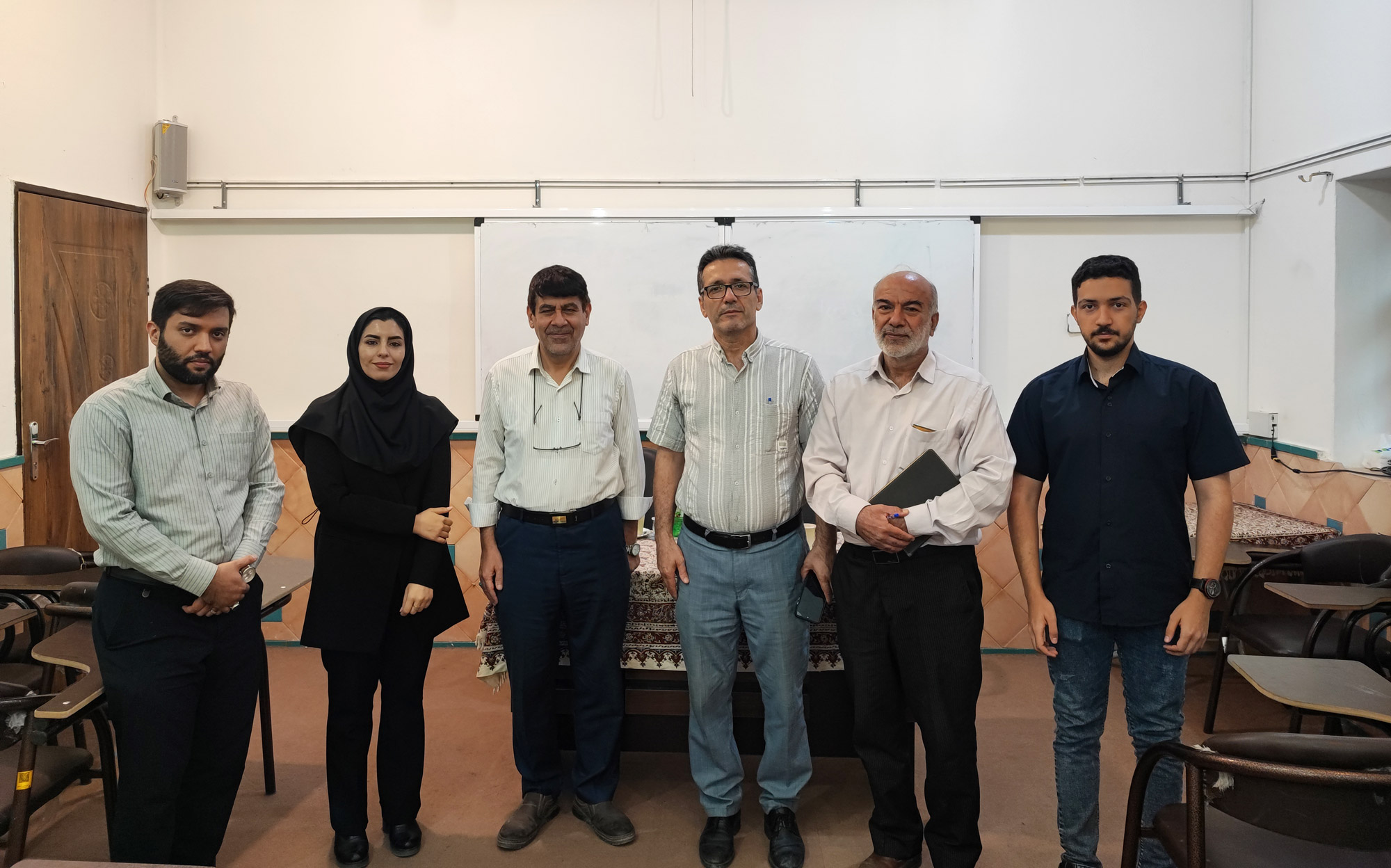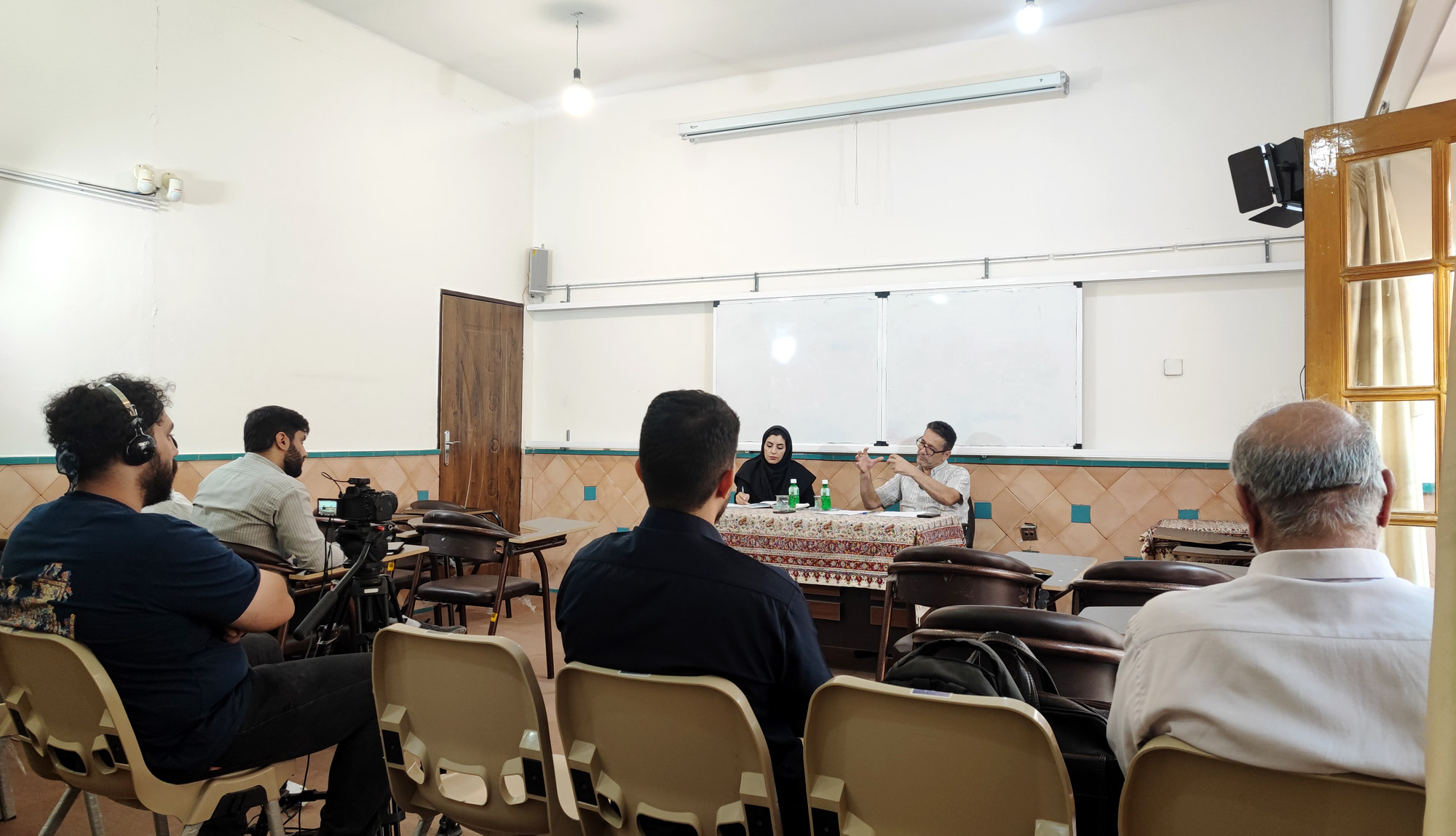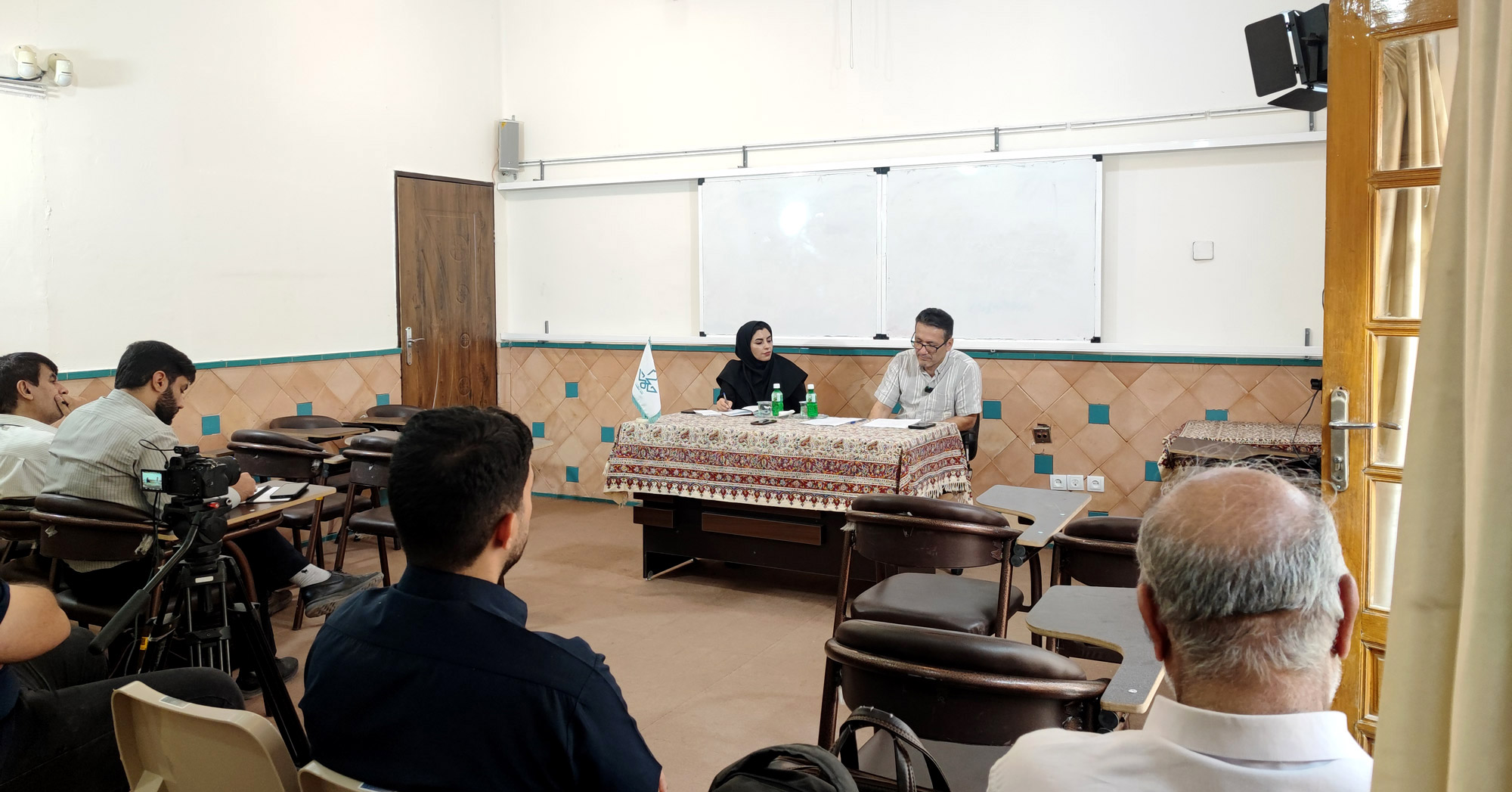
The specialized session on “The Nature of New Wars and Their Security Implications for Iran” was organized in collaboration between the Human Rights Institute of the University of Isfahan (HRIUI) and the Politics and Philosophy of Human Rights group of the Khane Hekmat (House of Wisdom) in September 2025. This session focused on tracing the historical evolution of wars, explaining the emergence of new generations of conflicts, and analyzing the pivotal role of artificial intelligence in shaping future battlefields. Undoubtedly, understanding these dynamics not only contributes to a better recognition of forthcoming threats and opportunities but also paves the way for adopting effective defense strategies in line with the requirements of the contemporary world.
Session Information
- Moderator: Sahar Barati Boroujeni, PhD Student in International Relations, University of Isfahan
- Speaker: Dr. Ali Omidi, Faculty Member, Department of Political Science and International Relations, University of Isfahan
- Main Themes:
- The Historical Evolution of War: From Traditional Battle Formations to Fifth-Generation Warfare
- Artificial Intelligence as a Key Actor in Modern Warfare: Opportunities and Challenges for Global Powers
- Date: Wednesday, September 3, 2025
- Time: 16:00–18:00
- Venue: Khane Hekmat (House of Wisdom)
Report of the Presentation
At the outset of his lecture, Dr. Omidi examined the fundamental transformations in the very concept of war. He began by tracing the etymology of the word “war,” noting that in Sanskrit it conveys the meaning of “going” and “advancing,” whereas in English it carries connotations of “confusion.” He then situated his analysis within the context of modern history, citing examples such as the Thirty Years’ War, the Spanish Succession Wars, the Russo-Turkish War, the Crimean War, the Napoleonic Wars, the Franco-Prussian War, the First and Second World Wars, and the Cold War. He highlighted the Hundred Years’ War between England and France as the longest-lasting conflict, underscoring that war has been a phenomenon intrinsic to humanity with deeply rooted and diverse causes.
Continuing, he referred to the theoretical contributions of prominent thinkers on the subject of war, including Sun Tzu, Niccolò Machiavelli, and Carl von Clausewitz. He emphasized Clausewitz’s famous dictum that “war is the continuation of politics by other means,” stressing that states wage wars to advance their objectives. Nevertheless, he pointed out, historical experience has shown that wars are not always controllable. Dr. Omidi described the institution of war as consisting of three essential elements: the people, the military, and the state. He explained that the role of the people becomes significant through their anger and collective hatred, without which wars do not ignite. The army requires intelligent and courageous commanders, while the state bears the responsibility of designing and planning wars. He also stressed the importance of identifying the enemy’s “center of gravity” alongside the necessity of both offensive and defensive strategies, all drawn from Clausewitz’s framework.
Dr. Omidi then outlined the classification of five generations of warfare, as formulated by historians on the basis of technology, strategy, and tactics:
- First Generation: Traditional wars with direct battle formations and the use of weapons such as bows and swords; wars in this era were confined to the battlefield, while the rear areas remained relatively undisturbed.
- Second Generation: Marked by the invention of gunpowder, which transformed both military formations and strategies.
- Third Generation: Characterized by the introduction of tanks into battle, particularly during the First World War.
- Fourth Generation: Less reliant on technology, this generation is exemplified by events such as the September 11 attacks, the Second Persian Gulf War, and the U.S. war in Afghanistan. Here, states confronted not other states but insurgent groups employing surprise assaults and guerrilla tactics.
- Fifth Generation: Defined by the emergence of artificial intelligence, as observed in the Russia–Ukraine war and the twelve-day conflict between Iran and Israel. Dr. Omidi emphasized that artificial intelligence fundamentally alters the concept of distance, as well as the tactics and strategies of warfare, thereby transforming its nature.
He then pointed to the vast investments made by leading states in the field of artificial intelligence. Between 2013 and 2024, the United States invested $471 billion, China $119 billion, the United Kingdom $28 billion, and Israel $15 billion in this sector—an amount exceeding the investments of France, India, and South Korea.
Dr. Omidi elaborated on the various ways artificial intelligence is transforming warfare. In the field of support operations, he identified seven key areas of impact: air defense systems, combat training, logistics and supply chains, human resource management, military medical systems, information operations, surveillance and reconnaissance, and naval robotics. He explained that the rapid growth of artificial intelligence is largely driven by the intense competition between the United States and China.
In the domain of command, control, and communications, he highlighted the critical role of artificial intelligence. While human bias in assessing troops and adversaries is often shaped by assumptions and flattery, artificial intelligence introduces greater accuracy and objectivity. Furthermore, the human capacity to process the immense volume of battlefield data is limited, leading to tendencies toward simplification and oversight of crucial facts. Artificial intelligence, by contrast, is capable of accurately processing massive datasets, thus assisting commanders in making better-informed decisions.
Conclusion
In concluding his presentation, Dr. Omidi predicted that the wars of the future will be wars of artificial intelligence, where states investing more heavily in this field will gain significant advantages. He stressed that AI-based tools and technologies will not only redefine the nature of battles but also profoundly influence security policymaking and international relations. Countries unable to adapt to this new wave, he warned, will face the risk of backwardness and emerging security threats.
At the same time, Dr. Omidi cautioned that the misuse or unregulated application of artificial intelligence could generate humanitarian crises and widespread human rights violations.
Finally, he offered several key recommendations for enhancing Iran’s defensive capacities:
- Agility of Armed Forces: This can be achieved by downsizing and focusing on capable, intelligent, and specialized forces. Agility entails greater speed and responsiveness to emerging threats. By reducing volume and prioritizing quality, maintenance costs are decreased, and operational effectiveness is significantly enhanced.
- Modernization of Weaponry: Upgrading military equipment and integrating advanced technologies, including smart drones, electronic warfare systems, and cyber weapons. Such modernization allows the country to maintain effective deterrence against technologically advanced adversaries.
- Strengthening Military–Academic Linkages: Facilitating scientific and research collaborations to transfer knowledge and technology. Such cooperation can lead to joint research projects and harnessing the capacities of academic elites, enabling the armed forces to integrate scientific advancements more rapidly into defense and security domains.
- Acknowledging and Addressing Weaknesses: Recognizing shortcomings honestly and planning systematically to overcome them. This process requires rigorous oversight and evaluation mechanisms. Acceptance of weaknesses, he emphasized, should not be seen as backwardness but rather as a constructive step toward reforming and strengthening national defense capacities.