Introduction
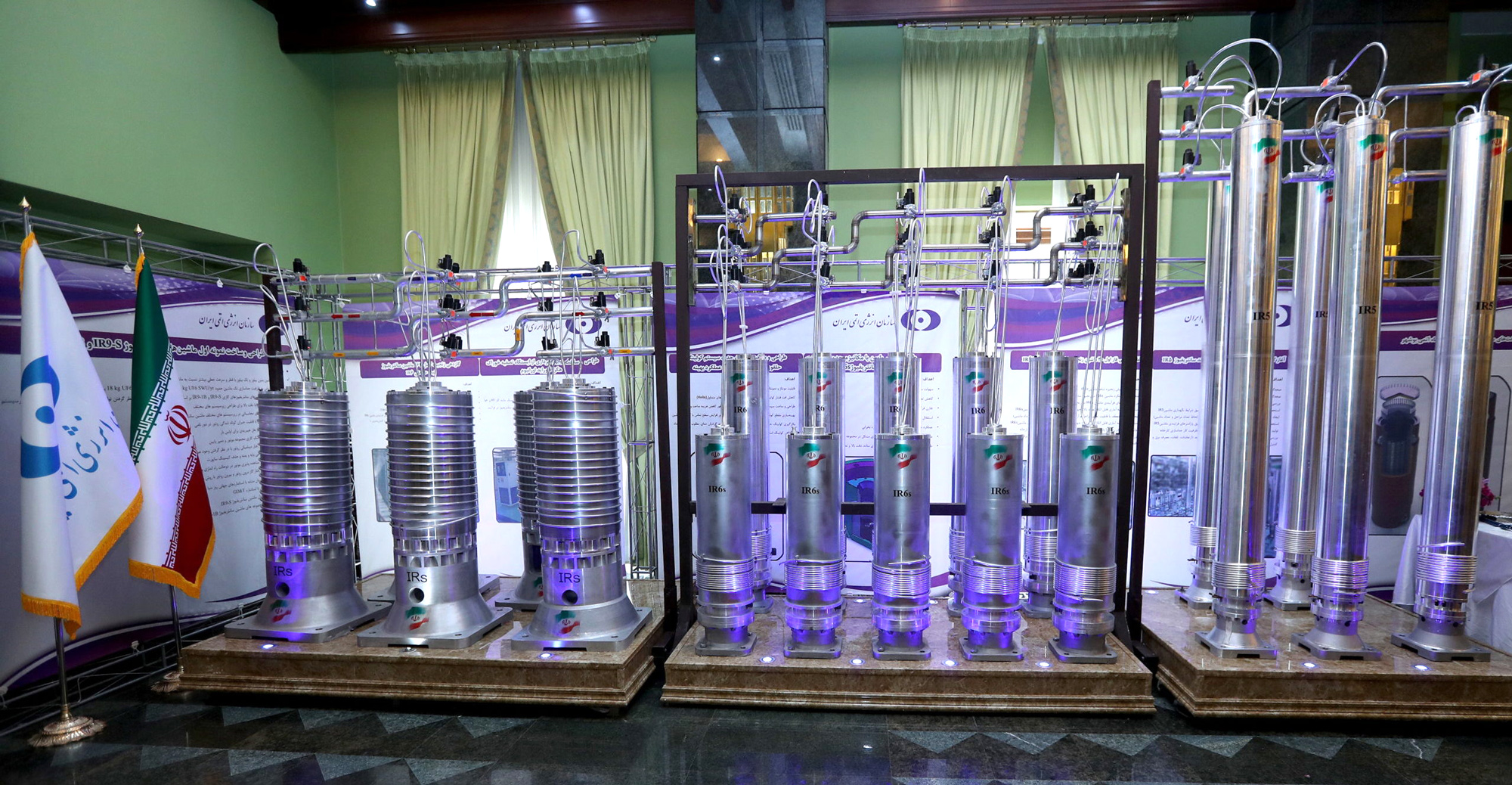
Over the past two decades, Iran’s nuclear program has been consistently subjected to persistent threats and hostile actions, ranging from cyber sabotage and covert physical operations to overt military assaults. The first widely recognized act—the Stuxnet cyberattack in 2010—was jointly orchestrated by the United States and Israel, resulting in the disruption of hundreds of centrifuges at the Natanz nuclear facility. This was followed by a series of targeted explosions and complex acts of sabotage in the ensuing years, such as the explosion on July 2, 2020, at the centrifuge assembly workshop in Natanz, and the deliberate detonation at the underground power distribution network of the same site on April 11, 2021. These incidents exemplify the various forms of foreign interventions that have consistently hindered the progress of Iran’s nuclear development. Iranian officials have repeatedly characterized these actions as acts of “nuclear terrorism.”
This trajectory escalated sharply in 2025, marking a turning point in hostilities against Iran’s nuclear program. For the first time, the Israeli regime—and subsequently the United States—carried out open and direct military operations against Iranian nuclear facilities. These operations, conducted in June 2025, targeted key sites including Natanz, Fordow, the Isfahan Uranium Conversion Facility (UCF), and the IR-40 heavy water reactor in Khondab, Arak. This marked a new phase of open confrontation against Iran’s nuclear infrastructure.
This report aims to provide a comprehensive review of the historical and technical background of these developments and examine the objective, legal, and political dimensions of the attacks. These acts of aggression carry significant implications under international law, particularly with respect to the prohibition on the use of force, the protection of civilian infrastructure, and the right to peaceful nuclear development.
Incidents
- Attack on the Natanz Nuclear Facility
The Natanz nuclear facility, known as the heart of Iran’s uranium enrichment program, was subjected to multiple direct military strikes during the 12-day conflict. In the early days of the confrontation, Israeli Air Force bombers targeted the peripheral structures around Natanz[1]. However, the core of the enrichment facility, which lies deep underground beneath layers of soil and reinforced concrete, remained largely unaffected by the initial assault.
Once the United States joined the conflict, the underground site became the target of bunker-buster bombs. Reports indicate that the U.S. military deployed Massive Ordnance Penetrators (MOPs)—30,000-pound bombs—against the Natanz facility, marking the first operational use of these weapons in combat[2]. Although initial U.S. statements claimed the complete destruction of Natanz’s nuclear infrastructure, subsequent intelligence assessments suggested that the powerful explosions merely blocked the entrances to the underground tunnels, and that not all sections of the subterranean complex had collapsed. In other words, it is highly likely that a significant portion of the underground facility remains intact[3].
Nonetheless, multiple reports confirmed that the surface-level infrastructure of the facility was severely damaged and rendered inoperable, at least temporarily. Iranian officials noted that, prior to the attack, a substantial quantity of enriched uranium had been relocated from Natanz to safeguard it from the anticipated strike[4].
- Attack on the Fordow Uranium Enrichment Plant
The Fordow nuclear facility, located deep within the mountains near Qom, has long been considered a difficult target for external attacks due to its structural fortification. However, in the recent conflict, in addition to limited damage caused by Israeli strikes—owing to Israel’s lack of technological capability to inflict widespread destruction—the United States took direct action to target the site.
On the morning of June 21, 2025, American stealth bombers (B-2) attacked the Fordow facility using MOP bunker-buster bombs[5]. According to Rafael Grossi, Director General of the International Atomic Energy Agency (IAEA), preliminary agency assessments indicated that the magnitude of the explosions was such that significant damage to the underground sections was likely[6]. Nonetheless, until on-site inspections are completed, the exact extent of the destruction remains uncertain, and the IAEA has stated that it is unable to provide a complete and definitive evaluation at this time.
U.S. President Donald Trump declared the strike a success, claiming that the Fordow enrichment facility had been completely destroyed[7]. In response, Iranian officials announced that prior to the attack, enriched uranium stockpiles had been removed from Fordow and transferred to a more secure location to protect them from damage[8].
No official confirmation of total destruction has been issued by Iranian authorities, credible media outlets, or international organizations. On the contrary, field observations and expert speculation suggest that while the facility may have sustained significant damage, it was not completely obliterated. Furthermore, reports from the Atomic Energy Organization of Iran and the IAEA confirmed that no radioactive leakage occurred following the attack.
- Attack on the Isfahan Nuclear Technology/Research Center
The city of Isfahan, as one of the central hubs of Iran’s nuclear program, hosts several critical facilities including a uranium conversion center and nuclear research laboratories. During the 12-day conflict, these installations were not spared from attack. The Israeli military targeted several research centers and nuclear laboratories in Isfahan in aerial strikes. The International Atomic Energy Agency (IAEA) later confirmed that the centrifuge production unit at the site had sustained damage.
A few days afterward, complementary attacks were launched by the United States, during which Tomahawk missiles struck the entrances to underground tunnels of the Isfahan nuclear complex. The primary objective of this operation was to damage the tunnel access points and undermine the defense structure and operational cycle of the Uranium Conversion Facility (UCF).
Preliminary assessments from the U.S. Department of Defense, the IAEA, and Iranian officials indicated that although the damage was relatively severe, no signs of radioactive leakage were recorded, and radiation levels around the site remained stable[9]. Intelligence analysts also believe that Iran may have relocated certain equipment and nuclear materials in anticipation of the attacks, minimizing the long-term impact. Consequently, the effect of the strikes is assessed to have merely delayed Iran’s nuclear program by several months.
It is also noteworthy that, according to General Dan Caine, Chairman of the U.S. Joint Chiefs of Staff, certain components of the Isfahan site are embedded so deep underground that they are considered impervious even to bunker-buster MOP bombs[10].
- Attack on the Khondab Heavy Water Research Reactor (IR-40)
The Khondab heavy water research reactor, also known as IR-40 and located near Arak, was one of the primary targets of the 12-day military assault. Designed for the production of research isotopes and plutonium usable in closed fuel cycle systems, the reactor constitutes one of Iran’s most important scientific infrastructures in the field of nuclear research. The IR-40 reactor was developed in the 2000s as part of Iran’s nuclear advancement plans.
On the morning of June 14, 2025, the Israeli military launched an airstrike on the reactor, during which several bombs struck the reactor dome. According to Israeli officials, the attack specifically targeted sections of the facility related to plutonium production, with the stated aim of preventing any future reconstruction or use of the reactor for related purposes.
The IAEA confirmed that, since the reactor had been inactive at the time of the attack, there was no radiation threat to local residents. The damage was confined to the upper dome and several auxiliary structures. The lower layers of the reactor remained intact, and no leakage or dispersion of radioactive material was reported[11].
Iranian officials and media also reported that the reactor had been preemptively emptied of materials, and that no harm was inflicted on nearby residential areas.
Challenges and Responses
- Domestic Reactions
Following the attacks, American officials adopted a dual approach: on the one hand, celebrating what they deemed a strategic victory, and on the other, facing a wave of questions and criticism. In a televised address, President Donald Trump hailed the strikes on Iran’s nuclear facilities as a “spectacular military success,” claiming that Iran’s key enrichment sites had been completely destroyed[12]. The U.S. Department of Defense also released images and operational reports confirming the first-ever combat use of MOP bombs and asserted that these strikes had destroyed underground sites such as Fordow[13].
However, within U.S. intelligence circles, doubts emerged regarding the effectiveness of the operations. Initial assessments by intelligence agencies indicated that, contrary to Trump’s claims, the recent military strikes likely delayed Iran’s nuclear program by only a few months. The reports further stated that Iran’s enriched uranium stockpiles had not been destroyed and that a significant portion of the nuclear infrastructure—especially the deeply buried sections—remained either intact or merely had their entrances sealed. It was also noted that several centrifuges remained operational following the strikes[14].
Subsequently, the Pentagon acknowledged that the military operations had only postponed Iran’s nuclear program by an estimated one to two years[15].
Beyond these strategic and technical considerations, the U.S. strikes drew widespread criticism within American political circles. Numerous lawmakers, particularly from the Democratic Party, denounced President Trump’s actions as illegal and reckless. Senator Chris Murphy explicitly described the airstrikes as unlawful, stressing that Trump had acted without Congressional authorization—an offense he considered more egregious than the actions that led to Trump’s impeachment during his first term. Murphy added that Trump had not only failed to achieve his stated goals but had also needlessly endangered the United States[16].
Senator Chuck Schumer, Democratic leader in the Senate, publicly stated after a classified briefing with administration officials that he remained unconvinced by the administration’s rationale and saw no coherent strategy or viable long-term vision for resolution[17]. Representative Hakeem Jeffries, Democratic leader in the House, likewise accused the administration of misleading the country about its true intentions and condemned the unauthorized use of military force. Jeffries warned that Trump had recklessly brought the U.S. to the brink of a disastrous war in the Middle East[18].
Even some Republicans expressed skepticism about America’s engagement in war with Iran. Congresswoman Marjorie Taylor Greene—despite being a staunch Trump supporter—voiced opposition on the social media platform X, writing: “This is not our war.” She emphasized that the United States should not intervene in foreign conflicts and must instead focus on domestic issues. Greene also warned that the operation could cause divisions within the “Make America Great Again” (MAGA) movement[19].
From a strategic and security standpoint, even prior to the U.S.’s official entry into the conflict, members of the Trump administration had privately warned policymakers about the potential fallout of attacking Iran. Steve Witkoff, the White House special envoy for Middle East affairs, reportedly told senior Republican senators during closed-door meetings that if Israel bombed Iran’s nuclear sites, Iran could retaliate forcefully, causing substantial casualties. Weeks before the conflict erupted, Witkoff had raised red flags in private discussions with lawmakers including Senators Jim Risch and Lindsey Graham[20]. These internal warnings reflected the concerns among some White House advisors about the far-reaching consequences of a direct confrontation with Iran.
On the Israeli side—which had been the primary instigator of the confrontation—sought to portray the outcome as a decisive victory. Israeli Prime Minister Benjamin Netanyahu issued a statement at the end of the 12-day war, declaring that Israel had eliminated the nuclear threat from Iran. He also expressed strong appreciation for U.S. support, referring to Donald Trump as “Israel’s best friend in the White House[21].”
Other senior Israeli officials defended the attacks as fully justified, framing them as a last resort to prevent Iran from acquiring nuclear weapons. For example, Danny Danon, Israel’s representative to the United Nations, stated during a UN Security Council meeting: “This is the last line of defense, when all other options have failed.”
Nevertheless, a few dissenting voices emerged. Representatives from Arab and leftist factions in the Knesset, such as Aida Touma-Sliman, condemned the unconditional support for the war and warned that their bloc was the only voice publicly questioning the legitimacy of the military decision. She noted that even Zionist left-wing parties had backed the war, leaving no substantial opposition within the political establishment[22].
- International Reactions
The military operations carried out by Israel and the United States against Iran’s nuclear facilities provoked strong international condemnation and widespread concern. Many countries around the world viewed these attacks as a grave violation of international law and a serious threat to global peace and security.
In an emergency session of the UN Security Council, UN Secretary-General António Guterres openly declared: “The bombing of Iran’s nuclear facilities by the United States marks a highly dangerous turning point. We must act urgently and decisively to stop the war and resume serious and sustained negotiations over Iran’s nuclear program.”
In the same session, China’s ambassador to the UN, Fu Cong, emphasized that “peace in the Middle East cannot be achieved through force,” adding that diplomatic solutions to Iran’s nuclear issue had not yet been exhausted. Russia’s representative, Vasily Nebenzya, delivered a sharply worded statement, drawing a historical parallel: “Again we’re being asked to believe the U.S.’s fairy tales, to once again inflict suffering on millions of people living in the Middle East. This cements our conviction that history has taught our U.S. colleagues nothing[23].”
European countries responded more cautiously, expressing concern and generally calling for a de-escalation of violence and a return to diplomacy. Barbara Woodward, the United Kingdom’s ambassador to the United Nations, stated: “Military action alone cannot bring a durable solution to concerns about Iran’s nuclear programme[24].”
The International Atomic Energy Agency (IAEA) also expressed concern over the attacks. Director General Rafael Grossi stated that military strikes against nuclear facilities—whether in Iran or elsewhere—are extremely dangerous and contrary to the agency’s guidelines, stressing that such sites should never become military targets[25].
More broadly, countries in the Middle East and members of the Non-Aligned Movement issued various responses. Several of Iran’s neighbors voiced their concern over the potential humanitarian and environmental consequences of the attacks, urging all parties to exercise restraint. For example, the Turkish government condemned the strikes and warned that military escalation could destabilize the entire region[26].
In Latin America, governments including Chile, Bolivia, Colombia, Cuba, and Venezuela issued official statements condemning the military assaults on Iran’s nuclear facilities[27]. Overall, global public opinion was overwhelmingly critical of the attacks, viewing them as provocative acts that threatened international peace.
- Violation of the UN Charter and International Humanitarian Law
The military attacks by Israel and the United States on Iran’s nuclear facilities represent a flagrant breach of binding obligations under the Charter of the United Nations and the foundational principles of international humanitarian law. These strikes were carried out without authorization from the UN Security Council and in the absence of any prior armed attack by Iran—thus violating Article 2(4) of the UN Charter, which prohibits the use of force against the territorial integrity or political independence of any state.
From the perspective of international criminal law, the deliberate and disproportionate targeting of civilian objects—particularly when such attacks pose widespread threats to civilian lives or damage to civilian infrastructure—is prosecutable as a war crime under Article 8(2)(b)(iv) of the Rome Statute of the International Criminal Court. This provision specifically underscores the necessity of proportionality between the expected military advantage and the incidental harm caused. Any attack on civilian objects that is intentionally executed and results in “excessive and unjustifiable” harm relative to the anticipated military gain is strictly prohibited.
Moreover, the same provision also forbids intentional attacks that result in “widespread, long-term and severe” damage to the natural environment[28]. Therefore, if the attacks on Iran’s nuclear facilities—which are legally considered civilian in nature—resulted in environmental harm, such as the release of radioactive materials or serious threats to human health (either in confined or open environments), those responsible could bear individual criminal liability under the classification of war crimes.
Additionally, in interpreting these attacks in light of United Nations precedents, Security Council Resolution 487 (1981), which condemned Israel’s strike on Iraq’s Osirak reactor, holds particular significance. In that resolution, the Council unanimously deemed Israel’s attack a clear violation of the UN Charter and international conduct. It further recognized Iraq’s right—as a party to the NPT—to the peaceful use of nuclear energy and affirmed that Israel had violated this right under international law.
This legal rationale is fully applicable to the recent attacks on Iran. As a signatory of the NPT, Iran’s nuclear program is subject to oversight by the IAEA and falls under the protections afforded to peaceful nuclear activities. Notably, Paragraph 2 of Resolution 487 explicitly prohibits Israel from conducting or threatening future preemptive attacks against nuclear facilities protected under international law[29]—an obligation now clearly breached in the case of Iran, warranting immediate and serious action by the Security Council.
Furthermore, Articles 55 and 56 of Additional Protocol I to the Geneva Conventions (1977) explicitly prohibit attacks on installations containing dangerous forces—such as dams, nuclear power plants, and chemical factories—except in narrowly defined circumstances where such facilities are demonstrably and directly used to support military operations. Even under such exceptional conditions, the legal interpretation of these provisions stresses that any attack must be aimed at disabling the facility’s military function, not at total destruction.
The core rationale behind this prohibition lies in the prevention of large-scale human and environmental catastrophes that could result from damage to such installations[30]. In the case of Iran, although the absence of nuclear fuel in certain sites and the controlled management of the crisis helped avert a disaster on the scale of Chernobyl or Fukushima, the potential for such a catastrophe during the attacks was undeniable. This very risk, when combined with the principles of international humanitarian law, amplifies the legal responsibility of the attacking states.
Moreover, the fundamental principles of precaution and military necessity, both pillars of humanitarian law, were clearly violated in these operations. The attacks on Natanz, Fordow, Isfahan, and Khondab were not supported by evidence of immediate military use, nor was any imperative established to justify the inevitability of military action. Given the potential danger to civilians, the principle of proportionality was also not respected.
The justifications presented by the attacking states reference the doctrine of preemptive self-defense. However, under customary international law and the authoritative judgment of the International Court of Justice in the Nicaragua case (1986), preemptive self-defense is only permissible if the threat is imminent, real, and unavoidable[31]. In Iran’s case, no evidence of an imminent attack existed, and IAEA assessments did not indicate any immediate military deviation from peaceful nuclear activity. Therefore, the doctrine of preemptive self-defense lacks legal standing in this context.
Furthermore, as an active member of the NPT, Iran holds the inalienable right to peaceful nuclear technology—a right that can only be limited through verified violations and via diplomatic mechanisms under IAEA oversight, not through unilateral military aggression. In sum, under international and humanitarian law, the recent attacks were devoid of legitimacy, authorization, or a valid defensive basis, and were instead grounded in unilateralism and coercive military strategy.
Conclusion
The military assaults carried out by Israel and the United States against Iran’s nuclear facilities in June 2025 marked a new chapter in the decades-long confrontation over Tehran’s nuclear program. This confrontation—far from being rooted in technical concerns or genuine fears of nuclear proliferation—reflected deep geopolitical rivalries, double standards, and the entrenched inequalities of the existing international security order.
Although the attacks inflicted significant damage on Iran’s nuclear infrastructure, they ultimately failed to achieve their strategic objective of completely and irreversibly halting the country’s nuclear program. This is primarily because nuclear knowledge, human expertise, and the indigenous dissemination of technology in Iran cannot simply be eradicated through military means.
More importantly, these strikes were carried out in the absence of authorization from the United Nations Security Council and in direct violation of the core principles enshrined in the UN Charter, including the prohibition on the use of force and the international legal norms protecting civilian infrastructure. The attackers’ blatant disregard for the human and environmental risks associated with striking active nuclear sites raises serious questions about their accountability and commitment to international norms. These acts may set a dangerous precedent by legitimizing unilateral military action and undermining the global non-proliferation regime—at a time when international institutions are increasingly grappling with crises of legitimacy and paralysis in the face of military power.
This crisis also revealed, once again, the entrenched pattern of unilateralism, selective application of international law, and structural contempt for the principle of sovereign equality. In this system, certain states—particularly Israel—remain shielded from accountability for military aggression and nuclear activities. Despite being outside the NPT framework and maintaining a policy of deliberate nuclear ambiguity, Israel, which possesses an undeclared nuclear arsenal, continues to evade international scrutiny while simultaneously positioning itself as a demanding actor in the nuclear non-proliferation discourse. This double standard fundamentally undermines any fair and law-based global order and erodes trust in institutions such as the International Atomic Energy Agency (IAEA), casting doubt on the legitimacy of demands for transparency.
The United States, as a global power, has increasingly played a central role in weakening multilateral institutions and disregarding international agreements. Its unilateral withdrawal from the Joint Comprehensive Plan of Action (JCPOA) in 2018, unconditional support for Israeli military actions, and repeated efforts to justify the use of force under the doctrine of preemptive self-defense—without providing credible evidence—are all part of a broader pattern of erosion. This behavior destabilizes the existing legal framework and replaces legal mechanisms with arbitrary exercises of political and military power.
Ultimately, the short but dangerous 2025 war demonstrated that, despite the aggressors’ political and media portrayal of the operation as a success, it lacked durable strategic or legal outcomes. What remains in the aftermath is not victory, but rather a deepening crisis of legitimacy, international mistrust, and an escalating threat to the integrity of foundational global legal regimes.
Going forward, the prospect of international stability hinges on the ability and willingness of certain states and institutions to refrain from applying double standards that transform global security into a function of military dominance. This reality constitutes a critical test for the legitimacy of the international order and the credibility of those who claim to defend it.
References
[1] Fabian, E. (2025, June 19). IDF strikes Iran’s Arak heavy water reactor, Natanz site used for nuclear development. The Times of Israel. From: https://www.timesofisrael.com/idf-strikes-irans-arak-heavy-water-reactor-natanz-site-used-for-nuclear-development/
[2] Murphy, F. (2025, June 23). IAEA chief expects ‘very significant damage’ at Iran’s Fordow site. Reuters. From: https://www.reuters.com/world/europe/iaea-chief-expects-very-significant-damage-irans-fordow-site-2025-06-23/
[3] Slattery, G & Cornwell, A & Hefezi, P. (2025, June 25). US strikes failed to destroy Iran’s nuclear sites, intelligence report says. Reuters. From: https://www.reuters.com/world/middle-east/trump-announces-israel-iran-ceasefire-2025-06-23/
[4] Hafezi, P & Stewart, Ph & Lubell, M. (2025, June 22). World awaits Iranian response after US hits nuclear sites. Reuters. From: https://www.reuters.com/world/middle-east/israel-under-missile-attack-iran-says-all-options-open-after-us-strikes-2025-06-22/
[5] Mongilio, H & Lagrone, S. (2025, June 21). Operation Midnight Hammer Drops 14 Bunker Busters in Record B-2 Strike Against Iranian Nuclear Sites. USNI News. From: https://news.usni.org/2025/06/21/u-s-strikes-3-iranian-nuclear-sites-using-b-2s-sub-launched-tomahawks
[6] International Atomic Energy Agency. (2025, June 23). IAEA director general’s introductory statement to the Board of Governors. IAEA News Center. From: https://www.iaea.org/newscenter/statements/iaea-director-generals-introductory-statement-to-the-board-of-governors-23-june-2025
[7] Lopez, C.T. (2025, June 26). ‘Historically successful’ strike on Iranian nuclear site was 15 years in the making. U.S. Department of Defense. From: https://www.defense.gov/News/News-Stories/Article/Article/4227082/historically-successful-strike-on-iranian-nuclear-site-was-15-years-in-the-making/
[8] Bloomberg. (2025, June 25). Satellite imagery shows damage to three Iranian nuclear facilities from US strikes. Bloomberg. From: https://www.bloomberg.com/graphics/2025-us-strikes-damage-iran-nuclear-sites-satellite-image/
[9] Al Jazeera. (2025, June 22). US joins Israel in attacking Iran, strikes Fordow, Isfahan, Natanz sites. Al Jazeera. From: https://www.aljazeera.com/news/2025/6/22/us-joins-israel-in-attacks-against-iran-strikes-key-nuclear-sites
[10] EurAsian Times. (2025, June 28). Bunker Buster GBU-57 ‘Not Effective’ To Destroy Iran’s Nuclear Facility At Isfahan, Top U.S. General Says Tomahawks Used Instead. EurAsian Times. From: https://www.eurasiantimes.com/gbu-57-mop-not-used-to-hit-irans-nuclea
[11] Gambrell, J. (2025, June 19). Iran’s Arak heavy water reactor, hit by an Israeli airstrike, was part of Tehran’s nuclear deal. Associated Press. From: https://www.apnews.com/article/arak-heavy-water-reactor-iran-israel-airstrikes-628381fb9b0706bacac8a1b8820b1cf3
[12] Walsh, J. (2025, June 22). Trump calls U.S. strikes on Iran a “spectacular military success,” warns of more attacks if Iran doesn’t “make peace”. CBS News. From: https://www.cbsnews.com/news/trump-address-nation-us-iran-strike
[13] Vincent, B. (2025, June 26). Joint Chiefs chairman supplies new details about MOP bomb attack on Iranian nuclear sites. DefenseScoop. From: https://defensescoop.com/2025/06/26/mop-bomb-iran-nuclear-sites-gen-caine-details
[14] Price, M.L & Jalonick, M.C & Liechtenstein, S & Mcneil & S. (2025, June 26). Early US intelligence report suggests US strikes only set back Iran’s nuclear program by months. Associated Press. From: https://apnews.com/article/iran-nuclear-program-military-strikes-trump-f0fc085a2605e7da3e2f47ff9ac0e01d
[15] Brezar, A. (2025, July 3). US airstrikes set back Iran’s nuclear programme by ‘one or two years’, Pentagon says. Euronews. From: https://www.euronews.com/2025/07/03/us-airstrikes-set-back-irans-nuclear-program-one-or-two-years-pentagon-says
[16] Lebowitz, M. (2025, June 29). Sen. Chris Murphy says it’s ‘clear’ Trump’s strikes on Iran are ‘illegal’. Yahoo News. From: https://www.yahoo.com/news/sen-chris-murphy-says-clear-143910974.html
[17] Senate Democrats. (2025, June 26). Leader Schumer Floor Remarks On The All-Senators Briefing On Iran And The Need To Enforce The War Powers Act. Senate Democrats. From: https://www.democrats.senate.gov/news/press-releases/leader-schumer-floor-remarks-on-the-all-senators-briefing-on-iran-and-the-need-to-enforce-the-war-powers-act
[18] Hakeem Jeffries. (2025, June 21). LEADER JEFFRIES STATEMENT ON TRUMP’S UNILATERAL MILITARY ACTION IN IRAN. Jeffries House. From: https://jeffries.house.gov/2025/06/21/leader-jeffries-statement-on-trumps-unilateral-military-action-in-iran
[19] Rahman, Kh. (2025, June 23). Marjorie Taylor Greene Criticizes Trump Over Iran: ‘Not Disloyalty’. Newsweek. From: https://www.newsweek.com/marjorie-taylor-greene-criticized-trump-iran-2089195
[20] Ravid, B. (2025, June 12). Exclusive: U.S. fears Iran’s response to Israeli strike would be mass casualty event. AXIOS. From: https://www.axios.com/2025/06/12/israel-strike-iran-response-witkoff
[21] Reuters. (2025, June 24). Netanyahu declares historic win, says Israel removed Iran’s nuclear threat in 12-day war. Reuters. From: https://www.reuters.com/business/media-telecom/netanyahu-declares-historic-win-commits-campaign-against-iran-axis-hamas-2025-06-24
[22] Speakman Cordall, S. (2025, June 18). Iran war gives Netanyahu political breathing room in Israel. Al Jazeera. From: https://www.aljazeera.com/news/2025/6/18/iran-war-gives-netanyahu-political-breathing-room-in-israel
[23] Nichols, M. (2025, June 23). UN Security Council to meet Sunday over US strikes on Iran. Reuters. From: https://www.reuters.com/world/middle-east/un-security-council-meet-sunday-over-us-strikes-iran-2025-06-22/
[24] GOV UK. (2025, June 22). Now is the time for de-escalation and a return to diplomacy: UK statement at the UN Security Council. GOV UK. From: https://www.gov.uk/government/speeches/now-is-the-time-for-de-escalation-and-a-return-to-diplomacy-uk-statement-at-the-un-security-council
[25] World Nuclear News. (2025, June 13). IAEA’s Grossi ‘deeply concerned’ after Israel attack on Iran nuclear facilities. World Nuclear News. From: https://www.world-nuclear-news.org/articles/iaeas-grossi-deeply-concerned-after-israel-attack-on-iran-nuclear-facilities
[26] TRT Global. (2025, June 22). Türkiye warns of global escalation after US strike on Iran nuclear sites. TRT Global. From: https://trt.global/afrika-english/article/c7ddb1cddf29
[27] Anadolu Agency. (2025, June 22). Latin American countries condemn US strikes on Iran’s nuclear facilities. A News. From: https://www.anews.com.tr/world/2025/06/22/latin-american-countries-condemn-us-strikes-on-irans-nuclear-facilities
[28] Kersten, M. (2022, May 2). The Forgotten Victim of War: The Natural Environment in Ukraine. Justice in Conflict. From: https://justiceinconflict.org/2022/05/02/the-forgotten-victim-of-war-the-natural-environment-in-ukraine
[29] United Nations Security Council. (1981, June 19). Resolution 487. United Nations Digital Library. From: https://digitallibrary.un.org/record/22225/files/S_RES_487%281981%29-EN.pdf
[30] Dienelt, A. (2022, March 7). How Are Nuclear Power Plants Protected by Law During War?. Voelkerrechtsblog. From: https://voelkerrechtsblog.org/how-are-nuclear-power-plants-protected-by-law-during-war
[31] Sikubwabo, J.M.V. (2024, May 13). A Critical Study of Legitimization of Preemptive Self-Defense as a Counter-Terrorism Measure Under International Law. World Mediation Organization. From: https://worldmediation.org/a-critical-study-of-legitimization-of-preemptive-self-defense-as-a-counter-terrorism-measure-under-international-law