

Introduction
The Roma minority (commonly referred to as Gypsies) is the largest ethnic minority in Europe and one of the most vulnerable groups in the Czech Republic. The Roma population in the Czech Republic is estimated at around 250,000, and for decades they have been subjected to various forms of prejudice and discriminatory behavior. Czech Roma faced repressive policies during the communist era, and their problems persisted afterward, ranging from segregation in education to the deprivation of adequate housing.
In recent years, despite the adoption of some anti-discrimination laws and the development of social integration strategies, the gap between the Roma minority and the majority Czech society has remained. Reports from both international and local organizations indicate that Roma systematically face discrimination and inequality in areas such as education, employment, healthcare, housing, and access to public services.
Moreover, the negative portrayal of Roma in the media and public discourse perpetuates discriminatory stereotypes and reinforces the cycle of poverty and marginalization. As a result of these combined factors, the Roma community in the Czech Republic continues to be deprived of full participation in the social, economic, and political life of the country.
Incidents
- Discrimination in Housing
One of the main areas in which the Roma minority in the Czech Republic has consistently faced discrimination is housing. Roma communities often cannot obtain adequate housing and also face discrimination in accessing state-organized housing facilities, such as student dormitories. As a result of deliberate neglect and discriminatory practices, many Roma continue to live in inadequate housing conditions. Such circumstances can seriously undermine their right to private and family life, as well as their right to health, and in some cases may even threaten their right to life.
In this regard, Dunja Mijatović, the Council of Europe Commissioner for Human Rights, has emphasized that no special housing program exists to support the Roma community, and Roma people are also subjected to discrimination in the private rental market[1]. According to the Office of the United Nations High Commissioner for Human Rights, in the Czech Republic, marginalized groups—particularly the Roma—often resort to so-called “residential hotels” as their last housing option. These are places where tenants have neither a lease contract nor official local residency status. Families typically pay exorbitant rents for small rooms or apartments with shared sanitary facilities. Residents can be evicted easily, leaving those who rely on such accommodations in a state of perpetual housing insecurity. As a result, many Roma families are forced to move frequently across the country in search of affordable housing.
Such instability prevents their social integration and the establishment of stable living conditions[2]. These persistent issues of housing discrimination against the Roma minority have repeatedly placed the Czech Republic under political and legal pressure from European human rights institutions.
- Discrimination in Education
The Roma minority in the Czech Republic faces serious discrimination in the field of education and schooling for their children. This issue not only contravenes international conventions and laws protecting minorities, but also violates the European Union’s legal framework. According to the European Commission, the main form of discrimination imposed on Roma children is their segregation from other pupils within the school environment. Consequently, the European Commission has called on the Czech Republic to put an end to discrimination against Roma children, stressing that the country fails to comply with EU rules on combating racial and ethnic discrimination. This has led the Commission to initiate infringement proceedings against Prague[3].
A report by the Czech educational authority indicated that there are 130 schools in the country where Roma children are segregated from others. Among these, 78 schools have student bodies in which Roma pupils make up more than half of the enrollment[4]. Furthermore, according to the 2023 report issued by the United States Department of State, while Roma children constitute only 3.5 percent of the overall school population in the Czech Republic, they account for 26 percent of students placed in segregated schools. This disparity demonstrates that the standards of local schools are inadequate. Many Roma parents seek to transfer their children elsewhere, but they often cannot find schools willing to admit them: “They do not want Gypsies in their schools[5].”
In this regard, Dunja Mijatović has argued that the Czech educational system requires a paradigm shift, moving away from an overemphasis on testing, which she views as a tool for channeling Roma children into lower-quality or specialized schools[6]. The lack of systemic change in education and the ongoing segregation of Roma pupils has contributed to higher illiteracy and dropout rates compared to the general Czech population.
A 2024 survey among Roma communities revealed that about 49 percent of Roma students had completed only primary school education, and a mere 0.2 percent had attained a bachelor’s degree[7]. Another survey indicated that up to 47 percent of young Roma in the Czech Republic aged 16 to 24 were neither employed, nor enrolled in education, nor engaged in vocational training[8].
These statistics clearly show that discrimination against Roma, which begins in childhood and at school, results in their exclusion from the majority society, leading to unemployment, lack of motivation, and widespread illiteracy.
- Hate Speech and Digital Discrimination
The Roma minority has long been a target of racist insults and hate speech in the digital sphere. With a population of approximately 12 million across Europe, Roma are both the continent’s largest ethnic minority and its most discriminated group. They are also the primary victims of online hate speech. Online media plays a crucial role in amplifying and inciting hatred: reinforcing stereotypes, employing offensive language, denying or minimizing anti-Roma racism, facilitating anonymous hate and violence, and often provoking real-world acts of aggression rooted in digital discourse[9].
In recent years, some of the most significant waves of online hate campaigns against Roma were triggered by the media coverage of violent hate crimes committed against them in Czech society. Among the most notable cases were the killing of a Roma man named Stanislav Tomáš by police in 2021, and the brutal attack on a two-year-old Roma girl named Natálka in 2009. The latter case resurfaced in public debate in 2023, when two of the four convicted perpetrators successfully applied for conditional release[10]. Each time Roma-related issues or social problems entered public discourse, online hate speech targeting the Roma minority in the Czech Republic intensified.
A monitoring study conducted between spring 2022 and summer 2023 found that a significant portion of online hate in the country focused on refugees and Roma, including attacks on Ukrainian Roma refugees. Moreover, some of the most disturbing hate speech referenced the Second World War, containing comments that called for the extermination of Roma, denied the Romani Holocaust, or expressed sympathy with Nazi ideology[11].
Such findings reinforce the view that anti-Roma hate speech in the Czech Republic is deeply rooted in the nation’s modern history, stretching back to the Second World War and even earlier.
- Forced Sterilization
The forced sterilization of Roma women began in the former Czechoslovakia during the 1960s. In the late 1960s, the Czechoslovak government initiated studies and discussions concerning the sterilization of Roma women. In 1972, an official decree authorized doctors to sterilize women deemed predisposed to criminality, antisocial behavior, “feeblemindedness,” alcoholism, or other illnesses[12]. This policy was reinforced in 1979 with a state program offering financial incentives to Roma women, the declared aim being to “control the unhealthy Roma population through family planning and birth prevention.”
Although the sterilization directive was repealed in 1993, the practice of sterilizing Roma women without their informed consent continued throughout the 1990s and 2000s, with the last known case occurring in 2007[13]. During these procedures, Roma mothers were often asked to sign medical consent forms while in labor or hospitalized, without being informed that they were authorizing sterilization. In some cases, they were lured by promises of financial aid or threatened with the withdrawal of social support.
Many Roma women died over time without ever gaining recognition of their violated rights. Numerous medical records were destroyed, making it impossible for many survivors to prove their victimization. Ultimately, in 2022, the Czech government agreed that victims sterilized between 1966 and 2012 could apply for compensation of up to £10,000 (approximately €11,000). However, by the end of 2024, out of 1,500 applications, only 688 had been approved, while the remainder were rejected[14]. Under pressure from European human rights bodies, the application deadline for victims, originally set for the end of 2025, was extended by two years.
Challenges and Responses
- Cultural Differences
There are profound cultural differences between the Roma minority and the majority population of the Czech Republic, which partly explains the persistent discrimination faced by Roma. These differences have created a social dynamic in which Czechs and Roma often perceive each other as the “other” or even as adversaries. Efforts by non-Roma to understand Roma culture are frequently viewed with suspicion, while Roma individuals are often treated as perpetual outsiders in Czech society[15].
For example, in education, many Roma children are disadvantaged due to low literacy levels, which are linked to different patterns of child-rearing within Roma families and a lack of significant participation in preschool education. Consequently, Roma children often begin school without sufficient language skills, a factor that quickly becomes a major obstacle[16]. Among many Czechs—who place relatively high value on education—this fosters entrenched stereotypes portraying Roma as uneducated, lazy, and uninterested in schooling[17].
Another cultural divergence relates to the role of women. In many Roma communities, women often marry young, frequently before completing their education, and bear multiple children. Additionally, cultural practices restrict women during menstruation from participating in certain activities, such as cooking or handling water sources[18]. Compared with the Czech majority’s modern European social norms, these practices contribute to portraying Roma women as traditional citizens with very low social status, leading to their exclusion from Czech women’s networks and the denial of many of their rights.
- Demographic Dispersion
Another key challenge facing the Roma minority in Europe is demographic dispersion. Roma, as Europe’s largest ethnic minority, are spread across multiple countries including Serbia, Romania, Slovakia, Bulgaria, Hungary, and the Czech Republic. Furthermore, due to migration in recent decades, Roma populations are also scattered across France, Spain, Germany, Sweden, and the United Kingdom.
It is estimated that the 10 to 12 million Roma in Europe[19] are dispersed across more than ten countries, with their share in each state’s population generally below 10 percent. This lack of concentration makes it far more difficult for Roma communities to effectively organize and advocate for their rights.
- Domestic Reactions
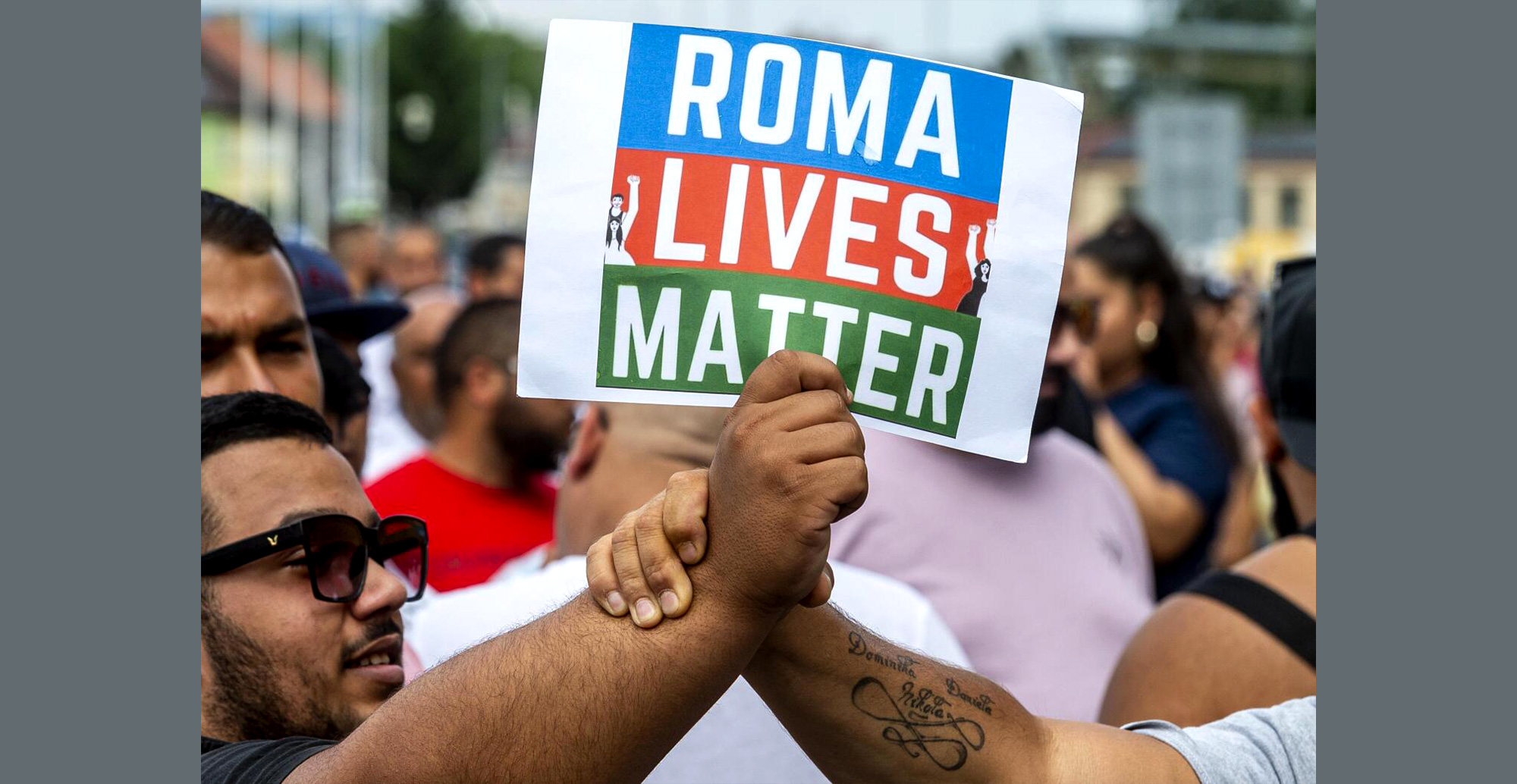
In recent years, Roma in the Czech Republic have staged numerous demonstrations and street protests against state policies and systemic discrimination. These protests have occurred at different times and under various pretexts. For example, on 19 June 2021, after a 46-year-old Roma man named Tomáš died when police applied pressure to his neck, Roma communities organized demonstrations. Initially framed as collective mourning, the protests soon adopted slogans such as “Stop Racism” and “Police are Murderers[20].”
In Czech academia, discrimination against Roma has also received significant attention. Numerous articles and books have been published on the subject. One notable example is a 2024 article by political science professor Lukáš Novotný entitled “Illegal Sterilisation in the Czech Republic.” The article examines the phenomenon of forced sterilization of women—particularly Roma women—in Czechoslovakia and later in the Czech Republic, beginning in the 1960s and continuing until 2012. Thousands of women were sterilized without free and informed consent, often under pressure from health officials or threats from social workers, sometimes in exchange for small sums of money or benefits.
Despite warnings from human rights institutions since 2005, the Czech government did not adopt legislation on compensation until 2021. Even then, the burden of proof was placed entirely on victims, and the compensation provided was largely symbolic. Roma women, in particular, endured years of neglect and humiliation before their voices reached Parliament through the efforts of activists and NGOs. This episode demonstrates a convergence of ethnic, gender-based, and political discrimination, not only constituting a clear violation of human rights but also highlighting the failure of the Czech political system to confront the dark legacy of communism in a timely manner[21].
Interestingly, a portion of Czech public opinion has not strongly opposed these discriminatory practices; instead, segments of society have aligned with the state in supporting discriminatory policies and pressure against Roma. This has been evident in the organization of anti-Roma rallies since 2013 and in the widespread dissemination of hate speech targeting Roma on Czech social media.
- International Reactions
The Council of Europe, in a press release published in early 2025, expressed concern over insufficient protection of vulnerable groups’ access to housing in the Czech Republic. The statement, issued on 24 January 2025, referred to a decision by the European Committee of Social Rights on a collective complaint filed by the European Federation of National Organizations Working with the Homeless against the Czech Republic. The Committee unanimously concluded that the country had violated Article 16 of the 1961 European Social Charter (the right of the family to social, legal, and economic protection) in relation to access to housing for vulnerable groups, especially Roma.
The Committee determined that the supply of social housing was inadequate, that existing remedies were ineffective, and that authorities had failed to ensure access to housing benefits for low-income and marginalized populations in socially excluded areas[22]. According to Senada Sali, Legal Director of the European Roma Rights Centre, this ruling represents a vital step in combating structural discrimination against Roma families in the Czech Republic. It underscores the need for comprehensive reforms to ensure that Roma communities are not deprived of basic housing rights. The Committee’s decision sends a strong message that governments must respect their human rights obligations and dismantle barriers that perpetuate racial segregation and inequality in housing access[23].
Additionally, Euronews published a report titled “The shameful story of Roma women’s forced sterilisation in central Europe,” tracing the sterilization practices from their beginnings under former Czechoslovakia through their eventual abolition. The report notes that an estimated 90 percent of Roma were killed by Nazi Germany and its allies during World War II, and that those who survived were largely resettled in poorly built housing in the newly established Czechoslovakia. Sterilization policies, intended to control their population, compounded this marginalization. Despite the collapse of communist regimes and the repeal of sterilization laws, the last reported case occurred as recently as 2007[24].
Conclusion
Despite decades of political and social transformation in the Czech Republic, and its membership in the European Union, the Roma minority continues to face persistent patterns of structural discrimination. The roots of this situation can be traced back to historical policies and practices, such as the forced sterilization programs implemented during the Czechoslovak era. The continuation of these discriminatory approaches is evident today in barriers faced by Roma communities in housing, education, employment, and social participation.
In the area of housing, many Roma families are confined to informal settlements or marginalized neighborhoods, often lacking essential infrastructure such as clean water, sanitation, and adequate urban services. These conditions not only threaten their health and security but also perpetuate cycles of poverty and social exclusion across generations.
In education, evidence shows that Roma children are subjected to both overt and covert segregation in schools. The direct consequences include early school dropout, low literacy rates, and restricted access to educational and professional opportunities later in life. This has contributed to higher unemployment rates and economic dependency within Roma communities. Furthermore, reports point to discrimination in employment and unequal access to labor market opportunities, highlighting the persistence of institutional and social barriers.
Digital spaces have added a new dimension to these challenges. Roma individuals are frequently exposed to online hate speech, threats, and humiliation. This not only causes psychological and social harm but also reinforces their sense of exclusion and marginalization.
Although both domestic and international human rights organizations have repeatedly emphasized the need for comprehensive reforms and inclusive policies, progress so far has been limited and insufficient. The persistence of these conditions demonstrates that deep structural and cultural obstacles still prevent genuine equality and full participation of Roma in the social, economic, and cultural life of the Czech Republic.
From this perspective, addressing the Roma issue is not merely a national necessity but also part of the Czech Republic’s international obligations in advancing human rights and equality.
References
[1] European Roma Rights Centre. (2023, October 09). 15 years after DH, Czechs carry on segregating: ‘Roma face discrimination in every aspect of their lives’. European Roma Rights Centre. From: https://www.errc.org/news/15-years-after-DH-czechs-carry-on-segregating-roma-face-discrimination-in-every-aspect-of-their-lives
[2] OHCHR. (N.D.). Reports on Discriminational, Segregation and the Right to Adequate Housing. OHCHR. From: https://www.ohchr.org/sites/default/files/Documents/Issues/Housing/SubmissionsCFIhousingdiscrimin/input-errc.docx
[3] Pohanka, V. (2024, March 10). EC urges Czech Republic to end discrimination against Roma children. Czech Radio. From: https://english.radio.cz/ec-urges-czech-republic-end-discrimination-against-roma-children-8830630
[4] Gričová, A. (2025, April 11). Segregation in schools continues. Municipalities have a responsibility, but they need state support. 24. From: https://ct24.ceskatelevize.cz/clanek/domaci/segregace-ve-skolach-trva-odpovednost-maji-obce-potrebuji-ale-podporu-statu-359940
[5] Armstrong, A. (2024, November). We Fight Discrimination Every Day”: Institutional Racism Casts Long Shadow Over Czech Roma Community. BRNO Daily. From: https://brnodaily.com/2024/10/09/news/we-fight-discrimination-every-day-institutional-racism-casts-long-shadow-over-czech-roma-community/
[6] Košlerová, A. (2023, February 27). Roma continue to face discrimination in almost all aspects of life, says Council of Europe commissioner. IROZHLAS. From: https://www.irozhlas.cz/zpravy-domov/dunja-mijatovicova-rada-evropy_2302271411_ank
[7] Svihel, P. (2024, May 06). Data: These are the inequalities of Roma in the Czech Republic. Seznam Zpravy. From: https://www.seznamzpravy.cz/clanek/domaci-zivot-v-cesku-obsahla-data-o-romech-v-cesku-podradna-prace-chudoba-i-bydleni-v-nejistote-250966
[8] Minaříková, K. (2023, August 19). Almost half of young Romani people do not have a job and lack motivation. Also because of prejudice. Denik.CZ. From: https://www.denik.cz/z_domova/temer-polovina-mladych-romu-nema-praci.html
[9] TAAO. (N.D.). Together Against Antigypsyism Online. TAAO. From: https://antigypsyism.eu/taao/
[10] Harvanová, V. (2023, September 21). Online Hate Speech as a Weapon of the 21st Century Czech Republic. European Roma Rights Centre. From: https://www.errc.org/news/online-hate-speech-as-a-weapon-of-the-21st-century-czech-republic
[11] Dubová, A. (2024, January 24). New Czech Volunteer-led Research & Legal Action Shows How Roma Can Combat Online Hate. European Roma Rights Centre. From: https://www.errc.org/press-releases/new-czech-volunteer-led-research–legal-action-shows-how-roma-can-combat-online-hate
[12] Jackova, A. & Koslerova, A. (2025, July 23). ‘Too Young, Too Poor, Too Romani’: The Women Sterilised Without Consent. Balkaninsight. From: https://balkaninsight.com/2025/07/23/too-young-too-poor-too-romani-the-women-sterilised-without-consent/
[13] Rorke, B. (2024, December 10). Czech government to extend compensation deadline for victims of forced sterilization. European Roma Rights Centre. From: https://www.errc.org/news/czech-government-to-extend-compensation-deadline-for-victims-of-forced-sterilization
[14] Commissioner for Human Rights. (2024, December 11). Czech Republic: the authorities should extend the law on compensation for victims of forced sterilisations. Commissioner for Human Rights. From: https://www.coe.int/en/web/commissioner/-/czech-republic-the-authorities-should-extend-the-law-on-compensation-for-victims-of-forced-sterilisations
[15] Ryvolová, K. (2011, August 3). The two cultures of the Czech Roma. Eurozine. From: https://www.eurozine.com/the-two-cultures-of-the-czech-roma/
[16] MerhautMerhaut, M. & Fulkova, M. & Rudorfer, L. (2022). Social Services Management in the Context of Ethnic Roma Issues in the Czech Republic with a Focus on Education for Roma Children. Social Sciences. 11(10), 477. https://doi.org/10.3390/socsci11100477
[17] Cashman, L. (2004). Roma in the Czech Republic: An Excluded Minority. University of Glasgow. From: https://www.gla.ac.uk/research/az/esharp/esharp/3/cashman/
[18] Merhaut, M. (2019). Theoretical studies focused on gender discrimination against Roma women in the Czech Republic. Journal of Ethnic and Cultural Studies. 6(1), 28-44. https://doi.org/10.29333/ejecs/147
[19] Lecerf, M. (2025). Understanding EU action on Roma inclusion. European Parliamentary Research Service. From:https://www.europarl.europa.eu/RegData/etudes/BRIE/2021/690629/EPRS_BRI%282021%29690629_EN.pdf
[20] Civic Space Developments. (2021, August 04). Protests calling for justice for Roma people, president bans outlets from receiving information. Civic Space Developments. From: https://monitor.civicus.org/explore/protests-calling-justice-roma-people-president-bans-outlets-receiving-information/
[21] Novotný, L. (2024). Illegal Sterilisation in the Czech Republic. Europe-Asia Studies, 76(8), 1185-1202. https://doi.org/10.1080/09668136.2024.2362738
[22] European Committee of Social Rights. (2025, January 24). Insufficient protection of access to housing for vulnerable groups in Czechia breaches the European Social Charter. European Committee of Social Rights. From: https://search.coe.int/directorate_of_communications#{%22CoEIdentifier%22:[%220900001680b3a44e%22],%22sort%22:[%22CoEValidationDate%20Descending%22]}
[23] FEANTSA.(2025, January 21). Czech Republic’s Housing Policy Violates European Social Charter. FEANTSA. From: https://www.feantsa.org/en/press-release/2025/01/21/
[24] Hutt, D. (2021, August 02). The shameful story of Roma women’s forced sterilisation in central Europe. Euronews. From: https://www.euronews.com/2021/08/02/the-shameful-story-of-roma-women-s-forced-sterilisation-in-central-europe


