

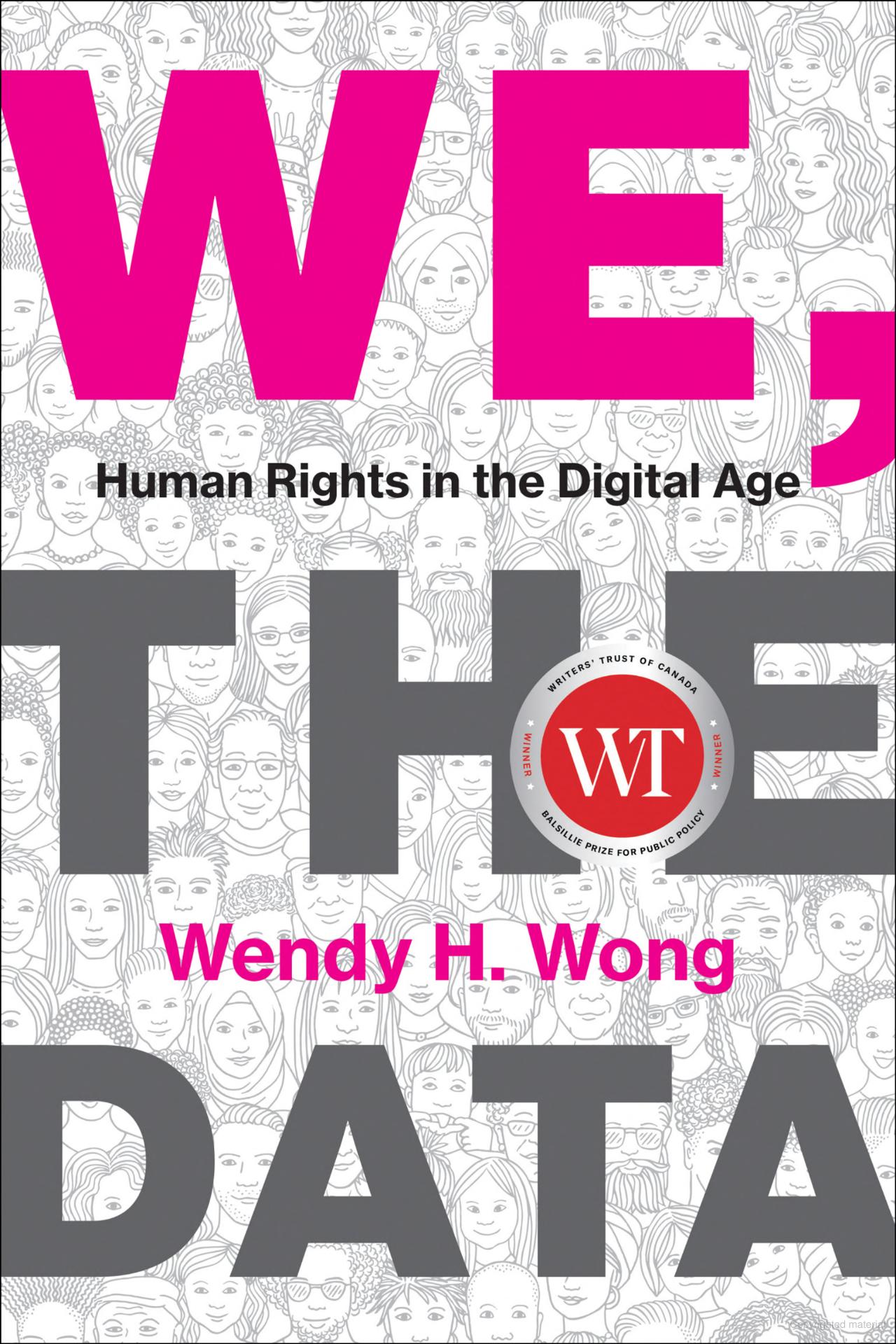
Book Title:We, the Data: Human Rights in the Digital Age
Author: Wendy H. Wong
Publisher: MIT Press
Publication Year: 2023
This approximately 260-page book, structured into eight distinct chapters, is authored by Dr. Wendy H. Wong, a professor at the University of British Columbia in Canada. Wong posits that this work serves as a collective call to expand human rights beyond our physical selves, urging a redefinition of our rights in a data-saturated world.
In an era inundated with data, Wong questions whether this proliferation compromises our humanity—specifically our autonomy, community, dignity, and equality. She contends that such a trade-off is unacceptable. Highlighting the pervasive nature of data collection and surveillance, Wong emphasizes that we are all stakeholders in the digital realm, yet often excluded from critical discussions on technology, ethics, and policy. The book elucidates the process of datafication and advocates for an extension of human rights to address the challenges posed by data on human potential.
Wong explains that as we navigate our daily lives, we collectively generate data through our actions. She argues that we must acknowledge these data as integral to our identities, even though current policies fail to reflect the extent of changes in human experiences. This perspective shifts our role from mere “subjects” or “sources” of data to active participants whose information is harvested and utilized by technology companies and governments.
Delving into topics such as data rights, facial recognition technology, posthumous rights, and the necessity for data literacy, Wong constructs a compelling argument for our engagement as stakeholders to hold data collectors accountable. Drawing parallels to the Universal Declaration of Human Rights, she proposes that data provides a foundation upon which to claim human rights in the digital age.
Chapter Summaries
- Chapter 1: “Data Are Everywhere”
Wong discusses how, as part of our daily routines, we carry various data-collecting and compressing devices—whether in our pockets, on our wrists, or mounted on our walls. We place trust in voice assistants like Alexa, Google, and Siri, posing numerous questions that lead to data collection. Those who gather our data analyze and sell it to third parties, enabling them to better understand, influence, and control our behaviors and preferences. - Chapter 2: “Why Are Data and Human Rights Interconnected?”
Wong asserts that human rights, traditionally focused on physical harm to individuals, require a significant reevaluation in the data age. Data quantifies our lifestyles, and the collection, transmission, and analysis of quantitative data facilitate easier control over individuals. The vast amounts of data collected and analyzed aim to steer us in directions previously unattainable. Unlike earlier times when turning off digital devices could halt data collection, we now possess devices that are perpetually on or in standby mode, continuously gathering data whether we are awake or asleep, aware or unaware. - Chapter 3: “Data Rights”
The author recounts the story of Mario González, a Spanish citizen who settled his debts through a newspaper auction advertisement. However, when the newspaper transitioned online, González encountered the auction notice again and was unable to remove it. He sued Google, and the case reached the European Court of Justice, which ultimately ruled in favor of allowing individuals to delete unwanted advertisements. This legal precedent led to the establishment of the “right to be forgotten.” - Chapter 4: “Is Your Face Truly Yours?”
Wong emphasizes the significance of human faces, noting that individuals are socially and culturally identified by their facial features, which play a crucial role in personal and collective identity. However, facial recognition technology (FRT) threatens this identity by collecting facial data, converting features into numerical values, and creating matrices that go beyond simple imaging to serve as analytical tools. - Chapter 5: “Do We Need Human Rights After Death?”
Wong discusses how Robert Kardashian appeared at his daughter Kim’s birthday in 2020, despite having passed away in 2003. A holographic construct engaged with her about real-time events in her life, including her legal studies. This technology, known as “Pepper’s Ghost,” utilizes various modern technologies, including artificial intelligence. The datafication of our lives implies that our data may outlive our physical selves. - Chapter 6: “We and Big Technologies”
This chapter explores the influence of major technology companies on our lives, examining their roles in data collection, governance, and the implications for individual rights and societal structures. - Chapter 7: “Data Literacy: Why We Need Libraries More Than Twitter”
Wong advocates for the importance of data literacy, arguing that understanding data is crucial for navigating the digital age. She suggests that traditional institutions like libraries play a vital role in fostering this literacy, perhaps more so than modern social media platforms. - Chapter 8: “We and the Data”
In the concluding chapter, Wong synthesizes the book’s themes, reiterating the necessity of recognizing our roles as data stakeholders and the imperative to redefine human rights in the context of our data-driven existence.


