

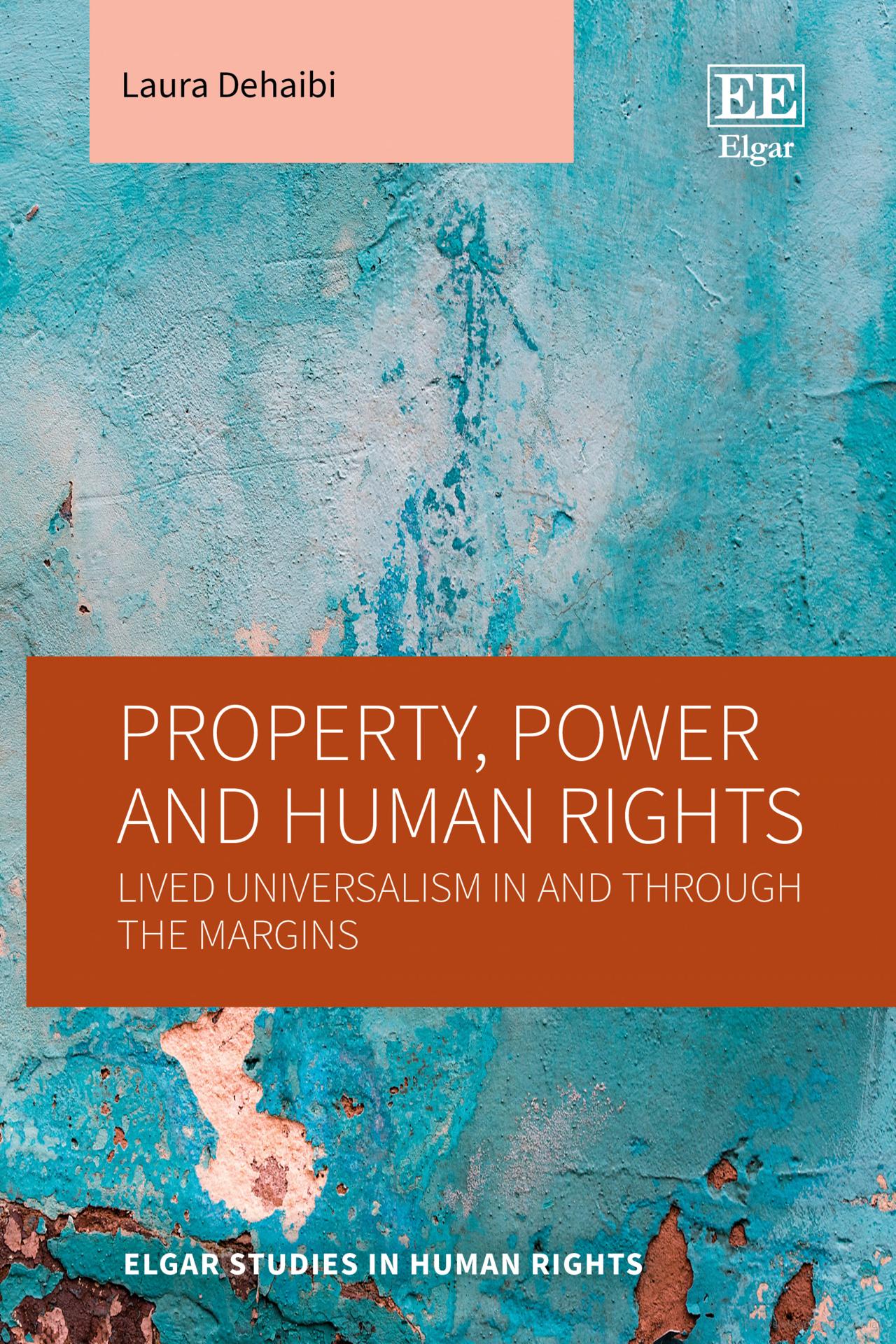
Title of the Book: Property, Power and Human Rights
Author: Laura Dehaibi
Publisher: Edward Elgar Publishing
Publication Year: 2024
Property, Power, and Human Rights, written by Laura Dehaibi, is a groundbreaking and critical examination of foundational concepts in property rights and the universality of human rights. The book challenges dominant liberal narratives, offering a fresh perspective that centers on lived experiences and the voices of marginalized communities. Through this lens, Dehaibi redefines human rights as a liberatory and socially embedded tool.
In the introduction, Dehaibi draws upon the ideas of Hannah Arendt, asserting that power is not about dominance but about the capacity to act, which emerges from human relationships and social participation. She argues that the goal of human rights is to level the playing field, ensuring that all individuals, regardless of their social standing, can equitably fulfill their needs.
The author critically analyzes international human rights frameworks, including the drafting of the Universal Declaration of Human Rights, while providing a comprehensive review of regional judicial practices concerning property rights. She identifies the limitations of the current liberal approach, which overly relies on abstract, individualistic formulations and fails to address the social realities and needs of individuals.
A central theme of the book is the reexamination of property as a human right. Dehaibi contends that the liberal theory, by transferring individualistic notions of ownership into the domain of human rights, distorts the idea of universality. She proposes a reconceptualization of property as a social right—one that is intrinsically linked to empowerment and the enhancement of social participation. In her view, property is not a prerequisite or a defining factor of social membership but rather a means to support human flourishing through meeting material needs, defining identity, and enabling livelihoods.
Dehaibi places significant emphasis on the lived experiences of marginalized groups, such as claimants from the Global South and disenfranchised populations in Europe. She critiques the abstraction of liberal human rights, advocating for an approach rooted in context-specific political, social, and cultural dynamics. Her concept of “lived universality” shifts the focus from detached theoretical constructs to the relational and participatory aspects of human rights, particularly for those traditionally excluded from legal protections.
The book also delves into the political and social dimensions of property rights, illustrating how rethinking these concepts can lead to practical solutions for achieving social justice. Dehaibi underscores the importance of dialogic and discourse-based approaches that amplify diverse voices and enhance social participation. Such frameworks, she argues, hold transformative potential, especially for individuals and communities on the margins of legal recognition.
Drawing on critical theory, Third World Approaches to International Law (TWAIL), and socio-legal studies, Dehaibi provides a compelling critique of the dominant liberal understanding of property and human rights. She argues that social participation is central to power and justice and that human rights should serve as a mechanism for reinforcing this participation.
Property, Power, and Human Rights is an essential and thought-provoking resource for students, scholars, and practitioners in the fields of human rights, social justice, and international law. By offering a fresh perspective on the interpretation and application of human rights, the book equips its readers with practical tools to rethink foundational concepts in social justice and human dignity.


