Introduction
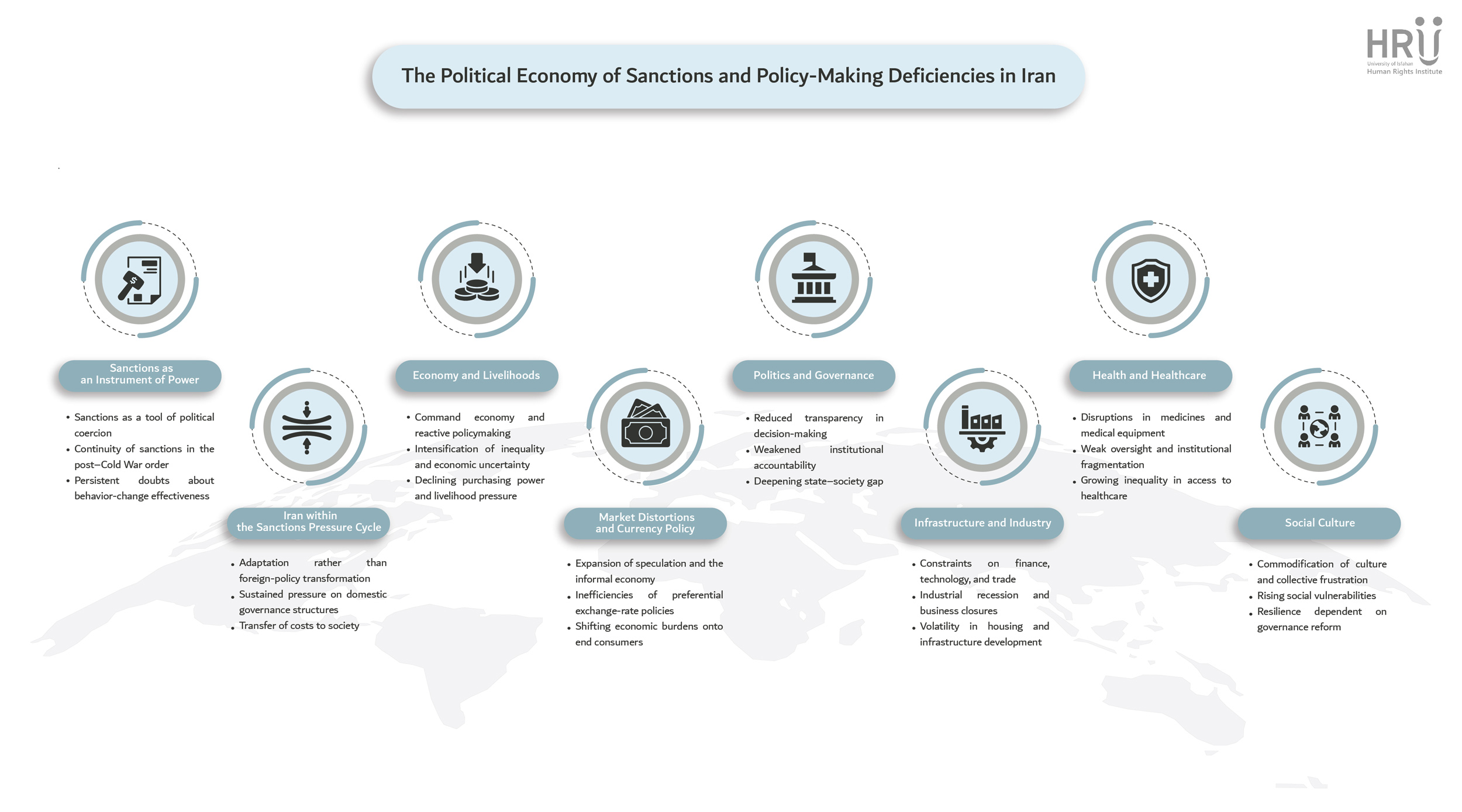
Within the framework of international political economy, sanctions imposed by major powers are employed as one of the principal instruments of pressure and confrontation against governments that pursue policy trajectories inconsistent with the interests or preferences of those powers. This instrument is generally utilized with the objective of altering state behavior, compelling political alignment, or at minimum restricting and containing activities that are perceived as threatening from the perspective of sanctioning powers. In the post–Cold War era, sanctions have consistently been deployed in the service of maintaining U.S. hegemony.
Sanctions typically affect multiple dimensions of the target country’s economic, political, social, and even cultural life. Nevertheless, serious doubts have always existed regarding the extent of their success in achieving their primary objective—namely, changing state behavior. Experiences over recent decades indicate that many sanctioned governments, even under conditions of maximum pressure, have been unwilling to fundamentally alter their foreign policy approaches. Instead, they have been compelled to adapt their internal and external policies and mechanisms to sanction-induced realities.
Iran constitutes one of the most prominent contemporary examples of prolonged exposure to severe sanction pressures. Over recent decades, the country has faced a broad spectrum of unilateral and multilateral sanctions. The Iranian experience demonstrates that sanctions, rather than leading to changes in foreign policy behavior, have placed domestic structures and modes of governance under sustained—and at times erosive—pressure. This forced adaptation has frequently come at the cost of intensifying strain across various spheres of society and governance, including the economy, industry, healthcare and public health, general livelihoods, and social and cultural structures.
Under such conditions, structural weaknesses in policymaking and governance, inefficiencies in dynamic policy formulation, and the absence of effective compensatory strategies not only fail to mitigate the effects of sanctions but may also deepen and prolong crises. In this context, the present study seeks to examine and analyze weaknesses in governance and policymaking structures, as well as the impact of international sanctions on various dimensions of social life in Iran. Five principal domains are addressed: “Economy and Livelihoods,” “Politics and Governance,” “Construction and Industry,” “Health and Healthcare,” and “Social Culture.”
Economy and Livelihoods
In the economic sphere, international sanctions generally function as an external pressure factor that limits the scope of positive outcomes of domestic economic policymaking. However, the intensity and breadth of these pressures depend to a significant extent on the quality of economic governance, policy coherence, and the regulatory capacity of the state. Weaknesses in planning, unstable decision-making, and a lack of transparency in performance can amplify the effects of sanctions and transform them into structural crises.
Under such conditions, short-term and reactive policies tend to replace long-term, development-oriented strategies. This process leads to increased uncertainty, the expansion of inequality, and additional pressure on the general livelihood of the population. Therefore, the economy is not only affected by sanctions but also reflects policymaking choices and mismanagement. From this perspective, distinguishing between the direct effects of sanctions and the consequences arising from weaknesses in economic governance is of fundamental importance. Sanctions may constrain economic capacities; however, the transformation of these constraints into persistent crises is often the result of opaque decision-making, policy instability, and the dominance of short-term approaches over comprehensive macro-level planning. Consequently, sanctions alone do not fully explain economic conditions; rather, their impact becomes meaningful in interaction with prevailing patterns of economic governance.
In Iran, the first, most central, and at the same time most significantly affected domain targeted by international sanctions has been the economy and public livelihoods. A sanction-based economy typically shifts governmental priorities from development and long-term planning toward the provision of immediate and short-term needs and objectives. This places the government in a position where it resorts to directive approaches in managing the economy, including setting prices even for small-scale consumer goods. This phenomenon can clearly be observed in the pricing of cooking oil, dairy products, rice, and other essential commodities.
The expansion of directive economic policies by the state, although justified in the short term as a means of controlling markets and containing price shocks, in the medium and long term leads to the weakening of supply-and-demand mechanisms, a reduction in production incentives for factories, and increased inefficiency. This approach, particularly under sanction conditions, reduces the flexibility of the national economy and limits its capacity to adapt to crises. Furthermore, enterprises, banks, and other economic institutions operate with reduced autonomy, as policymaking is drawn in accordance with prevailing national conditions by the government itself. This situation distances banks and economic centers from innovation and active, dynamic engagement. In addition to adherence to regulatory principles that are globally recognized and mandatory, they must also wait for short-term governmental decisions, thereby remaining in a state of stagnation and limited advancement, where forward movement becomes either impossible or significantly slowed.
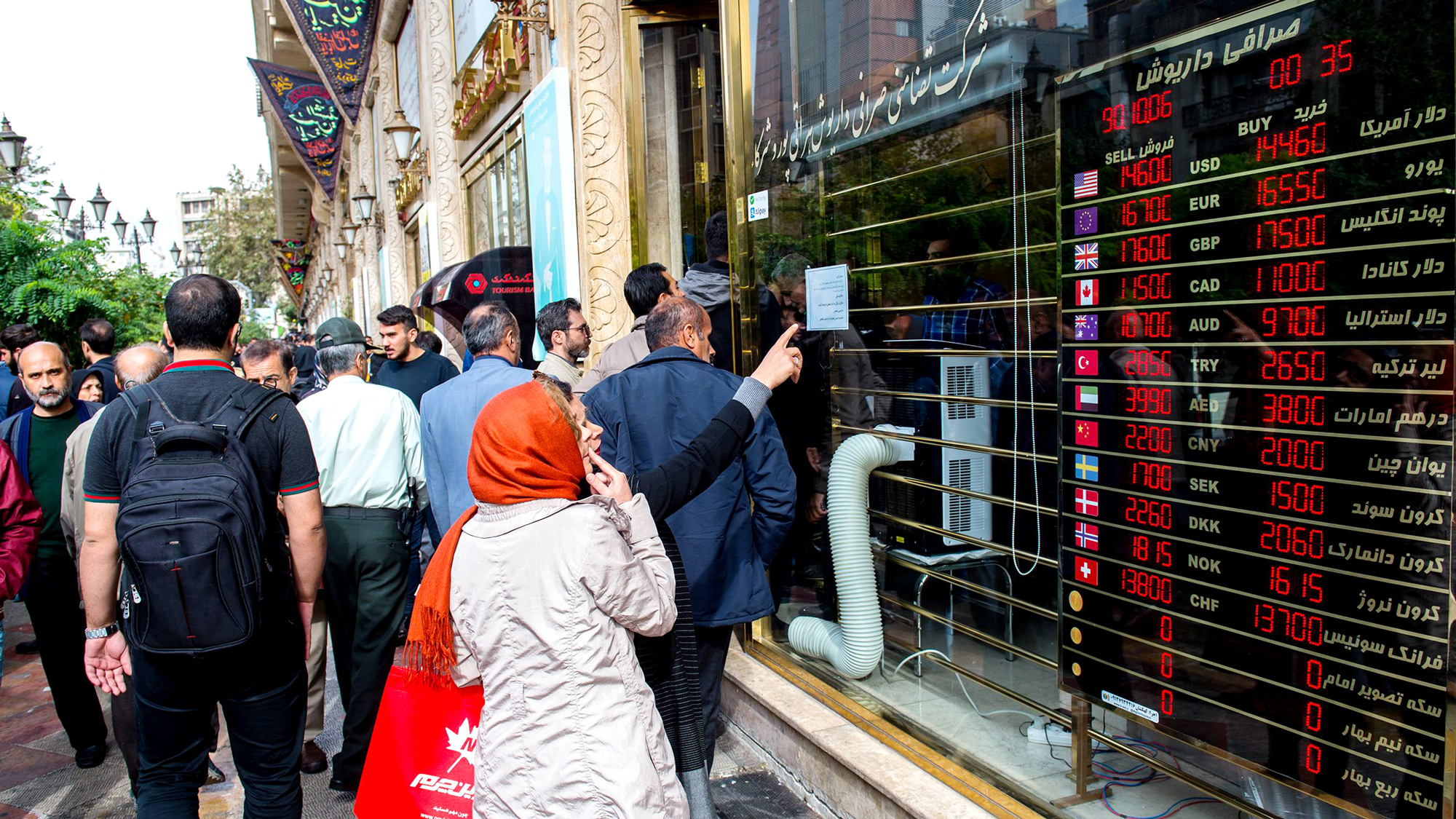
Beyond sanction-induced constraints that compel governmental responses, certain domestic policy choices and decision-making processes may further intensify economic hardship and crisis conditions. One such issue is the insufficient and ineffective attention to informal markets in the spheres of economy and trade. A significant portion of the depreciation of the national currency and the increase in the price of gold and coinage within Iran’s economy has occurred within the informal economic sector, including major trading centers in Tehran such as Istanbul Crossroads (Chaharrah-e Istanbul), as well as through certain channels operating on social media platforms—areas over which the government lacks clear and organized control.
Under such circumstances, the country’s informal economy becomes a platform for speculation, the circulation of idle liquidity, and the formation of inflationary expectations among the public. This process not only renders the government’s monetary and exchange-rate policies ineffective but also deepens the gap between the formal economy and market realities. The continuation of this situation increasingly weakens the possibility of effective policymaking. When combined with economic sanctions—which themselves contribute to currency depreciation and exchange-rate increases—this dynamic generates extensive problems within the country’s economic and livelihood systems.
Another major issue in this domain has been the allocation of preferential foreign currency to production enterprises, traders, and commercial actors. This policy generated a form of rent-seeking within the country. Preferential currency—offered at rates below the actual market exchange rate—can incentivize recipients to divert from their primary functions in trade and export activities toward brokerage and the importation of more profitable goods with higher financial value. As a result, the country may face serious shortages in meeting certain essential needs, including the importation of raw materials for pharmaceutical production or livestock feed—both of which are among the most critical imported goods—as well as in other economic sectors, including the dairy industry, which is considered a foundational sector in food production.
The experience of preferential exchange rates—despite only a short period having passed since their removal—demonstrated that currency interventions, in the absence of an efficient monitoring system and informational transparency, can lead to the unequal distribution of national resources among specific groups and individuals, the formation of rent-seeking networks, and deviation from the original policy objectives. Although this policy was designed with the aim of supporting public livelihoods, in practice it transferred part of the economic pressure indirectly to the final consumer.
Following the suspension of this policy and the efforts of the fourteenth administration to unify the market exchange rate and the preferential exchange rate, it appears that a relatively acceptable development has occurred in the realm of economic governance and decision-making. However, its outcomes and impacts require the passage of time and the attainment of stability for at least a minimum one-year period. At present, its effectiveness cannot be definitively guaranteed.
Overall, in the current condition of Iran’s economy, externally imposed sanction pressures and the internal manner of engagement with economic decision-making and governance are both highly significant and influential. This issue directly affects the consumption basket of Iranian households, their income levels, and all livelihood and economic indicators. A lack of attention to this matter and unprofessional or non-expert approaches to related challenges have contributed to the formation of economic and livelihood constraints within Iranian society.
Ultimately, what becomes most significant within this economic cycle is the direct transmission of the consequences of sanctions and economic governance to the everyday lives of Iranian citizens. Rising living costs, declining purchasing power, and income instability demonstrate that the economic crisis is not merely a macro-level issue; rather, it tangibly affects the economic security of households and the broader sense of social stability.
Politics and Governance
In the realm of politics and governance, sanctions often constrain the decision-making space and place policymaking under conditions of constant pressure. However, the manner in which a governing system responds to these pressures determines whether sanctions lead to political stagnation and blockage, or instead result in the redefinition and restructuring of governance mechanisms.
The concentration of power, reduction of transparency, and weakening of accountability mechanisms can intensify the political consequences of sanctions. Conversely, weaknesses in managing internal conflicts and deficiencies in communication between the government and society may create conditions for the accumulation of dissatisfaction. In such a context, domestic politics becomes increasingly vulnerable to erosion. From this perspective, sanctions and political governance must be analyzed within an interactive relationship.
Within this framework, sanctions should not be viewed merely as an external variable, but rather as a structural factor capable of reproducing or transforming patterns of governance and policymaking. Depending on how they are politically managed, sanction pressures may reinforce authoritarian tendencies, securitize decision-making processes, and reduce public participation; alternatively, they may lead to institutional reform, greater transparency in procedures, and the redefinition of state–society relations. Therefore, the political consequences of sanctions cannot be analyzed independently of the quality of governance and the institutional capacity of the state.
In the political environment of Iran, sanctions have consistently played a significant role in shaping governance and policymaking practices. In this regard, it can be observed that Iranian governments have often adopted a degree of opacity in policymaking under sanction conditions. This lack of transparency has frequently been justified on the grounds of sanctions and the particular sensitivities they entail.
In addition to this opacity—part of which is linked to sanction-related and security considerations and part of which is connected to policymaking justifications—the concentration of power may also emerge as a secondary effect. Areas such as foreign policy, international negotiations, the regulation of regional relations, and even certain major domestic decisions have, in some cases, moved outside formal cycles of institutional accountability and oversight.
This situation has been particularly evident in processes related to sanction negotiations, exchange-rate decision-making, energy policies, and regional engagements—domains that, due to their designation as security-sensitive or sanction-related, have often remained distant from transparent oversight by the Islamic Consultative Assembly (Parliament), domestic media, and the broader public sphere in Iran. As a result, the gap between decision-making institutions and public opinion has deepened, and the possibility of independently evaluating the effectiveness of governmental policies has diminished.
Because many policymaking mechanisms—under sanction conditions—have moved beyond the individual and institutional control of various governing bodies and cooperating actors, the government itself has been compelled to intervene directly in multiple domains and assume an active role. Consequently, the concentration of power shifts toward the executive branch and its affiliated institutions.
Construction and Industry
In the sectors of construction and industry, sanctions affect the trajectory of infrastructural and industrial development by restricting access to financial resources, technology, and international cooperation. However, inefficiencies in project prioritization, weaknesses in resource allocation, and the absence of effective oversight can further intensify these limitations. As a result, construction projects often face delays, declines in quality, or remain incomplete. Such conditions frequently lead to uneven development and the deepening of regional disparities.
Weaknesses in policymaking within the fields of construction and industry allow external pressures to accumulate into structural crises rather than being effectively managed. Therefore, construction and industry represent domains in which the interconnection between sanctions and policymaking and decision-making practices becomes clearly visible. Within this framework, sanctions should be regarded as limiting factors of capacity rather than necessarily as determinants of the ultimate fate of industrial and infrastructural development. The manner in which the government prioritizes projects, allocates resources, and ensures institutional oversight—typically exercised by institutions such as the Ministry of Industry, Mine and Trade (MIMT), the Ministry of Housing and Urban Development, and related bodies—determines whether sanction pressures lead to severe stagnation or are mitigated through optimal management. Consequently, crises in construction and industry are often less the product of sanctions alone than reflections of weaknesses in development-oriented policymaking.
In Iran, sanctions—alongside deficiencies in policymaking—have resulted in persistent volatility within the industrial and construction sectors, particularly in relation to financing, procurement of parts and raw materials, pricing mechanisms, modernization processes, and payment systems. The inability to sustain large-scale and stable exports under sanction conditions has caused serious production stagnation in industry. After meeting domestic demand, producers often encounter severe downturns, particularly in relation to durable goods such as household appliances, where the domestic market quickly becomes saturated. As a result, producers are compelled to reduce production capacity, decrease their workforce, and revise payment structures. In the long term, this recessionary situation may culminate in the complete shutdown of production enterprises.
The continuation of this cycle of stagnation produces consequences that extend beyond the closure of firms in industrial zones across the country. It contributes to the weakening of supply chains, a reduction in industrial investment, and instability in labor markets. Under such circumstances, industry loses its role as a driver of economic growth and becomes a vulnerable sector dependent on short-term governmental support—an outcome that has already been observed in relation to certain enterprises within the country. It should be noted that this situation manifests with less severity among producers of consumer goods—particularly food products—since domestic demand for such goods remains constant even in the absence of export opportunities, preventing comprehensive stagnation in these sectors.
In the field of construction, sanctions have generated substantial difficulties in the importation of a wide range of building materials and related inputs. This has led to significant price volatility in markets for construction equipment and raw materials, and consequently to unpredictable fluctuations in housing markets. Not only small-scale homebuilders but also large-scale developers in major metropolitan areas such as Tehran, Isfahan, and Mashhad have encountered various challenges. Many Iranian households, faced with exorbitant costs of purchasing or constructing homes, are compelled to resort to renovation and partial rebuilding rather than constructing homes from the ground up.
Moreover, in the construction sector, numerous urban and infrastructural projects have been delayed or abandoned due to the government’s reduced access to oil revenues and declining foreign currency earnings in recent years. As a result, many projects have remained incomplete for extended periods, contributing to the phenomenon of uneven development. This means that no consistent and stable pattern of comprehensive infrastructural development has been observed, and a lack of balance exists in the growth of welfare, cultural, sports, and other infrastructure sectors. Uneven development in construction not only exacerbates regional inequalities between peripheral and central areas of the country, but also affects the economic security of Iranian households through persistent uncertainty in housing markets. Continuous fluctuations in construction and infrastructure projects disrupt long-term planning in housing and urban development and increase the overall costs of urban living.
In addition to sanctions—particularly the major obstacle of restricted export channels—domestic challenges themselves may also generate crises within the industrial sector. One such issue is government-imposed price controls on various goods, as previously discussed in the economic section. This policy obliges producers to set prices not according to their actual costs and profit margins but in accordance with broader political and economic conditions. As a result, profit margins remain controlled and fixed, and overall progress in business activity is constrained due to limited operational autonomy. Although directive pricing is often justified as a measure to protect Iranian consumers or stabilize markets, in practice it may reduce production incentives, lower the quality of domestically produced goods, and erode industrial capital. Under sanction conditions, the continuation of such an approach without institutional and supportive reforms places additional pressure on producers and reduces the resilience of industry.
In the construction sector as well, beyond sanction-related difficulties, insufficient governmental oversight over the pricing of raw materials and equipment, as well as inadequate regulation of the extensive housing market, has itself become a principal contributor to the disorderly housing situation in recent years. Furthermore, the absence of effective prioritization in urban and infrastructural projects, insufficient attention to cost–benefit analyses of certain construction initiatives, and the linkage of project development to political interests—including electoral considerations of some policymakers—have resulted in a convergence of sanction pressures and flawed policymaking that has produced extensive and simultaneous challenges.
Overall, the construction and industrial sectors in Iran have evolved into arenas where the effects of external sanctions and internal policymaking weaknesses operate in a coordinated and mutually reinforcing manner. The absence of development-oriented strategies across successive administrations, improper project prioritization, and non-expert, interest-driven interventions have caused sanction pressures—combined with imprudent management—to evolve into chronic crises in production, housing, and infrastructure. Addressing this situation requires a serious reconsideration of industrial and construction policymaking, the strengthening of institutional oversight, and a transition toward policies grounded in objective realities and societal needs.
Health and Healthcare
In the field of healthcare, sanctions may create challenges in access to financial resources, medical equipment, and healthcare technologies. However, weaknesses in health governance, the absence of preventive planning, and institutional dis-coordination can multiply the effects of these limitations. Under such circumstances, the healthcare system faces compounded pressure and its capacity to respond diminishes. Moreover, inequality in access to medical services may intensify. Weak management and policymaking can transform sanctions from an external challenge into an internal crisis. Therefore, any analysis of the healthcare situation that does not simultaneously consider both sanctions and policymaking deficiencies remains incomplete.
Within this framework, the health system must be regarded as one of the most sensitive domains of public governance under sanction conditions—an area in which any disruption in policymaking, resource provision, and institutional coordination carries direct and immediate consequences for the health and lives of citizens. Accordingly, the quality of health governance plays a decisive role in determining the resilience of this system in the face of external pressures.
Although sanctioning actors claim that the healthcare and medical sectors are exempt from sanctions, sanctions have had significant effects on this field in Iran. Sanctions have slowed the initiation of new healthcare projects and created numerous obstacles, including limited government financial resources, deterioration of infrastructure and equipment, restrictions on the importation of certain raw materials, and difficulties in purchasing medical equipment. The continuation of this situation not only halts the development of new health infrastructure but also accelerates the gradual erosion of existing facilities. Consequently, the quality of medical services declines, and the gap between the actual needs of the healthcare system and its available capacities widens.
Furthermore, despite claims that pharmaceutical products are not formally included within sanction regimes, disruptions have occurred in the comprehensive importation of medicines and their raw materials. Producers, distributors, and suppliers of pharmaceuticals have encountered serious challenges in the domestic market. These problems have impaired their ability to respond effectively to consumers—who, more than any other group in this cycle, are exposed to serious risks and even potential harm to life and health. This situation demonstrates that even if one assumes the absence of formal pharmaceutical sanctions, banking restrictions, supply-chain disruptions, currency volatility, and logistical barriers can significantly impede effective access to medicines. Under such conditions, the assertion that pharmaceuticals are exempt from sanctions does not adequately correspond to the practical realities of the country’s healthcare system.
In addition to sanction-related constraints, deficiencies in the management of this cycle have further exacerbated the crisis, particularly in recent years when conditions have intensified. The government does not exercise sufficiently effective oversight over this sector—especially the pharmaceutical market. Oversight in this context does not merely refer to price determination; rather, it involves monitoring points of entry for medicines and raw materials, and ensuring that the entire process—from the importation of raw materials to the delivery of final pharmaceutical products to consumers—functions normally and without disruption.
However, the influence of certain actors and profiteers in this sphere, combined with instability in exchange rates affecting the importation of raw materials, has caused the healthcare and pharmaceutical sectors to experience numerous crises in recent years. The absence of effective supervision creates space for rent-seeking, hoarding, and the diversion of medicines away from final consumers. As a result, even when medicines are relatively available in aggregate, patients’ actual access may be disrupted, and treatment costs may rise disproportionately.
Overall, sanction pressures in the field of healthcare become full-scale crises when combined with weaknesses in governmental policymaking, institutional dis-coordination among responsible bodies—including the Ministry of Health, the Parliament, and other relevant institutions—and ineffective oversight mechanisms. The consequences of this situation include heightened inequality in access to medical services and increased vulnerability among specific social groups, including chronic patients, the elderly, and low-income populations. For this reason, public health must be regarded as one of the primary indicators for assessing the effectiveness of policymaking under sanction conditions.
Social Culture
In the cultural domain, sanctions operate in an indirect and gradual manner, exerting influence on social culture through economic and social pressures. However, ineffective cultural policymaking, the absence of targeted support, and weaknesses in the management of cultural resources can intensify these effects. In such an environment, cultural activities are increasingly marginalized, and cultural priorities give way to livelihood concerns. At the same time, deficiencies in cultural governance may deepen identity-based and discursive cleavages among citizens. In this sense, culture is not merely a passive victim of sanctions, but also a sphere that reflects weaknesses in policymaking. Therefore, any cultural analysis must simultaneously consider external pressures and internal shortcomings.
Within this framework, social culture may be understood as an intermediary arena connecting the economy, politics, and the everyday life of citizens—an arena in which economic pressures resulting from sanctions, in the absence of active and supportive cultural policymaking, lead to the erosion of cultural capital and the weakening of social cohesion. Accordingly, the quality of cultural governance plays a decisive role in shaping how economic pressures are translated into social and cultural consequences.
In Iran, culture—shaped by prevailing economic conditions—has increasingly become a marketable commodity rather than a dynamic force capable of generating broader social currents. The commodification of culture, in this sense, refers to the reduction of culture to an instrument of economic survival, whereby cultural production becomes governed more by market logic and purchasing power than by meaning-making, identity formation, or dialogue. Over time, this trend weakens culture’s capacity to perform its critical, identity-building, and integrative roles.
Although this phenomenon may be examined from various sociological perspectives beyond the scope of this report, what remains central in the context of sanctions and culture is the combined impact of sanctions and insufficient management on Iranian social culture. Sanctions, through the creation of extensive economic hardships and insufficient attention to household livelihood levels and economic capacity in recent years, have contributed to the emergence of a sense of frustration within Iranian society. This dynamic has, in turn, given rise to additional challenges, including increased social conflicts, the growth of speculative occupations such as brokerage in housing and automobile markets, rising levels of social delinquency, and an increase in social problems such as higher divorce rates, declining youth marriage rates, growth in judicial case filings, declining reading rates, and numerous other social difficulties.
The consequences of this situation manifest in a chain-like manner across multiple social levels—from shifts in livelihood and employment patterns to transformations in family relations, social behaviors, and lifestyles. Overall, Iranian social culture has experienced a process of gradual erosion under the simultaneous pressures of sanctions and weaknesses in cultural policymaking. The continuation of this situation not only diminishes culture’s capacity to foster social solidarity but may also deepen identity-based cleavages and weaken social cohesion. Therefore, attention to social culture must be regarded as an inseparable component of any comprehensive analysis of the macro-level consequences of sanctions and domestic governance.
Conclusion
Ultimately, Iran’s experience demonstrates that sanctions are not merely an external pressure. When they are accompanied by weaknesses in domestic policymaking and management, their effects multiply and are transmitted directly into the everyday lives of citizens. The consequences of this situation can be observed in the decline in purchasing power—particularly from the end of the COVID-19 period to the present—economic uncertainty, disruptions in production and employment, the closure of production units, the erosion of infrastructure, increasing difficulties in access to medicine and treatment, and even noticeable changes in social mood and interpersonal relations.
In recent years, Iranian society has confronted a form of collective fatigue and a sense of chronic instability—an experience rooted both in sanction-related constraints and in inefficiencies in decision-making and the absence of effective compensatory solutions. Therefore, if external pressures are to be effectively contained, the path does not pass solely through diplomacy. Rather, it also requires reform in policymaking, greater transparency, stable and sustainable decision-making processes, and genuine attention to the livelihood and health of the population.
In other words, Iran’s resilience is tied above all to the quality of its domestic policymaking. It is at this level that the social costs of sanctions may either be mitigated or intensified for society.