

Introduction
Germany’s migration and asylum policies in 2024 unfolded within a landscape shaped by global geopolitical shifts and internal political developments. The governing coalition—comprising Social Democrats, Greens, and Liberals—adopted a contradictory and multilayered approach amid growing security concerns, fluctuations in public opinion, and international legal obligations. While Article 16a of the German Basic Law and the 1951 Geneva Convention emphasize unconditional protection for asylum seekers, the government’s practical conduct revealed a utilitarian balancing act between humanitarian commitments and domestic political and security demands.
This duality reflects a broader tension between human rights rationality and the control-oriented logic of the modern state—where universal values often conflict with systemic imperatives. Facing an increasing influx of migrants and asylum seekers, the German government was compelled to adopt policies that sought to preserve international legal legitimacy while simultaneously appeasing conservative and far-right domestic pressures. This tension created deep fault lines within the core of Germany’s 2024 migration policy.
This report adopts a sociological framework composed of seven key dimensions to provide a multidimensional and explanatory account of Germany’s migration policy. Rather than focusing solely on quantitative data, it aims to analyze the structural forces, social contradictions, and semantic representations that underpin these policies.
- Sources of Tension
Germany’s migration policies in 2024 were grounded in structural tensions and long-term changes in economic, political, cultural, and demographic domains.
- Economic Dimension: Chronic economic stagnation, rising living costs, and cascading crises linked to the war in Ukraine placed significant pressure on the welfare system. Simultaneously, the shortage of skilled labor in sectors such as manufacturing, healthcare, and transportation placed the government in a contradictory position: on one hand, it recognized the need to attract qualified migrants; on the other, public demand for limiting immigration was growing.
- Political Dimension: Politically, the coalition government struggled to balance liberal policymaking principles with electoral pressures caused by the rise of far-right forces. Although early reforms, like citizenship facilitation, aimed to project a humanistic image of Germany, escalating security crises and intense opposition from the Alternative for Germany (AfD) party forced the government to retreat from these positions. In the 2024 state elections, AfD significantly increased its vote share by exploiting security fears and cultural anxiety, shifting dominant discourse from integration and equality toward control and deterrence.
- Cultural Dimension: Culturally, migration policy intersected with three identity narratives: Germany’s historical responsibility due to fascism and war; decades-long investment in multicultural integration; and a resurgence of nationalism and political philosemitism—especially visible in citizenship policies. Requirements such as declaring support for Israel or formally rejecting antisemitism sparked broad public debates. Critics viewed this as a form of political loyalty engineering that conflicted with liberal democratic principles and civil equality.
- Demographic Dimension: In 2024, approximately 25% of Germany’s population had a migration background. This social composition complicated ethnic and cultural dynamics, exacerbating inequalities in employment, education, healthcare, and political participation. Rising Islamophobia, antisemitism, and racially motivated violence polarized public discourse and depoliticized public space. In such a context, identity narratives were easily co-opted by exclusionary policies, legitimizing state restrictions against migrants.
In summary, Germany’s 2024 migration policies emerged from a multilayered and tension-filled environment shaped by economic demands, demographic shifts, political pressure, and cultural challenges. The government, caught between the need to attract labor and the rise of far-right pressures, adopted contradictory measures that revealed a fragmented policy image. While investments in integration and cultural rights continued, the imposition of political loyalty conditions and identity-based restrictions drew human rights criticisms. As a result, social divisions deepened, and public discourse shifted toward polarization and othering—strengthening the state’s deterrent measures under the guise of security discourse rather than legal and social rationale.
- Social Actors
Migration policy in Germany in 2024 resulted from the complex interplay of diverse institutional, political, civil, and non-governmental actors, each holding varying degrees of power and legitimacy. Key actors included:
- Federal Government: The ruling coalition, despite early slogans of solidarity and the right to asylum, adopted a dual-track policy under pressure from economic crises, rising illegal migration, and far-right influence. The Interior Ministry played a central role in regulating detention, deportation, and accommodation, with the state increasingly portraying migration as a manageable issue rather than a rights-based concern.
- Political Parties: Political parties significantly shaped migration discourse and policy. Conservative parties (CDU/CSU) accused the government of negligence in border control and called for restrictive measures. The AfD capitalized on populist rhetoric to insert concepts such as cultural threat, social occupation, and hidden Islamism into mainstream discourse. Their growing influence pushed even centrist parties toward cautious rightward shifts. Even the traditionally migrant-friendly Greens showed signs of compromise within the coalition.
- Media: As intermediaries, German media helped shape public perception of migration. Public and intellectual outlets attempted to present human-centered narratives, while right-wing platforms such as Bild emphasized migrant-related crime and violence. In 2024, discursive media analysis revealed dominant themes such as migration waves, welfare burden, and cultural vulnerability resurfacing in headlines.
- Human Rights Organizations and Civil Society: Despite limited resources and unofficial status, actors like Pro Asyl, Amnesty International, and the Catholic and Protestant Churches acted as moral voices. Through reporting human rights violations, legal advocacy, street protests, and networked activism, they offered civil resistance to state policy. However, in some eastern and traditionally conservative regions, public trust in these actors declined, with perceptions of them as liberal elites detached from social realities.
- Migrants and Refugees: Contrary to perceptions of passivity, migrants increasingly became active political agents. Migrant associations, media campaigns, legal initiatives, and local participation signaled new forms of political self-expression. By sharing lived experiences, migrants challenged media portrayals and created new bonds between subcultures and local structures.
- Extremist Groups: Outside formal structures, far-right groups such as neo-Nazis and proponents of the “Great Replacement” theory actively targeted migrants with symbolic and physical violence. Attacks on asylum centers, threats against migrant advocates, and the spread of fear and hatred—often met with weak security responses—underscored the deep-rooted nature of these threats. Counter-actions by anti-racist coalitions, student networks, and leftist groups formed fragmented but effective resistance.
Overall, Germany’s 2024 migration policy did not stem from a unified political will but from the interaction and opposition of diverse actors who redefined the meaning, priority, and legitimacy of migration. From state institutions and parties to media and migrants, all participated in a contested field where security and morality were in constant negotiation. Migrants increasingly became narrators of their own experiences and agents of change.
- Power Structures and Governance Mechanisms
In 2024, Germany’s migration policies operated within a complex power structure and multilayered governance system. This system reflects not only state-centric authoritarian tendencies but also a battleground of competing discourses, policy implementations, and civil resistance. It can be divided into five overlapping domains:
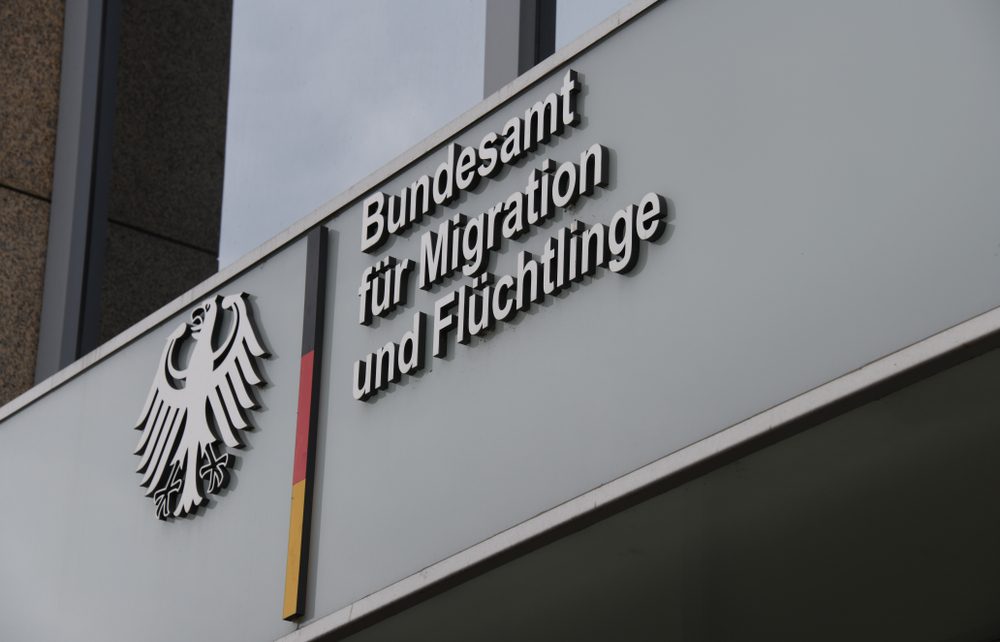
- Sovereign Structure: At the apex stands the federal government, guided by the Bundestag and Bundesrat, with legislative and executive tools to shape migration policy. The Ministry of the Interior sets strategic directions, while the Federal Office for Migration and Refugees (BAMF) serves as the main executive body. Legislative changes in 2024—such as expanding pre-deportation detention, removing family notification obligations, and granting police greater border powers—signaled a shift toward security-centered governance. These policies aligned with “deterrence by design,” a biopolitical strategy aimed at controlling migrant bodies and movement through intensified surveillance and bureaucratic pressure.
- Discursive Structure: A significant discursive shift occurred in 2024. Despite continued control by centrist parties, dominant narratives shifted from solidarity to portraying migrants as cultural and economic threats. The AfD, though outside formal power, achieved discursive hegemony through fear-mongering and symbolic action. Mainstream parties’ partial adoption of this rhetoric illustrated the influence of narrative power over executive authority.
- Federal Structure: Germany’s federalism grants states and municipalities crucial roles in implementing migration policy. Regional differences in interpreting and applying laws led to institutional inequality. Some states imposed stricter naturalization conditions and intensified pressure on social services. Regional immigration offices (Ausländerbehörde), responsible for residency permits, had the most direct impact on migrants’ lives—often influenced by local political orientations.
- Supranational Structure: At the EU level, Germany adheres to shared rules. The 2024 adoption of the New Pact on Migration and Asylum emphasized border detention and accelerated returns, drawing sharp criticism from human rights groups. Although the European Court of Human Rights occasionally blocked deportations to unsafe countries, supranational frameworks largely aligned with deterrent logics. Germany’s reintroduction of internal border controls with Poland, Austria, and the Czech Republic further reflected tensions between internal security and Schengen commitments.
- Resistance Structure: Countering this authoritarian order, networks of civil actors—human rights groups, migrant associations, critical media, and political artists—mounted symbolic resistance. Using legal challenges, storytelling, and digital campaigns, they articulated alternative discourses of participatory citizenship, restorative migration justice, and human security. Though lacking formal power, these actors influenced public legitimacy and questioned state narratives.
Ultimately, Germany’s migration regime in 2024 was not merely a set of rules and institutions but a dynamic power field. The intersection of state authority, nationalist discourse, supranational obligations, civil resistance, and structural contradictions shaped the evolving boundaries of rights, power, and legitimacy. Only through continued international oversight, informed civil engagement, and critique of securitized narratives can migration policy move toward justice and human dignity.
- Discursive Inconsistencies
In 2024, Germany’s migration policies were shaped by competing and overlapping discourses. At least three dominant narratives—security, human rights, and historical responsibility—competed for hegemonic status, while secondary discourses emerged at their margins or intersections.
- Security Discourse: The most dominant and influential narrative framed migration as a potential or actual threat to public order, internal security, and national identity. Promoted by AfD, conservative figures, tabloid media, and isolationist segments of the public, this discourse was amplified by isolated violent incidents involving asylum seekers. It justified a series of restrictive measures: reinstating border controls, criminalizing ideological support for extremism, broadening grounds for deportation, and reducing social benefits for irregular migrants. Even centrist parties adopted parts of this rhetoric to maintain political survival. This led to the erosion of human rights protections and legitimized coercive state instruments.
- Human Rights Discourse: In opposition, the human rights and humanitarian discourse emphasized dignity, the principle of non-refoulement, the right to asylum, and cross-border solidarity. Led by NGOs, churches, left-wing parties, and intellectuals, this narrative criticized restrictive measures such as third-country processing, residency limitations, and erosion of individualized asylum assessments. Though often on the defensive, it preserved key international legal frameworks and served as the moral conscience of civil society.
- Historical Responsibility Discourse: Rooted in Germany’s Nazi past, this discourse emphasized an unconditional obligation to support Jewish communities and combat antisemitism. In 2024, especially amid Middle Eastern conflicts, this narrative entered legal and citizenship frameworks—manifested in revised naturalization exams requiring support for Israel’s right to exist. Critics warned that conflating antisemitism with legitimate criticism of Israeli policies blurred important distinctions. Arab-origin communities and some academic circles voiced concern over the politicization and discriminatory implications of this approach.
- Peripheral and Hybrid Discourses:
- Integration Discourse emphasized language acquisition, employment, and civic participation as positive contributions of migration.
- Nationalist-Identity Discourse stressed cultural purity and Western civilizational values—mainly in far-right rhetoric.
- Economic-Pragmatic Discourse treated migration as a demographic solution and labor resource—justifying skilled migration laws.
These narratives often intersected with dominant discourses, resulting in a policy field driven by a blend of humanitarian, economic, and security logics.
Ultimately, the discourse surrounding migration policy in Germany in 2024 reflected a deep structural conflict between historical values, security imperatives, and ethical obligations. The resulting policies were often contradictory, reactive, and multilayered—attempting to enforce strict borders while maintaining a moral facade. This duality not only signals a policymaking crisis but also illustrates Germany’s collective uncertainty about its national identity, historical responsibilities, and the future of migration in the 21st century.
- Inequalities and Disparities
While Germany’s migration system is officially based on legal and administrative principles, in practice, it operates through mechanisms that reproduce structural inequality and discrimination. These disparities are not merely the result of implementation flaws but are rooted in fundamental differences in how policies are defined and executed based on ethnicity, religion, nationality, social class, and legal status. An analysis of these discriminatory layers reveals an unspoken hierarchy in Germany’s approach to migrants.
- Nationality-Based Discrimination: One of the most apparent forms of discrimination was differential treatment based on country of origin. While Ukrainian refugees were immediately granted temporary residency under EU regulations—benefiting from access to employment, social services, and education—migrants from Afghanistan, Syria, Iran, and African countries faced prolonged, opaque, and restrictive processes. Such disparities contradict the principle of equal access to international protection and reflect an underlying hierarchy of human worth in policymaking. The delay or suspension of resettlement programs for Afghan refugees, despite their high-risk status, was a clear example of functional inequality. Likewise, the expansion of the “safe countries list” and the expedited rejection of asylum claims without proper individual assessment were criticized as procedural discrimination by human rights organizations.
- Religious and Ideological Discrimination: New citizenship policies that included ideological and value-based questions—although justified under Germany’s historical responsibility—effectively marginalized specific religious groups, especially Muslims and Arab-origin populations. Concerns grew that such measures extended beyond counter-extremism and became tools for testing political loyalty. Additionally, restrictions on peaceful assembly and security interventions during pro-Palestinian protests were seen by civil society as instances of double standards regarding freedom of expression. The vague criminalization of “praising terrorism” raised fears of suppressing legitimate political opinions.
- Legal Status Disparities: A migrant’s legal status significantly determined their access to resources, services, and rights. While skilled workers with job visas enjoyed full social and economic rights, asylum seekers with temporary or uncertain status lived in precarious conditions. Collective accommodation centers, restricted work permits, limited access to healthcare and education, and financial deterrence policies all contributed to a form of structural poverty. The proposal to reduce financial benefits for those with temporary status was criticized as motivational engineering and a violation of human dignity.
- Policing and Surveillance: Field reports and civil data showed that police and border authorities were more likely to stop individuals with Middle Eastern or African appearances—a phenomenon known as “racial profiling.” This practice not only raised legal concerns but also eroded migrant communities’ trust in the justice system. The sharp rise in violent attacks on asylum centers—including arson, vandalism, and neo-Nazi symbolism—reflected the state’s failure to ensure migrant safety. The delayed or ineffective responses by authorities amounted to passive discrimination.
- Discrimination in Deportation and Citizenship: Although citizenship reforms in 2024 removed some prior restrictions, such as the ban on dual nationality, they simultaneously introduced strict ideological criteria for naturalization. Without transparent evaluation mechanisms, these conditions risked arbitrary exclusions. In terms of deportation, increased detention periods, reduced legal protections, and fast-tracked removals to unsafe countries were seen as violations of international humanitarian principles. Human rights advocates viewed these measures as emblematic of Germany’s disproportionate and punitive migration policy.
In summary, despite claims of adherence to equality principles, Germany’s 2024 migration system reflected unequal, hierarchical, and at times discriminatory structures. Ethnicity, nationality, religion, social class, and legal status served as implicit classification indicators that shaped migrants’ life trajectories. Although legally framed, the system functioned as a tool for selective inclusion and exclusion. A central question for policymakers is how to move from identity-based policymaking toward a system grounded in real needs, individual merit, and social justice—only then can the migration regime align with human rights standards and attain sustainable legitimacy.
- Dynamics of Policy Transformation
Germany’s migration and asylum policies in 2024 were not the outcome of a static process but rather the product of intersecting and conflicting forces across social, political, institutional, and supranational levels. The field was increasingly marked by tension between control and integration, order and humanitarianism, security and rights—divides that pushed policy toward fragmentation and dualism.
- Legal Reforms: The year witnessed multiple legal changes in citizenship, residency, deportation, and border control. The ruling coalition, under the banner of modernizing migration law, adopted hybrid policies combining cohesion and deterrence. For instance, citizenship law reforms facilitated faster access for integrated migrants but also imposed stricter criteria against individuals with extremist affiliations. A new law expanded grounds for deportation and increased pre-deportation detention. These reforms, though responding to right-wing critiques of system inefficiency, sparked broader debates on their legal legitimacy, operational fairness, and social consequences.
- Narrative Shifts: Changing public opinion was another driver of policy evolution. The welcoming discourse of 2015 gave way to conservative inclinations amid economic hardship, welfare competition, and security incidents. This shift was evident in the rise of far-right parties and public polls. In response, civil society organizations, churches, and progressive parties sought to reclaim the narrative—portraying migration as a cultural and economic opportunity. Campaigns celebrating successful integration and exposing systemic discrimination were part of this discursive resistance.
- Impact of International Crises: Regional crises—such as conflicts in Gaza and Afghanistan, and the ongoing war in Ukraine—placed added strain on Germany’s asylum system. While Ukrainian refugees were institutionally welcomed, Middle Eastern refugees faced differential treatment, raising questions about double standards and political instrumentalization of humanitarianism. Additionally, EU-level migration reforms significantly shaped national policies. Germany justified its restrictive actions within Brussels’ policy framework, reinforcing the fusion of domestic and supranational constraints.
- Conceptual Redefinitions: In 2024, core migration concepts underwent redefinition. “Integration” became increasingly tied to cultural loyalty and economic utility; “security” was used to justify rights restrictions; and “solidarity” in official discourse became politically selective. Meanwhile, migrants and asylum seekers emerged not merely as policy subjects but as discursive, legal, and social agents—actively reshaping narratives and challenging exclusion.
Thus, Germany’s migration policy was less the result of centralized intention and more a battlefield of conflicting narratives, structural pressures, and global crises. Foundational concepts like security, integration, and solidarity were retooled as instruments of control or resistance. Migration was revealed not as a technical issue but as a symbolic and strategic arena at the heart of contemporary democracy.
- Lived Experiences of Migrants and Asylum Seekers
Beyond high-level decisions, the lived experiences of migrants and asylum seekers offer a more grounded picture of Germany’s migration policy—one that often contradicts official documents and declarations.
- Suspension, Anxiety, and Marginalization: Many asylum seekers, especially those in temporary camps, lived in a state of existential limbo—not just legal but ontological. Uncertainty, bureaucratic delays, the constant threat of deportation, and lack of social participation rendered life an indefinite wait. According to Pro Asyl, over 60,000 individuals were housed in such facilities by the end of 2024, many for over a year. These centers often lacked proper ventilation, healthcare infrastructure, and psychological support, exacerbating stress. A study by DIW Berlin showed that 45% of refugee children displayed severe anxiety or behavioral disorders. Asylum, in this light, becomes not merely administrative but a condition of psychological erosion and dignity denial.
- Complex Integration Pathways: Despite claims of successful integration, institutional mechanisms remained riddled with gaps. Only 25% of accepted asylum seekers secured stable employment within three years. Factors such as non-recognition of qualifications, excessive bureaucracy, and structural racism were key barriers. Research from the University of Hamburg showed that young applicants with Arabic or Turkish names were three times less likely to be hired than white German counterparts, even with identical resumes. While second-generation success stories like Narges Hekmat or Ahmad D. were publicly celebrated, such cases were often framed as exceptions—implying a persistent structural imbalance.
- Racial Violence: Racially motivated violence increased dramatically in 2024. The Amadeu Antonio Foundation recorded over 1,450 attacks on migrants—from arson in Saxony to street assaults in cities like Dortmund. These attacks rendered migrants physically vulnerable, yet not passive. In response, migrant-led activism and German allies launched creative resistance through groups like Migrantifa, cultural festivals, protests, and participation in local councils—demonstrating that marginal spaces can also foster political renewal and reclaimed public engagement.
- Intercultural Solidarity Networks: Despite limited visibility in official narratives, grassroots solidarity initiatives played a vital role in healing social divides. Projects like Start With a Friend, Refugee Law Clinics, and PSZ NRW provided language training, psychological support, and community assistance to migrants. In North Rhine-Westphalia, over 450 war and torture survivors received trauma counseling. Volunteer networks of teachers, cultural workers, and migrants built trust within schools and civil spaces—offering powerful models of coexistence and social repair.
Ultimately, the lived experience of migrants is not peripheral to policy—it reflects its core contradictions. In the interplay of violence and solidarity, exclusion and agency, suspension and activism, everyday life becomes a symbolic battlefield for reimagining belonging, rights, and dignity. These experiences collapse the distance between legal frameworks and lived realities—posing a foundational question: Where does the human stand in this legal order?
Conclusion
Germany’s 2024 migration and asylum policies reflected deeply intertwined layers of structural crisis, discursive conflict, and shifting societal values. What emerged in executive decisions was not the product of a unified political will, but rather the outcome of tensions among diverse actors, competing narratives, international legal obligations, and evolving European geopolitics. In Germany—a nation with collective memory shaped by both fascism and democratic reconstruction—migration became a central arena of contestation between historical ethics, security logics, and economic interests.
These dynamics manifested not only in policy but also within institutional and procedural practices—generating mechanisms of exclusion and structural discrimination under a façade of rights-based governance.
Despite formal reforms, many legal frameworks—especially regarding detention, deportation, border control, and naturalization—continued to function as instruments of restriction and control. This revealed a persistent duality within the German legal system: while human dignity remains a discursive anchor, bureaucratic execution often racializes or subordinates it to security priorities.
In response, civil society activism—from migrant networks and human rights groups to local social movements—offered symbolic and practical challenges to the dominant discourse. These forms of resistance were not merely reactive but redefined migrants’ social position and redrew boundaries of collective belonging.
From a legal-anthropological perspective, the lived experiences of migrants expose the fundamental disconnect between official declarations and social reality. Symbolic violence, institutional discrimination, and voluntary civic engagement together portray a multilayered migration reality that demands interpretive, phenomenological attention—not just legal or statistical analysis.
Looking ahead, humane, just, and sustainable migration policies require moving beyond reductive frameworks of security and social cohesion. Such transformation will only be possible when migrants are treated not as policy subjects but as active participants in decision-making. The redefinition of integration, citizenship, and civic engagement must emerge from institutional critique and genuine dialogue with migrant lived experiences.
The central question that remains is:
Can Germany, amid the triangle of political realism, security logic, and global ethics, achieve a sustainable balance rooted in justice?
The answer lies not in formal policies, but in the daily lives of migrants—in protest actions, local interactions, and marginal voices that are actively reshaping the meaning of “acceptance.”


