Imperialism in today’s world no longer appears solely in the form of territorial occupation, the establishment of colonies, or the direct military presence of great powers. Although the end of classical empires and the twentieth-century wave of decolonization transformed formal structures of domination, a fundamental question remains: Did the end of formal colonialism also mean the end of imperial logic?
Developments in the contemporary world demonstrate that global power has been reproduced through new forms—forms in which war, sanctions, the international financial system, technological control, economic dependency, domination over media narratives, and the management of knowledge production have all become instruments of power.
Within this framework, domination is no longer exercised only through direct control over territories; rather, it operates through the ability to determine economic rules, constrain political choices, and shape global perceptions regarding the legitimacy or illegitimacy of states.
Within this context, the concept of “Hyperimperialism” represents an attempt to explain a new form of imperial power—one in which a dominant military, financial, and ideological bloc seeks to pressure states that refuse to accept a subordinate position within the global order through a combination of interconnected mechanisms.
From this perspective, military intervention, economic sanctions, exclusion from financial networks, technological restrictions, narrative warfare, and regime-change operations are not separate phenomena; rather, they constitute interconnected components of a broader structure of power.
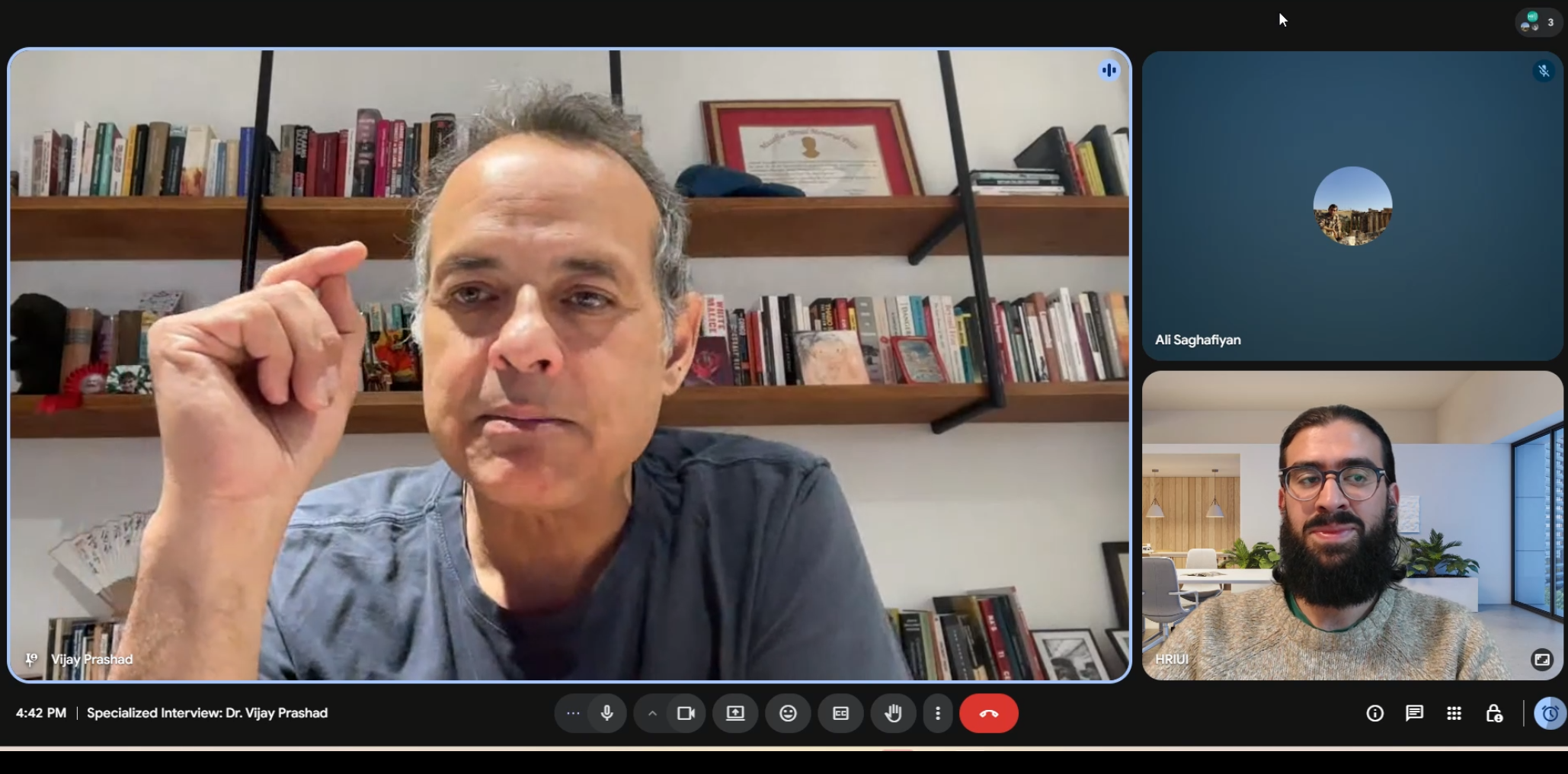
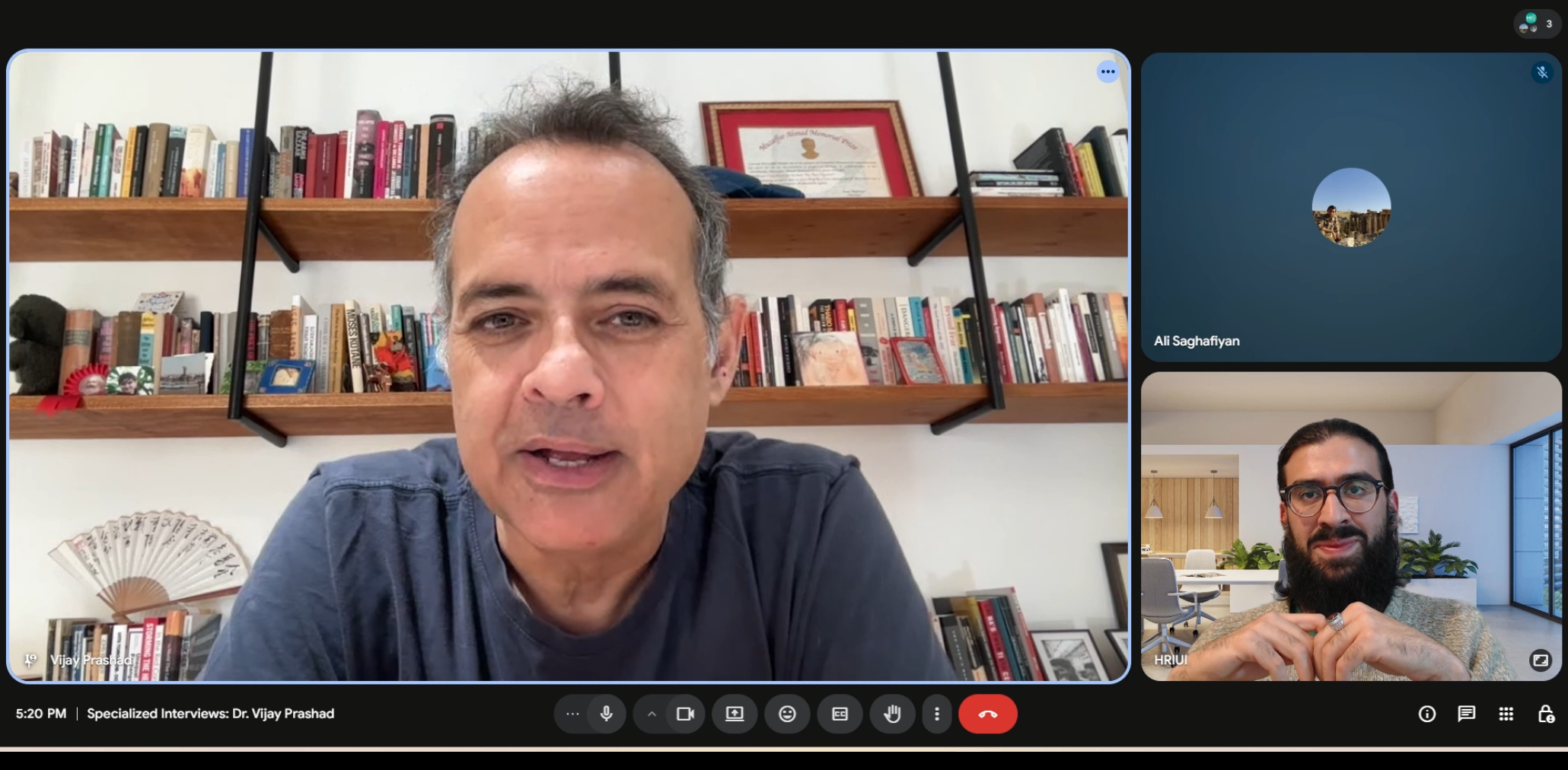
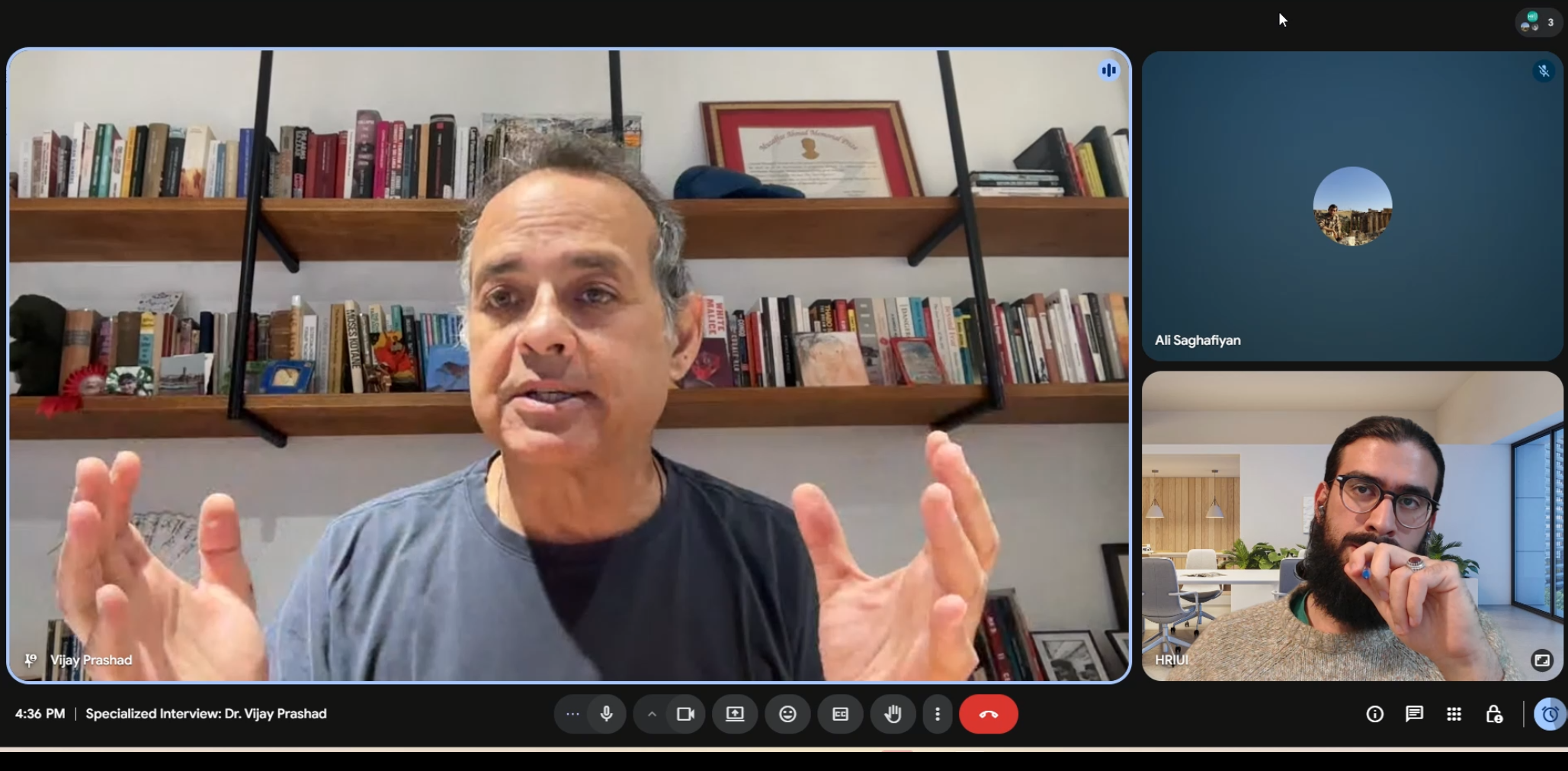
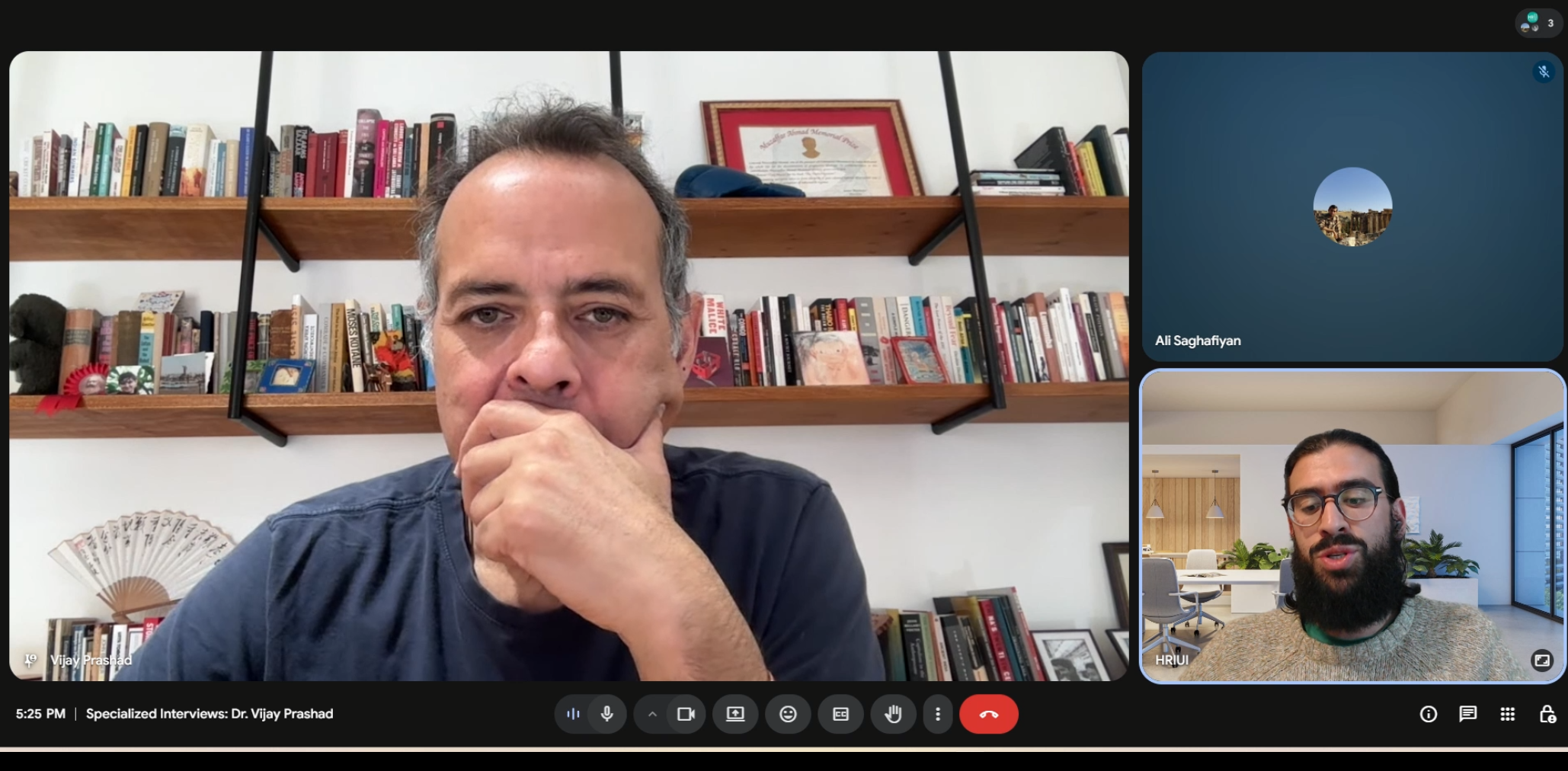
Against this background, this interview with Dr. Vijay Prashad, historian, political analyst, writer, and Executive Director of the Tricontinental: Institute for Social Research, examines these transformations. The conversation explores a wide range of issues, including the concept of hyperimperialism; the transition from territorial empire to financial domination; the role of dollar hegemony; sanctions; regime change; epistemic power; media; BRICS; and the future of South–South cooperation.
From his perspective, the central issue of the present era is not merely competition among states; rather, it is a deeper struggle over a fundamental question: Who has the right to determine the trajectory of development, security, political independence, and the future of nations?
Interview Details
- Interviewer: Mahdi Baeidi Nejad | PhD Student in International Relations, University of Isfahan
- Interviewee: Vijay Prashad | Historian, political analyst, and Executive Director of the Tricontinental: Institute for Social Research
- Date of Interview: Monday, 6 April 2026
- Main Topics:
- Hyperimperialism: A New Stage of Domination in the Contemporary Global Order
- From Territorial Empire to Financial Empire
- Petro-Yuan, the Strait of Hormuz, and the Future of Dollar Hegemony
- Regime Change, Cultural Crisis, and the Transition from “Washington’s Bullets” to “Washington’s Missiles”
- Democratization or Political Management? Elections and the Logic of Accepting Desired Outcomes
- Sanctions: A Tool of Non-Territorial Imperialism in the Era of Global Financial Systems
- Greenland, Territorial Ambitions, and the Disciplinary Messages of Empire
- Israel, Territorial Expansion, and the Limits of Security Logic
- The United States–Israel Relationship: A Joint Project or a Convergence of Geopolitical Interests?
- Epistemic Power: The Role of Think Tanks, Media, and Knowledge-Producing Institutions in Global Domination
- Material Power, Ideological Consent, and the Production of Hegemony
- Social Media, Counter-Hegemonic Narratives, and the Limits of Digital Space
- Bandung, the Non-Aligned Movement, and the Historical Project of Global South Sovereignty
- BRICS, Multipolarity, and the Limitations of South–South Cooperation
- Structural Transformation and the Future of Global South Sovereignty
Note: In order to preserve academic independence and diversity of perspectives, it should be emphasized that the opinions expressed in this interview reflect solely the personal views of the interviewee and do not necessarily imply endorsement or adoption of a position by the Human Rights Institute of the University of Isfahan.
Interview Summary
Topic 1: Hyperimperialism: A New Stage of Domination in the Contemporary Global Order
- Question: How should the concept of “hyperimperialism” be understood in relation to the contemporary global order? Does the current combination of military power, financial instruments, technological control, and narrative power represent a new stage of imperialism, or should it be understood as an intensified form of existing imperial structures?
In response to this question, Dr. Prashad emphasizes that the concept of “hyperimperialism” should be understood in connection with the normalization of aggressive wars and new mechanisms of exercising power against states that refuse to accept a subordinate position within the global order.
From his perspective, the first step toward understanding the current situation is recognizing that, within this analytical framework, Iran is considered a victim of an aggressive war, as it did not initiate the conflict and did not undertake any action that would justify the use of force against it.
Prashad argues that following the legal developments arising from the Nuremberg Trials, initiating an aggressive war itself constitutes a fundamental violation of the international order. Therefore, the essential nature of a war cannot be determined solely by examining the specific targets of attacks; rather, the unlawful use of force itself must also be taken into account.
From this perspective, there is a fundamental distinction between attacking a specific target—such as a military facility, infrastructure, or civilian site—and the broader issue of initiating an unauthorized war. According to him, this question lies at the heart of the concept of hyperimperialism.
Hyperimperialism refers to a stage in which war and military pressure have become normalized instruments for regulating the behavior of states that refuse to comply with the preferred order of dominant powers.
Dr. Prashad uses examples such as Iraq and Libya to explain this transformation. From his perspective, the United States’ invasion of Iraq in 2003, which was carried out without authorization from the United Nations Security Council, represented an example of an aggressive war. Similarly, in the case of Libya, although the Security Council resolution authorized the establishment of a no-fly zone, the subsequent military operation went beyond that framework and transformed into a broader war aimed at restructuring the country’s political system.
From Prashad’s perspective, the term “hyperimperialism” represents a new quality of imperial power that differs from classical forms of imperialism. To explain this distinction, he refers to Lenin’s analysis of imperialism in the early twentieth century—a period in which national capitalist states competed against one another, and economic rivalries among major powers often resulted in military confrontation.
However, according to him, contemporary capitalism no longer operates solely on the basis of competition among national capitals. Following the collapse of the Soviet Union and the expansion of globalization, production has become organized through complex global chains, in which raw materials, components, manufacturing processes, and consumption are distributed across different countries.
Capital has acquired a transnational character, and major financial and economic corporations can no longer be understood simply as representatives of the interests of a single state.
Based on this understanding, Prashad argues that contemporary imperialism should not be viewed merely as competition among equally positioned capitalist powers. Rather, it should be understood as the domination of a powerful military, financial, and political bloc over the global system—a bloc led by the United States that seeks to pressure countries unwilling to accept its rules.
Within this framework, countries such as Iran, China, Venezuela, and Cuba, from his perspective, are not targeted primarily because of direct imperial competition, but because of their “defiance.” The central issue is their refusal to accept an imposed order.
According to him, when one country resists such an order, it can create a model for others, and therefore the dominant power seeks to contain and limit that resistance.
Prashad emphasizes that hyperimperialism does not rely solely on military instruments. Instead, it employs a combination of interconnected mechanisms, including:
- Financial pressure and restrictions on access to global currencies;
- Economic and technological sanctions;
- Scientific and commercial isolation;
- Narrative warfare and the portrayal of a country as a “threat” or an “illegitimate actor”;
- The use of military force when previous instruments fail.
From his perspective, the war against Iran represents an example of a miscalculation by hyperimperial powers. According to him, the United States and Israel overlooked an important factor in their assessment: the historical memory and civilizational capacity of Iranian society.
He argues that, unlike many societies that experienced direct colonial rule, Iran was never fully subjected to Western colonial domination. Although Iran has experienced foreign pressures and political interventions, its historical trajectory differs from that of many African and Asian societies that underwent direct colonial experiences.
From Prashad’s perspective, this historical difference has shaped Iranian society’s relationship with Western powers in a way that is not based on acceptance of colonial subordination. Accordingly, he argues that the calculations of dominant powers were based on the assumption that external pressure could lead to submission or collapse.
However, these pressures encountered resistance rooted in a sense of sovereignty, historical experience, and civilizational confidence within Iranian society.
Ultimately, Prashad argues that hyperimperialism should not be understood as merely a simple continuation of classical imperialism. Rather, the concept refers to a new organization of power in which war, economics, technology, media, and knowledge production operate together in order to preserve a global order favored by dominant powers.
In other words, imperialism in the contemporary world no longer operates only through battlefields or territorial control; it also functions through financial networks, technological systems, narratives, and structures of meaning production.
Topic 2: From Territorial Empire to Financial Empire
- Question: How should the transition from territorial empires to new forms of financial and institutional imperial control be understood? To what extent did formal decolonization eliminate global hierarchies, and how were these hierarchies reorganized through trade, debt, currency structures, and international institutions?
In response to this question, Dr. Vijay Prashad first emphasizes that the transition from territorial empire to new forms of financial control should be understood within the transformation of the global trade system. According to him, it is not only the financial system itself that has created new forms of domination; rather, the globalization of production and trade has generated new dependencies that have transformed financial instruments into some of the most important mechanisms of exercising power.
Prashad argues that in the past, many countries produced a significant portion of the goods and services they required within their own borders. However, developments such as advances in transportation, communication technologies, logistics systems, and the globalization of production transformed this situation. Today, the production of many goods takes place through global supply chains, meaning that raw materials, components, manufacturing processes, and final consumption may occur across multiple countries.
This transformation has made countries more dependent than ever on global trade networks. Under such conditions, control over financial channels and international payment mechanisms becomes a major source of power.
In this context, he explains that global trade requires a dominant currency for the settlement of transactions. Since there is no official global currency issued by the United Nations, the International Monetary Fund, or the World Bank, the U.S. dollar has assumed this role.
The importance of the dollar’s position has become particularly evident in global energy markets. Following the 1970s and the emergence of the so-called “petrodollar system,” a large share of global oil transactions came to be conducted in dollars, and this significantly strengthened the financial position of the United States.
From his perspective, the United States has used this position as a tool of power. Control over the primary currency of global trade allows Washington to restrict countries’ access to credit, capital, and international financial networks.
Dr. Prashad refers to the example of Chile in the 1970s to explain this issue. During that period, the United States sought to create economic pressure by limiting Chile’s access to financial resources, demonstrating how control over dollar flows could become an instrument for exerting political pressure.
He argues that a similar logic can be observed in the case of Iran. According to him, Iran’s exclusion from the SWIFT (Society for Worldwide Interbank Financial Telecommunication) network represents one of the significant examples of using global financial infrastructure as a tool of pressure.
SWIFT, as the primary communication network connecting banks around the world, enables international payment coordination and financial transactions. Prashad argues that when a country is removed from such a network, even governments and companies willing to trade with that country face significant restrictions, because conducting financial transactions becomes more difficult and costly.
As a result, financial sanctions can push a country toward the margins of the global economic system.
Nevertheless, he emphasizes that although some countries have attempted to create alternative pathways, no other currency has yet been able to challenge the position of the dollar within the global financial system.
Regarding the Chinese yuan, he explains that this currency continues to face structural limitations. The most important obstacle, from his perspective, is China’s capital controls. Global investors do not yet view the yuan as equivalent to the dollar in terms of freedom of use and global accessibility, because the dollar is not merely a payment instrument; it is also a means of purchasing assets and investing across the world.
From this perspective, the power of the dollar does not arise solely from its role in trade, but also from its position in global capital markets, foreign exchange reserves, and the broader structure of the international economy.
Despite this, Prashad argues that dollar hegemony is not without limitations. The dependence of the U.S. economy on global investor confidence, the bond market, and international financial flows creates vulnerabilities. If global confidence in U.S. debt securities declines, the United States could face significant challenges.
Therefore, the dollar system is simultaneously a source of power and a point of vulnerability for Washington. The United States uses the position of the dollar to exert pressure on other countries, but this same position also makes it dependent on developments within global financial markets.
As his final point in response to this question, Prashad argues that contemporary imperialism no longer operates primarily through direct territorial control. Whereas classical empires were defined by the occupation and administration of colonies, new forms of domination operate increasingly through the management of dependencies, control over financial networks, global trade rules, and access to technology.
From this perspective, the end of formal colonialism did not eliminate global hierarchies; rather, many of these relations were reconstructed through new economic, financial, and institutional forms.
Topic 3: Petro-Yuan, the Strait of Hormuz, and the Future of Dollar Hegemony
- Question: Does the use of yuan-based transactions in oil trade related to energy flows through the Strait of Hormuz represent a structural challenge to the petrodollar system, or should it primarily be understood as a political action within a financial order that remains dominated by the dollar?
In response to this question, Dr. Vijay Prashad emphasizes that the movement toward using the yuan in oil transactions connected to the Strait of Hormuz, while politically significant, does not yet represent a fundamental transformation of dollar hegemony. From his perspective, concepts such as “petro-yuan” or the use of yuan in energy trade should be understood as signs of countries’ efforts to create alternative financial pathways, rather than as evidence of the end of the petrodollar system.
The Strait of Hormuz holds strategic importance because of its major role in global energy transportation; however, this route alone does not represent the entirety of the global oil market. Therefore, changes in payment methods in this region cannot, by themselves, eliminate the global position of the dollar.
The increasing use of the yuan in oil transactions may strengthen the role of the Chinese currency in certain trade relationships, but the yuan continues to face structural limitations. According to Dr. Prashad, the most important of these limitations remains China’s capital controls.
He argues that one of the primary reasons behind the strength of the dollar is that it functions not only as a payment mechanism, but also as a global store of value and a means of purchasing assets worldwide. Governments and investors can use dollars in global markets, acquire assets, and move capital with a level of flexibility that the yuan has not yet achieved.
Prashad explains that even an increase in oil transactions conducted in yuan does not necessarily mean the elimination of the dollar. The revenues generated through yuan-based trade may, through mechanisms such as currency exchanges, eventually return to the dollar-based financial system. Therefore, while the expansion of yuan-based transactions may strengthen China’s position, it does not necessarily transform the fundamental architecture of global finance.
Accordingly, Prashad views Iran’s use of the yuan in energy transactions primarily as an important political move—an action reflecting efforts to reduce dependence on the dollar and create greater room for maneuver in response to financial pressures.
Nevertheless, Prashad emphasizes that a genuine transformation of dollar hegemony requires much more than the use of a new currency in bilateral transactions. Such a transformation would require broad changes in foreign exchange reserves, capital markets, financial flows, and the overall architecture of the global economy.
In this regard, he identifies the global circulation of the dollar as one of the key factors sustaining its power. Many countries impose restrictions on the international movement of their national currencies; however, the dollar circulates globally, and this characteristic enables the United States to use its currency as an instrument of power.
At the same time, Prashad notes that this advantage is not without costs. The global circulation of the dollar has also made the U.S. economy dependent on international investor confidence and the stability of global financial markets. Therefore, dollar hegemony is simultaneously a source of strength and a source of vulnerability for the United States.
Ultimately, Dr. Prashad argues that the emergence of the petro-yuan should be understood as part of a broader process through which countries seek to reduce their dependence on a financial system dominated by the dollar. This trend reflects important changes in the global economic order, but it has not yet reached the stage of fully replacing the dollar.
In other words, the world may be moving toward greater diversification of financial systems, but the position of the dollar remains rooted in deeper factors, including its role in capital markets, global reserves, and the economic power structure of the United States.
Topic 4: Regime Change, Cultural Crisis, and the Transition from “Washington’s Bullets” to “Washington’s Missiles”
- Question: How should contemporary mechanisms of regime change be understood in relation to classical forms of imperial intervention? Are current interventions simply continuations of traditional imperial techniques, or do they represent new methods for shaping cultural confidence, political legitimacy, and global governance structures?
Dr. Vijay Prashad argues that contemporary mechanisms of regime change are no longer limited solely to classical coups or direct military interventions. In today’s world, he suggests that it is necessary to speak of a transition from “Washington’s bullets” to “Washington’s missiles,” because the instruments of power have become more diverse, complex, and multilayered.
From Prashad’s perspective, dominant powers often attempt to transform the cultural, social, and psychological conditions of a target society before resorting to military force. This process may take place through financial support, media networks, civil society programs, the production of specific narratives, and the promotion of concepts such as corruption, generational crisis, political inefficiency, and social exhaustion.
The initial objective in many of these cases is not necessarily the direct overthrow of a government, but rather the weakening of a society’s confidence in itself. When a society begins to question its political institutions, historical identity, collective foundations, and civilizational capacities, it becomes more vulnerable to external narratives regarding the necessity of “change.”
Prashad explains that within this framework, young people are sometimes presented as the primary symbols of transformation—a generation portrayed as inherently pure, modern, and free from the political attachments of the past, while previous generations and historical structures are represented as obstacles to progress.
Such patterns, he argues, can be observed in some countries, including Bangladesh and Nepal, where new, young, and previously outsider political figures became symbols of change. However, Prashad warns that the emergence of such forces does not necessarily lead to greater freedom or genuine democratization, and in some cases may even contribute to restrictions on political space.
From Dr. Prashad’s perspective, one of the common errors in Western analyses is interpreting every form of social dissatisfaction as evidence of a society’s desire for complete political transformation. However, dissatisfaction with economic difficulties, corruption, or government policies does not necessarily mean a demand for the complete collapse of the political system.
He applies this argument to countries such as Iran and China, arguing that attempts to transform social dissatisfaction into evidence of civilizational collapse have been less successful in these cases. The reason, according to him, is that there is a distinction between domestic problems within a society and a society’s willingness to accept an entirely different political order.
From Prashad’s perspective, when cultural and narrative pressures aimed at producing internal change fail, military pressure and direct threats may enter as the next stage. He argues that Iran and China, due to their historical and civilizational confidence, have demonstrated greater resilience against such patterns.
Regarding Iran, he emphasizes that long-term sanctions, contrary to their original objectives, have contributed to strengthening certain domestic scientific and technological capacities. According to him, Iran has not relied solely on its historical past; rather, it has attempted to establish a connection between its civilizational identity and modern scientific development.
Drawing a certain parallel between Iran and China, Dr. Prashad considers both as examples of societies that have used their historical civilizations not merely as memories of the past, but as foundations for contemporary development. However, he warns that cultural resistance cannot be achieved through a nostalgic return to history alone. A civilization can only generate power when it is accompanied by science, technology, and the capacity for production.
Ultimately, Prashad argues that regime change in the contemporary era is pursued not only in the fields of politics and warfare, but also within the domains of culture, narratives, and public perception. From this perspective, one of the most important arenas of global struggle is not only territory, but also societies’ understanding of themselves, their histories, and their future possibilities.
Topic 5: Democratization or Political Management? Elections and the Logic of Accepting Desired Outcomes
- Question: How should the language of “democracy promotion” be interpreted in relation to the political management of strategically important states? Does democratization genuinely reflect a normative commitment to political participation and free elections, or has it, in practice, become a mechanism for determining which political forces are acceptable to dominant powers?
In response to this question, Dr. Vijay Prashad emphasizes that the concept of “democracy promotion” requires critical examination. According to him, in many cases, this concept does not simply mean support for elections and political participation, but can become a tool for defining the boundaries of politically acceptable forces from the perspective of dominant powers.
In some cases, countries are encouraged to hold elections, but the outcome is accepted only when it leads to the victory of political forces compatible with the interests and priorities of major powers.
To explain this argument, he refers to the experience of Palestine. Prashad argues that following the Second Intifada, the United States supported the holding of elections in the Palestinian territories and presented them as a pathway toward political legitimacy and advancing peace. However, when Hamas won the elections in Gaza, the United States and Israel refused to accept the outcome.
According to him, this experience demonstrates that, for certain powers, the central issue is not merely whether elections take place, but rather what the outcome of those elections is. In other words, popular will is recognized only when the choice of voters falls within a framework considered acceptable by the dominant order.
Prashad argues that similar patterns can be observed in other cases. He refers to the way Iranian elections are represented in Western media and policymaking circles, where political currents are often categorized through labels such as “reformist” and “hardliner.” When electoral outcomes do not align with Western expectations, questions regarding legitimacy or the integrity of the political process often emerge.
According to him, the central dispute in such cases is not about the “form” of democracy, but rather about the “content” of the outcome. The fundamental question is not simply whether people voted, but whether they voted for a political force considered acceptable by dominant powers.
Dr. Prashad further refers to Lebanon. He argues that Hezbollah is not merely a military actor, but also a political movement present within Lebanon’s parliamentary system. However, because it is considered an undesirable actor from the perspective of the United States, it is primarily viewed through a security lens and described as a “terrorist organization.”
According to him, this reflects a contradiction within the discourse of democracy promotion. On the one hand, emphasis is placed on the importance of elections and political participation; on the other hand, political choices that do not align with the interests of major powers may be questioned or delegitimized.
From his perspective, this logic can be summarized as follows:
Be democratic, but vote for those whom the dominant order considers acceptable; otherwise, the democratic process itself may be questioned.
Therefore, the fundamental issue in global power relations is not merely whether elections are held, but rather:
Who has the authority to define the boundaries of political choice, and when is the will of people genuinely recognized?
Topic 6: Sanctions: A Tool of Non-Territorial Imperialism in the Era of Global Financial Systems
- Question: Can sanctions be understood as a form of non-territorial imperial control within the contemporary financial system? How should one distinguish between a state’s sovereign right not to trade with another country and the use of extraterritorial pressure to force third countries to comply with such a decision?
In response to this question, Dr. Vijay Prashad emphasizes that understanding the nature of sanctions requires distinguishing between two different issues: the right of a state to choose its own trade partners and the attempt to compel other countries to follow the same decision.
Every state, within the framework of its national sovereignty, has the authority to decide whether or not to engage in trade relations with another country. For example, if the United States decides to restrict its trade relations with Iran or any other country, such a decision falls within the domain of that government’s authority.
However, according to Prashad, the situation changes when a state attempts to impose this decision on third parties—that is, when it seeks to force companies, banks, and other governments to refrain from cooperation with the targeted country even if they themselves wish to maintain economic relations.
From his perspective, this is the defining feature of extraterritorial sanctions. In such circumstances, sanctions are no longer merely a bilateral economic decision; rather, they become a mechanism for exercising power over the broader international economic network.
Prashad argues that this form of using sanctions represents one of the defining characteristics of hyperimperialism in the contemporary era. While classical empires primarily exercised power through territorial occupation, military presence, and the direct administration of colonies, contemporary power can be exercised through control over financial networks, banking systems, international currencies, and economic infrastructures.
Sanctions imposed with authorization from the United Nations Security Council occupy a different legal position, as the Security Council, under the UN Charter, has the authority to take measures under certain circumstances in order to maintain international peace and security.
However, when a state unilaterally imposes sanctions and then uses its position within the global financial system to compel other countries to implement them, the issue extends beyond a national decision.
From his perspective, the primary power of U.S. sanctions lies not only in the sanctions themselves, but also in the position of the United States within the architecture of global finance. Control over important parts of the international banking and financial system enables Washington to extend its economic policies to other actors.
Therefore, in Prashad’s analysis, sanctions are not merely economic instruments; they are part of the mechanisms through which political power is exercised in the contemporary world. They demonstrate that domination today can occur without direct territorial occupation and even without permanent military presence, through control over financial channels and economic networks.
In other words, while past empires operated through the control of geography, new forms of imperialism can operate through control over the flows of capital, credit, trade, and access to global economic systems.
Topic 7: Greenland, Territorial Ambitions, and the Disciplinary Messages of Empire
- Question: How should contemporary political discourse regarding Greenland and potential U.S. interest in acquiring the territory be interpreted? Does such rhetoric indicate a return of territorial imperialism, a symbolic strategic message, or a mechanism for disciplining U.S. allies?
In response to this question, Dr. Vijay Prashad emphasizes that the issue of Greenland cannot be understood merely as a competition between Danish sovereignty and U.S. territorial ambitions. The first point that must be recognized, according to him, is that Greenland itself has a colonial history, and the aspirations and interests of the people of Greenland must remain central to any political analysis.
He notes that Greenland has historically been under Danish rule, making the issue far more complex than a simple dispute between two states. Therefore, the fundamental question is not only about U.S. claims or Danish sovereignty, but also about the position of the people of Greenland in determining their own political future.
At the same time, Dr. Prashad emphasizes that Greenland’s strategic importance for the United States is not a new issue. The United States has maintained a significant military presence in the region since the Second World War and, through its security infrastructure, has already secured considerable strategic access to the territory.
From this perspective, Prashad argues that Washington does not necessarily require formal annexation of Greenland in order to achieve its geopolitical objectives. Military presence, security cooperation, and the United States’ position within regional structures already provide significant influence without formal territorial control.
Furthermore, statements regarding the acquisition of Greenland should be understood within the broader framework of applying pressure and discipline toward U.S. allies. From Prashad’s perspective, such positions send a message to allied countries: even within a political and military alliance, relations of power are not equal, and the United States continues to consider itself the decisive actor.
He connects this logic to U.S. relations with European allies as well. Washington’s pressure on European countries regarding increased defense spending, alignment with U.S. security policies, and acceptance of American strategic priorities represents part of this broader structure of power.
Within this framework, the implicit message of such an approach is that if allies do not move in accordance with U.S. priorities, they may face reduced support or political pressure.
Therefore, from Prashad’s perspective, the Greenland issue is not merely a geographical matter; rather, it represents an example of how power operates within the contemporary international order. Imperialism today does not necessarily mean the direct occupation of new territories; instead, it can operate through the creation of hierarchies among states, the establishment of security rules, and the reminder of allies’ dependence.
Ultimately, Prashad argues that the Greenland debate is less an indication of a complete return to classical territorial imperialism and more an example of disciplinary imperialism—a form of power whose primary objective is to preserve a superior position, manage relations with allies, and reinforce existing hierarchies within the international system.
Topic 8: Israel, Territorial Expansion, and the Limits of Security Logic
- Question: How should Israel’s territorial policies be evaluated from a structural perspective? Do these policies reflect requirements of self-defense, territorial expansionism, religious-political ideologies, or a broader form of regional domination?
In response to this question, Dr. Vijay Prashad emphasizes that Israel’s territorial policies cannot be explained through a single factor. Rather, they should be understood as the outcome of a combination of security claims, ideological currents, and expansionist political tendencies.
Within Israeli politics, there are currents that interpret the question of territory not merely through contemporary political considerations, but through religious and historical narratives. Some of these currents emphasize broader interpretations of historical territory. However, Prashad argues that Israeli policy cannot be reduced only to religious motivations; the role of security logic and strategic considerations must also be taken into account.
From his perspective, one of the central elements of this security logic is the pursuit of strategic depth, control over surrounding areas, and the preservation of military superiority. However, this approach faces a fundamental contradiction: the expansion of military occupation does not necessarily create sustainable security; rather, it can generate new forms of resistance and instability.
To explain this point, Dr. Prashad refers to the experience of southern Lebanon. He argues that the emergence and strengthening of Hezbollah was closely connected to Israel’s occupation of southern Lebanon. Occupation did not eliminate resistance; rather, in many cases, it became a factor contributing to its consolidation.
In this context, he warns that the expansion or deepening of military occupation may produce the opposite of its intended result, because it strengthens resistance forces that it seeks to eliminate.
From his perspective, sustainable security between political communities cannot be achieved solely through military power. Military force may create the ability to temporarily control a territory, but it cannot by itself resolve deeper political and historical issues.
Prashad further refers to the experience of liberation movements in different parts of the world and argues that societies that have experienced occupation, colonialism, or foreign intervention rarely abandon their political and identity-based demands. The experiences of Palestinians, Lebanese, and other communities that have faced occupation or external domination demonstrate that military power cannot permanently eliminate political resistance.
He emphasizes that even if Israel has genuine security concerns, security cannot be achieved through destruction, permanent occupation, or the political elimination of others. From his perspective, security based on continuous territorial control and ongoing violence ultimately contributes to the reproduction of insecurity itself.
In Dr. Prashad’s final analysis, Israel’s territorial policies should be understood through the interaction of three factors:
- Ideologies concerning territory and historical identity;
- A security logic based on control and military superiority;
- The historical consequences of occupation, which contribute to the formation of political resistance.
Topic 9: The United States–Israel Relationship: A Joint Project or a Convergence of Geopolitical Interests?
- Question: How should the strategic relationship between the United States and Israel be analyzed? Should it be understood as a patron–client relationship, a shared imperial project, or the result of converging geopolitical interests under specific circumstances?
In response to this question, Dr. Vijay Prashad argues that the relationship between the United States and Israel cannot be explained through a simple or one-dimensional framework. From his perspective, two common interpretations—that the United States controls Israel, or that Israel controls U.S. policy—are both overly simplistic.
The reality of this relationship is more complex, and the degree of influence exercised by each side varies depending on the period and the issue under consideration. In some cases, Israel has been able to exert significant influence within the U.S. political environment; however, in other areas, it is the United States that determines the broader strategic framework.
Nevertheless, the central point from Prashad’s perspective is that, on many issues, the two countries overlap within a shared political project.
To explain this, he refers to the issue of Iran. He argues that efforts to contain Iran cannot be understood merely as an Israeli project that has shaped American policy. Rather, in many cases, this issue has become aligned with the strategic objectives of both countries.
From the perspective of the United States, Iran represents a geopolitical challenge because of its resistance to the preferred U.S.-led order and its refusal to accept American influence. From Israel’s perspective, Iran is viewed as a threat due to its support for the Palestinian cause and regional resistance movements.
For this reason, Prashad argues that, regarding Iran, U.S. and Israeli interests have converged to a significant extent.
However, he emphasizes that the positions of the two countries should not be considered completely identical. Israel is a regional power whose primary focus is on developments in the Middle East and issues related to its security, whereas the United States pursues a global project involving multiple regions and actors—from China and Iran to Venezuela and Cuba.
This difference demonstrates that the U.S.–Israel relationship is not always uniform or absolute. In some issues, the interests of the two sides are strongly aligned, while in others, their priorities and calculations may differ.
Prashad argues that understanding this relationship requires moving beyond simplified binaries such as “Israeli control over the United States” or “Israel’s complete dependence on the United States.” Both states possess their own objectives and interests; however, at certain historical moments, these interests converge within a broader geopolitical project.
Overall, Dr. Prashad views this relationship as an example of convergence between a global power and a regional power—a relationship in which cooperation on specific issues forms part of a wider network of power competition in the contemporary international order.
Topic 10: Epistemic Power: The Role of Think Tanks, Media, and Knowledge-Producing Institutions in Global Domination
- Question: To what extent is contemporary imperial power maintained not only through military and economic instruments, but also through institutions of knowledge production, think tanks, media networks, and academic discourses?
In response to this question, Dr. Prashad emphasizes that contemporary imperial power cannot be understood without considering its epistemic dimension. From his perspective, military and economic power alone are insufficient to sustain a dominant order, because every structure of power requires the production of narratives, the creation of legitimacy, and the ability to influence how societies understand themselves and the world around them.
According to Prashad, imperialism does not operate only through control over resources, markets, and military capabilities; it also seeks to influence how reality itself is defined. In this sense, one of the most important arenas of power is the production of meaning—the space in which it is determined what constitutes a crisis, which actors are considered legitimate, and which societies are portrayed as requiring “reform” or “salvation.”
He argues that one of the most important mechanisms of this form of power is weakening a society’s confidence in its own historical, cultural, and political capacities. Narratives concerning corruption, political exhaustion, generational divisions, or historical inefficiency can be employed in ways that lead societies to conclude that their fundamental problems originate from within, rather than from external pressures and unequal structures.
Within such narratives, a society’s historical experience and cultural identity may be portrayed as obstacles to progress, while new, young, and seemingly neutral figures are represented as symbols of desirable transformation and salvation.
Prashad emphasizes that think tanks, media networks, academic institutions, non-governmental organizations, and other knowledge-producing institutions play significant roles in shaping such narratives. These institutions do not merely transmit information; they create frameworks for interpreting the world and influence which issues are considered important, which actors are regarded as legitimate, and which pathways are viewed as possible.
This is precisely where epistemic power becomes a central element of hyperimperialism. Sustainable domination is possible only when it influences not only the behavior of states, but also the ways in which societies think and interpret their own realities.
The central argument of Prashad in this regard is that no power can maintain a global order through military force alone for an extended period. Even the most powerful armies and economies require a degree of intellectual and cultural acceptance in order to sustain their influence.
From this perspective, controlling narratives and producing knowledge are as important as controlling resources and trade routes. Contemporary wars are not fought only on battlefields; they also take place in the realm of ideas, historical memory, and societies’ perceptions of themselves.
Dr. Prashad’s final argument in this section is based on the proposition that the struggle for independence and sovereignty is not merely an economic or military struggle; it is also a struggle to preserve a society’s ability to define itself, narrate its own history, and produce knowledge about its position in the world.
In other words, one of the most important arenas of conflict in today’s world is the realm of meaning—the space where powers attempt to determine what is considered truth, who is considered legitimate, and which future pathways are regarded as possible.
Topic 11: Material Power, Ideological Consent, and the Production of Hegemony
- Question: How should the relationship between material domination and ideological consent be understood in maintaining global hegemony? What is the connection between economic pressure and narratives that portray internal failures of societies as the primary causes of their problems?
In response to the eleventh question, Dr. Vijay Prashad argues that material power and ideological power are not separate elements; rather, they operate together. From his perspective, durable domination cannot be maintained solely through sanctions, economic pressure, or military capabilities. It also requires the creation of narratives capable of explaining these pressures and making them appear politically and socially legitimate.
If a society enjoys relative stability, its population’s basic needs are met, a certain degree of public trust exists in political institutions, and a visible path of economic and social development is present, external intervention in the cultural and political sphere becomes more difficult.
For this reason, Prashad argues that one of the most effective strategies employed by dominant powers is combining material pressure with ideological and narrative pressure.
He explains that this process usually begins by creating economic pressure—for example, through sanctions, restrictions on access to international currencies, preventing technology transfers, or limiting foreign trade. The consequences resulting from these pressures are then presented as the outcome of internal problems, corruption, or political inefficiency within the targeted society.
In other words, external pressure is gradually transformed into internal blame.
From his perspective, the objective is not merely to weaken a country’s economy; rather, it is to transform economic difficulties into a crisis of political legitimacy. Under such circumstances, a society may begin to attribute all responsibility for its problems to its own internal structures rather than recognizing the role of external pressures.
Prashad considers this combination of material power and narrative power one of the defining characteristics of hyperimperialism. Within this framework, sanctions and economic pressures are not merely restrictive instruments; they are part of a broader strategy aimed at transforming how societies perceive their own conditions.
Nevertheless, he emphasizes that the success of this strategy depends on the internal capacities of states as well. If a society possesses human resources, productive capabilities, a domestic market, and scientific and technological capacities, external pressure does not necessarily lead to collapse.
In this regard, he identifies China as an important example. From his perspective, rising living standards, poverty reduction, infrastructure development, and economic progress reduce the ability of external pressure to create internal divisions.
He also refers to Iran, arguing that despite years of sanctions, the country has been able to resist scenarios of collapse due to its domestic capacities and large internal market.
According to Dr. Prashad, the central issue is not merely the intensity of external pressure, but rather the relationship between external pressure and a society’s ability to respond to it. Countries that can meet essential needs, maintain scientific and productive capacities, and preserve social confidence are more resilient against attempts to transform economic difficulties into political crises.
His final analysis in this section is that hegemony is not created through force alone; rather, it requires a combination of power, meaning, and consent. Dominant powers seek not only to influence the behavior of states, but also to shape how societies interpret their own circumstances.
From this perspective, one of the fundamental questions of the contemporary world is how responsibility for crises is defined:
Are problems solely the result of internal failures, or are they also products of unequal global structures and external pressures?
According to Prashad, hyperimperialism reaches its greatest strength when it can simultaneously place economic pressure on a society and produce narratives that portray that same society as responsible for its own condition.
Topic 12: Social Media, Counter-Hegemonic Narratives, and the Limits of Digital Space
- Question: Do global social media platforms primarily function as infrastructures of imperial domination—by shaping public perceptions and marginalizing alternative narratives, thereby reproducing the dominant order? Or do they continue to provide meaningful spaces for the emergence of counter-hegemonic discourses?
In response to this question, Dr. Vijay Prashad argues that the available space for the formation and dissemination of counter-hegemonic narratives has become increasingly limited in recent years. From his perspective, although social media platforms were initially understood as tools capable of breaking the monopoly of traditional media and enabling independent voices to emerge, today’s digital environment is increasingly shaped by platform control, security regulations, and content-management mechanisms.
According to Prashad, social media platforms are no longer merely neutral spaces for information exchange; rather, they have become part of the broader field of power. Within this field, decisions are made regarding which narratives receive greater visibility, which perspectives gain legitimacy, and which voices are marginalized.
One of the important instruments in this process, according to him, is the extensive use of counterterrorism laws and security mechanisms. Prashad argues that these frameworks have, in many cases, moved away from their original objectives and have become tools for restricting political opposition, pressuring critics, targeting journalists, and limiting public space.
However, Prashad emphasizes that the response to this situation should not be further restriction of internal dialogue within societies. A society that trusts its own intellectual and cultural capabilities must be able to tolerate disagreement, debate, and diverse perspectives.
He argues that confronting epistemic pressure and narrative warfare should not be based on eliminating all opposing voices; rather, it should rely on the strength of argumentation, knowledge production, and the ability to persuade.
Prashad distinguishes between freedom of expression and discourses that lead to hatred or incitement to violence. From his perspective, the issue is not defending absolute and unlimited freedom of expression, but rather whether societies can simultaneously preserve spaces for critical dialogue while resisting information operations and misleading narratives.
He warns that if dominant powers suppress all forms of opposition by labeling them as security threats or extremism, and other societies respond by adopting the same logic of restriction, the ultimate result will be the shrinking of intellectual space and the normalization of limitations.
According to Dr. Prashad, genuine resistance requires confidence in a society’s intellectual capabilities. A society that trusts its own ideas does not need to eliminate competing narratives in order to defend itself; rather, it can strengthen its position through debate, reasoning, and knowledge production.
Therefore, while the digital sphere continues to possess the potential for the emergence of alternative narratives, these possibilities can no longer be considered guaranteed. Social media platforms have become part of the broader competition for power in the contemporary world—a competition in which technology, platform ownership, security regulations, and struggles over meaning all play a role in determining the boundaries of public discourse.
Topic 13: Bandung, the Non-Aligned Movement, and the Historical Project of Global South Sovereignty
- Question: Should the Bandung experience and the Non-Aligned Movement be considered genuine structural alternatives to the imperial order, or did these projects face fundamental limitations from the beginning due to the constraints of global capitalism and Cold War geopolitical competition?
The first point in Dr. Vijay Prashad’s response to this question is that the Bandung Project must be evaluated within the historical context in which it emerged. The Bandung Conference of 1955 was not merely a diplomatic gathering among newly independent states; rather, it represented a significant attempt to redefine the position of the Global South within the international order.
According to him, the importance of Bandung lay in the fact that Asian, African, and other societies outside the traditional centers of power sought to establish concepts such as sovereignty, dignity, and independent agency of the Global South as fundamental principles of global politics.
From Dr. Prashad’s perspective, Bandung represented an effort to move beyond the imposed binary of the Cold War era—a framework that placed many newly independent countries between two choices: joining one of the dominant power blocs or remaining in a position of dependency. This project demonstrated that countries of the Global South could pursue independent paths for development, cooperation, and self-determination.
However, he emphasizes that no historical project should be judged solely according to whether it fully achieved its original ideals. Historical movements must be evaluated according to the conditions of their time, the constraints they faced, and the real possibilities available to them.
In other words, the central question is not why Bandung failed to realize all of its idealistic objectives; rather, the question is:
Under what conditions did it emerge, what structures did it challenge, and what transformations did it create in how nations understood their position in the world?
A central aspect of Prashad’s interpretation of Bandung is that, even if it did not create an entirely different global order, it produced an important transformation:
It established the idea that countries of the Global South are not merely objects of great-power politics, but can also act as independent actors capable of shaping the future of the world.
He applies this logic to other historical transformations as well. From his perspective, revolutions and social movements should not be evaluated solely by measuring their distance from an idealized final outcome. Every historical transformation is a field of competition among different forces, where some currents succeed and others fail.
Applying a historical perspective to this issue, Prashad refers to the Iranian Revolution of 1978–1979 as an example of the complexity of historical processes. He describes it as a revolution in which various political forces—including leftist movements, liberals, and religious currents—participated, with certain groups ultimately gaining dominant influence.
According to him, this is a natural feature of history. Political projects never move toward their objectives without contradictions, setbacks, changes of direction, and internal struggles. Therefore, he argues that historical movements should not be romanticized or expected to achieve their goals in a complete and contradiction-free manner.
At the same time, their limitations and failures should not lead to the neglect of their historical significance.
Within this framework, Prashad considers Bandung an important historical achievement. Although it did not become a fully emancipatory project in its final form, it challenged imperial hierarchies and created space for imagining a different global order.
The historical significance of Bandung lies in demonstrating that sovereignty, independence, and the dignity of nations are not privileges granted by great powers, but rights that societies can struggle to achieve.
Ultimately, Prashad argues that Bandung should be understood as part of a long historical process aimed at redefining justice, sovereignty, and the position of the Global South within the international order. A process that has not ended and continues today through new efforts for cooperation and independence.
Topic 14: BRICS, Multipolarity, and the Limitations of South–South Cooperation
- Question: Does the emergence of BRICS and the expansion of South–South cooperation indicate the erosion of hyperimperial structures, or should it be understood merely as a limited adaptation within existing geopolitical and economic constraints?
To understand the position of BRICS, Dr. Vijay Prashad argues that a distinction must be made between a coherent political alliance and a framework for economic cooperation. From his perspective, BRICS in its current form is less a political alliance with shared positions and more a framework for economic and trade cooperation among countries with different interests and perspectives.
Prashad explains that if BRICS were a genuine political alliance, an attack against one of its members would generate a coordinated and collective response from other members. However, in cases such as the war against Iran, BRICS has not been able to act as a unified political bloc. This demonstrates that the level of political and strategic convergence among its members has not yet developed sufficiently to transform it into an integrated geopolitical power.
The primary reason for this situation, from Dr. Prashad’s perspective, lies in the deep differences among BRICS members. These countries differ significantly in terms of political systems, economic structures, geopolitical interests, and their understanding of the global order. Countries such as China, India, Russia, Iran, Saudi Arabia, and Brazil, although cooperating within a common framework, do not necessarily share a single political project.
Prashad also approaches the widespread use of the concept of “multipolarity” with caution. From his perspective, this concept sometimes fails to adequately explain the complexity of today’s global economy. The contemporary world is not simply a collection of completely separate poles; rather, it is a deeply interconnected network of production, trade, capital, and technology.
Therefore, understanding contemporary geopolitics requires connecting the geography of political power with the geography of the global economy. Political power cannot be analyzed separately from structures of production, trade, financial systems, and technological dependencies.
Nevertheless, he argues that the importance of BRICS should not be underestimated. The group represents efforts by various countries to create greater strategic space, reduce dependence on Western-dominated structures, and develop new forms of economic cooperation.
In this regard, attempts to increase trade using national currencies, develop independent infrastructure, and expand regional cooperation represent signs of searching for alternative pathways beyond the existing order.
At the same time, Prashad warns that BRICS should not be viewed as a complete replacement for the current global system. The group continues to face internal contradictions, and its members do not share complete agreement on many political and strategic issues.
Multipolarity can only become a genuine transformation if it goes beyond simply increasing the number of major powers and leads to the creation of new forms of cooperation, economic justice, and political independence.
In his final analysis in this section, Prashad describes BRICS as a dual phenomenon:
On the one hand, it represents an effort by countries of the Global South to reduce historical dependencies and create greater autonomy within the international system.
On the other hand, it continues to operate within the same deeply interconnected global economy that reproduces many existing inequalities.
Therefore, from his perspective, BRICS should not be understood as the final answer to hyperimperial order, but rather as part of an ongoing historical process. A process that creates new possibilities for cooperation while continuing to face serious limitations and contradictions.
Topic 15: Structural Transformation and the Future of Global South Sovereignty
- Question: If hyperimperialism is maintained through interconnected military, financial, economic, and epistemic mechanisms, what requirements and conditions are necessary for genuine structural transformation beyond this situation?
The first point in Dr. Vijay Prashad’s response to this question is that genuine transformation of the global order requires the creation of a new form of integration without dependency. According to him, countries of the Global South should not move toward isolation in order to escape structures of domination. Instead, they should seek ways to participate actively in the global economy and international system.
However, such participation must be based on independence, equality, and the preservation of national decision-making capacity. Prashad argues that the central challenge facing countries of the Global South is how to balance international cooperation with strategic autonomy.
Liberation from historical dependency does not mean cutting ties with the world; rather, it means creating relationships in which no external power can determine a country’s development path or political choices.
In this context, Dr. Prashad refers to China’s experience as an important example of the possibility of moving beyond traditional dependency patterns. China has been able to transform its position in the global economy by developing extensive industrial, technological, and economic capacities.
However, he emphasizes that the objective of countries of the Global South should not be replacing one dependency with another. In other words, escaping the domination of one power should not result in accepting dependence on another power, whether China or Russia.
From Dr. Prashad’s perspective, the fundamental principle should be “integration without dependency.” This means that countries should be able to benefit from opportunities provided by trade, investment, technology, and international cooperation while preserving their independence in decision-making.
Regarding Iran, he argues that the country’s future path should not be based on isolation, but rather on expanding regional and international connections. He refers to Iran’s potential cooperation with neighboring and surrounding countries, including Pakistan, India, Afghanistan, Central Asia, Turkey, Russia, and other regions.
From his perspective, one important example of such cooperation is projects such as the Peace Pipeline—a project that could strengthen the transfer of Iranian energy resources from the South Pars field to Pakistan and India.
Prashad argues that such initiatives are not merely economic projects; they can also have geopolitical consequences by creating economic interdependence, strengthening regional cooperation, and providing greater opportunities for countries to play active roles in regional diplomacy.
He emphasizes that the future of countries of the Global South should not be limited to two options: isolation or surrender. From his perspective, the third path is the creation of networks of independent cooperation—forms of cooperation in which countries remain active participants in the global economy while avoiding subordination to any external power.
He stresses that this principle applies not only to Iran, but to the entire Global South. Countries must be able to benefit from global opportunities while simultaneously strengthening their domestic capacities, economic independence, and political decision-making power.
Prashad further emphasizes that the reconstruction of countries affected by crisis or war should not merely mean restoring the previous situation. From his perspective, genuine reconstruction represents an opportunity to rethink development models, economic infrastructures, regional positions, and future pathways of cooperation.
Ultimately, Dr. Prashad argues that building a different world will not happen automatically. Transforming the global order requires three essential elements:
- Intellectual work and the production of new ideas;
- Political and social organization;
- The ability to imagine a different future.
From his perspective, intellectuals, academic institutions, governments, and societies must analyze existing realities, but they should not consider them unchangeable. History is not merely a collection of imposed conditions; rather, it is a field in which new pathways can be created.
The future of the Global South lies neither in accepting domination nor in complete isolation, but in creating networks of independent cooperation, endogenous development, and equal engagement with the world.
A better world is possible, but it will not emerge automatically; it requires thought, collective effort, and the ability to transform historical possibilities into political realities.
Policy Recommendations
- Developing a Strategy of “Financial Independence Combined with Smart Integration into the Global Economy”: To reduce vulnerability to financial pressure and extraterritorial sanctions, countries should move toward diversifying payment mechanisms, strengthening regional monetary arrangements, developing independent financial infrastructures, and expanding the use of national currencies in trade. However, this approach should not mean economic isolation. Rather, it should be designed around the principle of “integration without dependency”—meaning active participation in the global economy while preserving independent decision-making capacity.
- Strengthening Independent Knowledge Production and Narrative Capacity in the International Arena: Given the growing role of epistemic power in shaping the global order, countries should invest more heavily in research, think tanks, specialized media, and international academic networks. The production of locally grounded knowledge and active participation in global intellectual spaces can prevent the monopolization of narratives by limited actors and create opportunities for more diverse analyses of global issues, development, security, and international law.
- Establishing Sustainable South–South Cooperation Mechanisms Beyond Symbolic Frameworks: Cooperation among countries of the Global South should move beyond political statements and develop into practical projects in areas such as technology, energy, trade, education, infrastructure, and knowledge transfer. Initiatives such as BRICS, regional agreements, and joint projects can become effective if they lead to genuine economic and technological capacities rather than remaining merely political reactions to the existing order.
- Strengthening Domestic Resilience through Scientific, Economic, and Social Development: Reducing vulnerability to external pressure requires strengthening internal capacities. Countries should focus on technological development, supporting domestic production, improving human capital, reducing social vulnerabilities, and increasing public trust. External pressures have the greatest political impact when combined with internal weaknesses. Creating societies with strong scientific and economic capacities is the most important factor in preserving strategic independence in the face of external pressures.
- Redefining Foreign Policy through Active Multilateralism and Balanced Engagement: Under conditions of a changing global order, effective foreign policy requires moving away from dependence on a single power center and toward a diverse network of political, economic, and technological relations. Countries should maintain engagement with all actors while avoiding becoming dependent on another replacement power. Instead, they should focus on balanced relations, regional cooperation, and equal participation in the international system.
Conclusion
The interview with Dr. Vijay Prashad provides a broad framework for understanding imperialism in the contemporary world—a framework in which domination is no longer limited merely to territorial occupation, colonial administration, or direct military presence. Rather, it is reproduced through a complex network of military, financial, economic, technological, and epistemic power.
From his perspective, the concept of “hyperimperialism” represents a new stage of power projection in which war, sanctions, financial control, technological pressure, and narrative warfare have become interconnected instruments for regulating the behavior of states and societies.
One of the central themes of this interview is the transformation of imperialism after the end of formal colonialism. According to Prashad, the collapse of classical empires did not eliminate global hierarchies; rather, many unequal relations were reconstructed through new economic, financial, and institutional forms.
Within this framework, dollar hegemony, international financial networks, extraterritorial sanctions, and control over capital flows have become mechanisms through which power can be exercised without direct territorial control.
In Prashad’s analysis, contemporary power does not exist only in the domains of economics and military capability; it also operates through the production of meaning and narratives. From his perspective, dominant powers require not only the ability to impose material pressure, but also the ability to shape public perceptions, define crises, and establish frameworks of political legitimacy.
For this reason, media organizations, think tanks, and knowledge-producing institutions have become part of the broader arena of power competition in today’s world.
One of the important points raised in this conversation is the connection between external pressure and the internal capacities of societies. Prashad argues that sanctions and economic pressure can only transform into political crises when they are accompanied by weakened social trust and narratives portraying internal failure as the primary cause of existing problems.
In contrast, societies with scientific, economic, and cultural capacities possess greater ability to withstand such pressures. From his perspective, the experiences of Iran and China represent examples of attempts to combine historical identity, scientific development, and the preservation of strategic autonomy.
At the same time, Prashad emphasizes that responding to structures of domination should not lead to isolation or the complete withdrawal of countries from the international system. From his perspective, the desirable path for countries of the Global South is “integration without dependency”—that is, active participation in the global economy and international system while maintaining independent decision-making, strengthening domestic capacities, and building equal networks of cooperation.
Within this framework, BRICS, South–South cooperation, and regional projects should not be viewed as complete replacements for the existing order, but rather as parts of an ongoing historical process aimed at redefining power relations in the world.
Ultimately, this conversation demonstrates that the central struggle of the contemporary world is not merely competition among states, but a deeper conflict over the definition of the global order:
Who determines the rules of this order?
Who has the authority to define development, security, and political legitimacy?
And how can a world be created in which cooperation among countries is possible without domination, and independence is possible without isolation?
From his perspective, the future of the Global South lies neither in accepting dependency nor in completely breaking away from the world, but in creating new forms of independent cooperation, endogenous development, and equal engagement.
In other words, the central challenge of the present era is not merely the end of one form of imperialism; rather, it is the effort to build a world in which the sovereignty and dignity of nations are not privileges granted by great powers, but fundamental principles of the international order.