


Introduction
Following the large-scale aggression by the United States and Israel against Iranian territory on the morning of 28 February 2026, and the attacks on military and non-military centers, historic and cultural sites, as well as UNESCO World Heritage properties, suffered serious damage. These sites were scattered across the country, from Isfahan to Tehran and Khorramabad, and each sustained damage in one form or another. This issue once again highlighted the effectiveness of international standards related to the protection of historical and archaeological heritage—particularly globally registered sites—as well as the performance of international organizations responsible for this field, especially UNESCO. This is a matter that had previously drawn attention in relation to the historical heritage of Syria during the ISIS war and the historical heritage of Iraq during the U.S. and NATO attack on that country in 2003, generating a wave of criticism directed at the effectiveness of the existing institutions and legal foundations.
UNESCO is recognized as the international body responsible for the protection of cultural heritage and is mandated to safeguard cultural heritage and globally registered historical monuments in times of peace as well as crisis. This mission has been entrusted to the organization through several conventions and international mechanisms. In general, what is beyond dispute is that these sites possess extensive cultural, social, political, historical, and scientific dimensions, and each of them, in its own way, holds considerable importance both for the people of each country and for the international community. These sites embody the historical background and cultural richness of every society; therefore, serious damage to or destruction of them in fact constitutes a direct targeting of the living foundations of a people and a violation of the cultural rights of a nation.
Incidents
Following the aggression by the United States and Israel against Iranian territory, in addition to military centers, non-military sites were also subjected to direct or indirect attacks. By “indirect,” it is meant that these places were located adjacent to, or at a very short distance from, military sites and were seriously damaged as a result. The scale and extent of the damage varied from one location to another depending on the nature of the attack and the distance from the bombed site; however, these places were spread throughout the country and encompassed a broad range of sites.
- Isfahan
Isfahan is recognized as a historic city with numerous historical monuments at both the national and international levels; a city that, after Mecca, was designated the Capital of Culture of the Islamic World in 2006. This makes cities such as Isfahan all the more significant during armed conflicts and hostilities, in order to ensure that war and conflict do not damage the city’s historical heritage. However, during the February aggression against Iranian territory, this city became one of the principal targets of the attacks, and naturally, its historic urban fabric was not spared. According to municipal officials, by the time of writing this report in March 2026, the damage had been estimated at around $500 million[1].
Naqsh-e Jahan Square in Isfahan, a legacy of the Safavid era dating back approximately 500 years and inscribed on the UNESCO World Heritage List, suffered serious damage as a result of the blast wave caused by attacks on sites within the city’s historic fabric. This damage included the surrounding area of the square, particularly the decorations associated with the Shah Abbas Mosque, and the collapse of a number of tiles from the northern and western iwans of the mosque. In addition, reports and images were published from within the Naqsh-e Jahan Square complex showing broken doors and windows at the historic Ali Qapu Palace[2]. Moreover, the historic Chehel Sotoun Palace, located near Naqsh-e Jahan Square and also close to the sites of the explosions, sustained damage as well. Reports indicate damage to the wooden ceiling decorations, the collapse of part of the mirrorwork, and damage to structural elements[3]. This palace, which also includes a relatively large garden complex, is one of the nine Persian gardens inscribed on the UNESCO World Heritage List in 2011[4]. According to sources, despite the installation of the Blue Shield emblem on this complex—which under international conventions signifies the protection of cultural heritage during war and conflict—this historic monument was nevertheless targeted[5].
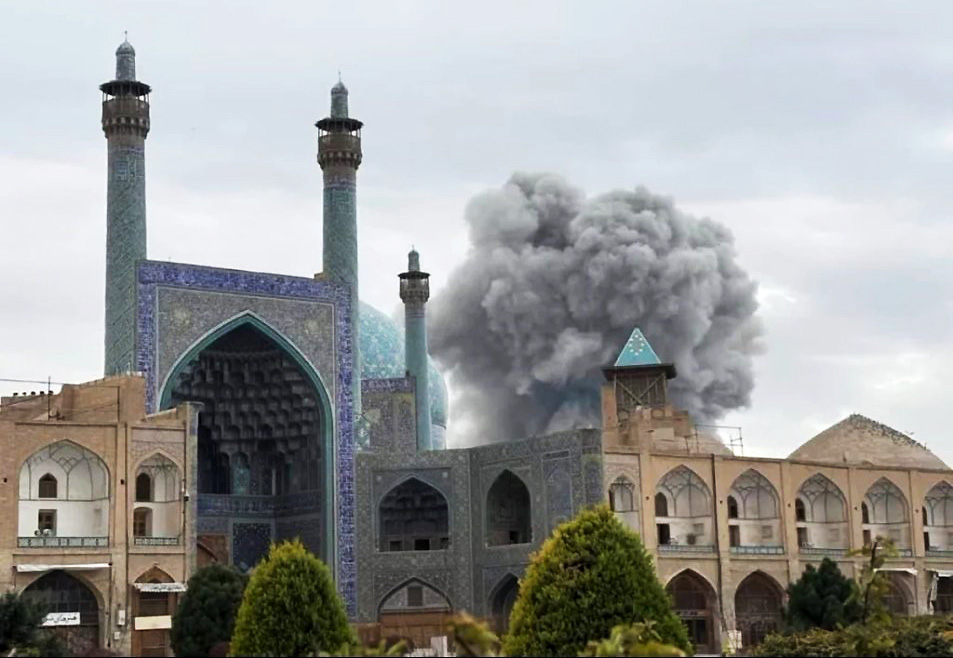
The Safavid Dowlatkhaneh Complex, which comprises a collection of valuable historical monuments and buildings, also suffered serious damage following the attack on the Isfahan Governorate Building. Among the buildings within this complex is Ashraf Hall, one of the remaining structures from the Safavid governmental ensemble in Isfahan, located in the heart of the city’s historic fabric and within the same complex. According to Iranian cultural heritage sources, this structure is attributed to the period of Shah Abbas II, and its completion took place during the reign of Shah Suleiman Safavi. Owing to its valuable decorations—such as delicate stucco work, wall paintings, and finely crafted wooden elements—Ashraf Hall enjoys considerable historical and artistic importance. During the Qajar period, the building acquired a different function and was used as the residence of Sarem al-Dowleh, the commander of Isfahan’s military forces[6]. Nevertheless, during the recent attack, this historic monument also sustained serious damage.
The Isfahan Governorate Palace, known in historical sources as Rashk-e Jannat, was severely damaged during the recent U.S. and Israeli airstrikes. This building was among the monuments registered on the National Heritage List of Iran and possessed considerable historical and architectural significance. Rashk-e Jannat originally dates back to the Safavid era and was restored and renovated during the Qajar period. This historic building was located in the Darvazeh Dowlat area, on Bagh-e Goldasteh Street in Isfahan. This valuable monument had been registered on Iran’s National Heritage List several decades ago and, in later years, came to be used as the Isfahan Governorate Building, by which name it was also commonly known[7].
On the other hand, the Tohidkhaneh Mansion, which had been used as the Faculty of Architecture and Urban Planning of Isfahan University of Art, was also damaged as a result of the attacks and explosions. This damage included shattered glass throughout the complex, destruction of wooden windows, damage to façade work, and damage to the fine tiles of the building’s exterior. This prompted the President of Isfahan University of Art, in a letter addressed to Iran’s Minister of Cultural Heritage, to describe the destruction of cultural heritage as contrary to international law and the dictates of human conscience, and to call for a reaction from international bodies[8].
- Tehran
The city of Tehran, which was chosen as the capital of Iran during the Qajar era, under the reign of Agha Mohammad Khan Qajar, nearly 240 years ago, is today recognized as the country’s political, economic, commercial, and industrial center and has played a decisive role in the contemporary political and social developments of Iran. In this context, the body of monuments remaining from the Qajar and Pahlavi periods in Tehran also constitutes an important part of the country’s historical heritage, and some of them possess cultural value and significance at the national and even international levels. Nevertheless, during the recent attacks on Tehran’s historic fabric, 19 historical buildings from among these ensembles were damaged[9].
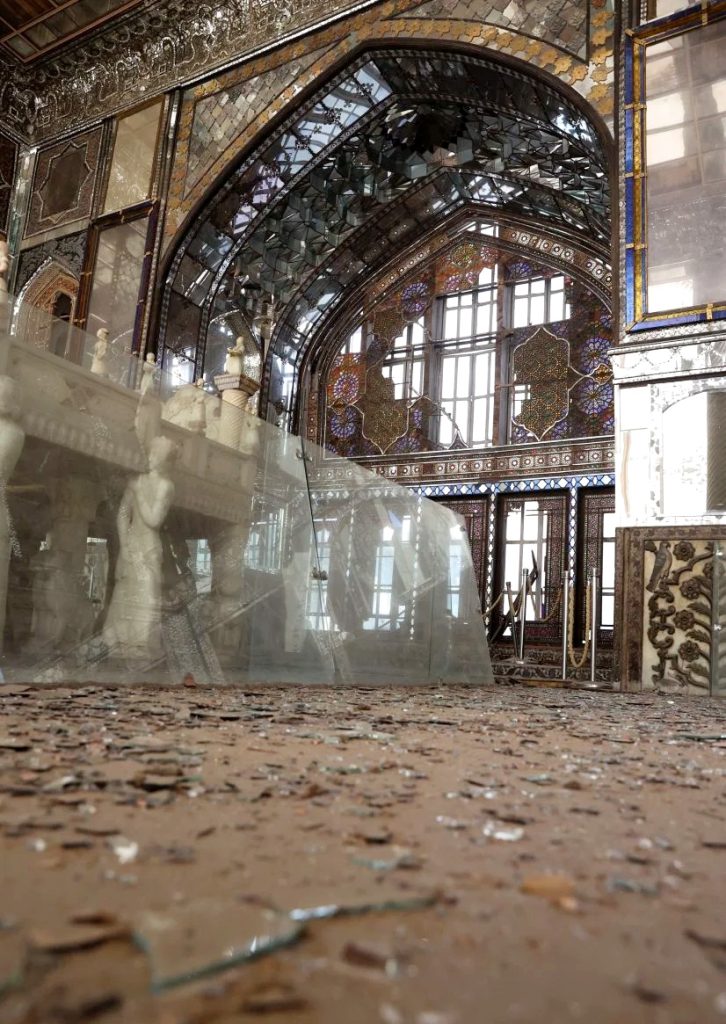
One of the most important of these sites is the Golestan Palace Complex, which was inscribed on the UNESCO World Heritage List in 2013. In its statement of 2 March 2026, UNESCO announced that Golestan Palace had been damaged by debris and the blast wave following an airstrike on Arg Square on Panzdah-e Khordad Street in Tehran, an area that lies within the buffer zone of this property. Referring to the images it had received, the Director of the UNESCO World Heritage Centre stated that it was not possible at that moment to determine the exact extent of the damage, but UNESCO confirmed that the palace had indeed been affected. Reference was also made to visual evidence showing masses of shattered glass and broken wood in the interior spaces[10].
In this regard, Eskandar Mokhtari Taleghani, who holds a doctorate in art research and is a conservator and researcher of architectural and urban heritage, visited the Golestan Complex after the attacks. In his remarks, he stated: “The entire surface of the Golestan Palace grounds was covered with dust and building debris that had fallen into the complex as a result of these attacks; the space of Arg Square was almost desert-like, most of the trees had been destroyed, and only one or two old trees remained. Inside the complex, the Abyaz Palace sustained the greatest damage: all the windows had shifted and been damaged, even the interior windows had been affected, and several parts of its ceiling had been pierced. Inside the palace, about 70 percent of the sections of the Marble Throne had collapsed[11].”
In addition to the foregoing, the Azadi Tower in western Tehran, which was built in the 1970s and is regarded by Iranians as a national and patriotic symbol and is also registered on the National Heritage List, was damaged as a result of multiple explosions in its surrounding area. According to a statement issued by the Public Relations Office of the Rudaki Foundation, during attacks on certain areas around Azadi Square in Tehran, the blast wave caused by missile strikes resulted in damage to the café-gallery located within this cultural complex[12].
- Khorramabad
The city of Khorramabad and its historic valley are among Iran’s most recent sites associated with the UNESCO World Heritage framework, with an estimated antiquity of approximately 63,000 years[13]. This valley comprises a large area containing several caves and a rock shelter. Owing to this valley, as well as monuments such as Falak-ol-Aflak Castle, whose origins date back to the pre-Islamic period and the Sasanian era, this city is one of the regions of Iran with exceptionally high historical and cultural significance; indeed, it has been recognized as the twenty-ninth global heritage property of Iran, among the treasures of human civilization, and its dossier has been placed in line for World Heritage inscription by UNESCO.
During the aggression by the United States and Israel, the Khorramabad Historic Valley also sustained damage. According to Reuters, despite the fact that this area constitutes a World Heritage property and, given the protected zone that is automatically established around it, should have been immune from any form of attack or damage, it was nevertheless struck and damaged[14]. Furthermore, as a result of an attack on a site within the protected boundary and in the vicinity of Falak-ol-Aflak Castle, the intensity of the blast wave, together with explosion fragments, caused damage to this historic fortress and also led to the complete destruction of the General Directorate of Cultural Heritage. In the course of this damage—which occurred despite the installation of the Blue Shield symbol on the roof of the castle—the Archaeology Museum and Anthropology Museum within the fortress, the historic Barracks Building, the historic Officers’ Club Building, the Regiment Building, and the historic Akhund Abu House were also severely damaged[15].
- Sanandaj
Kurdistan Province and the city of Sanandaj are also among Iran’s most important cultural and historical centers. Given that western Iran, for tactical reasons, was targeted more heavily by U.S. and Israeli bombardment than the eastern and central regions of the country, cultural and historical centers were likewise subjected to indirect aggression. Following the recent attacks on the area surrounding historical sites in Sanandaj County, parts of the city’s landmark buildings—including the Asif Mansion (Kurd House Anthropology Museum), the Salar Saeed Mansion (Archaeology Museum), and the Khosroabad Mansion—sustained damage as a result of the blast waves. It should be noted that all of these sites are among the properties registered on Iran’s National Heritage List.
In addition, a number of registered buildings within the historic fabric of Sanandaj—including the Malek al-Tojjar Building, Imamzadeh Pir Omar, the Motevasel House, the Mojtahedi House, and Amin al-Eslam—which were located near the sites of the explosions, also suffered damage. According to provincial officials, parts of the architectural decorations of these buildings—including mirrorwork, walls, orosi sash windows, inscribed entrances, stucco work, and also doors and windows—were damaged[16].
- Kermanshah
Following the attacks of 8 March 2026 on the historic fabric of the city of Kermanshah and parts of its historic bazaar, a number of buildings registered on the National Heritage List were also damaged as a result of the blast wave and projectiles caused by the destruction of surrounding buildings. Among the damaged structures were the Jameh Mosque of Kermanshah, Kazzazi High School (which houses the Museum of Education), the Qajar-era Dowlatshah Mosque, the Coppersmiths’ Bazaar within the historic bazaar complex, the historic Soori Mansion, and Takyeh Beyglarbeygi (which houses the Museum of Calligraphy and Manuscripts).
These buildings were chiefly damaged as a result of the blast wave and the impact of pieces of stone, brick, and construction materials that were hurled into the surrounding area following the destruction of buildings around the sites where the missiles struck. In some locations, the intensity of the blast waves caused windows to shatter, damaged doors and wooden orosi windows, and also led to the collapse of parts of the building materials in sections of these historic monuments[17].
Challenges and Responses
- Enforcement of International Treaties and Conventions
One of the key challenges concerning cultural heritage during periods of security crises and war lies in the existence of laws, conventions, and treaties that parties often disregard, while responsible organizations such as UNESCO lack the effective capacity to ensure their enforcement. The core of the contractual system for the protection of heritage in armed conflict is the 1954 Hague Convention for the Protection of Cultural Property in the Event of Armed Conflict. According to Article 4 of this Convention, states undertake to respect cultural property both within their own territory and within the territory of others, including by refraining from the military use of cultural property or its immediate surroundings in ways that could expose it to destruction, as well as by refraining from hostile acts against such property[18].
This convention obliges states to protect cultural sites and objects—including historical monuments, museums, archives, and similar institutions—from the hazards of war and to prevent the theft and trafficking of cultural artifacts. These legal instruments foresee both protective measures to be taken during peacetime and rules governing respect for cultural property during armed conflict. Accordingly, cultural property—along with its protective mechanisms and its immediate surroundings—must not be used for purposes that might expose it to destruction or damage in the event of armed conflict, and it must be protected against any hostile action[19].
In addition, two protocols to the Hague Convention (1954 and 1999) addressing the protection of historical artifacts and the prevention of their theft, the 1970 Convention on the Prohibition of the Illicit Trafficking of Cultural Property, and the 1972 World Heritage Convention, as well as the establishment of the International Committee of the Blue Shield, constitute other measures adopted under the auspices of UNESCO as the international body responsible for safeguarding historical and archaeological heritage. Nevertheless, the manner in which these mechanisms are implemented and the extent of their enforceability have always been subject to debate and uncertainty. Among them, perhaps the most notable mechanism is the Blue Shield.
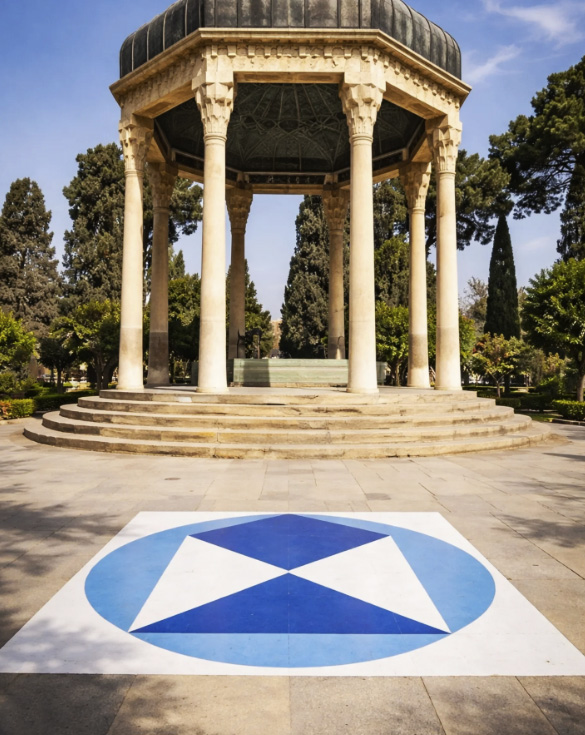
The Blue Shield is an international mechanism and symbol designed for the protection of cultural heritage during war, armed conflict, humanitarian crises, and natural disasters, and it has its roots in the 1954 Hague Convention. The emblem, which appears as a blue shield, is placed on monuments, museums, libraries, archives, historical sites, and scientific centers in order to formally indicate their cultural importance and to prevent them from being targeted or used for military purposes. The Blue Shield is not merely a warning sign; it also represents a set of preventive actions, including the documentation of heritage sites, crisis management planning, training of local personnel, and cooperation with military and emergency institutions. The organization, often described as the “Red Cross of cultural heritage,” serves as a global coordinating body for these activities. The ultimate aim of the Blue Shield is to preserve the identity, historical memory, and cultural diversity of humanity and to transmit them to future generations—even under the most difficult crisis conditions.
- Domestic Reactions
Abbas Araghchi, the Minister of Foreign Affairs of Iran, reacted to the attacks on historical monuments and cultural sites in a post on his personal account on the social media platform X. He wrote:
“Israel is bombing Iran’s historical monuments, some of which date back to the fourteenth century. Several sites registered on the UNESCO World Heritage List have also been targeted. We hope that UNESCO will adopt a firm and principled stance against further attacks on cultural heritage, including the historic monuments of Isfahan. The protection of these sites is an international responsibility and concern[20].”
Amir Karamzadeh, Director General of Cultural Heritage, Tourism, and Handicrafts of Isfahan Province, also addressed the issue of damage to the historic fabric and World Heritage sites of Isfahan in an interview with the Mehr News Agency. According to Karamzadeh, the significance of this incident goes beyond physical damage; because the Shah Abbas Mosque forms part of the unified World Heritage ensemble of Naqsh-e Jahan Square, any damage inflicted upon it constitutes not only a national loss but also a blow to the cultural heritage of humanity.
He emphasized that, under the current circumstances, protecting this complex in accordance with the 1972 UNESCO Convention must become an international priority. Traditional construction materials used in historical monuments—such as tiles, plaster, and ancient mortars—have limited resistance to intense acoustic pressure and vibrations. Since many parts of the mosque’s decorations are several centuries old, any heavy vibration can disrupt the attachment of tiles and decorative coverings, and their restoration requires careful structural analysis and the use of authentic conservation techniques.
He further noted that Isfahan, with its unparalleled concentration of historic monuments in the central urban core, is considered one of the largest living museums in the world, and the repetition of attacks in the vicinity of the city could produce irreversible consequences for the global standing of its World Heritage sites. Referring to the responsibility of states to safeguard humanity’s heritage, he added that, according to international agreements—including the Hague Convention for the Protection of Cultural Property in the Event of Armed Conflict—attacks against World Heritage areas constitute a clear violation of humanitarian and legal principles and require a response from international organizations[21].
Subsequently, Dr. Behrouz Vejdani, a prominent figure in the field of Iranian traditional music and cultural heritage, also reacted to the attacks and damage inflicted on Iran’s historical and cultural centers during an interview. Referring to the destruction and threats directed at historical monuments during the recent attacks, he emphasized that the United States and Israel, by disregarding the 1954 Hague Convention and the international rules for the protection of cultural heritage during wartime, had committed a clear violation of their global obligations. He proposed that prominent figures in Iran’s cultural heritage community should sign an official resolution condemning the act as a “crime against the heritage of humanity.”
This cultural heritage researcher also referred to similar cases around the world, stating that the bitter experiences of cultural heritage destruction in recent decades demonstrate that some groups or governments have ignored such commitments. These examples range from the destruction of the Bamiyan Buddhas in Afghanistan by the Taliban to the extensive damage inflicted upon historic cities during wars in the region, including Aleppo in Syria. In many of these cases, international organizations were unable to prevent such damage in time. He added that preserving this heritage is a global necessity, because these monuments belong to the history and civilization of humanity, and damaging them effectively constitutes an assault on the historical memory of humankind[22].
At the governmental level, the Minister of Cultural Heritage, Tourism, and Handicrafts of the Islamic Republic of Iran also addressed an official letter to the Director-General of UNESCO, Professor Khaled El-Enany. In the letter, he reported serious damage inflicted upon the Golestan Palace World Heritage Complex and parts of the historic fabric of Tehran following the attacks of February and March 2026, describing these actions as inconsistent with the legal obligations of states under international conventions and binding United Nations Security Council resolutions. He called for the formal condemnation of these actions, the immediate dispatch of an independent expert mission, and the activation of World Heritage protection mechanisms.
The letter stated that following the attacks of 1 March 2026 on residential, historical, and non-military areas in the center of Tehran, the Golestan Palace Complex suffered structural and decorative damage as a result of the explosions and blast waves. As a “heritage of humanity,” this complex possesses outstanding universal value, and safeguarding it constitutes a universal responsibility. Additionally, parts of the Grand Bazaar of Tehran, one of the principal components of the capital’s historic fabric and located adjacent to Golestan Palace, suffered damage that requires urgent technical evaluation and emergency stabilization and protection measures[23].
- International Reactions
Following the escalation of military confrontations and reports concerning damage to several historical monuments in Iran, a number of international institutions active in the field of cultural heritage protection reacted to the threats facing the country’s historical sites and called for compliance with international legal obligations regarding the protection of cultural property.
In this regard, UNESCO, while expressing concern about the safety of cultural heritage following the escalation of hostilities in the region, announced that Golestan Palace in Tehran, one of the properties inscribed on the World Heritage List, had been damaged by blast waves and debris resulting from an airstrike within the protective perimeter of the site. The organization emphasized that it continuously monitors the situation of cultural heritage in Iran and across the region and, in order to prevent potential damage, has provided the geographical coordinates of World Heritage properties and significant national heritage sites to the parties involved in the conflict. UNESCO also recalled that cultural property enjoys legal protection under international law, particularly under the 1954 Hague Convention for the Protection of Cultural Property in the Event of Armed Conflict and the 1972 World Heritage Convention[24].
At the same time, the U.S. Committee of the Blue Shield issued a statement expressing concern about the risks posed by military operations to Iran’s cultural heritage and stressed the necessity of protecting cultural property during armed conflict. The organization noted that Iran hosts some of the most significant cultural heritage sites in the world, including Persepolis, Pasargadae, and the historic ensemble of Isfahan, and that reports regarding damage to Golestan Palace illustrate the vulnerability of this heritage. The Blue Shield called upon the United States government, the Israeli military, and all other parties involved in the conflict to comply with their obligations under the 1954 Hague Convention and to take immediate measures to identify, map, and safeguard cultural sites, particularly within Iran. The committee also warned that the destruction of cultural heritage may constitute a violation of international humanitarian law and may even amount to a war crime[25].
The International Council on Monuments and Sites (ICOMOS) also supported UNESCO’s position and expressed concern regarding the threats facing cultural heritage in light of escalating tensions in the Middle East. The organization emphasized that adherence to international conventions and commitments for safeguarding the shared heritage of humanity is essential and called for respect for international humanitarian law. ICOMOS further stated that, through its national committees in the countries concerned, it is assessing the situation of professionals and gathering information in order to evaluate the impact of the conflict on cultural heritage.
Finally, the International Council of Museums (ICOM) issued a statement expressing serious concern about the human and cultural consequences of the conflicts in Iran and the Persian Gulf region. The organization warned that reports had emerged indicating damage to several cultural sites and emphasized that the protection of museums and cultural heritage must be prioritized. ICOM stated that it continues to monitor the situation of cultural heritage through cooperation with its national committees and international partners, and it called on all parties involved in the conflict to respect their obligations under the 1954 Hague Convention for the Protection of Cultural Property in the Event of Armed Conflict, emphasizing that the destruction of cultural heritage represents not merely a local tragedy but a loss for all humanity[26].
Conclusion
Cultural heritage, historical monuments, and archaeological sites constitute an inseparable part of the culture and civilization of nations as well as of the global community. Naturally, damage inflicted upon them during periods of armed conflict and security crises not only exposes their physical structures to destruction and deterioration but also causes irreparable harm to the cultural and historical legacy of the societies concerned. As discussed in this report, despite the existence of international conventions and treaties designed to safeguard world heritage and historical monuments, such sites remain continually vulnerable to damage caused by warfare. Not only have international institutions often been unable to effectively protect them, but aggressor states and actors frequently disregard the importance of these monuments and focus solely on their military objectives during conflict.
The Middle East is recognized as one of the most historically rich regions in the world, as evidenced by the vast array of monuments preserved across its countries. The remnants of ancient civilizations—from Iranian civilizations to those of the Assyrians, Chaldeans, and Babylonians in Iraq, as well as the Phoenicians in Lebanon—demonstrate that this region constitutes one of the richest and most historically significant areas of human civilization. Yet practical experience since the establishment of international organizations after the Second World War shows that, despite the fact that many of the world’s most intense armed conflicts and wars have occurred in this region, the protection of cultural heritage and historical monuments has not been adequately ensured. International conventions have repeatedly proven insufficient to guarantee effective protection of these sites. This reality became particularly evident in the wars in Syria and Iraq involving ISIS, in the NATO and U.S. war in Iraq, and again in the February 2026 attacks on Iranian territory.
References
[1] Kalan Shahr News & Media. (2026, March 11). 500 million in damage to the cultural heritage of Isfahan Province. Kalan Shahr News & Media. From: https://kalanshahr.ir/60485
[2] Geranpayeh, Sarvy. (2026, March 10). UNESCO sites in Iranian city of Isfahan and others across the country damaged by US-Israel strikes. The Art Newspaper. From: https://www.theartnewspaper.com/2026/03/10/unesco-sites-in-iranian-city-of-isfahan-and-others-across-countrydamaged-by-us-israel-strikes
[3] Mehr News. (2026, March 12). Damage of the Safavid Statehouse has Wounded Iranian Historical Memory. Mehr News. From: mehrnews.com/x3bzGQ
[4] UNESCO World Heritage Centre. (2011). The Persian Garden. UNESCO World Heritage Centre. From: https://whc.unesco.org/en/list/1372/
[5] Tasnim News. (2026, March 9). Chehel Sotoun Palace Museum was damaged by a missile strike + video. Tasnim News. From: https://tasnimnews.ir/3536335
[6] Miras Aria News Agency. (2023, July 17). Ashraf Hall, the Jewel of Iranian Halls. Miras Aria News Agency. From: www.chtn.ir/x3LxM
[7] Shargh Daily. (2026, March 13). Destruction of the 200-year-old Isfahan palace following US and Israeli attacks. Shargh Daily. From: https://www.sharghdaily.com/%d8%a8%d8%ae%d8%b4-%d9%81%d8%b1%d9%87%d9%86%da%af-%d9%87%d9%86%d8%b1-70/1093322-%d8%aa%d8%ae%d8%b1%db%8c%d8%a8-%da%a9%d8%a7%d8%ae-%d8%b3%d8%a7%d9%84%d9%87-%d8%a7%d8%b5%d9%81%d9%87%d8%a7%d9%86-%d8%af%d8%b1-%d9%be%db%8c-%d8%ad%d9%85%d9%84%d8%a7%d8%aa-%d8%a2%d9%85%d8%b1%db%8c%da%a9%d8%a7-%d8%a7%d8%b3%d8%b1%d8%a7%d8%a6%db%8c%d9%84-%d8%b9%da%a9%d8%b3
[8] Irna. (2026, March 12). Isfahan University of Art Calls for Protection of Cultural Heritage Against Destruction. Irna. From: https://irna.ir/xjWR9M
[9] Mehr News Agency. (2026, March 13). Damage to 19 historical buildings in Tehran Province during the recent war. Mehr News Agency. From: https://www.mehrnews.com/news/6774832/%D8%A2%D8%B3%DB%8C%D8%A8-%D8%A8%D9%87-%DB%B1%DB%B9-%D8%A8%D9%86%D8%A7%DB%8C-%D8%AA%D8%A7%D8%B1%DB%8C%D8%AE%DB%8C-%D8%A7%D8%B3%D8%AA%D8%A7%D9%86-%D8%AA%D9%87%D8%B1%D8%A7%D9%86-%D8%AF%D8%B1-%D8%AC%D9%86%DA%AF-%D8%A7%D8%AE%DB%8C%D8%B1
[10] UNESCO. (2026, March 2). UNESCO expresses concern over the protection of cultural heritage sites amidst escalating violence in the Middle East. UNESCO. From: https://www.unesco.org/en/articles/unesco-expresses-concern-over-protection-cultural-heritage-sites-amidst-escalating-violence-middle
[11] Shargh Daily. (2026, March 3). An expert’s account of the situation of the Golestan Palace after the U.S. and Israeli attacks. Shargh Daily. From: https://www.sharghdaily.com/fa/tiny/news-1091535
[12] Etemad Online. (2026, March 13). Damage of Azadi Tower Following the Blast Waves from Recent Attacks. Etemad Online. From: https://www.etemadonline.com/tiny/news-765117
[13] UNESCO World Heritage Centre. (2025). Prehistoric Sites of the Khorramabad Valley. UNESCO World Heritage Centre. From: https://whc.unesco.org/en/list/1744/
[14] Cabrera, Michaela . (2026, March 11). UNESCO fears for fate of historical sites during Iran war. Reuters. From: https://www.reuters.com/world/middle-east/unesco-fears-fate-historical-sites-during-iran-war-2026-03-11/
[15] Mehr News. (2026, March 14). Crime at the Falak‑ol‑Aflak Site; UNESCO’s Silence in the Face of Destruction in a World Valley. Mehr News. From: mehrnews.com/x3bBph
[16] Talebnia, P. (2026, March 12). Damage of Several Historical Buildings in Sananadaj During the Recent Attacks. Mehr News. From: mehrnews.com/x3bzDN
[17] Chamani, parastoo. (2026, March 9). The history of Kermanshah was not spared from missile attacks. Fars News Agency. From: https://farsnews.ir/Parasto/1773562424903182932/%D8%AA%D8%A7%D8%B1%DB%8C%D8%AE-%DA%A9%D8%B1%D9%85%D8%A7%D9%86%D8%B4%D8%A7%D9%87-%D9%87%D9%85-%D8%A7%D8%B2-%D8%AD%D9%85%D9%84%D8%A7%D8%AA-%D9%85%D9%88%D8%B4%DA%A9%DB%8C-%D8%AF%D8%B1-%D8%A7%D9%85%D8%A7%D9%86-%D9%86%D9%85%D8%A7%D9%86%D8%AF
[18] International Committee of the Red Cross (ICRC). (1954). Article 4: Respect for Cultural Property – Hague Convention for the Protection of Cultural Property in the Event of Armed Conflict. ICRC International Humanitarian Law Database. From: https://ihl-databases.icrc.org/en/ihl-treaties/hague-conv-1954/article-4a
[19] French Republic. (2015, July 2). Opinion on the Protection of Cultural Property during Armed Conflict. French Republic. From: https://www.legifrance.gouv.fr/jorf/id/JORFTEXT000030911687
[20] Seyed Abbas Araghchi. (n.d.). Seyed Abbas Araghchi (@araghchi). X (formerly Twitter). From: https://x.com/araghchi
[21] Mehr News Agency. (2026, March 7). Encroachment on the World Heritage zone of Naqsh-e Jahan is a clear violation of the 1954 Hague Convention. Mehr News Agency. From: https://www.mehrnews.com/news/6769045/%D8%AA%D8%AC%D8%A7%D9%88%D8%B2-%D8%A8%D9%87-%D8%AD%D8%B1%DB%8C%D9%85-%D8%AB%D8%A8%D8%AA-%D8%AC%D9%87%D8%A7%D9%86%DB%8C-%D9%86%D9%82%D8%B4-%D8%AC%D9%87%D8%A7%D9%86-%D8%AA%D8%AE%D9%84%D9%81-%D8%A2%D8%B4%DA%A9%D8%A7%D8%B1-%D8%A7%D8%B2-%DA%A9%D9%86%D9%88%D8%A7%D9%86%D8%B3%DB%8C%D9%88%D9%86-%DB%B1%DB%B9%DB%B5%DB%B4
[22] Noor Ali, M. (2026, March 13). The United States and the Zionist regime have violated the 1954 Hague Convention and caused serious damage to Iran’s human heritage / Prominent figures of cultural heritage should sign a resolution condemning this crime against humanity. Miras Aria News Agency. From: www.chtn.ir/x4nsk
[23] Ilna. (2026, March 3). Damage to the Golestan Palace is a clear violation of international conventions and a UN Security Council resolution / Call for an official condemnation and the immediate dispatch of a formal delegation. Ilna. From: https://www.ilna.ir/fa/tiny/news-1758127
[24] UNESCO. (2026, March 2). UNESCO expresses concern over the protection of cultural heritage sites amidst escalating violence in the Middle East. UNESCO. From: https://www.unesco.org/en/articles/unesco-expresses-concern-over-protection-cultural-heritage-sites-amidst-escalating-violence-middle
[25] U.S. Committee of the Blue Shield (USCBS). (2026, March 4). Statement on the Iran Conflict and Cultural Heritage. U.S. Committee of the Blue Shield. From: https://uscbs.org/statement-iran-conflict-cultural-heritage-march-2026/
[26] Museums Association. (2026, March 10). Blue Shield warns of potential ‘war crimes’ against Iran’s cultural sites. Museums Journal. From: https://www.museumsassociation.org/museums-journal/news/2026/03/blue-shield-warns-of-potential-war-crimes-against-irans-cultural-sites/


